-
Barolo and back

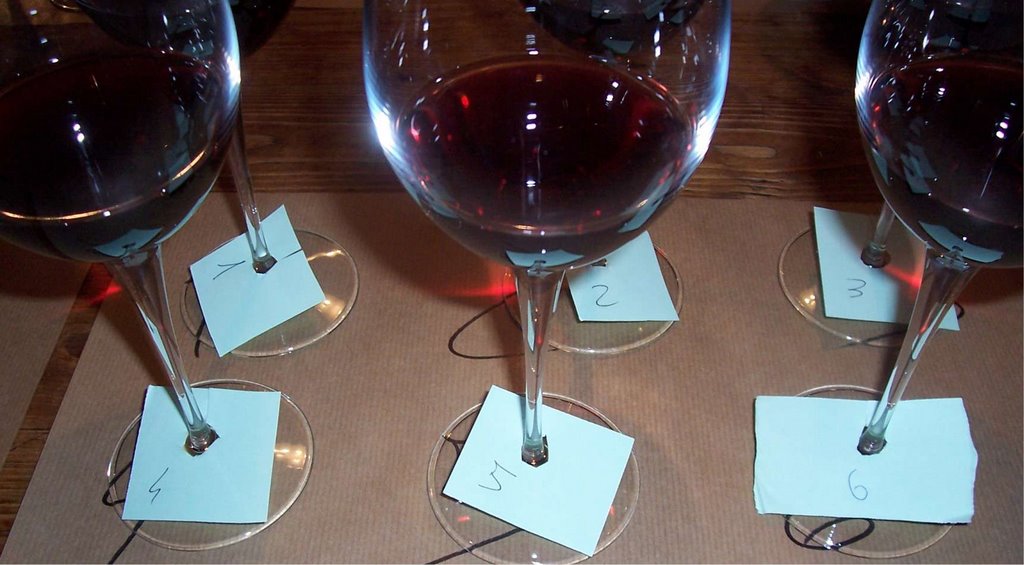
Lining up for the blind tastingOn Tuesday we attended a Barolo wine-tasting at a local enoteca (wine bar), called Ombre Rosse. We went through to a private room at the back where we rather swamped the place and probably startled the three locals who had come for the occasion.
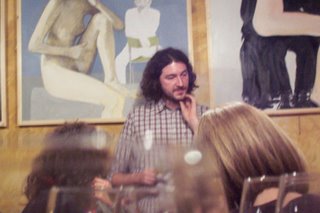
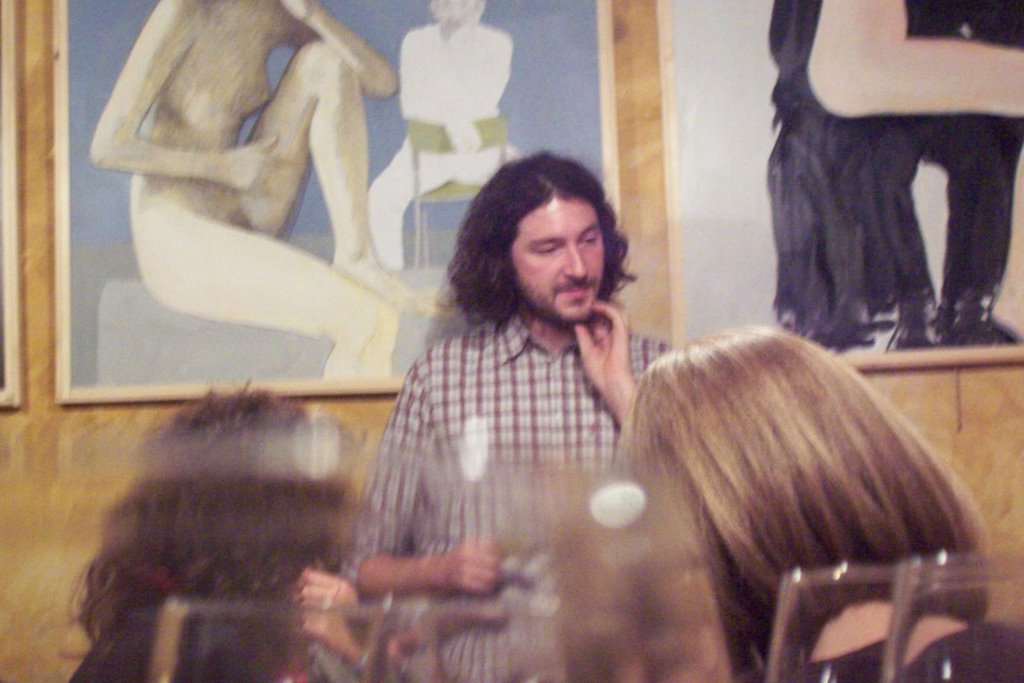
Our host explains the wines.We did a blind tasting of six different Barolos – by wine producers: Bartolo Mascarello, Rinaldi, Aurelio Settimo, Clerico, Aldo Conterno and Montezemolo. As a complete wine rookie I had some trouble isolating the different scents and flavours, but did eventually manage to pull out cherries, black licorice, toffee, blackberry/blackcurrant, while others talked chocolate, nutmeg, panettone, candied fruits, raspberries, figs, mint and more. From different glasses, I hasten to add. After a survey by the proprietor, he disclosed that most of us preferred the fruitiest (and priciest I think, at about €50 a bottle), from Aldo Conterno.
We called it a night around 11.30, and left a large group still there savouring the dregs and gnawing on some chewy bread rolls the management had kindly brought in at the end. The evening was €30 and worth it for the education, the company (of course!) which included some more knowledgeable noses who led others of us, and the wine itself which goes for around €7 a glass.
-
Parma weekend
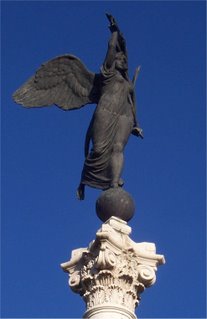
Monomento alla Vittoria (Victory) in Parma – unveiled in 1931 and made out of enemy weapons.A long weekend in Parma: we had a holiday on Friday (Immaculate Conception) which I squandered on a day of rest and rehabilitation, trying to beat the bug that has been making life tiring and difficult. I hope that’s done the trick.
We had sunny days Saturday and Sunday and I spent the daylight hours of the former running errands at Brico and Ipercoop. A typical expat’s shopping expedition. Nancy has already written a poem of the wrong lightbulb, but at least she got to experience that in English. Yesterday I bought a lampada but managed to come home with the wrong lampadina – and no illustrated guidance on which is the right one. All those I’ve seen in corner shops have been standard screw-in types and this is obviously something else. Two other minor purchases went similarly awry – wrong battery, wrong size hook – and so it goes. Swimming through the murk.
Had a chance to commiserate with a few classmates over dinner. We compared notes: where can you buy a hammer? Who sells lightbulbs? Why do the service staff of Telecom Italia simply hang up when they hear an American voice? What’s the best way to get hold of the one cab that goes from Colorno to Parma at night? What’s the best way to learn Italian? What do they sell in the Chinese market? It was a convivial and delicious evening with almost as many things to eat as questions to ask.
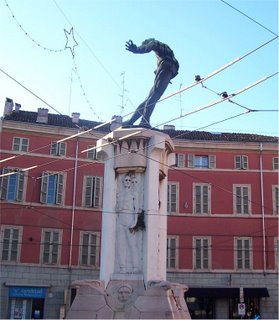
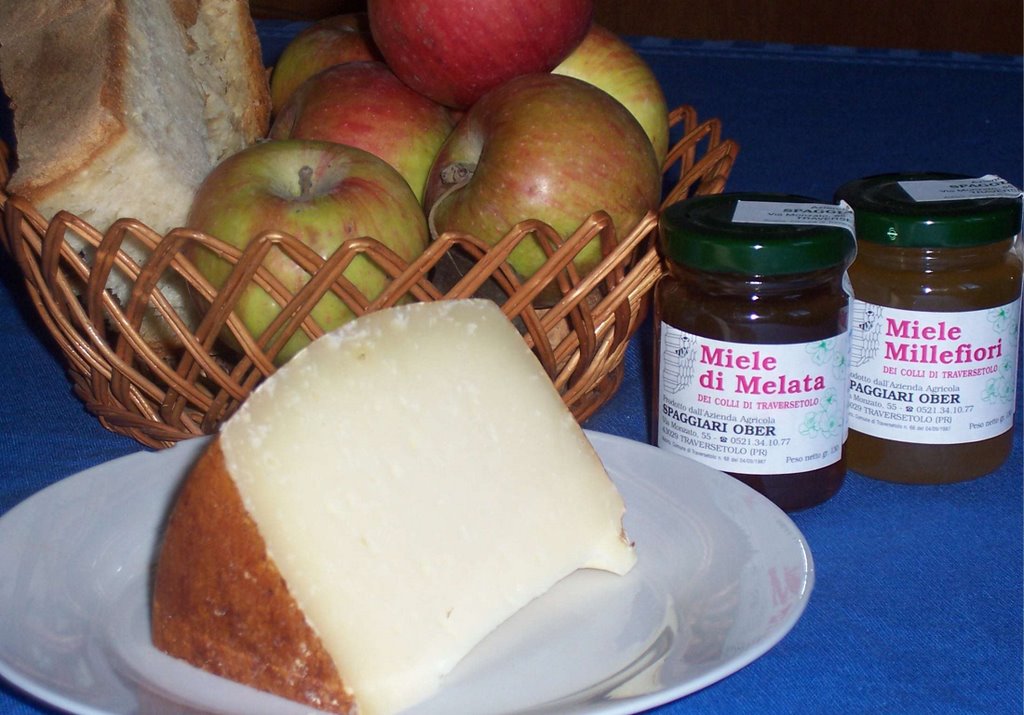
Monumento a Corridoni – first world war memorial in Oltretorrente, near the Ponte di Mezzo.Today I set off in hopeful fashion to replenish our water supply – bottles of drinking water we prefer over the heavily mineralised tap water that to our sensitive noses says ‘eau de sulfur’. All right to bathe in (apparently this is sulfur spa country so we’re not imagining it) but we prefer something less overt in our coffee. But I managed to miss the supermarket by about 10 minutes; it was closing early today due to the holiday I guess. There was instead a Christmas market to browse, and I came back laden with ancient apples (the variety rather than the produce, I mean), a couple more flavours of honey (melata – honeydew, and millefiori – a thousand flowers!) and some bread and cheese (pecorino – sheep’s milk cheese – I forget where this one was from, Sardinia maybe?). Now, on to catching up on some Italian lessons from last week…

Still life with pane, pecorino, “mele di nonna“, e miele. -
Cheese-off
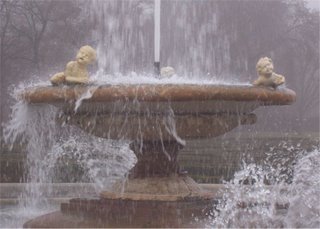
Colorno fountainWe learned something about cheese tasting yesterday in a first class on that subject, when we went nose-to-rind with four fabulous cheeses. It was very exciting and entirely delicious, which was a small miracle given the continuing cold-type ailment which has been working its way around my upper respiratory sytem since the first week of classes.
It helped that we were mostly trying strong cheeses – Fontina, Pecorino Toscano (an unusual one, aged 4 months in a cave!) and a very rare and exquisite four year old Parmigiano-Reggiano – as well as a fresh Mozzarella di Bufala Campana that was soft and yummy and totally unlike most anything that goes by the term “mozzarella” in Canada.
Someone had asked the cheese technology prof why there was no control over the use of the name Mozzarella, since it’s used worldwide to describe substances that only remotely resemble the original product in production methods, appearance and least of all taste, and he said something like, “oh to ask that question is to make wider the wound in the heart of every Italian”.
I’ve been awed and impressed by the pride and passion the people we’re meeting have about their food. His answer to the mozzarella question was that basically by the time Italian producers got around to applying to protect the name, “mozzarella cheese” was in really wide production (from a variety of methods) worldwide and Italy didn’t have an argument of scale sufficient to make a case for reclaiming the name. They did protect the “Mozzarella di Bufala” designation though, since water buffalo are not widely used for this kind of cheese production and are mostly found only in Italy, India and east Asia.
We discussed cheese tasting terminology, needed to capture the effects of various combinations of the 200+ different chemical compounds that make up tastes, smells and aromas in cheese. One important point was that it is fairly critical to have eaten widely and well if you want to taste cheese (or wine, I suppose) because in order to master the terminology you need to know other flavours as they are suggested to your palate – call on your olfactory memory: no easy thing. Apparently there is an international vocabulary to describe all this, that was only developed about six years ago. To supplement our handouts, I came across a good list of terms – the Cheese Connoisseur’s Glossary, at an artisanal cheese website – and an even better one: CheeseNet’s Cheese Glossary.
We did find it difficult to appreciate the full meaning of some of the tasting terms: for those of us not familiar with the exact nature of chestnut or arbutus honey, for example, the term is not so meaningful. Being one who enjoys splitting hairs, I’ve been speculating that given the differences that regional climate, vegetation and soil types make in end products of just about every agricultural enterprise, I’m guessing that there would be a noticeable difference in flavour between Italian and Canadian (and other) chestnut honeys. We’ll have to have a taste-off sometime to find out.
Well. That was it for today. We’ll be tasting six more cheeses next time.
Here are some more photos ’round town:
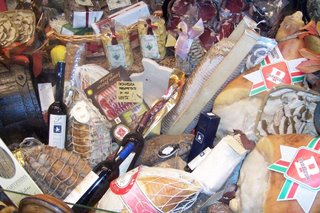
Parma specialties, Via Farini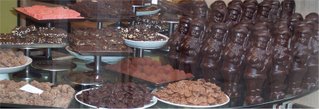
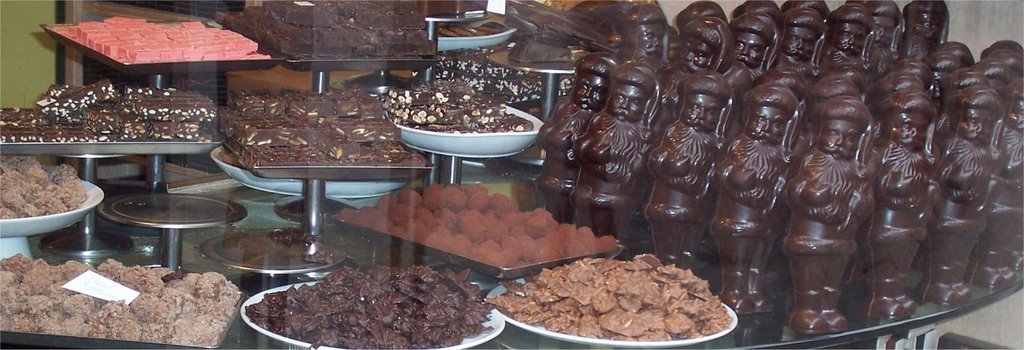
Some scary Santas (Babbi Natale)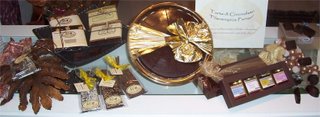
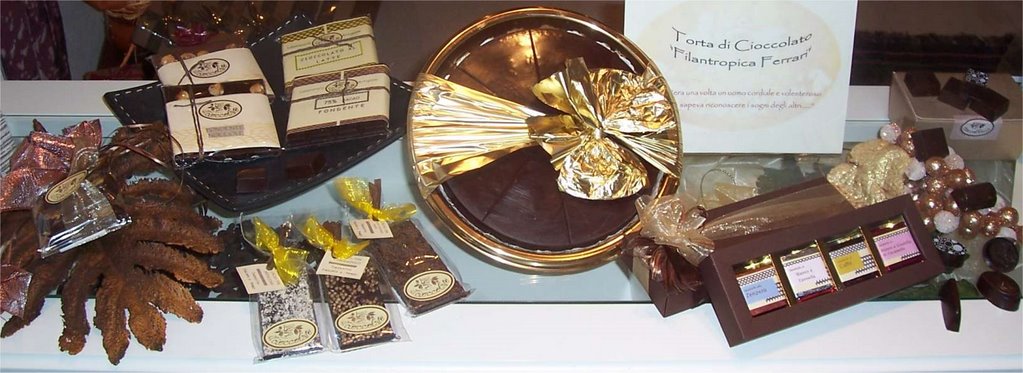
More chocolate…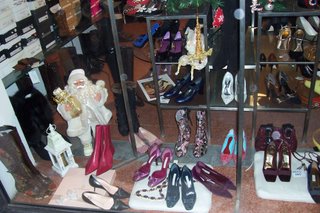
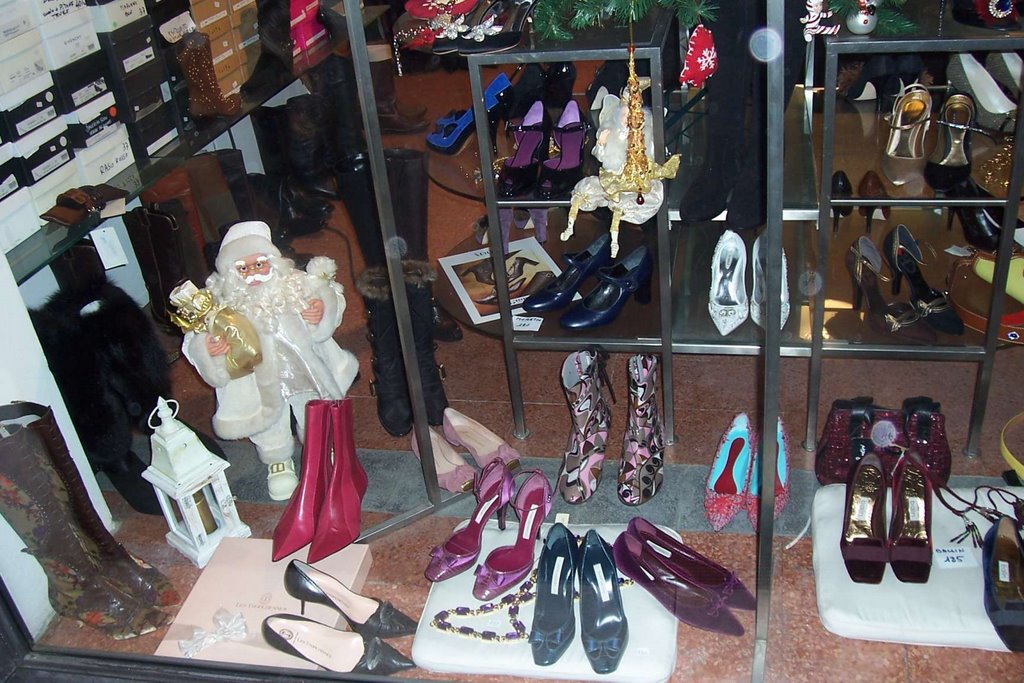
One for the shoe fetishists





Latest Posts
- Sublime
- Good weather for reading
- The world, the world
- Sublime launch!
- Planet Earth Poetry – Readings by Volunteers, Victoria 2026
- Poetry at the Goldfinch
Aldeburgh Poetry Festival Barny Haughton BBC BC poets Berkswell blackberries Black Stilt Bologna book launch Borough Market Carlo Petrini Catalonia Cyrus Todiwala dairy Daunt's Books Dijon Edinburgh Fanny Bay Feast of Fields Food and Morality food history food journalism Jenna Butler lardo Malahat Review Michael Pollan Okanagan olive oil tasting olive trees Omnivore's Dilemma Our Food Our Future Oxford Parmigiano-Reggiano Planet Earth Poetry poetry poetry readings Poetry videos prosciutto salumi Sean O'Brien Suffolk ticks Wendy Morton Wired Writing Yvonne Blomer
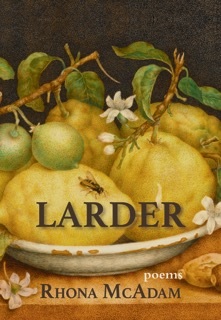
In her latest collection, Rhona McAdam navigates the dark places of human movement through the earth and the exquisite intricacies lingering in backyard gardens and farmlands populated by insects and pollinators, all the while returning to the body, to the tune of staccato beats and the newly discovered symmetries within the human heart.
“…A beautiful, filling collection, Larder is a set of poems to read at the change of the seasons, to appreciate alongside a good meal, and to remind yourself of the beauty in everything, even the things you may not appreciate before opening McAdam’s collection….”
Rhona McAdam is a writer, poet, editor, and Registered Holistic Nutritionist with a Master’s in Food Culture from Italy and a deep-rooted passion for ecology and urban agriculture. Her work spans corporate and technical writing to poetry and creative nonfiction, often exploring the vital links between what we eat and how we live. Based in Victoria, BC, and available via Zoom, Rhona is always open to new writing commissions, readings, or workshops on nutrition and the culinary arts.