-
Of Sausages and St David’s Day
Read Full Post: Of Sausages and St David’s DayI do not, so far as I know, have a drop of Welsh blood in me, but I wish those of you who do a happy St David’s Day. I read that Welsh recipes have something in common with poetry (not surprisingly I suppose!) in that they were saved from dying out during the Industrial Revolution, when farmers turned from the land to the factories and mines, by oral tradition, one generation passing them to the next, until they were written down. As food does get caught up in class struggles too, I guess these more humble dishes would also have risked loss by having given way to more ‘elevated’ fare cooked in French-influenced English kitchens of the time.
If you want to celebrate today with a particularly good dish, I recommend Glamorgan Sausages, which you can probably make well enough with Feta or Lancashire if you are in a Caerphilly-deprived area.
Speaking of sausages, before I left Saskatchewan, I was directed by two independent and reliable gastrophiles (Dee and Glen) to the town of St Gregor
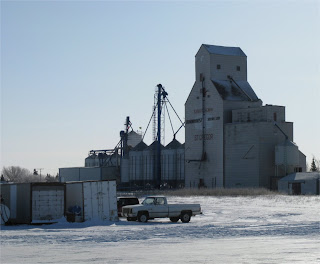
and the red and white striped home of Prime Meats.
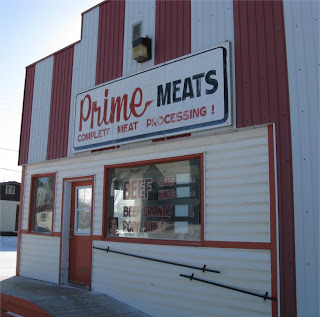
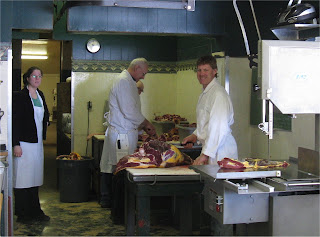
Glen has been a loyal customer for at least 30 of the 31 years the company has been offering local employment and high quality smoked locally-reared meats to smoked German sausage fans far and wide, and so I accepted his judgement. The odour of woodsmoke, which Dee commented on, was most appetising, and you can peek behind the counter to see men in action on sawdust floors. Long may they continue!.
And for those who wish to celebrate Welsh heritage in poetry, why not try your hand at three classic Welsh poetry forms? (Though I am a bit dubious about the Welshness of Terza Rima… was Dante a Welshman?)
-
Bonnie ‘Prince’ Billy
Read Full Post: Bonnie ‘Prince’ BillyAnd now, a musical interlude, from Bonnie ‘Prince’ Billy, because he will soon (March 22) be appearing in Saskatoon at the Broadway Theatre. We are not to be graced in Victoria, alas. I must have invoked him because I was looking through some of his Youtube appearances a few days before I happened upon the notice for his show when I was in Saskatoon last weekend. Andrew put me onto him when I was in London a couple of years ago.
-
Terroir in Saskatchewan
Read Full Post: Terroir in Saskatchewan… or as they quipped during the Saturday night entertainment, that’s terroir as opposed to terre noire as opposed to terreur. It’s a term that began in the realm of winemaking, to describe the many elements that go into building a wine’s character: the mineral content of the soil, sun exposure, moisture and drainage, altitude and so forth.

Marc Loiselle and the Rural Development Alternatives panel.The word has been picked up by other food producers who find it a good all-encompassing way to describe the qualities that go into making a food product unique. If it’s an animal product, you look at the breed as well as the climate, topography and flora that affect the flavour, fat and texture of its meat or milk, which will in turn provide unique characteristics to its products – cheese, for example – made from it.
So last weekend I spent a day at a conference with the enticing title of Terroir, Identity and Seduction which gave the francophones of Saskatchewan (and a few of us anglophones) a chance to take a close look at local issues of terroir, through presentations, networking and even a bit of eating and drinking.
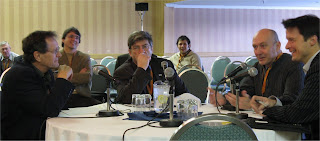
Kicking things off with a plenary on Regional Development in Saskatchewan and BeyondThere was a small but diverse and surprising selection of producers offering tastes and consumables of all shapes and sizes; howdja like them apples, from Petrofka Bridge Orchard
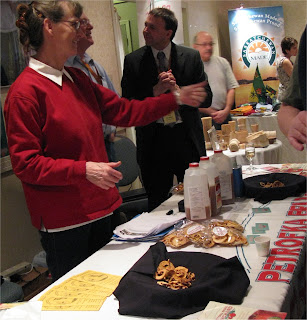
or that lovely flour from Marc Loiselle’s Red Fife Wheat
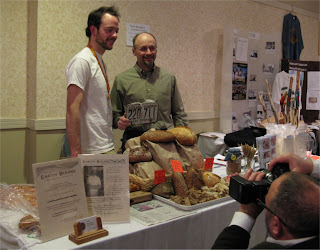
rising to life in Trent Loewen’s excellent Earthbound Bakery bread…

and who could have imagined Bedard Creek Acres’ Red Clover Syrup
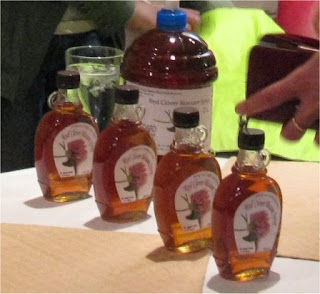
plus beaucoup de bison (including an awesome bison pâté) from the Meridian Bison Company; marvellous moutarde de Gravelbourg from Gravelbourg Mustard (the one with cranberry made me swoon, and yearn for a nice bit of roast goose to eat it with).
André Simard told us about Charlevoix’s Local Development Centre and the state of gastrotourism and food production in Charlevoix, where they’ve made good progress in establishing unique products and viable markets for them, including La Route des Saveurs de Charlevoix, which was set up nearly 15 years ago and continues as a model of gastrotourism to the rest of the country.
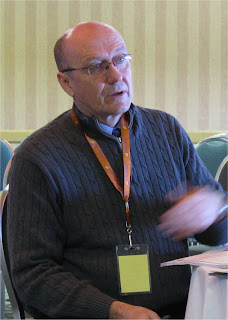
Jean-Pierre Lemasson offered some gritty truths about terroir, identity and commerce, touching on some interesting dilemmas, like: is it possible to recreate a historical dish when the ingredients no longer resemble their origins? And talked about the industrialization and globalization of production and taste since World War 2, and the sticky issues those things raise for contemporary notions of authenticity and terroir. At lunchtime he offered an impromptu historical view of Tourtière, maintaining – to enthusiastic acclaim – that it is an ancient food, on the grounds that a recipe for a meat pie encompassed in pastry was found on cuneiform tablets, proving it’s been on the table for around 4,000 years. Hotly debated, tourtière’s origins according to folklore are that it was named for passenger pigeons – tourtes – that were used as ingredients a couple of centuries ago; but others maintain that, like paella, the food is named after the dish it’s cooked in. Here’s a recipe for it from Charlevoix.

We heard from Claude Dubé about Economuseums (économusées)
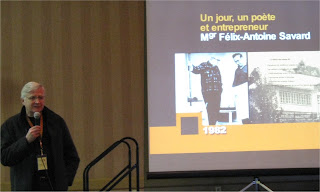
which are part museum, part workshop, part commercial enterprise, or as they define themselves:
a craft or agri-foods business whose products are the fruit of an authentic technique or know-how. The business showcases artisans and craft trades by offering an area for interpreting its production and by opening its doors to the public.
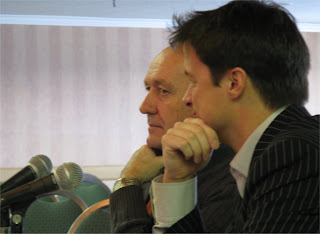
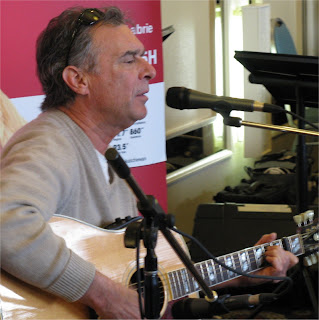
André Simard and Sylvain Charlebois ponder Saskatchewan issues.We even had a participant who knocked a few socks off – even when they were sat the other side of the wall in the next room – by ending his presentation a capella. Here he is singing for CBC/Radio-Canada, the one and only Zachary Richard, Acadian advocate from Louisiana:
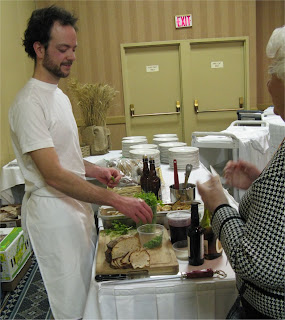
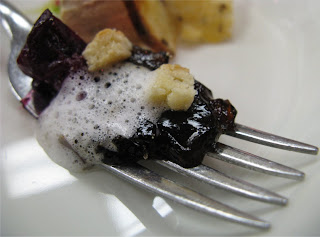
For me the grand finale was the Iron Chef competition, featuring three talented locals preparing hors d’oeuvres we could vote on:
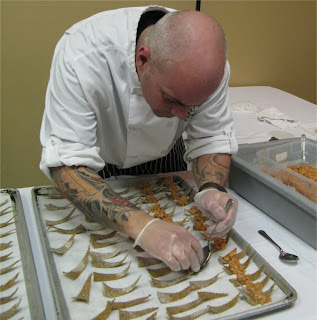
Pascal Lafond
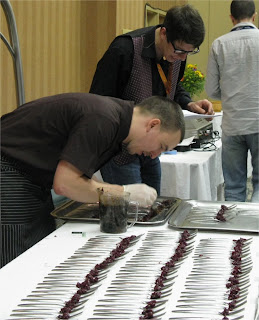
and Trent Loewen prep it up.
Pascal Lafond’s spectacular and surprising cherry salsa, mustard tile and liver pâté bison glacé
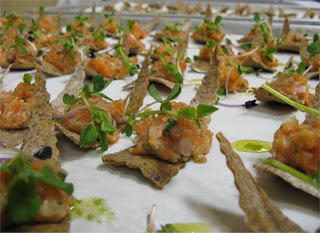
Jean-François Dionne’s Diefenbaker Lake trout tartare with greens served on a wild rice flour cracker was elegant and understated:
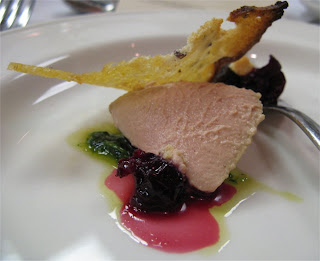
but the winner was Trent Loewen’s silky chicken liver mousse on Éphémère flax bread.


Latest Posts
- (no title)
- Sublime and Twisted Readings coming up!
- Sublime
- Good weather for reading
- The world, the world
- Sublime launch!
Aldeburgh Poetry Festival Barny Haughton BBC BC poets Berkswell blackberries Black Stilt Bologna book launch Borough Market Carlo Petrini Catalonia Cyrus Todiwala dairy Daunt's Books Dijon Edinburgh Fanny Bay Feast of Fields Food and Morality food history food journalism Jenna Butler lardo Malahat Review Michael Pollan Okanagan olive oil tasting olive trees Omnivore's Dilemma Our Food Our Future Oxford Parmigiano-Reggiano Planet Earth Poetry poetry poetry readings Poetry videos prosciutto salumi Sean O'Brien Suffolk ticks Wendy Morton Wired Writing Yvonne Blomer
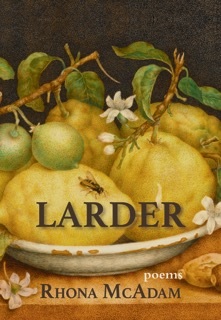
In her latest collection, Rhona McAdam navigates the dark places of human movement through the earth and the exquisite intricacies lingering in backyard gardens and farmlands populated by insects and pollinators, all the while returning to the body, to the tune of staccato beats and the newly discovered symmetries within the human heart.
“…A beautiful, filling collection, Larder is a set of poems to read at the change of the seasons, to appreciate alongside a good meal, and to remind yourself of the beauty in everything, even the things you may not appreciate before opening McAdam’s collection….”
Rhona McAdam is a writer, poet, editor, and Registered Holistic Nutritionist with a Master’s in Food Culture from Italy and a deep-rooted passion for ecology and urban agriculture. Her work spans corporate and technical writing to poetry and creative nonfiction, often exploring the vital links between what we eat and how we live. Based in Victoria, BC, and available via Zoom, Rhona is always open to new writing commissions, readings, or workshops on nutrition and the culinary arts.