-
Smoked salmon ‘n spuds
Read Full Post: Smoked salmon ‘n spudsAs my mission to clear out the deep freeze continues, I laid my hand upon a lovely package of alder-smoked sockeye salmon; first I made a moderately successful smoked salmon quiche, and then tried a good smoked salmon gratin. Sort of a cross between scalloped potatoes and fish pie and very good with a simple salad or steamed vegetable side dish.
Smoked Salmon & Potato Gratin
2lb/1kg starchy potatoes (e.g. russets, Yukon Gold or King Edward)
8oz/250g smoked salmon, flaked or diced
1 tbsp drained capers
1 cup light cream
1 tbsp cornstarch
2 garlic cloves, crushed
1 tsp dijon or wholegrain mustard
Salt and pepper to taste
1/2 tsp grated nutmeg
2 tbsp butter- Preheat the oven to 350f.
- Peel the potatoes and slice very thinly, dry with a cloth and use one third of them to cover a well buttered baking dish. Season.
- Scatter half the salmon and capers on top. Repeat.
- Cover with the rest of the potatoes and season again.
- Mix the cream with the cornstarch, garlic and mustard and pour over the potatoes.
- Grate nutmeg over the top and dot with butter.
- Cover and bake for 1 hour; then bake uncovered another ½ hour or so, until the potatoes are tender, golden brown and bubbling. Let it rest for 10-15 minutes before serving
Fish, to taste right, must swim 3 times: in water, in butter and in wine.
— Polish Proverb -
Food in poetry
Read Full Post: Food in poetryHere’s a funny thing, from a year ago. As a National Poetry Day project last year, the Poetry Book Society had set up a food page allowing you to search poems by ingredient (or browse by author or title). How wonderful is that??
Here’s another funny thing. My mother loooooved parsley. She had trees of the stuff all over the balcony and it adorned, nay, festooned all our meals. I wonder if she ever saw this tribute ditty?
Parsley, parsley everywhere
Let me have my victuals bare.
–Ogden Nash -
Chocolate+Chestnut Boulestin, and Nigel’s Cheese+Onion Tart
Read Full Post: Chocolate+Chestnut Boulestin, and Nigel’s Cheese+Onion TartI’ve been talking at very long distance with Clodagh about various food matters, and she sent me a recipe she’d seen in the Guardian not so long ago, for Chestnut Chocolate Boulestin, with the advice that you warm the dish before attempting to coat it with caramel as otherwise it will solidify where poured. I am not sure we can even get tinned chestnuts in this corner of the world, but it might be worth looking. It sounds like a worthwhile venture: a truly serious chocolate pudding for grown-ups. If anyone else tries it or works out good variations, let us know.
We also embarked on a discussion about an amazing looking recipe from Nigel Slater’s sacred text Appetite: a Cheese and Onion Tart, made with puff pastry.


Latest Posts
- Writers at Word!
- Sublime and Twisted Readings coming up!
- Sublime
- Good weather for reading
- The world, the world
- Sublime launch!
Aldeburgh Poetry Festival Barny Haughton BBC BC poets Berkswell blackberries Black Stilt Bologna book launch Borough Market Carlo Petrini Catalonia Cyrus Todiwala dairy Daunt's Books Dijon Edinburgh Fanny Bay Feast of Fields Food and Morality food history food journalism Jenna Butler lardo Malahat Review Michael Pollan Okanagan olive oil tasting olive trees Omnivore's Dilemma Our Food Our Future Oxford Parmigiano-Reggiano Planet Earth Poetry poetry poetry readings Poetry videos prosciutto salumi Sean O'Brien Suffolk ticks Wendy Morton Wired Writing Yvonne Blomer
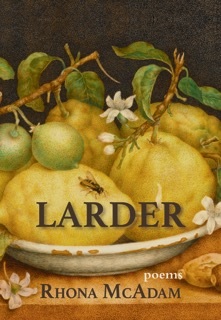
In her latest collection, Rhona McAdam navigates the dark places of human movement through the earth and the exquisite intricacies lingering in backyard gardens and farmlands populated by insects and pollinators, all the while returning to the body, to the tune of staccato beats and the newly discovered symmetries within the human heart.
“…A beautiful, filling collection, Larder is a set of poems to read at the change of the seasons, to appreciate alongside a good meal, and to remind yourself of the beauty in everything, even the things you may not appreciate before opening McAdam’s collection….”
Rhona McAdam is a writer, poet, editor, and Registered Holistic Nutritionist with a Master’s in Food Culture from Italy and a deep-rooted passion for ecology and urban agriculture. Her work spans corporate and technical writing to poetry and creative nonfiction, often exploring the vital links between what we eat and how we live. Based in Victoria, BC, and available via Zoom, Rhona is always open to new writing commissions, readings, or workshops on nutrition and the culinary arts.