-
National Organic Week- with poetry!
Read Full Post: National Organic Week- with poetry!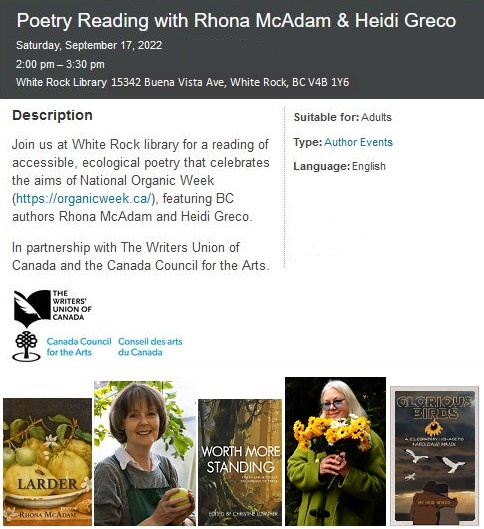
-
Where does all the garbage go?
Read Full Post: Where does all the garbage go?I learned the important connection between food and sewage years ago when I came across the excellent documentary Crapshoot: The Gamble with Our Wastes. The film of course talked also about garbage disposal and the endless growth of landfill waste which humans create so easily and dispose of so badly.
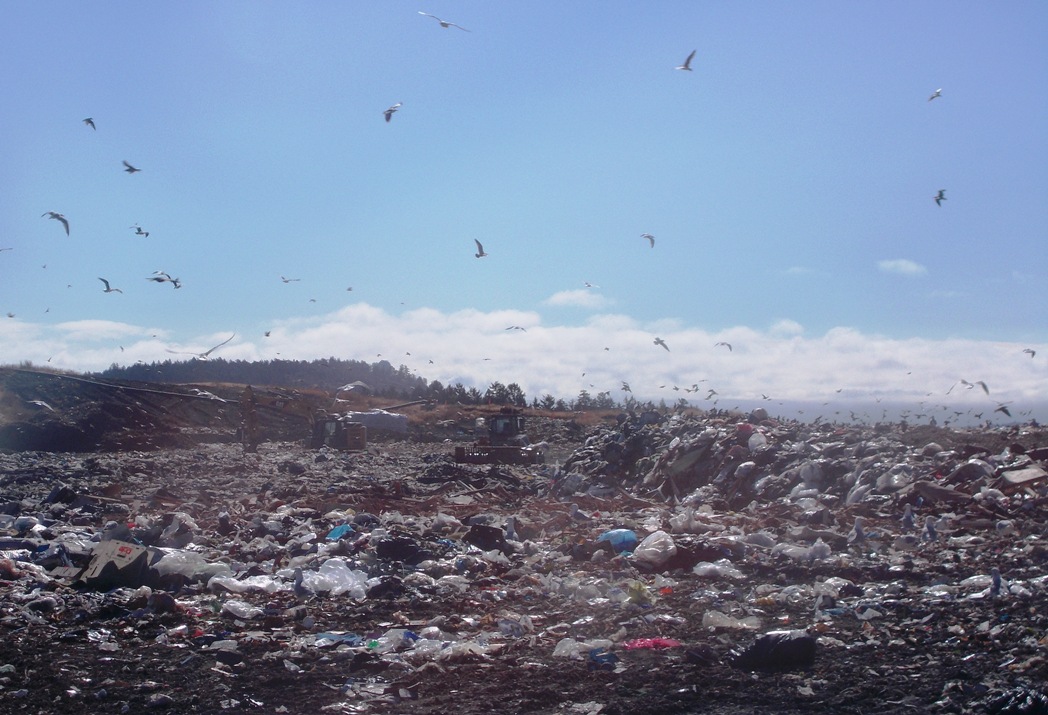
So I was pleased to finally be able to catch a Hartland Landfill tour, which I’d heard was well worth taking. So much has already been written and said about the growth of food waste in well-fed nations I won’t belabour the point here; but just to say it seems we are not willing or able to manage the food we buy, grow or manufacture, and despite composting pick-up systems now in place, too much of it still finds its way to places like Hartland, where it generates greenhouse gases.
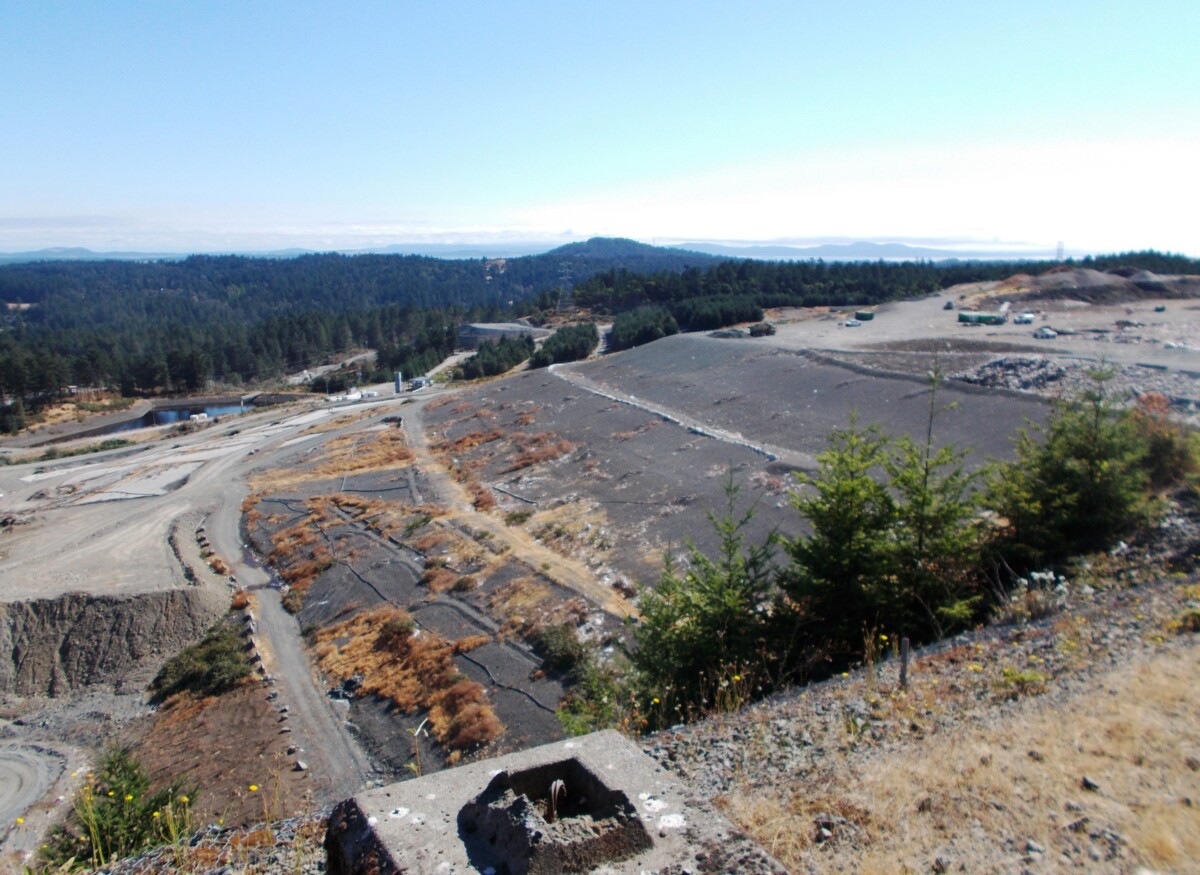
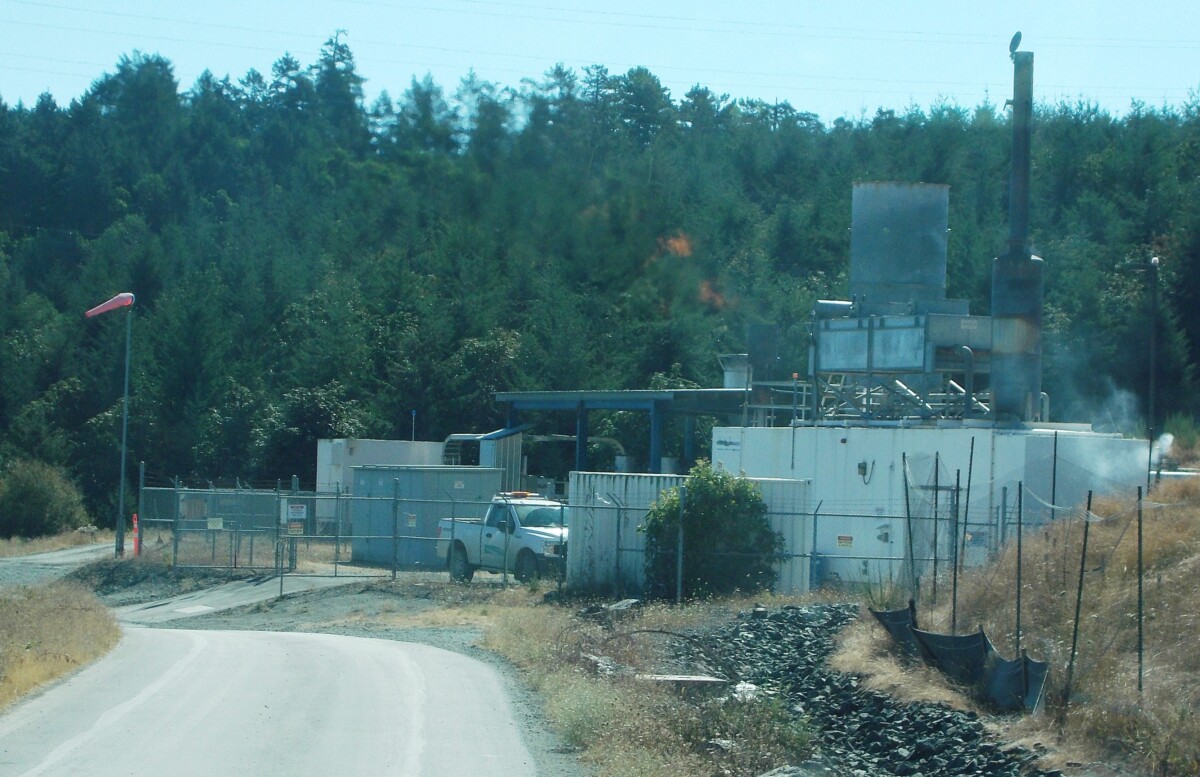
So one of the features that most intrigued me was the methane capture system – basically a series of pipes laid into and across the ever growing garbage mountain, feeding into an electricity plant – which powers (so far) about 1600 homes in the area, with plans for expansion. However, as long as food waste – the primary source of this methane – can be diverted into composting programs, the growth will slow.
 Our tour bus spent time sitting at the top of the current garbage mountain, so we could watch birds scavenging and scattering. Our guide told us that birds of prey (from the Cowichan Raptor Centre) come to keep order later in the year, and this program of Natural Predation is by far the most effective preventive measure they have found. The birds who feed on our garbage end up the worse for it because of consuming microplastics and toxins.
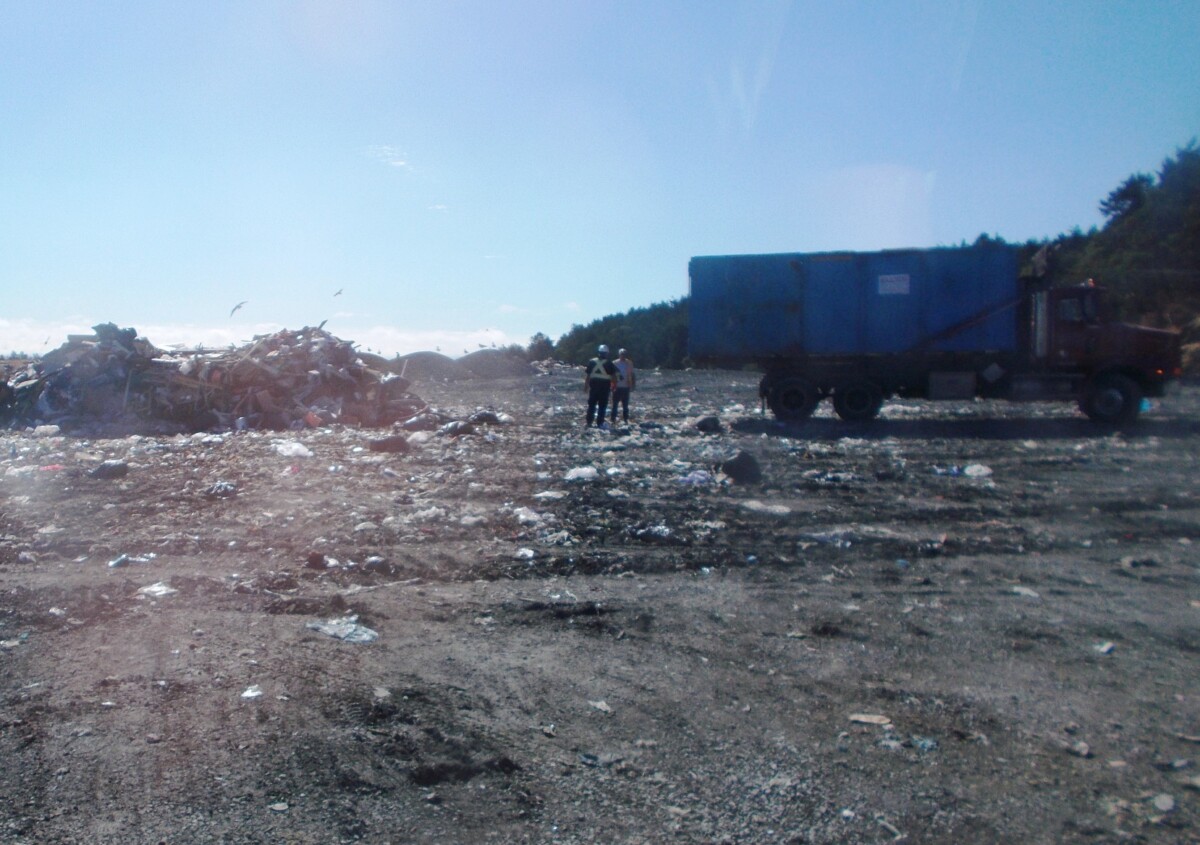
 I was also encouraged to see inspectors checking each load that was deposited by garbage trucks. Because space is limited by planetary constraints, our municipalities have strict guidelines about garbage vs recyclables and compostables; the guidelines are enforced through fining the trucks that pick up our bins. A 2016 study of Hartland found that organics, paper and plastics made up half of what is thrown away by locals; hence our blue and green bin pick-up programs.
Even so, unless consumers and businesses change their ways by reducing their annual waste load of 400kg/person to 125kg, Hartland expects to run out of space by 2045. At this point the waste will be destined to take over some of the local hiking and bike trails on a neighbouring mountain.
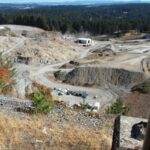
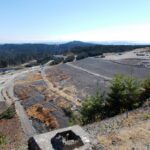
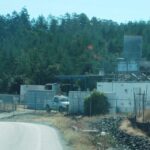
Adjoining the current mountain is a new valley being excavated ready to fill; in the background are sea, sky and mountains. And here’s what the power station looks like. There’s a nearby leachate pond as well, which is toxic fluid runoff, contaminated by
The landfill site is also a busy recycling centre, trying to reclaim as much as possible from consumer waste – people can bring in plastics, metal, clothing, paint etc to a public drop-off area, and the centre distributes and sorts it for whatever further life it might have. There’s composting available for larger scale drops, for a fee.
Here’s a closing thought: one of the items that has been deemed not recyclable is a damaged blue box!
-
Aeroponics in Victoria
Read Full Post: Aeroponics in Victoria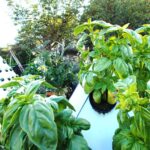
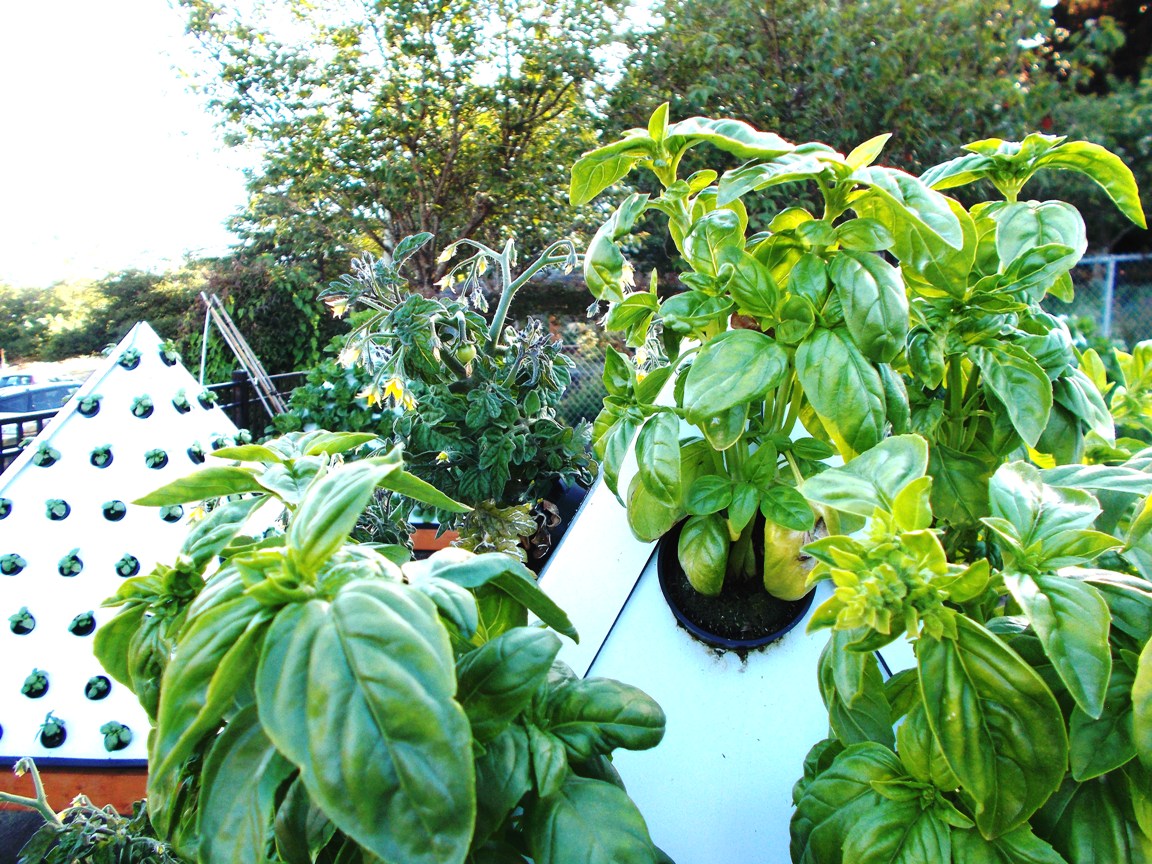
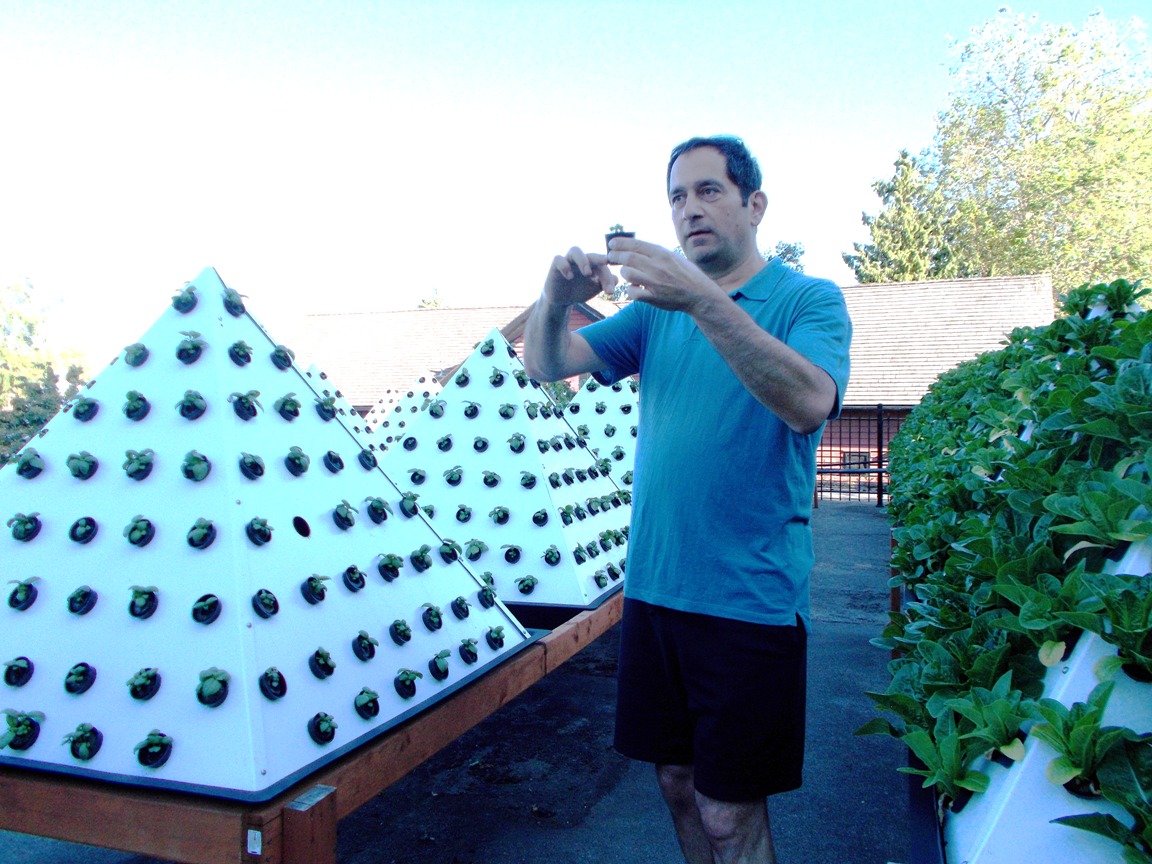
Basil and tiny tomato plants For the first time in a long while I went on a farm tour of sorts last Thursday. This one was a tour of an aeroponics project run by Harvest and Share Food Relief Society. It’s housed on the grounds of Victoria’s Government House, next to its vegetable garden and Victory Over COVID Garden.
While I am not generally a big fan of artificial growing media (more on that shortly) this one was set up with the worthwhile goal to provide fresh greens to local food banks and community kitchens during the summer growing season. Currently they’re growing basil, baby romaine and tiny grape tomatoes.
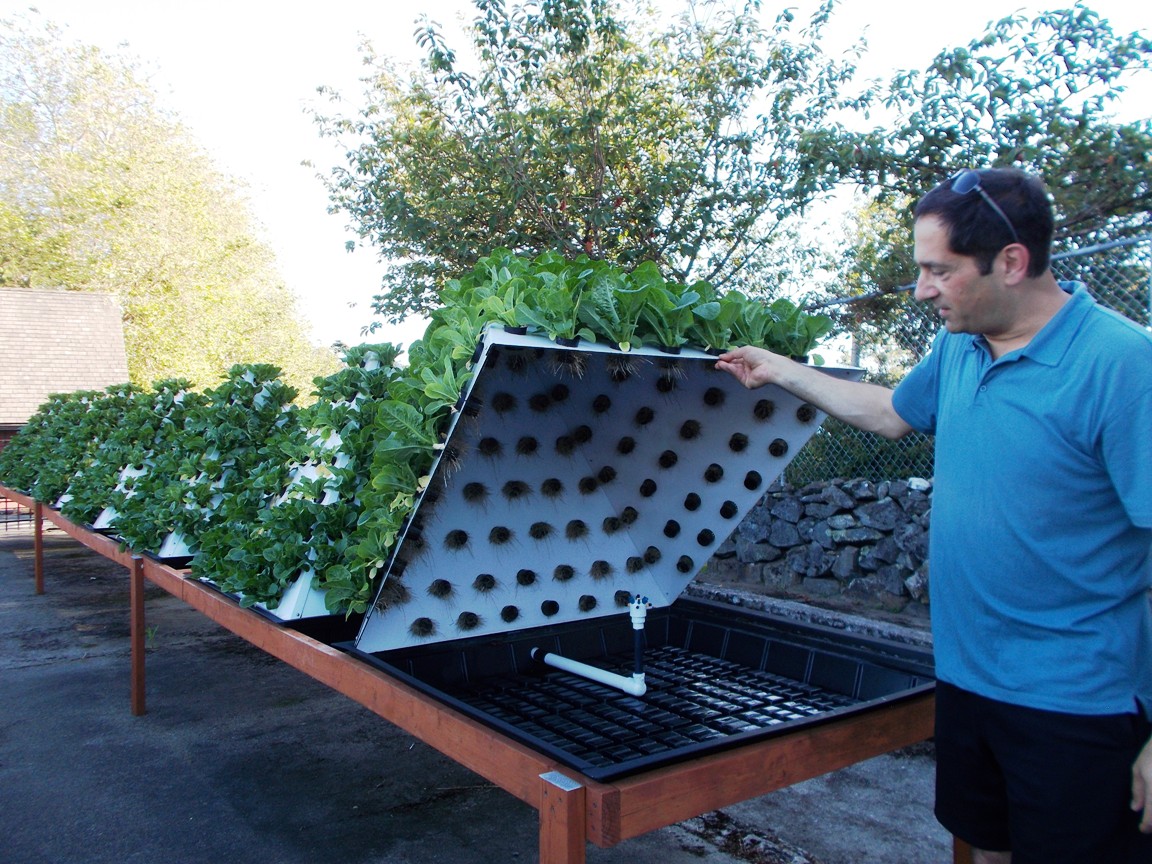
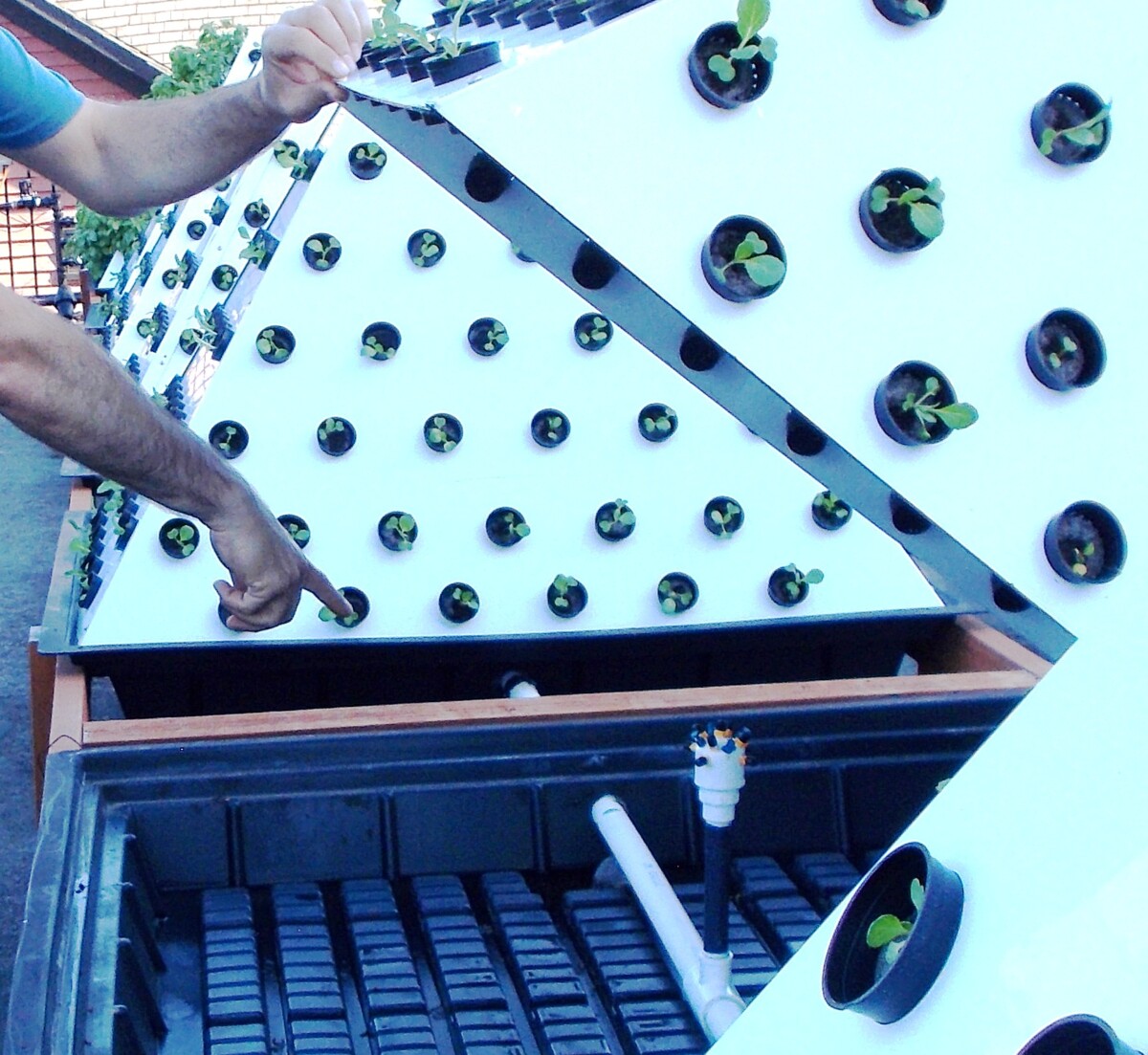
The setup involves aluminum pyramids with planting holes spaced 6 inches apart; each of the 25 planters can hold 136 plants. The plants are started in peat plugs, set into small plastic baskets that fit the planting holes. Foam (styrofoam) is often used in such systems, but can’t be cleaned or easily recycled. The system is lightweight and planters can be tipped up or moved to allow maintenance of the spray nutrient system that feeds them.
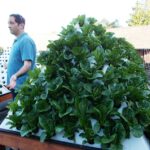
Baby romaine lettuce 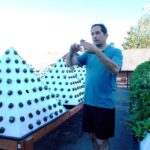
Planters & pots 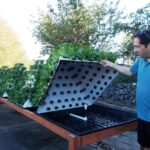
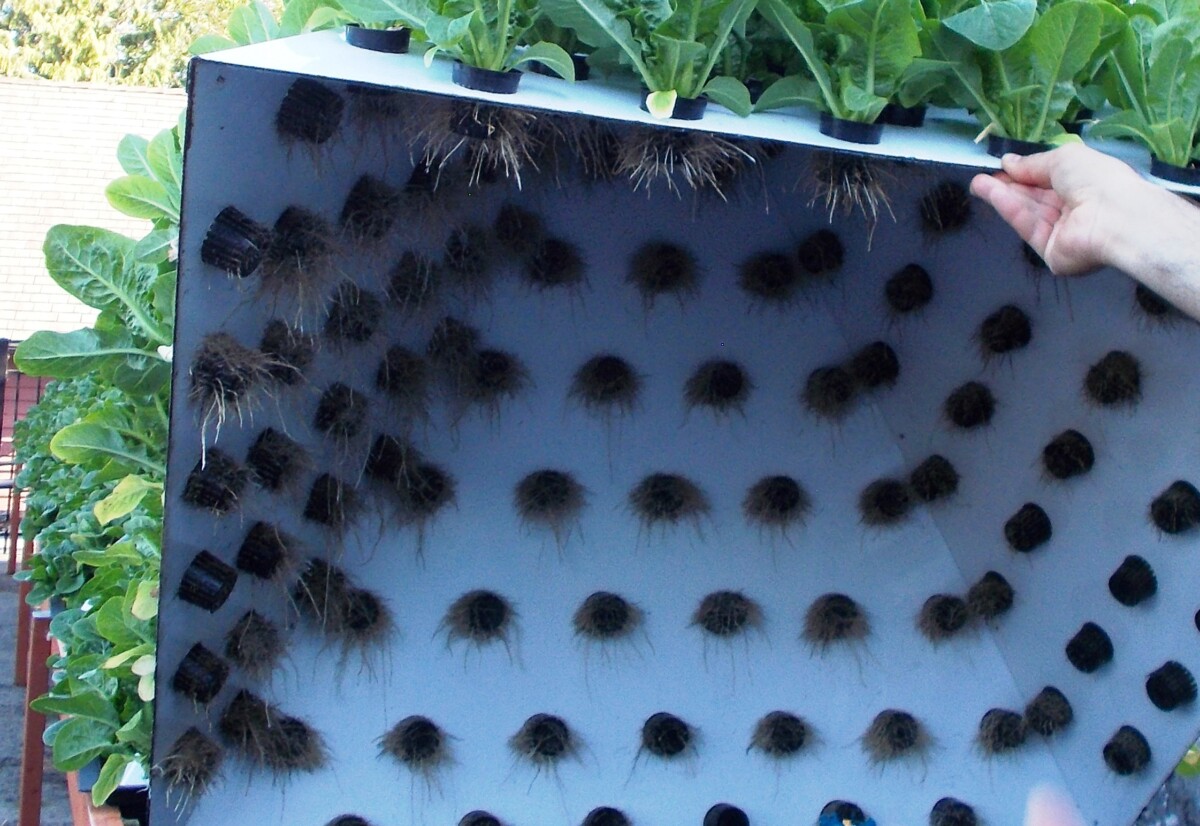
Plants seen from below
The plant roots extend into the growing space where they are misted with a liquid nutrient running through a pipe system beneath the planters, set on timers and propelled with a pump system. The excess liquid runs back into a collection bin where it is filtered and recycled. The nutrient liquid is changed at regular intervals, and the misting system needs checking and cleaning as it can get clogged.
Like many food growing innovations, some of the preliminary research into this method of food production came from the cannabis industry (Michael Pollen remarks on cannabis-grower-inspired horticultural innovation in Botany of Desire)
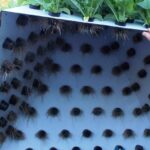
Plant roots within the pyramid 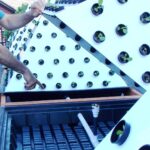
Misting head and pipes 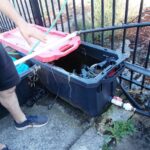
Nutrient recycling bin
The original design of this system was set up for growing basil; plants with larger leafy systems need to be spaced more widely. For example, the planters do work well with potatoes, which will extend inside the pyramid with the leafy matter above, but the plants need to be spaced more widely and/or positioned where their bushy leaves don’t intrude on what else is growing in the same planter. Other plants have been tried, including broccoli and squash, but speed and quantity are the goals in the current setup.
Hopes for the future are to extend the growing season by building a greenhouse (the system is located on the cement pad once used for the greenhouse that served the Government House kitchen).
There are compromises in every agricultural method. Aeroponics is admired for its clean, water-conserving and productive features and small footprint. The nutrients in the foods grown are believed to be similar to those in soil-based methods, although of course it depends which nutrient mix, which growing conditions, and which soil you are talking about.
However, held to a sustainability lens, this particular system does depend on peat plugs, plastic pots, plastic piping and electricity to run; and relies on an imported liquid nutrient mix. So it will never be free of external inputs as a soil-based farm can be. Done on a large scale, it can take farmland out of production and damage the health of the soil beneath its operations as readily as any other human activity. Moved indoors / into a greenhouse, additional requirements include heating and dehumidification systems = more electricity.
Growing without soil means that humans must attempt to mimic nature in providing the nutrients for plant growth; our species has determined there are 17 (or maybe 18) essential plant nutrients, but in the soil of course there are far more micronutrients, as well as microbial helpers working synergistically to nourish plants and build soil, adapted to different soil and climactic conditions. To my mind, there are as well question marks around the source (sustainability) of the ingredients in the nutrient mix, as well as the risk of diseases that can be swiftly circulated through a closed system.



Latest Posts
- Writers at Word!
- Sublime and Twisted Readings coming up!
- Sublime
- Good weather for reading
- The world, the world
- Sublime launch!
Aldeburgh Poetry Festival Barny Haughton BBC BC poets Berkswell blackberries Black Stilt Bologna book launch Borough Market Carlo Petrini Catalonia Cyrus Todiwala dairy Daunt's Books Dijon Edinburgh Fanny Bay Feast of Fields Food and Morality food history food journalism Jenna Butler lardo Malahat Review Michael Pollan Okanagan olive oil tasting olive trees Omnivore's Dilemma Our Food Our Future Oxford Parmigiano-Reggiano Planet Earth Poetry poetry poetry readings Poetry videos prosciutto salumi Sean O'Brien Suffolk ticks Wendy Morton Wired Writing Yvonne Blomer
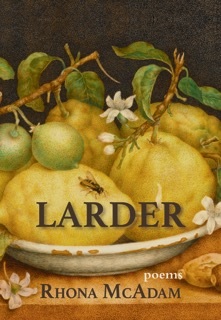
In her latest collection, Rhona McAdam navigates the dark places of human movement through the earth and the exquisite intricacies lingering in backyard gardens and farmlands populated by insects and pollinators, all the while returning to the body, to the tune of staccato beats and the newly discovered symmetries within the human heart.
“…A beautiful, filling collection, Larder is a set of poems to read at the change of the seasons, to appreciate alongside a good meal, and to remind yourself of the beauty in everything, even the things you may not appreciate before opening McAdam’s collection….”
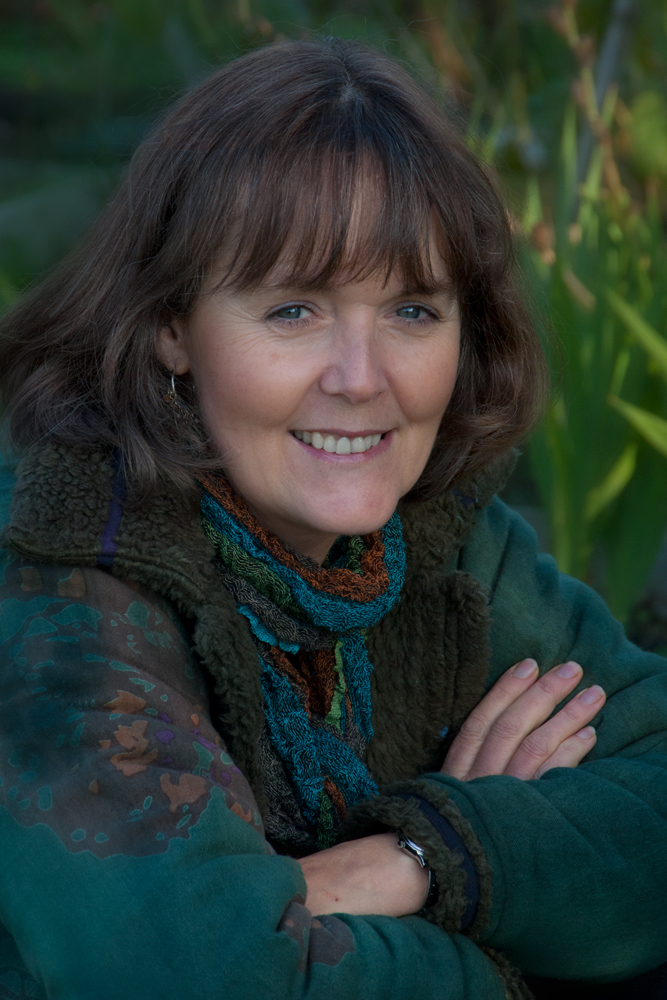
Rhona McAdam is a writer, poet, editor, and Registered Holistic Nutritionist with a Master’s in Food Culture from Italy and a deep-rooted passion for ecology and urban agriculture. Her work spans corporate and technical writing to poetry and creative nonfiction, often exploring the vital links between what we eat and how we live. Based in Victoria, BC, and available via Zoom, Rhona is always open to new writing commissions, readings, or workshops on nutrition and the culinary arts.