-
Pausing in Parma
Read Full Post: Pausing in ParmaSo I’m back in Parma, bracing myself for an earrrrrly train tomorrow. I’m going to Bra, which is not so very far but an absolute pig to get to by train. Four hours or so. Oh well. The destination will, I hope, be worth the pain of getting there: Cheese, glorious cheese.
I got here on Wednesday afternoon: left London where the generally fine weather I’d been grateful for for most of my stay so far had turned cold and grey with spitting rain. I sprinted down the street and got onto the airport bus with about three minutes to spare, made it to lovely Stansted in good time, and then killed it in various queues. The check-in queue was enlivened by a frequent occurrence at Stansted, namely the embarrassed departure of a pair of English holidaymakers who thought they were in the queue for Palma, Majorca. The endlessly unhelpful airport staff of course know all about the confusion – the word Palma is totally indistinguishable from Parma in the English accent over a loudspeaker – but make no concession to the weakness of travellers when making flight announcements. What fun!
My heart sank when I saw the number of Italian teenagers boarding the flight. We used to have to share buses to Colorno with this species on occasion, and in quantity they are among the loudest, most obnoxious and charmless creatures that walk this earth. But other than bolting out of their seats only seconds after a rather bouncy landing (and after a stern voice-of-god reprimand they hastily sat down again) they were surprisingly, gratifyingly well behaved.

Our welcome gift at the micro-airport was at the luggage carousel. The light started flashing, the beep sounded, and through the rubber curtain emerged… the guy who’d waved us into the passport control. He waved and smiled and then disappeared out the other curtain. I do love the way life can be so weirdly casual here.
All else in Parma is calm and quiet.

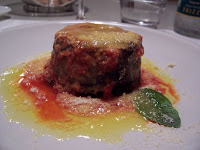
I have made lightning strikes on some of my favourite eateries – so happy everything is open again! Lunched at Sorelle Picchi and supped at La Croce di Malta (gorgeous torte of melanzane followed by a layered thing with potato and anchovy – interesting but a bit of a waste of a perfectly good anchovy I thought)

The meals have given me occasion to think about the matter of service in restaurants though. I’m thinking is it better to have friendly but inept service, which is more or less the case if you are recognised here, or snotty but correct service. Though usually the snotty service is also bad. So I’m settling for friendly. But it grieves me to see good restaurants losing points with new diners through simple ineptitude.
That having been said, I must praise once again my favourite chef in town, Davide di Dio, whose well deserved holiday seems to have given him some new verve; and I was pleased in the interests of his continued health and sanity to see he had more helpers on board at Ristorante Mosaiko. I hope they can keep up with him. I had a starter of Baccala on a wedge of what looked like a crouton
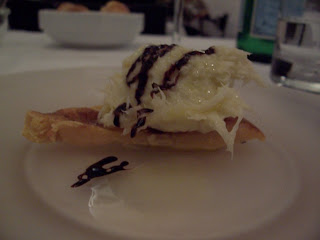
but turned out to be artichoke, drizzled with balsamico, yum: and I can honestly say I now see the point of Baccala. Then on to a primo piatto of prawns wrapped in crunchy blankets – Involtino di Gamberi Croccanti
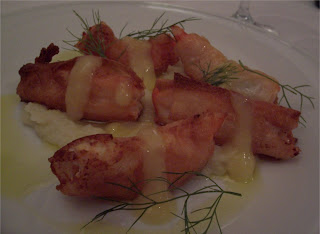
with a puree of fennel and lemon cream. Perfect. And then Rombo in crosto di patate alla zucca:
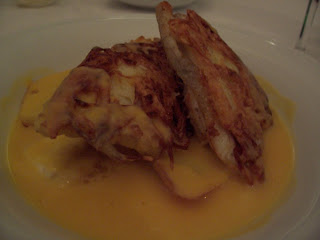
some beautiful turbot, perfectly cooked in a potato crust, docked on a few perfect roast potatoes in a thick orange sea of pumpkin soup. Since it was a night for overindulgence, and as I hadn’t had tiramisu since arriving in Italy, I thought I might as well. Very very nice. I went home well fed and looking forward to my next, and probably final, visit in November.
Tonight will be a quiet night of packing and resting.
-
London tasties
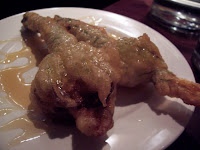
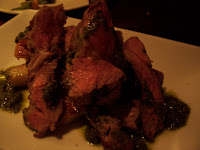
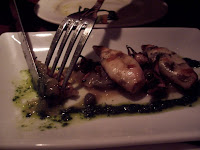
Read Full Post: London tastiesA couple of good chows before I left London this week. First, tapas at the Salt Yard, where some very tasty grilled bread with alioli was followed by some other things: padron peppers, stuffed courgette flowers stuffed with ewe’s milk cheese, lamb on roast parsnips,tiny squid…
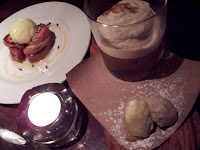
and then a pair of more than interesting desserts: a fresh plum jelly with sherry cream on top and warm madeleines on the side; and grilled peach slices topped with lavender ice cream, much nicer than chewing on a pot-pourri but with an oddly powerful similarity.
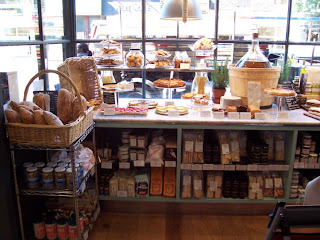
Then on Tuesday, a light lunch at Carluccio‘s – for me, some mushroom soup with pancetta

and an appreciative browse of the stuff in the window:
-
Look both ways
Read Full Post: Look both waysTime is slipping by without my being able to keep up. I’ll finish off Oxford when I can, but meanwhile here is what happened last week.
Monday night was a long awaited magazine launch reading at Foyle’s:
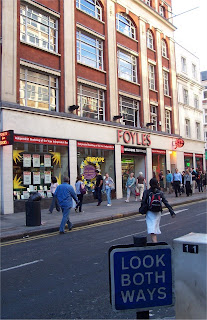
Seam is an excellent vehicle and the list of readers, though frightening in its length, was smoothly handled by its super-poet-editor Anne Berkeley, and we reached the break seamlessly, ha ha. Here’s the reading list (I can’t say I checked this against actual attendance but I know a lot of these people did read: Sue Rose distinguished herself, of course, and Mike Barlow was my surprise hit of the evening. I was glad as well for a chance to meet Todd Swift who has been on the edge of my acquaintance for several years, with more and more people known in common. Anyway, the other readers were: Gill Andrews, Pat Borthwick, Ken Champion, John Clegg, Chrissie Gittins, Allison McVety, Caroline Natzler, Julian Stannard, Kearan Williams.
After a bracing glass of wine, a bit of light mingling, and a chance to purchase copies of the magazine, we were treated to a second half reading by Sheenagh Pugh,
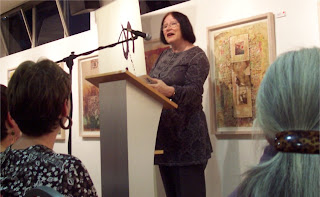
who demonstrated her position as an advocate for accessibility in poetry without sacrificing intelligence and interest. I particularly liked her ‘webcam’ poems. (Perhaps webcam poems will be the dream poems of the future?)
Afterwards some of us repaired to a Greek restaurant in Bloomsbury. What can I say: the half timbered interior was probably a pretty clear clue, but we were not in authentic Greek cuisine territory. I was curious to eat “Greek” restaurant food after my Crete experience, and it was about as unremarkable as I remembered, though filling. Anyway I needed to shoot off early to get myself tucked into bed for another day at London Food Link in the morning.
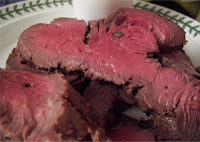
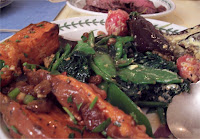
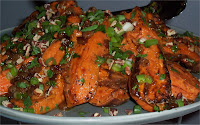
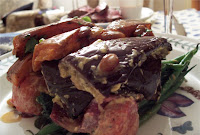
Which I did. And was there until Thursday when I finished up and went to meet Nancy to see Atonement, a well-made, grim but topical number I hadn’t been exactly looking forward to but thought I ought to see, as it’s much discussed. But I’m not a big fan of Ian McEwan, see. This film certainly demonstrated what I don’t like about his creative vision: it seems to be a matter of making each of his characters suffer as much as possible; there is no mercy and no forgiveness in his world. As I remembered afterwards, Alex’s mother once said to me that she only really wanted to see happy films anymore. I’m there too. Anyway Nancy and I took ourselves to Ottolenghi for some A-1 takeaway (the peppery gingery greenbeans, spinach and snow peas were particularly good). I’ve been following his interesting New Vegetarian column in the Guardian but was happy to see he serves some exquisite beef as well.
So that was kind of it for the week. Then I zipped off to Sussex for the weekend. The weather was beautiful: classic autumnal Englishness, clear and crisp. We went to a place called the Boathouse for lunch on Saturday, which was really hopping, with a big anniversary party on the other side of the room. But we had a sunny table overlooking the stream
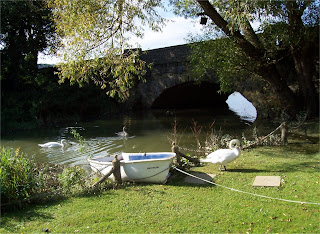
which was a nice setting with pleasant staff (even in the depths of Sussex it’s the New Britain: 1 each English, Polish, Latvian and Slovakian waiter and a Chinese maitre’d). Food not so good though: I encountered an ammonia-pong skate wing. By its soppy texture I’d say it was previously frozen, if not just plain overcooked, which might explain why the kitchen didn’t notice the problem. According to your sources, the ammonia develops either as an effect of poor handling when caught, or it is a symptom of a less-than-fresh piece of fish. Whatever the reason, it’s inedible at this point, so we sent it back and I had a bit more beef which was ok, and then after a little sit down on the wall by the water
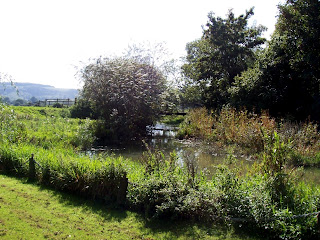
went in search of the sellers of some local free range eggs,
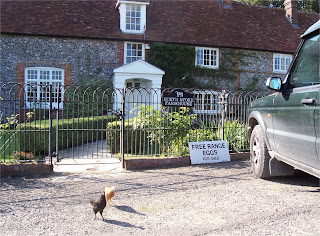
but they were apparently out, leaving a few chickens and a couple of dogs in charge. The church next door was cold and quiet

and after a look round and a cock-a-doodle farewell from the very fine rooster,
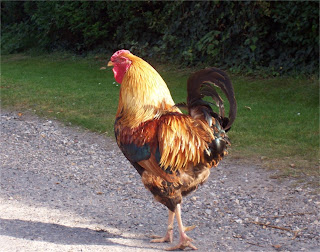
we left.


Latest Posts
- Writers at Word!
- Sublime and Twisted Readings coming up!
- Sublime
- Good weather for reading
- The world, the world
- Sublime launch!
Aldeburgh Poetry Festival Barny Haughton BBC BC poets Berkswell blackberries Black Stilt Bologna book launch Borough Market Carlo Petrini Catalonia Cyrus Todiwala dairy Daunt's Books Dijon Edinburgh Fanny Bay Feast of Fields Food and Morality food history food journalism Jenna Butler lardo Malahat Review Michael Pollan Okanagan olive oil tasting olive trees Omnivore's Dilemma Our Food Our Future Oxford Parmigiano-Reggiano Planet Earth Poetry poetry poetry readings Poetry videos prosciutto salumi Sean O'Brien Suffolk ticks Wendy Morton Wired Writing Yvonne Blomer
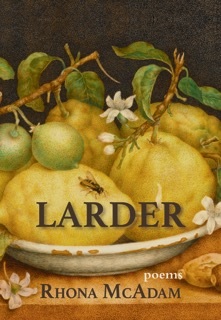
In her latest collection, Rhona McAdam navigates the dark places of human movement through the earth and the exquisite intricacies lingering in backyard gardens and farmlands populated by insects and pollinators, all the while returning to the body, to the tune of staccato beats and the newly discovered symmetries within the human heart.
“…A beautiful, filling collection, Larder is a set of poems to read at the change of the seasons, to appreciate alongside a good meal, and to remind yourself of the beauty in everything, even the things you may not appreciate before opening McAdam’s collection….”
Rhona McAdam is a writer, poet, editor, and Registered Holistic Nutritionist with a Master’s in Food Culture from Italy and a deep-rooted passion for ecology and urban agriculture. Her work spans corporate and technical writing to poetry and creative nonfiction, often exploring the vital links between what we eat and how we live. Based in Victoria, BC, and available via Zoom, Rhona is always open to new writing commissions, readings, or workshops on nutrition and the culinary arts.