-
Fungus not chocolate
Read Full Post: Fungus not chocolate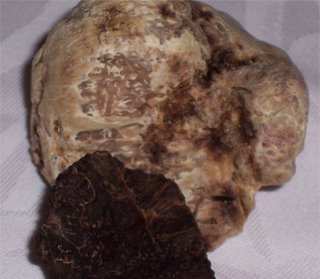
White (Tuber magnatum) and black (Tuber melanosporum) truffles.Truffles. Tartufi. What are they? Chocolates? Tubers, like their names? Mushrooms? An acquired taste? Why so expensive? A million questions, many appetites, much interest. And so it transpired two Saturdays ago that 22 of us jumped out of bed at some breathtaking hour of the morning and piled onto a bus, on the trail of the truffles.
An hour or two later, we disembarked in Savigno, scene of the annual truffle festival in November which I’d taken in soon after arrival in Italy, and where they take their truffles very seriously, as you might expect of a town whose population is 2000, about 200 of whom are truffle hunters.
We loitered in town for a while before heading to the forest, and had the good fortune to get a tour of the basement of La Bottega del Macellaio, a 110-year-old family business. We dodged the hams curing in the rafters to see some cured lardo which we’d heard about in our cured meats lectures; it was among the first cured meats to find protection under the Arca del Gusto, (Ark of Taste), a project of Slow Food which seeks to protect traditional food products. After at least six months of seasoning and curing it’s served in thin slices like any other meat product, eaten on hot toast.
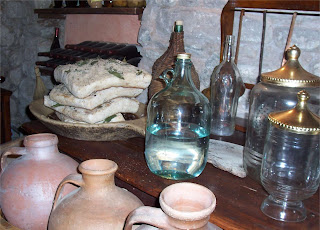
Lots of lardoOn we went. This has been a bad year for truffles, apparently: not enough rain, and ongoing and growing problem with too many hunters, too many inexperienced dogs, and poor forest management.

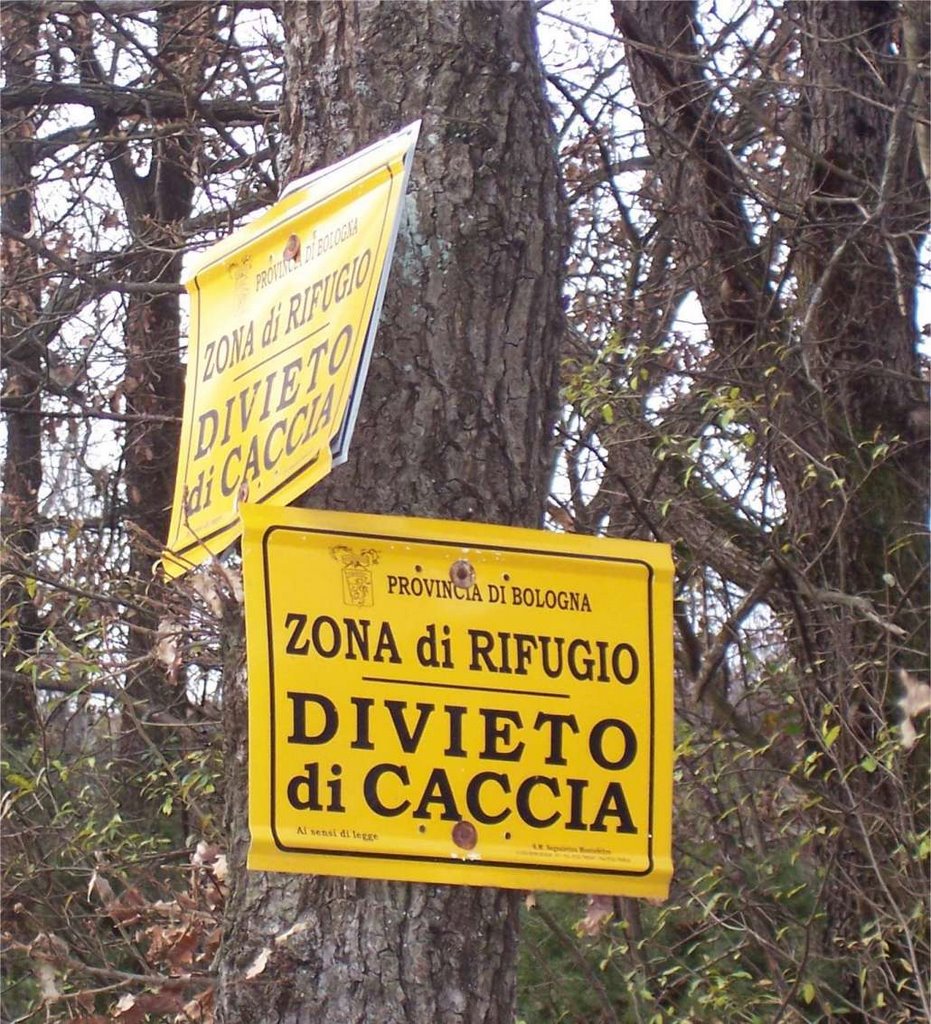
Forests in Italy mean hunters of many kinds, but we were, hopefully, not going to meet the kind with guns in this one.We were looking for Tuber magnatum, the white truffle, found mostly in northern and central Italy and also known as the Alba truffle, because the enterprising citizens of Alba thought to nab the trademark while they could, though it’s not found only there. There are other varieties in these woods as well, like Tuber melanosporum – the black truffle. Although their Latin name is Tuber, they are not tubers, vegetables like potatoes for example. They are uncultivable fungi, a symbiotic variety: they exchange mineral salts with tree sugars, which is why they are always found in the roots, or near them, of trees.
We met two kinds of truffle dogs too. The first, the Lagotto Romagnolo, resembles a poodle and is the star among truffle dogs.
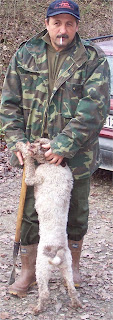

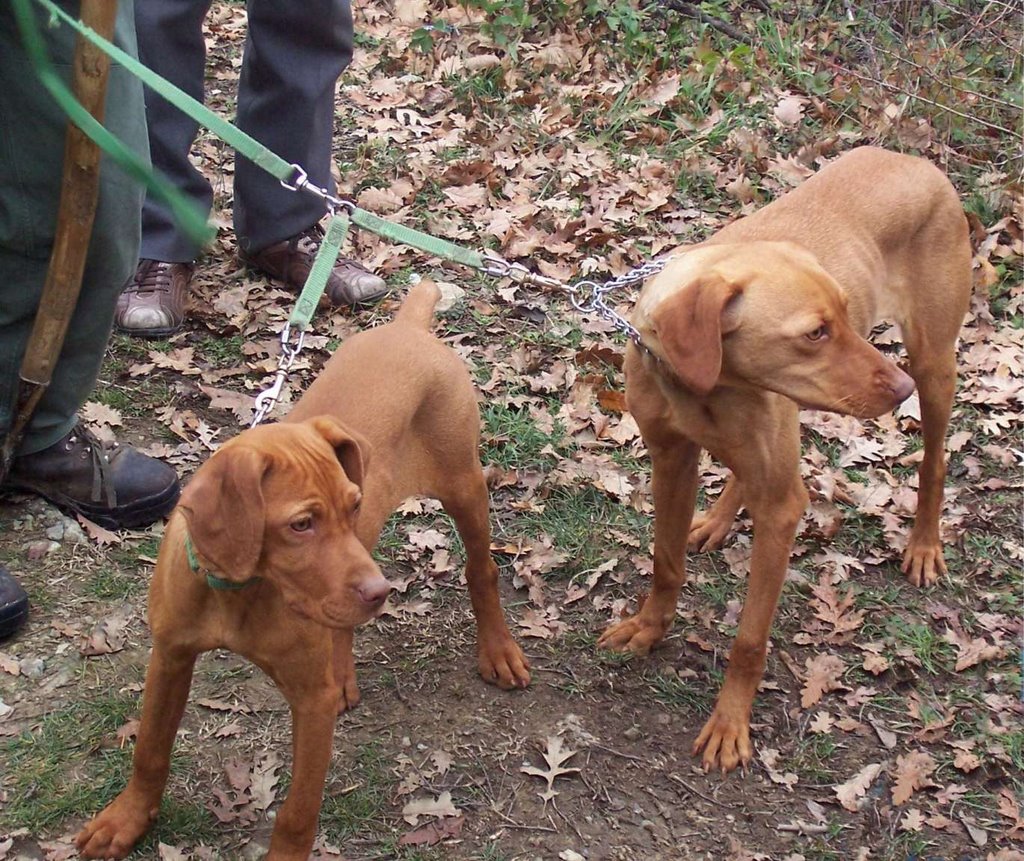
Pupa the dog and Adriano the truffle hunter.The second, Hungarian Vizla, is a short-haired hunting dog, and we had the chance to witness some truffle training of a very high spirited four-month old.
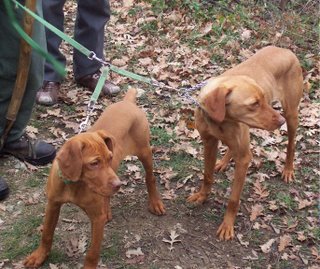
Rosita and Stella.Both our hunters used only female dogs, and this is apparently quite common. I’d heard that pigs were sometimes used for truffle hunting, but they apparently make a terrible mess – truffle hunting is a game of stealth and concealment, and any truffle-beds must be returned to a pristine state so that the truffles may re-grow there and other hunters not see the location.
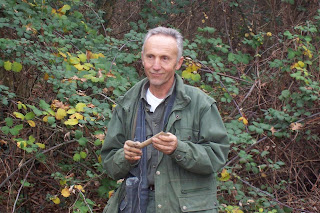
One of the tools used to dig truffles. The hunters carry long-handled short-bladed truffle spades, which double as walking sticks, and carry the sapin, a hand tool used to pry the truffle out of hiding.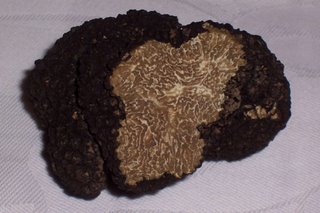
Black winter truffle.After the truffle hunt we stopped for lunch and a tour of an old flour mill, Il Mulino del Dottore, where we watched water-powered stone grinding of grain. They grind corn, wheat and chestnuts there, and the shop seemed to get a steady stream of local business. Our venue for supper, Da Amerigo, gets the flours for its pasta from this mill, which has been in operation since 1680.
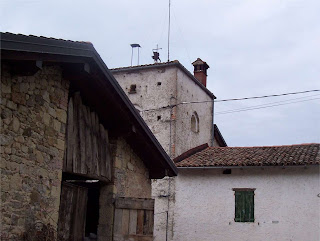
The cross on the roof of the mill, surmounting the crow which was the family emblem, advised pilgrims crossing the Appenines that they could find food and lodging here.We had a talk about truffles by longtime truffle merchant Luigi Dattilo at Appennino Funghi e Tartufi. He talked about the products – truffle oil, rice, pasta, polenta and pasta sauces flavoured with truffles – and then we watched a truffle dealer handle the merchandise – staggering to consider the monetary value of what we were observing.
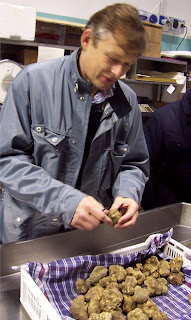
He chooses them by smell, feel, weight and appearance. Because his customers may shave them at the table they need to look nice. He says that a partially-nibbled truffle is not necessarily a reject, since it says something found this one good enough to eat!It was getting late but we found the time to taste some local wine at Vigneto San Vito and pick up a few bottles for our supper.
We then braced ourselves for a five course meal of truffles and seasonal goodies at Da Amerigo. Much loved by the Slow Food people, it’s described in the famed Osterie & Locande D’Italia guide as “a perfect combination of innovation and tradition.” Which I think we agreed with the moment the first course landed on our table.
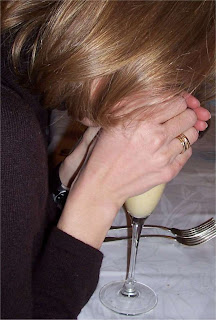
It was a soft, warm polenta served in parfait glasses, its surface layered with shaved white truffles which we stirred into the mixture to eat — after first enjoying the perfume. Beautiful.Swiftly followed by Parmesan gelato: parmigiano-reggiano cooked with cream, formed into gelato-sized balls, drizzled with some fine balsamico and served on a wee local flatbread. To die for.
Third starter – chicken and veal lasagne with black truffle shavings.

Mmmm… so happy…
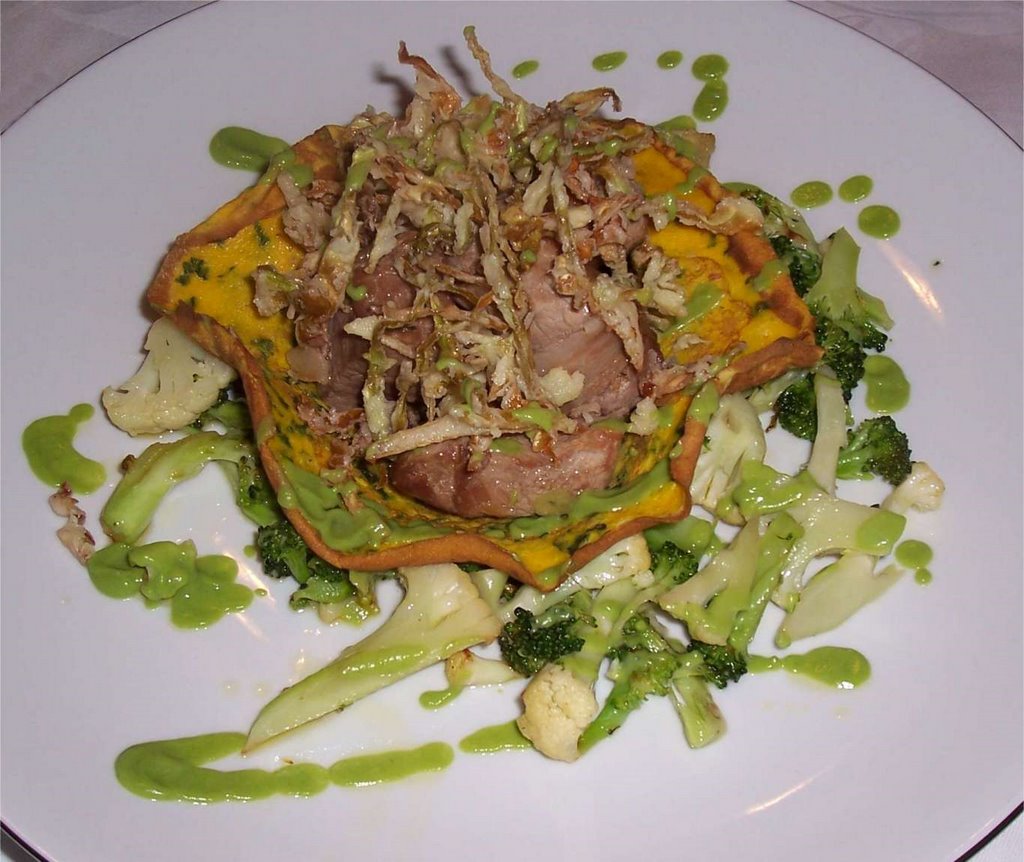
Main course – lots of lovely chili-tossed vegetables and nuggets of fresh local pork, girded in pancetta and crowned with frizzled cabbage.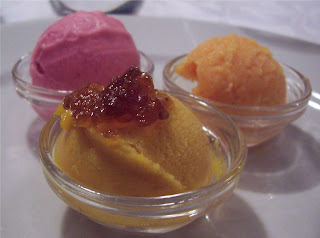
Dessert was a mercifully dainty, delicate and delicious gelato trio: pumpkin (zucca) topped with some orange marmelata, pomegranate (melograno) and persimmon (cachi).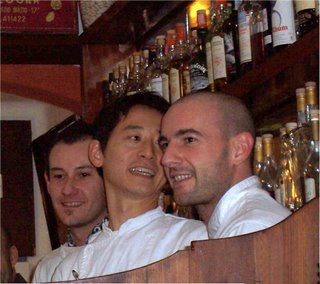
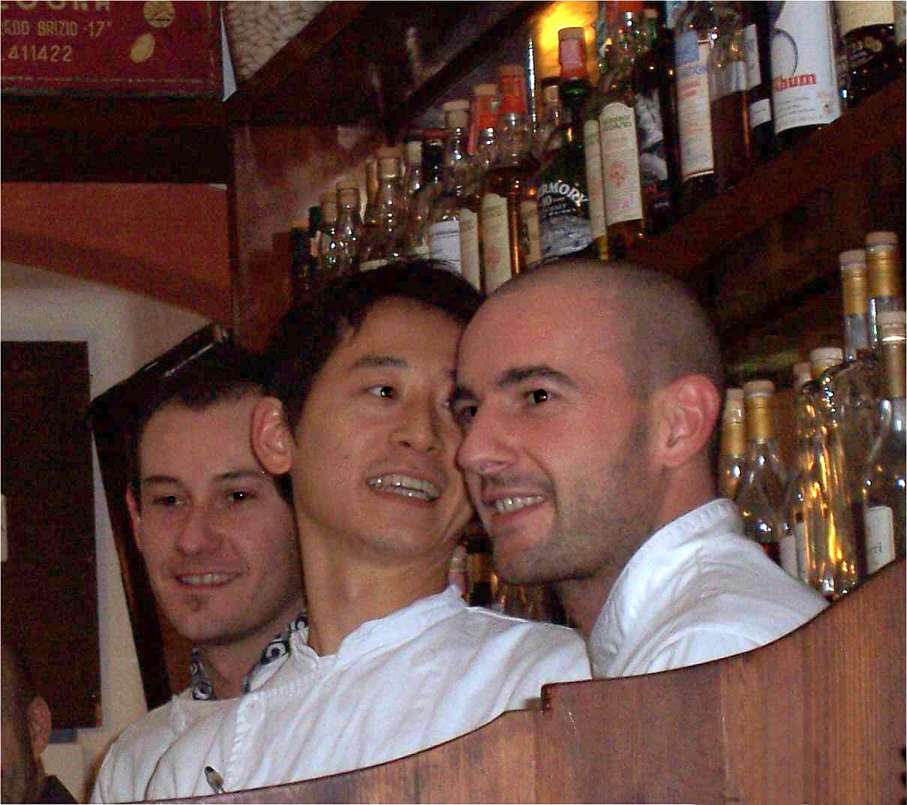
Praise to the chefs. -
London interlude
Read Full Post: London interludeJust back from a week in London – a busy frantic expensive delightful week, and a week without email or internet. A novelty, but I’m glad to be back at the keyboard. I have a piece to post about the truffle hunt last weekend but will put that up in the next couple of days.
Merry… Oxo?
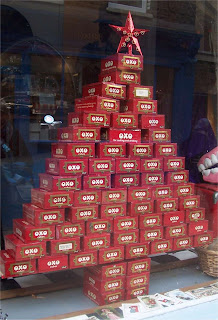
(from one of the dwindling number of antique dealers in Camden Passage, Islington, North London)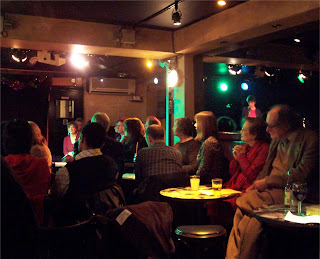
Quiz night at the Troubadour: I managed to crash the party five years after attending my last one. These are brilliant and entertaining evenings which feature themes, announced in advance so people can seek out a poem or write one for the event, and the readings are accompanied by ferociously difficult poetry quizzes. Last Monday was The Inexorable Sadness of Pencils. Here’s a taste of the quiz: What is Craig Raine describing when he says and the ground is full of pencil boxes? Name the Leeds-born author of these lines from The School of Eloquence… His home address was inked inside his cap/ and on every piece of paper that he carried. And who was he writing about?I was happy to see Catherine Temma Davidson for the first time in a long time. Her excellent first novel, The Priest Fainted, (still in print!) has a special resonance for my foodie life these days. She’s working on a second novel and says food figures in that one too.
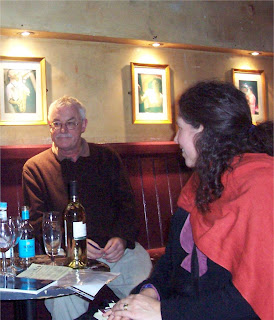
London poet Paul McLoughlin and poet-novelist Catherine Temma Davidson.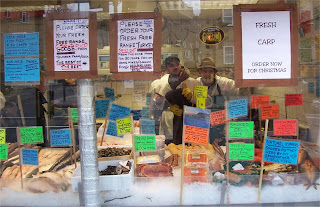
Steve Hatt, legendary fishmonger, on Essex Road, Islington.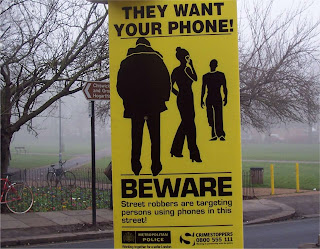
Fighting the neverending battle against street crime, with a taste of the week’s fog in the background. Outside Turnham Green station, West London.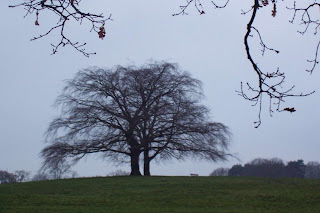
Hampstead Heath. A little teeny tiny bit of it.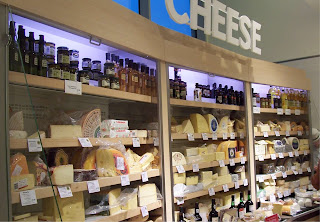
The big cheese at Waitrose, Brunswick Centre, near Russell Square.
Paxton and Whitfield, on Jermyn Street, been around a year or two. Cheesemongers to gentlemen, they say (–so where do the ladies shop?) and handy to Pink’s and Fortnum’s where you might like to browse on your way to tea at the Ritz, perhaps?
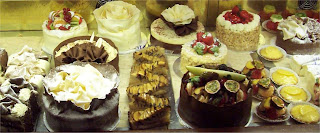
What we did and didn’t eat at Amato in Soho. Beautiful cheesy quiche and interesting salads (some rather middle-aged broccoli in there but otherwise good). Gorgeous pastries to admire through the glass on your way out.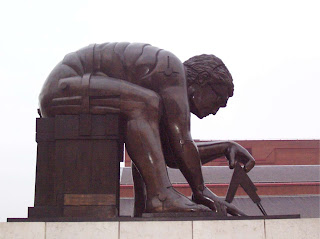
What would a visit to London be without a nod to Newton and a visit to the temple of knowledge – the British Library, one of my favourite places in the world. The caff’s not bad either.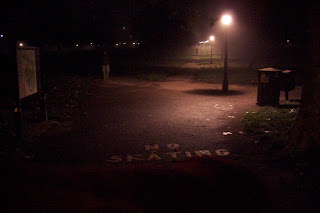
A foggy night on Primrose Hill.
And: buon natale to one and all. How it was looking earlier this evening in the Piazza Garibaldi, Parma. -
Where the milk comes from
Read Full Post: Where the milk comes fromSo today’s trip was to the dairy farm:
we got in the bus
to go to the farm
to meet the man
who owns the cows
who give the milk
that makes the cheese…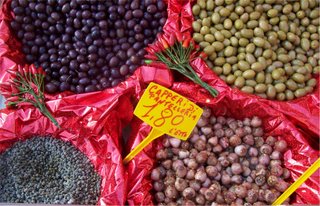
But before the farm, there was the Christmas market, and a stall selling small round edibles of a Sicilian persuasion.Then there was the farm. More round things.

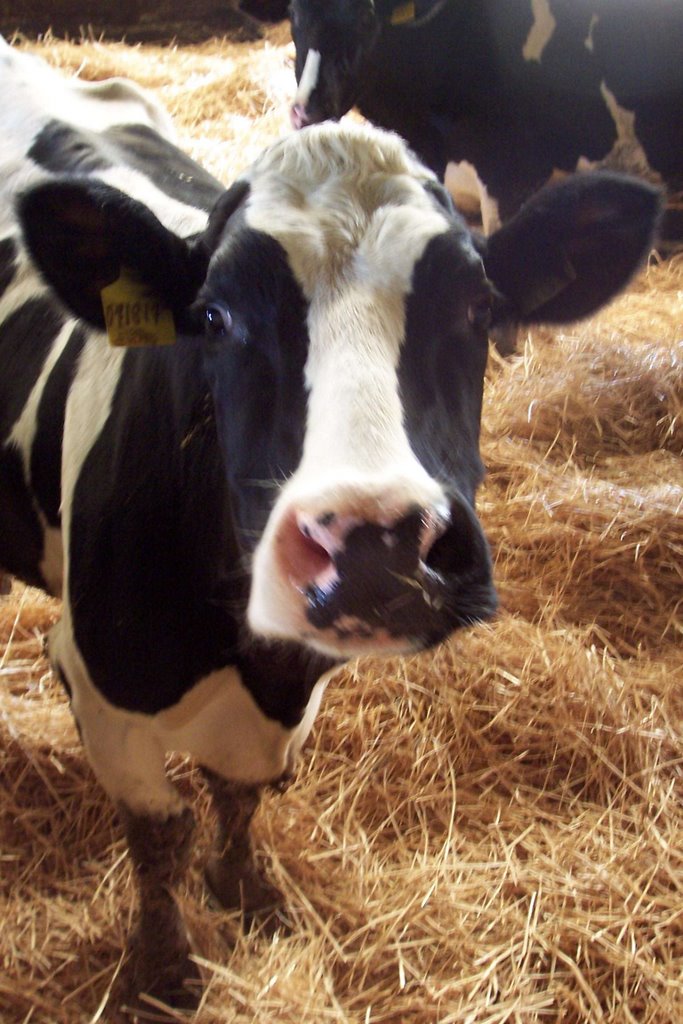
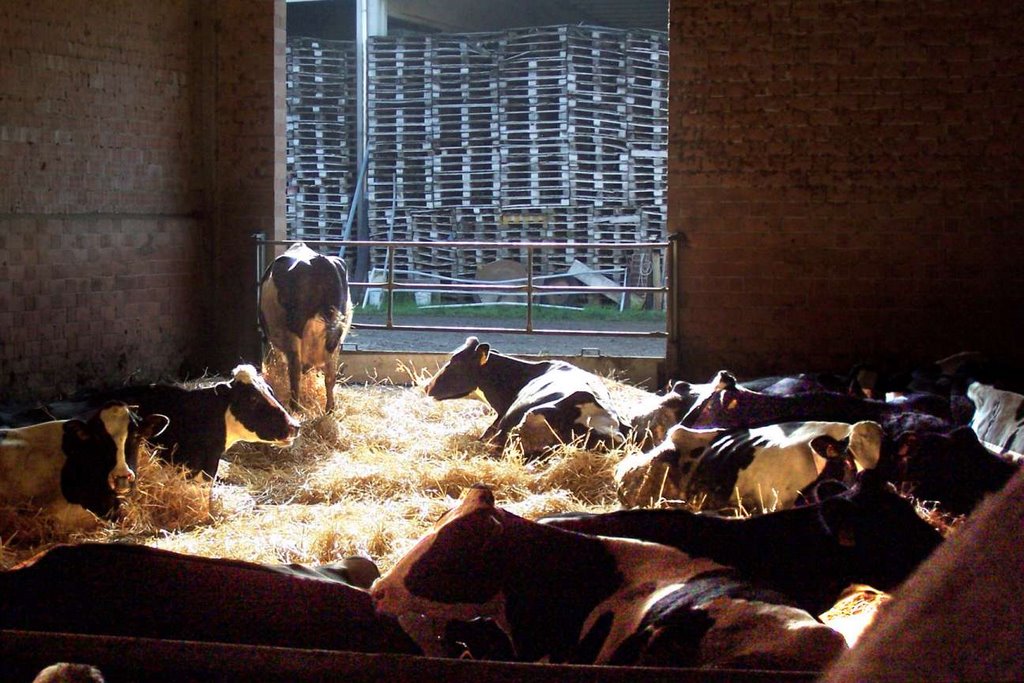
In addition to a persimmon tree, they had 200 cows, about half of which are giving milk at any time while the others are either growing up or getting ready to give birth. This farm had only Friesians, which came from Canada and the U.S. The farmer belonged to a dairy co-op of 11 farms and was very near his cheese factory, convenient for making that 2 hour deadline to deliver the milk. The other restriction on milking for Parmigiano-Reggiano is that the actual milking must be completed within four hours, start to finish (this farm managed it in one and a half hours, twice a day).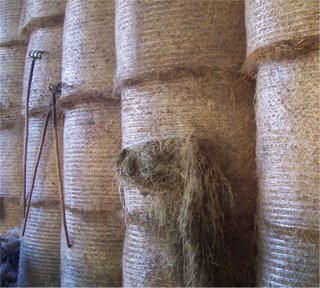
Hmm… these remind me of something I’ve seen lately… cylindrical, straw-coloured, stacked to the ceiling… The Parmigiano-Reggiano consortium obliges its dairy farms to produce – on-site – at least 50% of the feed for their cattle; this farm produces 90% of its feed. No animal products can be included in the diet of the dairy cattle, and no silage or wet grass, all to preserve the safety of the cheese, the reliability of the ripening process, and the purity of the flavour.
My fellow Canadian?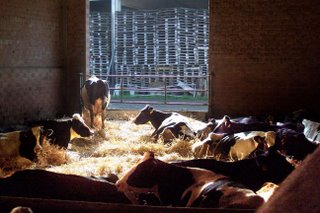
We observed the bedroom of the cows.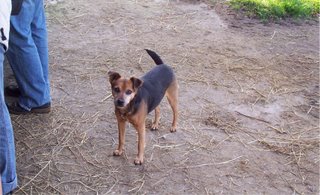
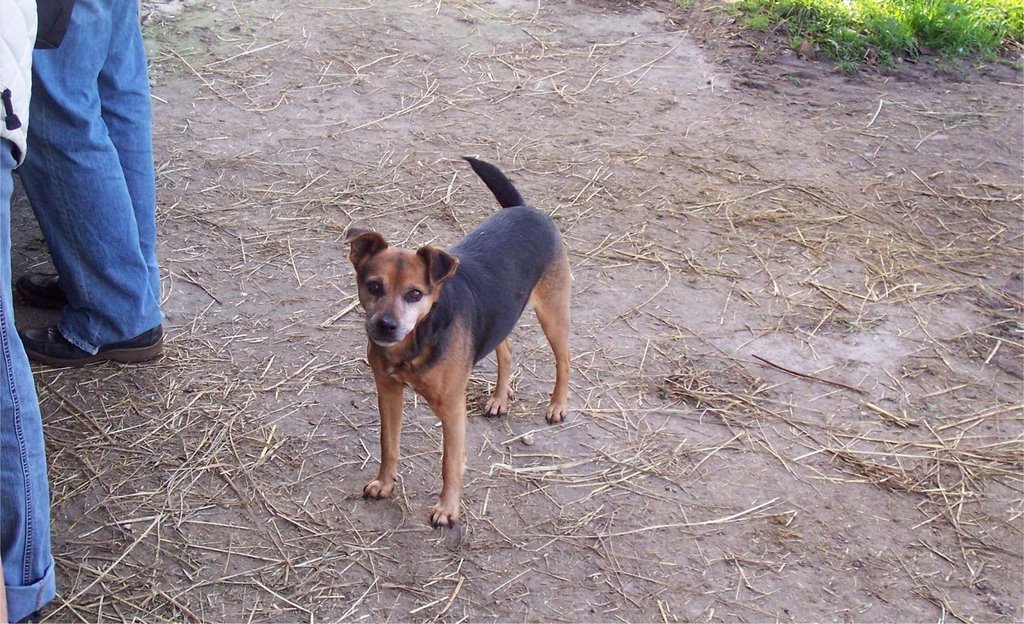
Scary farm dog.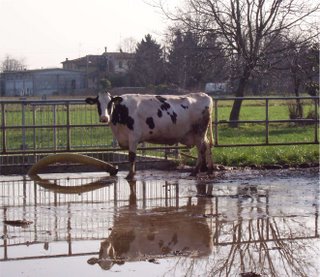
And on that farm there was a cow…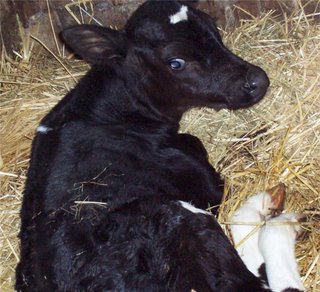
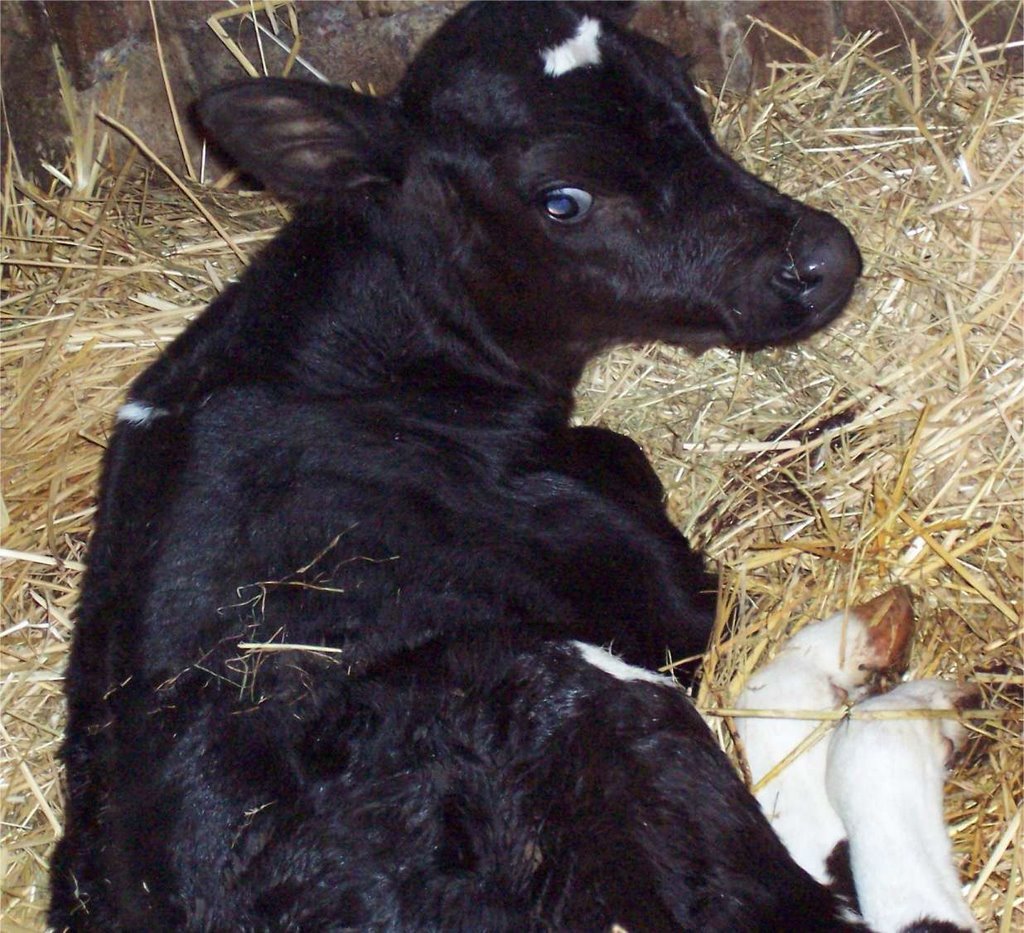
Why yes, as a matter of fact, I was born yesterday.










Latest Posts
- (no title)
- Sublime and Twisted Readings coming up!
- Sublime
- Good weather for reading
- The world, the world
- Sublime launch!
Aldeburgh Poetry Festival Barny Haughton BBC BC poets Berkswell blackberries Black Stilt Bologna book launch Borough Market Carlo Petrini Catalonia Cyrus Todiwala dairy Daunt's Books Dijon Edinburgh Fanny Bay Feast of Fields Food and Morality food history food journalism Jenna Butler lardo Malahat Review Michael Pollan Okanagan olive oil tasting olive trees Omnivore's Dilemma Our Food Our Future Oxford Parmigiano-Reggiano Planet Earth Poetry poetry poetry readings Poetry videos prosciutto salumi Sean O'Brien Suffolk ticks Wendy Morton Wired Writing Yvonne Blomer
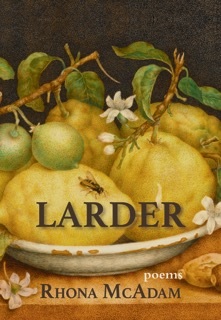
In her latest collection, Rhona McAdam navigates the dark places of human movement through the earth and the exquisite intricacies lingering in backyard gardens and farmlands populated by insects and pollinators, all the while returning to the body, to the tune of staccato beats and the newly discovered symmetries within the human heart.
“…A beautiful, filling collection, Larder is a set of poems to read at the change of the seasons, to appreciate alongside a good meal, and to remind yourself of the beauty in everything, even the things you may not appreciate before opening McAdam’s collection….”
Rhona McAdam is a writer, poet, editor, and Registered Holistic Nutritionist with a Master’s in Food Culture from Italy and a deep-rooted passion for ecology and urban agriculture. Her work spans corporate and technical writing to poetry and creative nonfiction, often exploring the vital links between what we eat and how we live. Based in Victoria, BC, and available via Zoom, Rhona is always open to new writing commissions, readings, or workshops on nutrition and the culinary arts.