-
Bread & Tulips
Read Full Post: Bread & TulipsI’d heard about the charming Italian film Bread & Tulips and finally got around to watching it; I am a Bruno Ganz fan from way back so was delighted to see him here playing a depressed Icelandic waiter in Venice…why not?
And I have been thinking generally about bread, even as the price rises due to the upturn in grain prices. One thing I learned something about over last summer was bread, having escaped the horrors of Emilia-Romagna’s all-crust-no-crumb-local-speciality pane comune
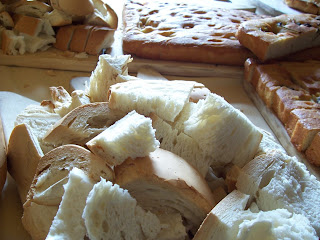
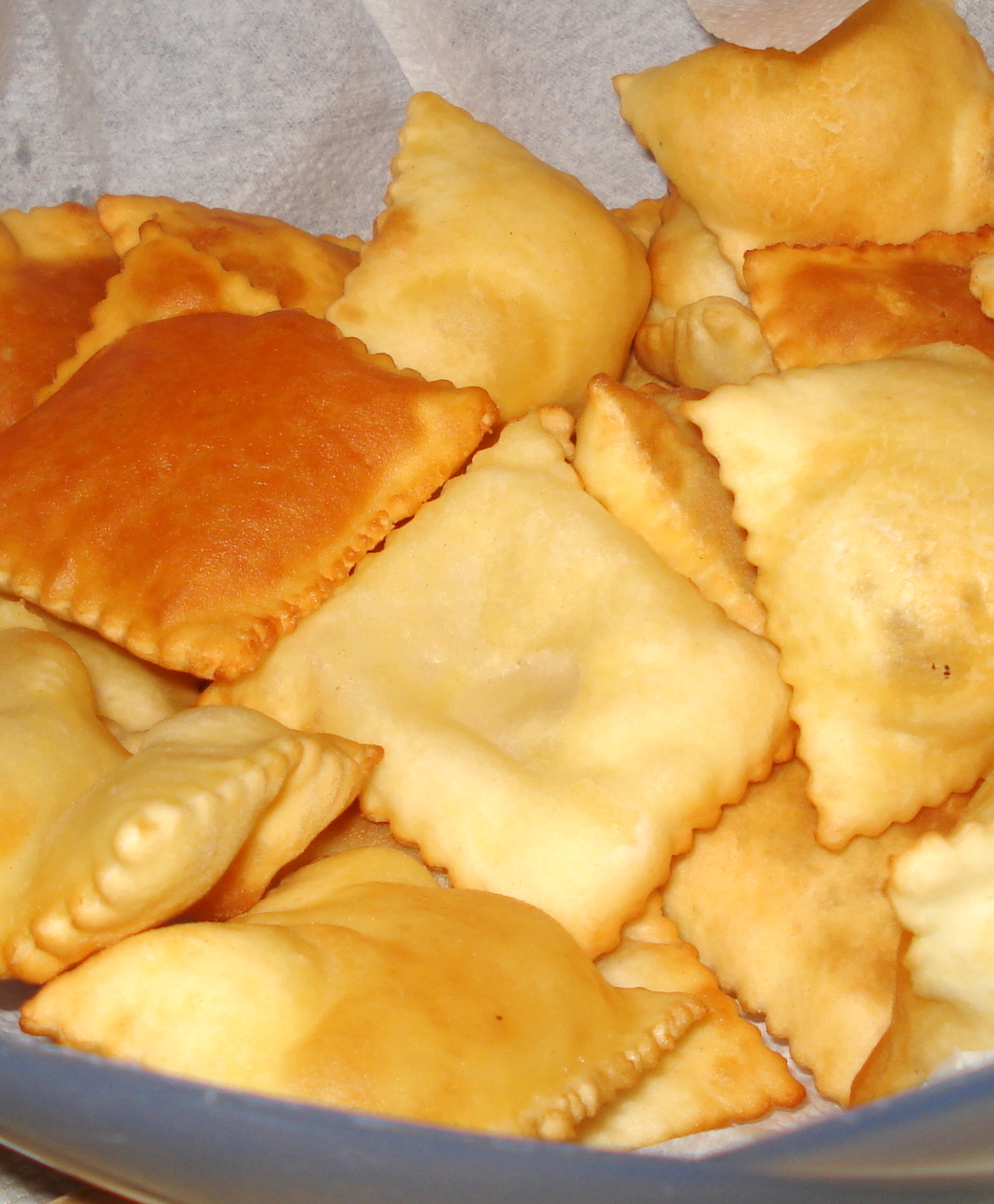
(and to be fair, the delicious chewy well oiled and salted focaccia, and its puffy little cousin gnocco frito/torta fritta)

and when in London indulged heavily in Euphorium.
There is a bit of a campaign going in the UK over real bread making, because it seems the industrial producers are putting a few extras in their loaves to make them appear fresher longer. Enzymes are one thing, amino acids are another (and from some questionable sources according to one writer I came across) and there is some toe-curling new jargon to learn while you’re at it: doesn’t ‘bread improver‘ sound like a dandy thing to put in your dough? I guess the trick is to sort out which of these are added as nutritional aids and which as materials that help bread makers to produce a more saleable, longer-lasting product. The latter by and large seem to make the bread less nutritious and less, well, bread-like, while the former has had its share of controversies around food adulteration.
There’s a British baker, Andrew Whitely, who is working hard to increase understanding about bread. He feels that some of the industrial bread-baking processes are behind the increase in gluten intolerance, and that if we were to eat properly made bread from sourdough cultures rather than high-speed leavening agents and their associated additives, there would be a substantial decrease in the wheat-related illnesses about.
I’ve just bought the American edition of Elizabeth David’s classic tome on the subject, English Bread & Yeast Cookery, which includes lots of background on the history and tradition of grains, milling and bread-baking over the centuries as well as contemporary and historical recipes.
-
Bonet and no doctor
Read Full Post: Bonet and no doctorA week ago, high up on Mt Washington, the view from the kitchen window looked like this:
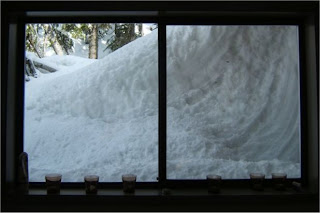
And down here at sea level this weekend, the view was more like this:

In other news, I got into a caramel crisis trying to make a version of bonet, but luckily found this tip sheet for caramel makers. Unluckily it didn’t save the caramel from solidifying into a solid mass. It did make me think about cajeta, though, which came into my life in my school days, thanks to kind fellow students from Mexico, and this variation, Dulce de Leche.
I had embarked on the bonet project because I have been reading Slow Food Revolution (very slowly) and was charmed by the amount of bonet consumed by the movers and shakers while they were forming the Slow Food movement. The book, naturally, lists the menus from important meetings during the movement’s early years, and enumerates as well some of the many, many fine wines consumed by what was from the outset a group of dedicated diners who were curious about wines, and evolved into eco-gastronomes along the way. And provides an early draft of the Slow Food Manifesto, which originally began:
The culture of our times rests on a false interpretation of industrial civilization: in the name of dynamism and acceleration, man invents machines to find relief from work but at the same time adopts the machine as a model of how to live his life. This leads to self-destruction; Homo sapiens is now so consumed by the cycle of production, consumption, and overconsumption that he has been reduced to the status of an endangered species… The fast life has been systematically proposed for or actually imposed on every kind of form and every attitude, as if in a risky attempt to culturally and genetically remodel the human animal…
Well, I’m doing what I can to live slowly. Unfortunately one of the things slowing me down is trying to replace my abruptly retired doctor with a new one, only this town is extremely short of doctors, and I’ve yet to find one who can take me on. Where can they all be? Why aren’t they flocking here? Evidently they are nowhere to be found in this country, as there are shortages of them across the country.
-
Bee here now
Read Full Post: Bee here nowSo yes, I started a bee-keeping class this week. I don’t have bees, have no immediate plans to get any, but was curious because although I have always eaten honey I didn’t really understand how it was produced. My classmates were a mixture of current and aspiring bee-keepers and honey-eaters like me.
We started things off right with a tasting (creamed, orange, mesquite, fireweed, salal & blackberry, plus a little jar of French honey– whose label said ‘product of Italy’) and then had a review of the equipment needed. Essential items include a smoker and a hive tool, for prying the lids off after the bees have sealed themselves inside with propolis. We admired different styles of veils and bee-wear (it’s white because the bees dislike anyone in animal colours – brown, black etc. – but don’t mind white or bright colours) and looked at different ways to configure and prepare the hives.
I found a bee blog to keep me interested between classes. And a blog that has photos of dogs in bee costumes (hey, is the internet useful or what?), and Bonnie passed along some information from Darryl Hannah’s website about Colony Collapse Disorder, which our instructor (a former hive inspector) thought had a lot to do with pesticide use in the US. It’s not as much a problem on Vancouver Island (though we’ll learn more about it later) which interestingly has had a bee quarantine in place since 1986, since this is a honeybee bee breeding stock area. (Incidentally, who knew that bees are currently the only insects that are artificially inseminated?)
Meanwhile, here on the Island, it’s nearly fruit blossom time, which means we need mason bees (honeybees don’t wake up round here till the end of May or whenever the temperature hits a steady 12.4c), also known as Blue Orchard bees. They are smaller, gentler and sleepier than honeybees; they do their thing with the fruit trees and then go for a long nap in a hole pre-drilled (by someone or something else) in some wood which they seal up like, well, masons! You can make their nests for them by drilling holes 5/16″ in diameter and 4″ deep, spaced ¾” apart in blocks of wood.


Latest Posts
- (no title)
- Sublime and Twisted Readings coming up!
- Sublime
- Good weather for reading
- The world, the world
- Sublime launch!
Aldeburgh Poetry Festival Barny Haughton BBC BC poets Berkswell blackberries Black Stilt Bologna book launch Borough Market Carlo Petrini Catalonia Cyrus Todiwala dairy Daunt's Books Dijon Edinburgh Fanny Bay Feast of Fields Food and Morality food history food journalism Jenna Butler lardo Malahat Review Michael Pollan Okanagan olive oil tasting olive trees Omnivore's Dilemma Our Food Our Future Oxford Parmigiano-Reggiano Planet Earth Poetry poetry poetry readings Poetry videos prosciutto salumi Sean O'Brien Suffolk ticks Wendy Morton Wired Writing Yvonne Blomer
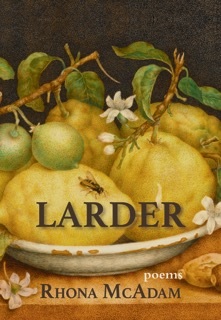
In her latest collection, Rhona McAdam navigates the dark places of human movement through the earth and the exquisite intricacies lingering in backyard gardens and farmlands populated by insects and pollinators, all the while returning to the body, to the tune of staccato beats and the newly discovered symmetries within the human heart.
“…A beautiful, filling collection, Larder is a set of poems to read at the change of the seasons, to appreciate alongside a good meal, and to remind yourself of the beauty in everything, even the things you may not appreciate before opening McAdam’s collection….”
Rhona McAdam is a writer, poet, editor, and Registered Holistic Nutritionist with a Master’s in Food Culture from Italy and a deep-rooted passion for ecology and urban agriculture. Her work spans corporate and technical writing to poetry and creative nonfiction, often exploring the vital links between what we eat and how we live. Based in Victoria, BC, and available via Zoom, Rhona is always open to new writing commissions, readings, or workshops on nutrition and the culinary arts.