-
Chocolate, gastronomy and Seedy Sunday
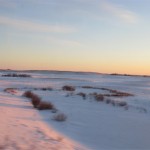 The writers and artists at the SWG winter retreat spend a lot of time thinking about food, and chocolate is one of the essential treats we administer to keep us healthy, happy and creative, meditating on all those dark sweet flavonoids as we search the cold white fields for inspiration. With Valentine’s day around the corner, it never hurts to spend time thinking about chocolate: what is it, where is it made and by whom? The industry has a poor record of exploiting producers and depending upon child labour, so if you want your valentine chocolate to mean what you think it does, you should have a listen to this and ask questions wherever you buy your chocolate. Fair Trade chocolate is always the best choice: if you don’t eat the rest, savour the thought that you are contributing to a better world, one calorie at a time.
Once you have bought the best, most fairly produced chocolate you can, you might like to whip up a little mousse. This one sounds like a good bet, particularly if you are catering for the dairy-intolerant. I was a little surprised to see the recipe credit go to Hervé This, one of the fathers of molecular gastronomy, as it’s remarkably low tech.
Speaking of gastronomy, I have just come across a 2010 broadcast of The New Gastronomy, from one of my favourite BBC radio shows, The Food Programme. It discusses academic training in gastronomy, starting with the University of Gastronomic Sciences, where I spent 2007 earning a Master’s of Food Culture & Communication (as documented on this blog). It’s an interesting look at the field of gastronomy and how and why it is being taught, though the Italian segment looks only at the three year undergraduate degree rather than the one year master’s that I did. (And I find Sheila Dillon‘s mispronunciation of Alice Waters’ name rather endearing). Other courses in the US and England are also discussed. It gave me a sense of renewed satisfaction that I had done the course.
Seedy Saturday takes place next weekend in Victoria which means winter is on its way out, and locals can start to plan for spring, buying seeds, swapping their home-reared seed and taking in a few talks about gardening. The event, which aims to encourage the sharing of seeds in the interests of protecting our country’s seed diversity, has got bigger every year, and I’ll be sorry to miss it, so am doubly grateful to have made it to the GTUF seed swap last month. GTUF will be at the Victoria event this year, joining other UFs (as we call our community food security groups) in a discussion of urban farming and food security.
-
READing and retreating
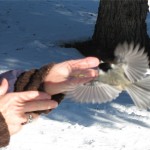 I am back at St Peter’s Abbey for another winter writing retreat with the Saskatchewan Writers Guild and CARFAC artists. Mild and sunny outside, with hungry birds loading up on free peanuts. When I first started coming to the winter artists colonies, about ten years ago, only the chickadees were bold enough to come to our hands; then the nuthatches took over. Today it was only chickadees. Indoors, the colonists, as once we were known (retreatants just doesn’t have the same ring) are unloading ideas and getting into the swing of a quiet time among the monks.
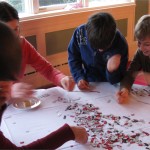
A week ago I attended an anniversary party for the Victoria READ Society, which promotes literacy to all ages. This event was a day of games held at Government House in Victoria, introduced by Steven Point who toured the proceedings and seemed to be enjoying it. Also present was David Bouchard, the society’s newly-appointed literary ambassador, who was sporting his Metis sash and entertaining youngsters on his collection of flutes. Elsewhere there was a hot game of magnetic poetry happening, and much else besides.


-
Year of the Dragon: seeds, storms and Sipsmith gin
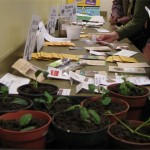 For the past three years, the Gorge Tillicum Urban Farmers have met in January, ahead of the larger “seedy” events in Victoria and elsewhere, in order to swap and share our locally grown seeds. It’s one of my favourite things about this neighbourhood’s delightfully mixed group of gardeners, chicken-lovers and food geeks. There’s no guarantee the seeds will sprout, no fancy packaging and no cost. The seeds mostly come from plants that GTUF members have grown in their own gardens and then saved, so are tested and adapted to our local climate. This gives them a big advantage over seeds purchased from major seed producers, who may be in a completely different growing zone from the consumer. Our seeds also come with an opportunity to tap the knowledge of the producer: could be someone with years of skill, or maybe just a delighted first-timer.
This year 60 of us were joined by affable seed guru Dan Jason, the visionary behind Salt Spring Seeds
 and the Seed and Plant Sanctuary for Canada. He’s also the star of Gardens of Destiny, a documentary about the importance of seed saving. Jason had put out a call a year or so ago inviting communities to consider establishing community seed banks, in order to preserve locally-adapted plant varieties (all seeds are under threat from seed patents and GMO contamination by seed multinationals) and to provide a hedge against food insecurity. Some of GTUF’s members ran with the idea and we’re in process of starting our first plantings for a seed bank this year.
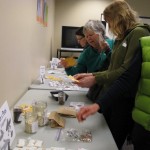 After the first half hour of picking and choosing for our gardens, we settled in to hear Jason speak and answer questions on seed saving and community seed banks. He began with a primer on why we should do this: in short, because our food seeds are at risk: multinationals have been ramming through GMO legislation despite the lack of testing for food safety, the potential health dangers from unlabelled GMO ingredients (which are in nearly every processed food you can buy in North America) and cross-contamination of our food supply with GMO. This puts our ability to grow safe and nourishing food at risk.
The good news is that Jason believes we can take matters into our own hands and make a positive difference, if we join with our neighbours to safeguard our seeds and learn to grow food:
“Community seed banks are an extension of something people have done throughout recorded history. With a community seed supply, people become the custodian of their own seeds; this empowers a community to grow what is wanted to eat there.”
He stressed the importance and also the ease of saving your own seeds:
“Plants produce a phenomenal amount of seeds. You mostly get so much back from a single plant it doesn’t take a huge number of people to do this. You maybe need just a couple of dozen in each community. You don’t have to be an expert in all seeds. Just go with the people who know tomatoes or beans or parsley, and make them the mentors for those varieties. They can advise and teach others about details of saving seeds in a particular family.
Jason was particularly encouraging about the prospects for urban farmers who are buffered from cross contamination by GMOs because of their distance from large farms, the only economically-feasible places GMOs can be grown. He spoke in praise of the higher yields that any small scale production can get (large scale industrial producers are handicapped by input costs, including fuel and equipment, and by the risks of monoculture; small growers can diversity to protect against crop losses, and can monitor and deal with potential problems more easily) and observed that growing in neighbourhoods we can share the strengths and weaknesses of our situation: the shady side of a street growing greens and the sunny side growing the heat-loving crops like tomatoes and peppers.
More of the same message seems to be contained in this book, The Vegetarian Myth: Food, Justice and Sustainability which I suspect is not the simple attack on vegetarianism that its title suggests, but more of what its subtitle says. A preview in this video:
And finally, I will be nursing myself through the dragonly blasts of wind and water that have started this year with sips from a precious bottle of Sipsmith Gin, made in Hammersmith, London which I brought back from the UK. I’d heard a bit about on a Radio 4 program that talked to artisanal gin makers in London and am looking forward to taste-testing it against my favourite local brand, Victoria Gin.
Latest Posts
- Sublime
- Good weather for reading
- The world, the world
- Sublime launch!
- Planet Earth Poetry – Readings by Volunteers, Victoria 2026
- Poetry at the Goldfinch
Aldeburgh Poetry Festival Barny Haughton BBC BC poets Berkswell blackberries Black Stilt Bologna book launch Borough Market Carlo Petrini Catalonia Cyrus Todiwala dairy Daunt's Books Dijon Edinburgh Fanny Bay Feast of Fields Food and Morality food history food journalism Jenna Butler lardo Malahat Review Michael Pollan Okanagan olive oil tasting olive trees Omnivore's Dilemma Our Food Our Future Oxford Parmigiano-Reggiano Planet Earth Poetry poetry poetry readings Poetry videos prosciutto salumi Sean O'Brien Suffolk ticks Wendy Morton Wired Writing Yvonne Blomer

In her latest collection, Rhona McAdam navigates the dark places of human movement through the earth and the exquisite intricacies lingering in backyard gardens and farmlands populated by insects and pollinators, all the while returning to the body, to the tune of staccato beats and the newly discovered symmetries within the human heart.
“…A beautiful, filling collection, Larder is a set of poems to read at the change of the seasons, to appreciate alongside a good meal, and to remind yourself of the beauty in everything, even the things you may not appreciate before opening McAdam’s collection….”
Rhona McAdam is a writer, poet, editor, and Registered Holistic Nutritionist with a Master’s in Food Culture from Italy and a deep-rooted passion for ecology and urban agriculture. Her work spans corporate and technical writing to poetry and creative nonfiction, often exploring the vital links between what we eat and how we live. Based in Victoria, BC, and available via Zoom, Rhona is always open to new writing commissions, readings, or workshops on nutrition and the culinary arts.
