-
Crete part 4: phyllo finale
Read Full Post: Crete part 4: phyllo finaleThe Crete trip was drawing to a close. We moved along to Rethymnon on Saturday, via the National Agricultural Research Foundation in Messara, where we had a talk from another gracious speaker, Dr Manolis Kambourakis
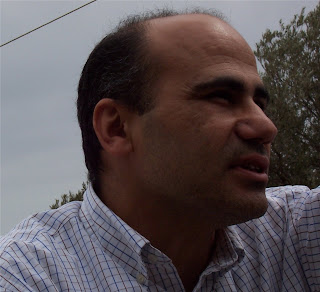
who talked about some of the issues supporting the growth in organic olive farming in the Messara Valley; the most urgent of which was the degradation of natural resources such as water.We enjoyed another Cretan lunch,

complete with koukouvaja (rusks with tomato and fresh cheese), tzatziki, halloumi and Greek salad. Afterwards he took us to a viewpoint to see the ancient ruins of Phaistos and the sweep of the valley with its new crop of greenhouses.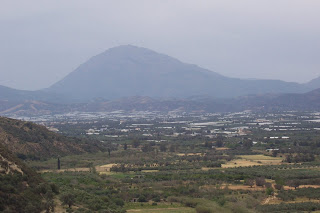
On to a cooking demonstration by our evening’s host, Othonas Hristoulakis,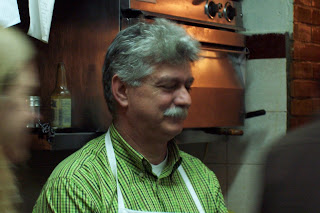
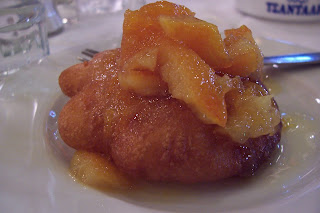
who showed us how our meal would be shaping up. Salad, halloumi, baked feta and lamb with artichokes were on their way, with a lovely little fried pastry with candied oranges to finish.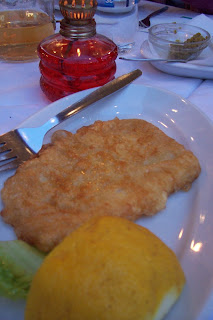
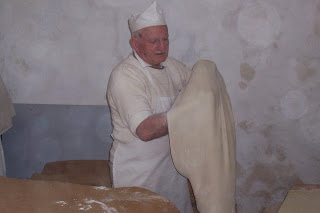
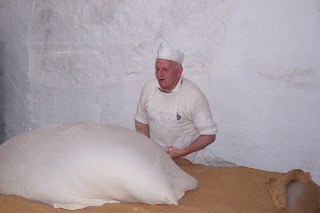
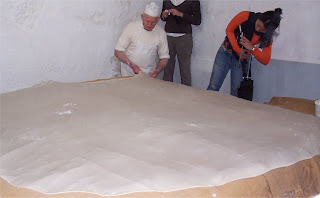
But first — as we had come to understand, there is always one more thing to see, just as every meal has one more course we weren’t expecting. We navigated a few narrow streets away from the restaurant to watch a demonstration of the noble art of phyllo making. The rounds of pastry have been made in large circles; the fun comes in when it’s stretched in a seemingly effortless process, much like making a bed and tugging the sheets gently until they cover the required space. Forty or fifty years of practice is all it takes…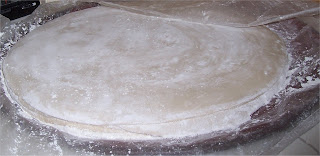
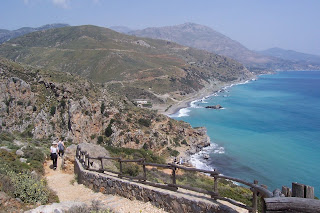
We had a day off on Sunday, and some of us spent it at the beach in south Crete: first at Palm Beach, near the Preveli monastery,
and then a scary drive along a narrow gravel cliffside road to Ligres, where a fabulous beach beckoned while our seafood was grilling.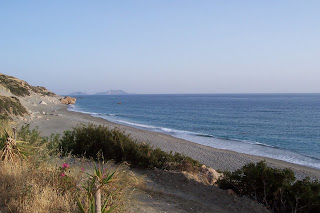

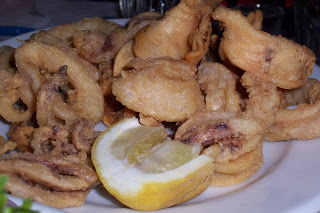
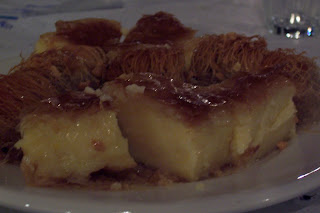
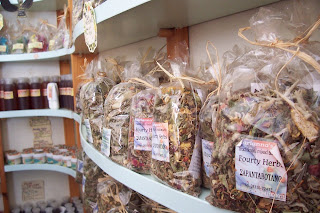
And then, by gum, it was our last day. We dropped into the village of Maroulas to visit a herbalist, Marianna, where we bought remedies for all that ailed us,
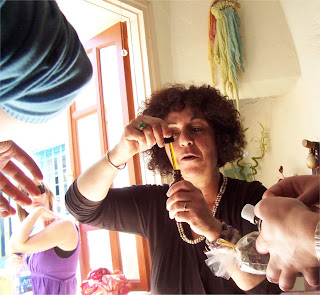
and then pressed on back to Amari where we met again our friend Katarina the potter, who welcomed us with cheese and raki and biscuits made from wine must, and warm cheese fritters we ate with honey. She showed us some of her wares and let us have a go.


Finally: supper in Rethymnon, the night of Too Much Food…

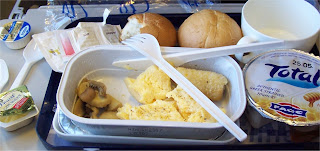
After which a group of hardy souls managed an hour or two round a beach fire before heading back to the hotel to rest up for morning.And as if a 4am departure wasn’t enough to tell us it really was over, we had to face this abomination on Aegean Airlines at breakfast time. At least the yogurt was good.
-
Crete part 3: shepherds, cheese and village feast
Read Full Post: Crete part 3: shepherds, cheese and village feast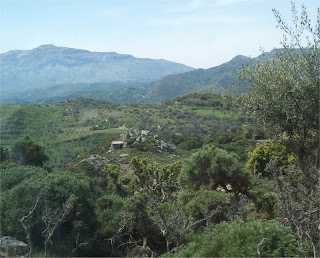
One morning we ascended a steep, gravel road and shortly found ourselves a lot of the way up a mountain, at an open-air milking parlour.
The goats were corralled and driven at intervals by a pair of well trained dogs towards the shepherds who wrangled them into position, milked them and sent them off to spend the day on the mountainside.


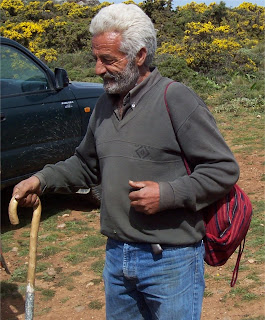
Our host models the traditional shepherd’s bag – which used to include one essential you don’t see much nowadays: a mending kit to allow them to stitch up their boots and clothing to get through the weeks and months they might have had to spend in the mountains.
He produced platters of fresh cheese, home made biscuits, and a bottle of raki. We were told we had to eat all the cheese. So we ate cheese.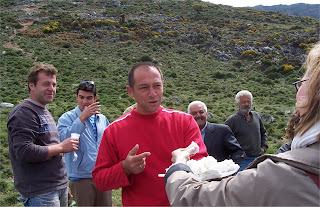
And we ate cheese.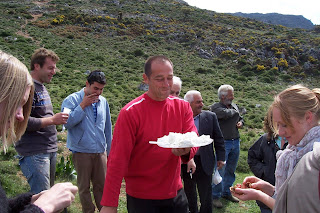
And we ate a bit more cheese.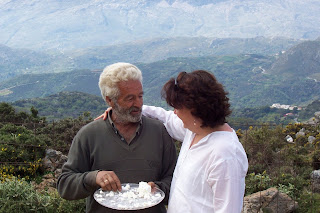
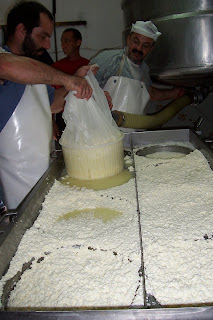
And then we were down to the last piece of cheese. And when that was gone, it was time to see how it was made, so we descended again and visited – what else? – a local cheesemaker.The milk has been coagulated, the curds have been cut, and then put into baskets to drain and firm up into cheese.
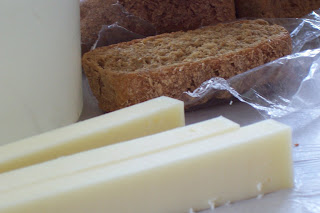
Afterwards, we were offered a very tasty gruyere-style cheese, Graviera, served with rusks (paximathia) and raki. And then, full of cheese, were called away to lunch.
Talk about a village welcome!
Men make fire..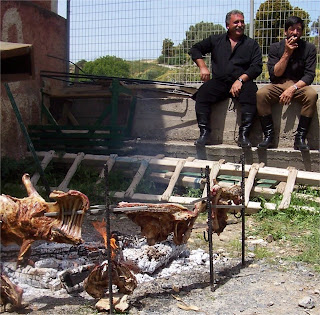

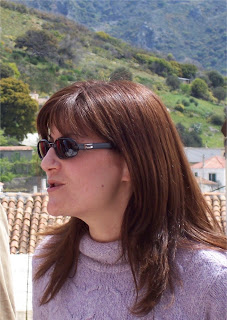
Popi, who organised the cooking, read us a poem of welcome. The four-line poem is a popular and traditional poetic form on Crete, and ideally sized for inscription on the blades of the knives that form part of the traditional costume for men.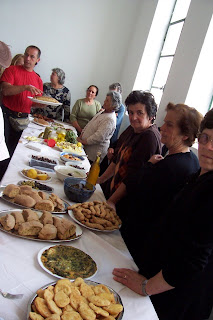
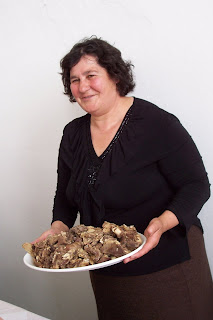
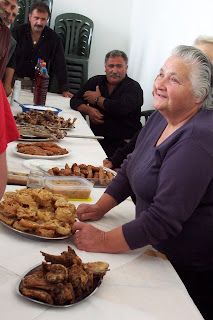
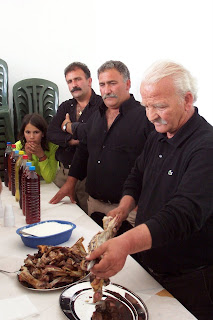
We were walked around the room, meeting the people behind the dishes, admiring the dishes, and finally eating the dishes. As Kostas said, the beauty of the event was not just the generosity of the welcome or the extent of the food that had been prepared for us, but the fact that it had been made from what these men and women had grown, raised or foraged themselves.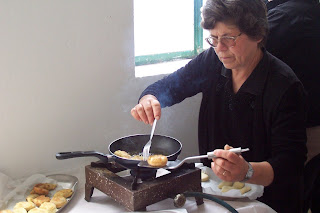
We had a cooking demo – how to make wild greens pies (Kalitsoùnia).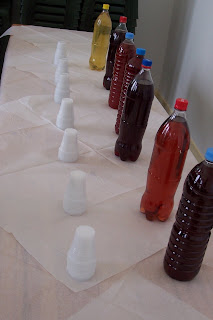
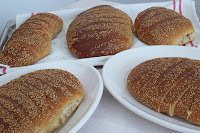
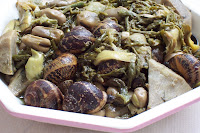
Lots of wine to sample.We tasted many new things, and some we’d already tried; snails finally broke free of the leaves and plants we’d been seeing them on, everywhere, and rolled right onto our dinner plates. So much food! So many impossible choices. This was one affair where we couldn’t try a little of everything, not even close.


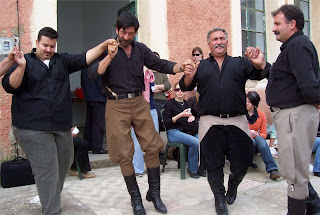
Afterwards, the men kicked up their heels.
We had a last drink, and wended our way towards a couple of hours’ relaxation before supper.
-
Crete part 2: Amari Valley; wild greens, pastry and sing for your supper
Read Full Post: Crete part 2: Amari Valley; wild greens, pastry and sing for your supper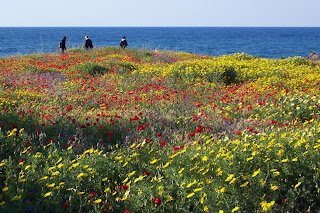
It may have felt on the wintry side at times, but we were in Crete at a perfect time to catch the full glory of wildflowers.Our Thursday morning was spent gathering wild greens from the hillside, and preparing them for lunch. Kostas led us up the trail and he, Aris (a cave specialist and companion on many of our outings) and Lambros (owner of the taverna where we were based) showed us what treasures we were trampling and filled us in on some of the legends, food and folk medicine around the greens we were collecting and observing.
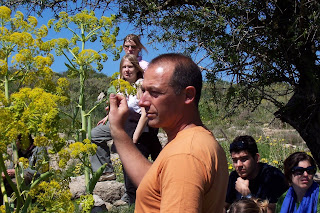
Giant fennel, not really fennel – in fact its poisonous cousin – but Ferula communis makes a dandy walking stick when it dries out, and it’s a handy torch as well. As Prometheus discovered, and used it to steal fire from Zeus to give to mortals.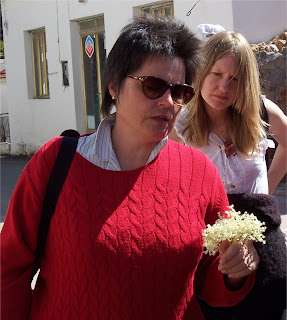
Jutta, a visiting German botanist who happened to be there with her botanist husband, tells us about the curative powers of Sambucus nigra, Elderflower. She said the tree and its flowers were considered lucky, and the flowers used to be hung above a cradle to protect the child. When I told her I’d heard elderberry wine was a popular concoction, she said the berries are edible only after cooking -which I guess happens during winemaking – and are otherwise toxic.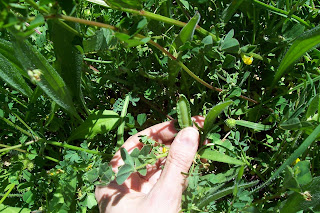
Some frilly midget beans; so so tasty. Pan-fry them (in Cretan olive oil!) and then put them in your omelette.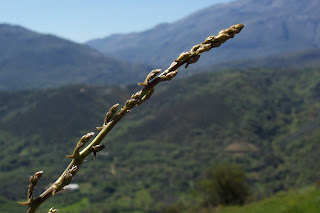
Wild asparagus: very hard to spot by amateur foragers, but lovely to nibble on raw and a favourite for omelettes.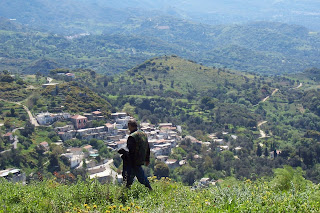
A shepherd we passed on the way up the slopes. I never saw the sheep, but then some people saw the sheep and not the shepherd. Anyway; nice view.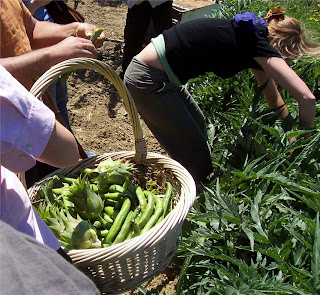
The greens basket, filling, filling. We harvest fava (broad) beans and artichokes on a nearby field.
Sorting the greens; the bowl on the left has asparagus fern fiddleheads; the one on the right has frilly beans.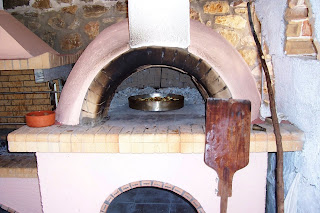
A kind of summer kitchen outside the taverna had a handy oven like many we saw in Crete, ideal for roasting potatoes.

Women make food.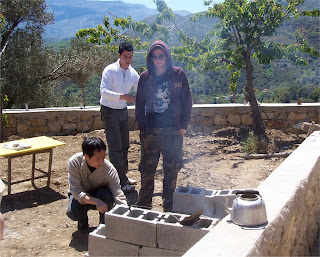
Men make fire.Everybody eats omelettes; there’s also a sweet omelette (not in this picture) made with elderflower.
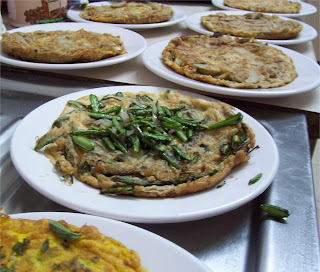
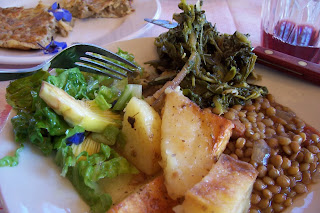
The finale: salad with raw artichoke, wild greens, borage flowers; boiled wild greens with fava beans and artichokes; potatoes roasted in goat fat; lentils; wild greens omelettes.
After lunch we departed for nearby Aghia Fotini, where we had a cooking demonstration, all about making stafidoto (filled cookies), baklava…
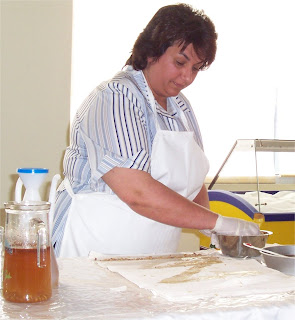
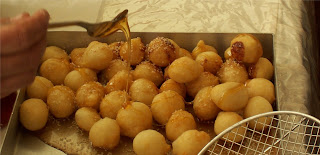
and these lovely Loukoumàdes (breakfast donuts), fried in olive oil and drenched in cinnamon syrup, Cretan honey and sesame seeds. At last, I thought, I have the secret to the Cretan diet: you start your day with donuts and raki and you will live forever.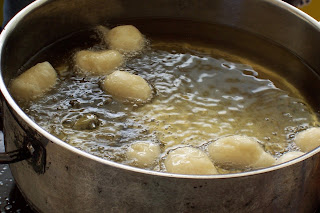
Katarina the potter, who we were to visit later on, came to the town hall and presented us with a branch of rosemary from her garden which we were to wear behind one ear, as a kind of instant wreath. It showed our fellowship and was also intended to give us clear thinking in the meeting, which was much needed after all those donuts.
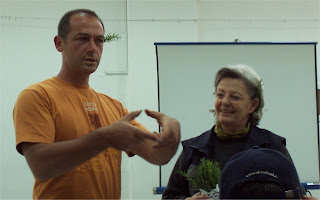
We had a presentation by Aris about caves, flora and fauna; there was a brief presentation by a local man who told us, among other things, about the tendency in this area to uproot old olive groves and replace the healthy, hardy local varieties of olives with dwarf varieties better suited to mechanical harvesting and producing olives with flavour more in keeping with contemporary tastes. Kostas told us a little more about MedASH, and its work to encourage hotels to compost their landscaping waste, to educate children in organic planting. His discussion of soil health included the memorable description of soil as the “stomach of the plant”; growing things are really all one organism, he said; roots tangle in the earth, and microorganisms connect them.And after that… ack. More food?!? Supper that night in Gerakari village started with a quick demonstration of some of the things we’d be eating: fava bean puree, raw artichokes.
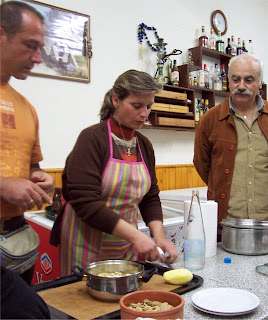
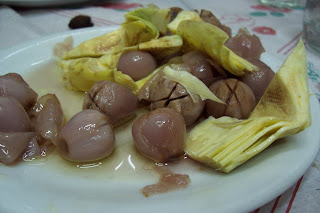
Wild onions and raw artichokes…
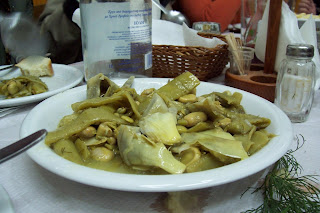
Boiled favas and artichokes…
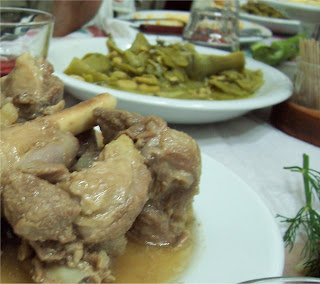
A nice bit of lamb…
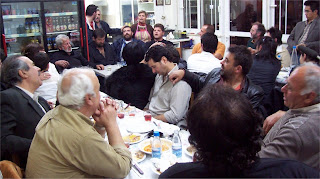
After the meal, singing and more singing. Everyone had to take a turn, by country. The Americans were a hit with “Comin’ Round the Mountain” to which they added a “yee-haw” chorus which so delighted our hosts they asked for an encore. Alas the three Canadians discovered we had only our national anthem in common, so that’s what we sang .
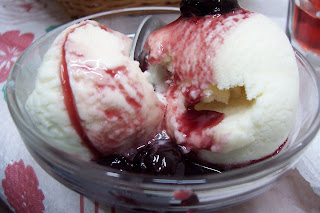
After the singing we were rewarded with ice cream with local cherries on top.


Latest Posts
- Writers at Word!
- Sublime and Twisted Readings coming up!
- Sublime
- Good weather for reading
- The world, the world
- Sublime launch!
Aldeburgh Poetry Festival Barny Haughton BBC BC poets Berkswell blackberries Black Stilt Bologna book launch Borough Market Carlo Petrini Catalonia Cyrus Todiwala dairy Daunt's Books Dijon Edinburgh Fanny Bay Feast of Fields Food and Morality food history food journalism Jenna Butler lardo Malahat Review Michael Pollan Okanagan olive oil tasting olive trees Omnivore's Dilemma Our Food Our Future Oxford Parmigiano-Reggiano Planet Earth Poetry poetry poetry readings Poetry videos prosciutto salumi Sean O'Brien Suffolk ticks Wendy Morton Wired Writing Yvonne Blomer
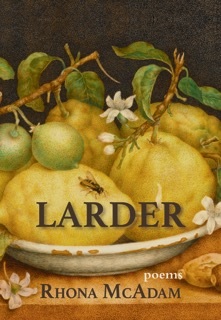
In her latest collection, Rhona McAdam navigates the dark places of human movement through the earth and the exquisite intricacies lingering in backyard gardens and farmlands populated by insects and pollinators, all the while returning to the body, to the tune of staccato beats and the newly discovered symmetries within the human heart.
“…A beautiful, filling collection, Larder is a set of poems to read at the change of the seasons, to appreciate alongside a good meal, and to remind yourself of the beauty in everything, even the things you may not appreciate before opening McAdam’s collection….”
Rhona McAdam is a writer, poet, editor, and Registered Holistic Nutritionist with a Master’s in Food Culture from Italy and a deep-rooted passion for ecology and urban agriculture. Her work spans corporate and technical writing to poetry and creative nonfiction, often exploring the vital links between what we eat and how we live. Based in Victoria, BC, and available via Zoom, Rhona is always open to new writing commissions, readings, or workshops on nutrition and the culinary arts.