-
The last Seedy Saturday, and Slow Cheese & Charcuterie
Read Full Post: The last Seedy Saturday, and Slow Cheese & CharcuterieLast Saturday I attended the final Vancouver Island Seedy Saturday of the season, in Duncan. Lots of people wandered through, looking for seeds, seedlings and advice; there was a seed swap table

and a workshop series, as well as a chance for youngsters to hunt for worms in a wee pile of dirt.
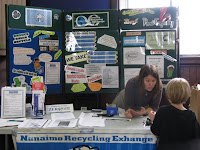
But before they entered the hall, visitors could stop to chat with a local forager,
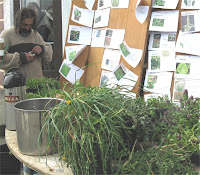
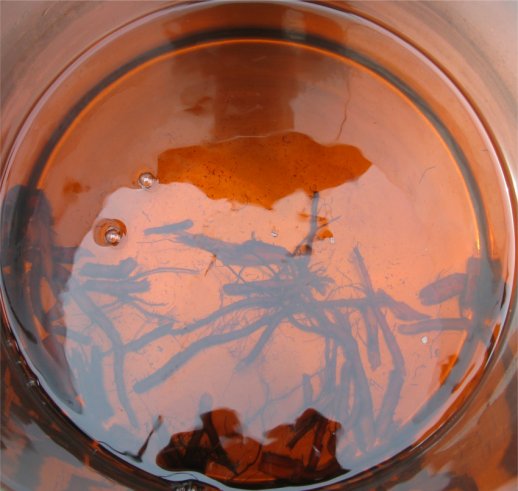
who had a table full of edible weeds, a pot full of burdock & dandelion root tea,
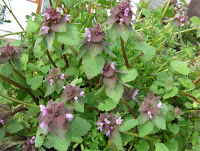
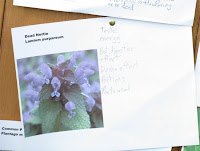
and lots of information and advice on using and eating native greenery, including dead nettle, which is blooming in many a local garden bed just now, and which resembles wheatgrass when juiced, and whose leaves can be eaten.
Meanwhile back inside, some interesting plants on offer..


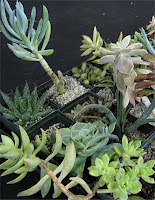
Lots of familiar faces including Carolyn Herriot with her always remarkable range of Seeds of Victoria – and featuring some fine looking succulents
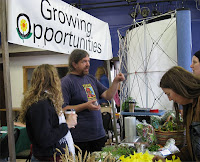
and Providence Farm, with a mixture of plant starts and produce
some young Metchosin Farmers
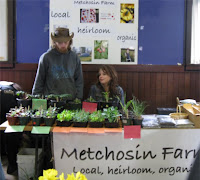
and of course Haliburton Farm was represented by some sturdy seedlings


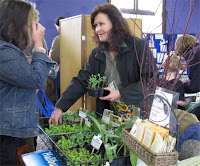
and a fine farmer, Elmarie Roberts of Haliburton’s Sunbird Farm, which grows organic flowers and vegetables.
And then it was Monday again and time to gear up for a Slow Food Cheese & Charcuterie event at Sips Bistro. We began with the charcuterie, which included ham and headcheese from Choux Choux Charcuterie

and also duck prosciutto (one from Oyama Sausage Co. and one from Two Rivers Specialty Meats) and buendnerfleish, one made from beef (Oyama) and the other from muskox (Continental Sausage Co.)
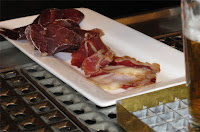
before moving on to the cheese. Here we sampled a couple of soft cheeses – Natural Pastures‘ Comox Brie, followed by Little Qualicum‘s Island Bries. Then on to a couple of washed rind Cowichan Bay hard cheeses, from Hilary’s Cheese, both washed with Cherry Point Blackberry Port: Red Dawn (cow’s milk), and Belle Ann (goat). And finished with Hilary’s blue cheeses, one cow (Cow Bay Blue) and one goat (Valley Blue).
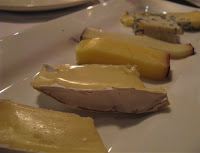
Hilary Abbott himself gave us an excellent talk about the cheeses, cheese making, milk production, blue cheese inoculation techniques and many related matters.
-
Sharing Food & Knowledge; Hali work party; Food Matters! and Planet Earth
Read Full Post: Sharing Food & Knowledge; Hali work party; Food Matters! and Planet EarthLast week was a busy one for Vancouver Island’s food security community, with two significant meetings and a last Seedy Saturday on top.
Tuesday about 50 of us gathered at the university for Sharing Food and Knowledge, a meeting of people involved in food and educational issues convened with the support of UVic’s Office of Community Based Research (OCBR). We had a speedy stream of presentations, kicked off by one from Linda Geggie, introducing the afternoon with an overview of the OCBR’s Capacity-Building Project, which includes UVic and five Vancouver Island post-secondary institutions. Areas of interest include food security and sustainability, and the group aims, among other things, to capture, share and meet research requests by working with interns and researchers. They’ll also do a survey of programs and curricula as well as identifying areas of research already underway.
Other speakers included Steven Earle, from Vancouver Island University, speaking on peak oil and the future of food production on Vancouver Island. Some of the looming consequences of our current situation that he identified include
- reduced food supply
- increasing food prices
- rationing of oil
- conflict
- less available food for all
- and less transported food
He was asked to provide some ideas about what needs to be done on the Island, and these include
- farm without chemical fertilizers and pesticides
- move away from mechanical farming and increase farm labour
- care for the soil
- improve water efficiency
- plant winter crops and storable summer crops
- use open pollinated vs hybrid seeds – i.e. practice seed saving
- practice mixed farming
- and buy local

Tom Child also spoke about his work studying environmental contaminants in the marine foods of coastal first nations in BC. Food sources he’s studying include harbour seals, dungeness crabs, sockeye salmon and butter clams. The highest PCB and PBDE levels he found were in seals (makes sense to find these things at the higher end of the food chain), but the sockeye has the highest consumption so its contamination levels will be the most important.

and Fiona Devereaux, who talked about the Feasting for Change project, which is part of the Aboriginal Diabetes Initiative
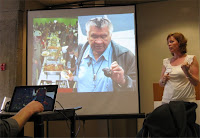
and aims to restore knowledge about aboriginal food traditions by putting youth and elders together to talk about traditional foods.
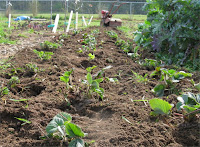
Wednesday was another work party at the farm

where preparations include moving strawberry runners into new beds:
Thursday evening a group of us got together to share some food and hammer out vision and mission statements for the Food committee of the Victoria Transition Town initiative.
Friday was Food Matters! – a day of workshops and local food hero celebrations. The meeting was held at the Native Friendship Centre and attracted lots of foodie folk from thither and yon. The day started with workshops, including one on community kitchens operating in Victoria. Some of these are participant-run, where people gather to share bigger cooking tasks, like canning, for largely social reasons (with some education picked up along the way) while others are funded and incline towards helping people on low incomes learn to manage food and nutrition through communal cooking. In both cases, participants work together to prepare meals or dishes on a large scale that are divided into portions to take home.
A lunch followed, which was a little disappointing – I played count the seasonal vegetables in the veggie wrap and came up with… one: asparagus, which is seasonal in California just now. It also featured zucchini, red pepper and eggplant (at best these last two will have come from BC greenhouses at this time of year, but that’s not an ideal source either). The halibut chowder
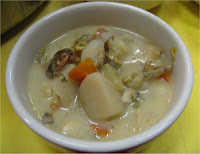
was both seasonal and delicious and was the work of Carrie Pollard (who runs the HEAL – Healthy Eating Active Living – program at the centre)
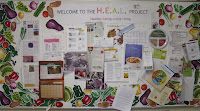
and the VNFC’s own community cooking enterprise: this brings locals together to prepare a soup each Friday for the centre’s Friday soup kitchen, which provides soup, bread and fruit to people who wish to participate. (But of course I have recently seen End of the Line and any fish consumption is now troubling to me.)
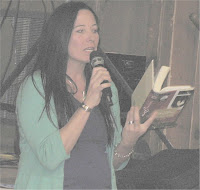
Linda Geggie read an excerpt from farmer-poet-novelist-memoirist Brian Brett’s Trauma Farm – a happy coincidence as later that evening I learned that Brian will be reading in Victoria next week.
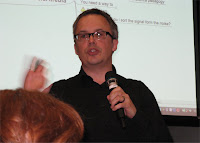
There was a talk by Gilbert Wilkes called Demystifying New Media: how media can help us reach and engage our audiences and each other. This covered a lot of ground and was particularly focused on ways foodies could use feeds and aggregators to filter food information.
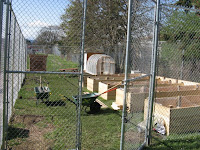
At the end of the day I wandered out to see the garden that volunteers from the centre and the community have been building, and it is in enviable shape, all the raised beds waiting to be filled:
Friday night was Planet Earth Poetry, with three featured readers: Michael Kenyon, from Vancouver/Pender Island; local poet Michael Bond,
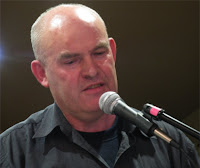
who gave us his first full reading, after several years of popular appearances at the open mic; and Richard Lemm,
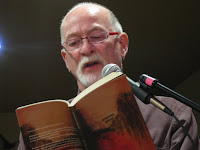
wrapping things up.
-
Dirt! and Raw food
Read Full Post: Dirt! and Raw foodA screening I attended of Dirt! The Movie last Wednesday turned out to be more than it seemed. One of the Sooke Awareness Film Night offerings, it was held in a local school where we encountered a hall full of people and stalls,


offering seeds, seedlings,
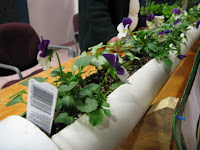
vegetables, snacks,

awareness
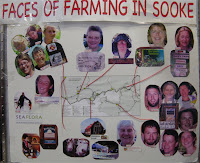
and even tips on mushroom growing before the screening. The film itself was very watchable, and although it did talk about the dangerous loss of topsoil happening around the world (the scenes of coal strip mining were particularly appalling) and the risks of erosion, desertification and pollution that go hand in hand with this, it offered a good number of optimists and activists working to improve the situation. The film’s advice: do what you can; plant trees; replenish the soil you work with; and be aware of dirt’s role in our lives.
Sunday’s entertainment was a trip to Esquimalt, where VIVA‘s monthly Raw Vegan Potluck event regularly attracts 30 or 40 people
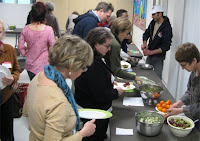
who bring all manner of dishes to share
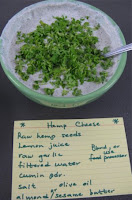
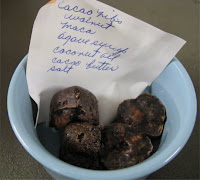
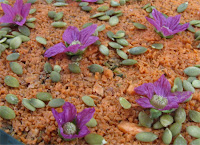
Hemp cheese… raw vegan chocolate balls… nettle sweet potato casserole with edible salmonberry blossoms
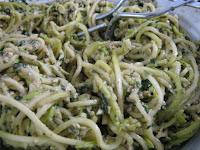
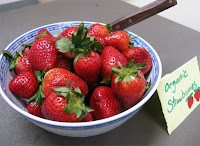
Blueberries & bananas in cashew cream… raw vegan zucchini pasta with pesto… and strawbs.The society also offers a raw food lending library, and a vendor was there selling ingredients, cookbooks

and tools of the trade.

Each meeting features a speaker: this month it was raw food nutritional advisor Shawna Barker, who teaches, consults, cooks and sells raw foods (at her Living Foods kiosk and through a Meals on Wheels enterprise). Her theme was Nutrition 101, with some extra nutritional tips for raw foodists (mostly around getting enough vitamin B12 – her top tip was to use an algae marketed as E3 Live).
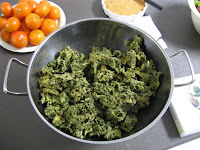
I enjoyed it – though like all potlucks you get pot luck with the food. But some was very good and the requirement for ingredients labels means you can really know what you’re eating; some of the participants provided recipes rather than straight labels, which would be helpful for some of the more complicated dishes. Because to novices, preparing raw food can be very complicated indeed. My main qualm about this way of eating is the dependence on imported ingredients; very few of the dishes were local or seasonal (I brought a brussels sprout slaw, and there were several other salads featuring seasonal greens) though my personal favourite – kale chips (dressed and dehydrated) – was definitely seasonal, and disappeared quickly. By the time I reached it there were only a few crumbs in the bottom of the bowl, but they were tasty. Here’s one I took earlier!






Latest Posts
- Writers at Word!
- Sublime and Twisted Readings coming up!
- Sublime
- Good weather for reading
- The world, the world
- Sublime launch!
Aldeburgh Poetry Festival Barny Haughton BBC BC poets Berkswell blackberries Black Stilt Bologna book launch Borough Market Carlo Petrini Catalonia Cyrus Todiwala dairy Daunt's Books Dijon Edinburgh Fanny Bay Feast of Fields Food and Morality food history food journalism Jenna Butler lardo Malahat Review Michael Pollan Okanagan olive oil tasting olive trees Omnivore's Dilemma Our Food Our Future Oxford Parmigiano-Reggiano Planet Earth Poetry poetry poetry readings Poetry videos prosciutto salumi Sean O'Brien Suffolk ticks Wendy Morton Wired Writing Yvonne Blomer
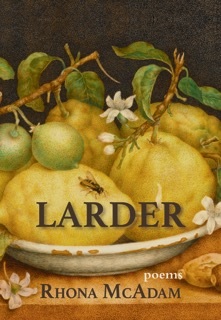
In her latest collection, Rhona McAdam navigates the dark places of human movement through the earth and the exquisite intricacies lingering in backyard gardens and farmlands populated by insects and pollinators, all the while returning to the body, to the tune of staccato beats and the newly discovered symmetries within the human heart.
“…A beautiful, filling collection, Larder is a set of poems to read at the change of the seasons, to appreciate alongside a good meal, and to remind yourself of the beauty in everything, even the things you may not appreciate before opening McAdam’s collection….”
Rhona McAdam is a writer, poet, editor, and Registered Holistic Nutritionist with a Master’s in Food Culture from Italy and a deep-rooted passion for ecology and urban agriculture. Her work spans corporate and technical writing to poetry and creative nonfiction, often exploring the vital links between what we eat and how we live. Based in Victoria, BC, and available via Zoom, Rhona is always open to new writing commissions, readings, or workshops on nutrition and the culinary arts.