-
Voyage to Vancouver
Read Full Post: Voyage to VancouverA Vancouver weekend long in the planning looks like it’s going to get a tiny bit longer, since my car gave up the ghost in the centre lane of a busy North Van street last night. I was on my way to a reunion with friends that we’d managed to coordinate between the five of us after seven months of emails, so turning back was not an option. My passengers, luckily, were possessed of cell phones, automotive repair connections and reliable husbands, so we managed to get my vehicle’s corpse towed to a nearby garage, and secured a car and the promise of a lift home and carried on with our evening. Tomorrow will tell just when I’ll be heading back to the Island.
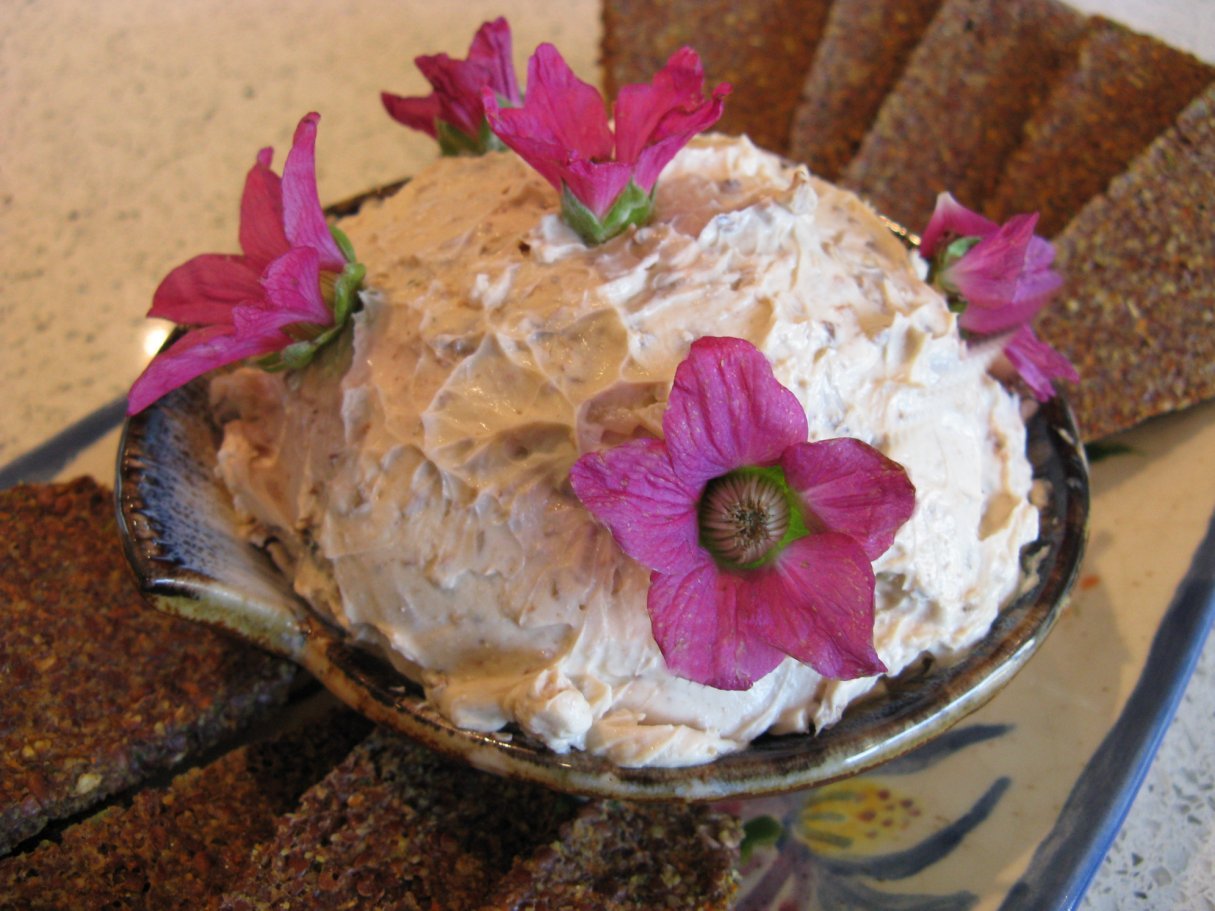
However. Good things have happened. On Friday, having planned to meet up for a drink with Diane, whom I’d met at a wine-tasting at the last Salone del Gusto, and Joanne the local Slow Food convivium leader, we instead were offered a place at a well-set table, at a Slow Food potluck. Which then engendered a familiar bout of Slow Food potluck anxiety: how to compile a dish that included local-seasonal-Good-Clean-Fair when facing unexpected cooking in an unfamiliar kitchen? Thought of making bread (no local flour in the larder) or my Canadian-Food-Tradition-fallback: butter tarts (lacking my own home-dried raisins, local butter and Fairtrade sugar). I had, however, brought some of my raw flax crackers with me, and had a tin of Fanny Bay smoked oysters at the bottom of my bag (what self-respecting Islander leaves home without?) so made some smoked oyster pate, which we decorated with (edible) salmonberry blossoms, and it looked very handsome.

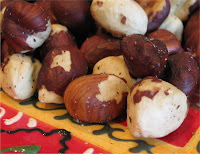
Also on offer were Diane’s hand-picked, hand-shelled and hand-roasted and seasoned hazelnuts, still warm and scattered with herbs.
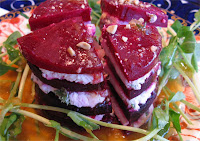
Our hostess presented us with this dazzling starter, of beets and goat cheese in a sea of pea shoots…
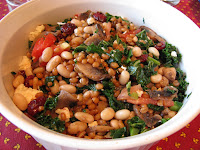
and Joanne brought a Red Fife wheatberry salad, with kale, mushrooms, beans and goat cheese;
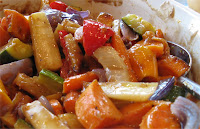
there was a bountiful dish of balsamic-dressed roasted veg
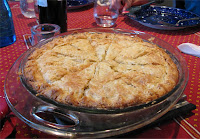
and a Tourtière (Christmas in April, why not?) with lovely flaky pastry.
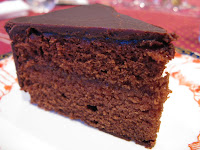
A visiting Viennese guest brought some authentic Sacher Torte to finish off.
So that was good. A cheery and convivial evening which for me was also a rare opportunity for a few hours of unbridled nostalgia as I swapped tales of London with our host, who it turned out, had lived on the same street as me in South Hampstead.
The next day – I’d forgotten my camera at the dinner! – I spent with Ana cruising the food trails on a gorgeous sunny Saturday. First stop was the Home Grow-In Grocer, which was celebrating its first birthday with a lawn full of pink flamingos and a larder full of BC products. Brian Harris was there, camera in hand on behalf of Farm Folk City Folk; we’d met last September at the Duncan edition of Feast of Fields which had been held at Providence Farm.
It was a bit early to think about sharing the market’s enormous birthday cake, so we scooted off to the farmers market at the WISE Hall. It was a happy sight. Outside the hall, people were browsing the stalls – pastries, herbs, greens, nuts, dried fruits – or lolling on the grass with organic greens in buckwheat crepes, enjoying a bit of music and sunshine. Inside was a gentle hive of shoppers gradually stripping the place of garlic, hummus, salad greens, pesto, bread, cheese, home baking, chopping boards, teas and more. I was overjoyed to see Kootenay Alpine Cheese there, as I’d interviewed the owners for an article last year, and I carried off a nice piece of their Mountain Grana, to get to know them properly.
We were very near the original Bosa Foods store, so in we went to forage for olive oil, parmigiano-reggiano, pasta and the like, and out we laboured with massively heavy bags. After we’d toiled to the car with our burdens it was definitely time for a bite, so headed back across to the North Shore for lunch at the Ethical Kitchen. It was a delightful bright spot to pass an hour or so with a pasture-raised beef burger and a big glass of fermented hibiscus tea. But reunion dinner and fate were beckoning and it was nearly time for that unfortunate assignation with the car-devil, which is where I began, and where I will end for today.
-
Trauma Farm x2: Picking up the pieces
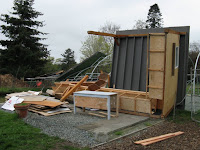
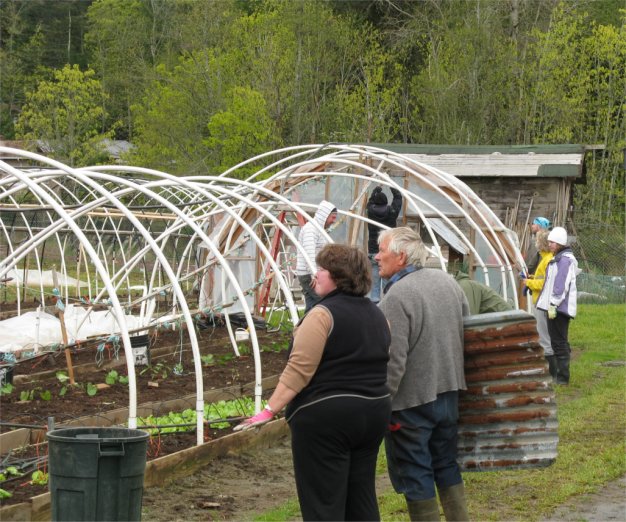
Read Full Post: Trauma Farm x2: Picking up the piecesBlustery is one word for the weather on Good Friday, much of which I spent at Haliburton Farm. While we were inside potting a few tomatoes, there was a noise, and this turned out to be what it was: the newly built farm stand upending itself on the newly donated greenhouse, which we were to have finished assembling on Saturday.
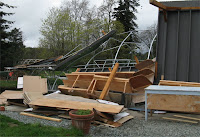
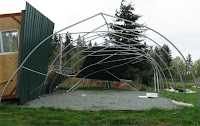
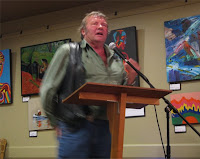
Friday night’s reader at Planet Earth Poetry was, therefore, most appropriate: Brian Brett read from his poetry and also from his latest memoir, Trauma Farm, about his 20+ years farming on Salt Spring Island.
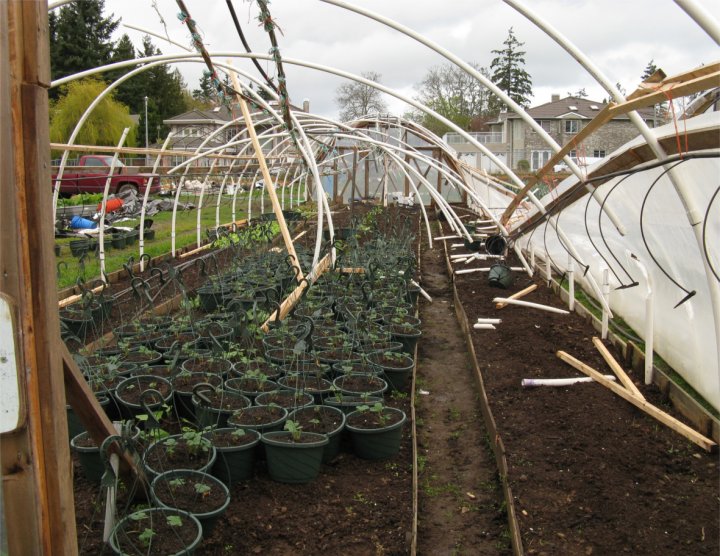
Saturday arrived and it was time to survey the damage at Haliburton and marshal the many volunteers who answered the call for help. Ray’s beautiful hoop house, recently filled with over 200 hanging baskets of strawberries, was, shall we say, hooped.
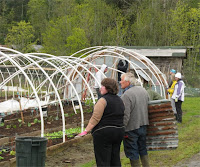
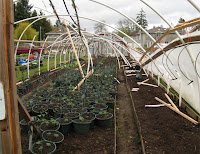
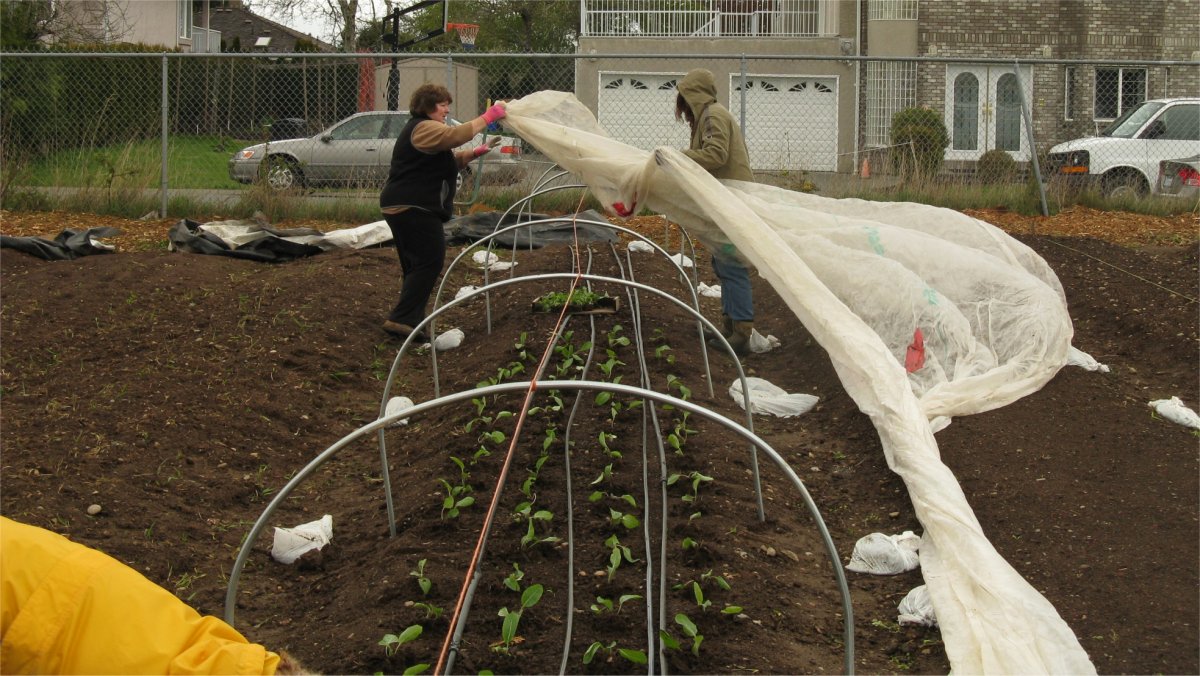
The row covers needed to be replaced.
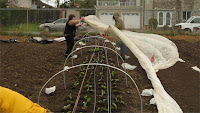
The Terralicious hoop house was put back together.

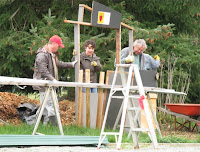
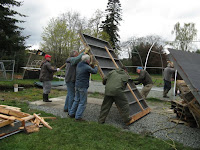
And many hands helped to dismantle the farmstand, ready to start putting it back together at upcoming work parties.
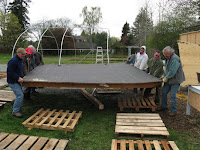
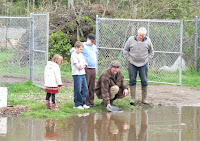
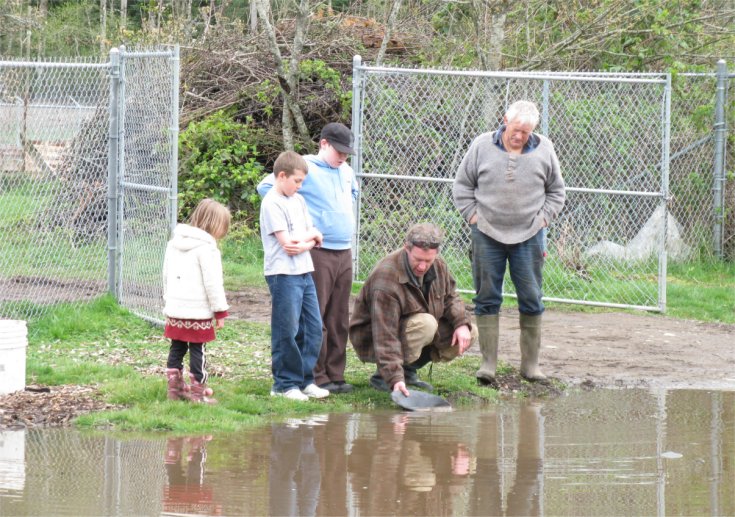
The children were put to work panning for gold to fund further repairs.
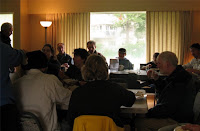
We had lunch – crowded but convivial.
And after shovelling and wheeling a few hundred loads of wood chips, to keep the weeds down between the rows, we called it a day.

-
Bill C-474: proposed Seeds Regulation Act
Read Full Post: Bill C-474: proposed Seeds Regulation ActAnd now, a message from CBAN, which is campaigning for Bill C-474 (Seeds Regulation Act), which aims to protects Canadian farmers who grow crops for our export (and organic) markets, by requiring Canada to perform proper analysis of potential harm before it allows any more GE crops into our fields.
This analysis is not being done at the moment: you may recall that flax contamination badly harmed our exports last year. The matter is urgent because Monsanto aims to introduce GE wheat and alfalfa into our markets, which would cause immeasurable and permanent damage to the purity of our wheat and alfalfa crops, and our ability to export to markets like Europe, which has banned GE products for human consumption. Italy, for example, relies upon Canadian wheat for its pasta industry.
You can listen to the First Reading debate on Deconstructing Dinner’s March 25 episode.
Here’s what CBAN has to say:
Action Alert. Please distribute widely.
Action Alert #3: Take New Action before April 14, 2010!
Support Bill C-474 – before April 14, 2010 – Support Canada’s Farmers! You can stop GE Alfalfa and GE Wheat!
Write an instant letter to Michael Ignatieff, Liberal Party leader from http://cban.ca/liberalact474 and ask him to make sure the Liberals pass the Bill on April 14.
You can also write to your own MP at http://cban.ca/474action
Bill C-474 was voted down but not out on April 1. The Liberals support the Bill in words – but will they support with enough votes on April 14?
Private Members Bill C-474 was debated on March 17, and April 1 with an oral vote. The recorded, official vote will happen on April 14.
Your concrete action could stop genetically engineered (GE) seeds from causing chaos in Canadian farming!
Bill C-474 would require that “an analysis of potential harm to export markets be conducted before the sale of any new genetically engineered seed is permitted.” The Bill could stop GE alfalfa and GE wheat.
This Bill is critically important because, as we know from experience, the introduction of new genetically engineered (GE) crops can cause economic hardship to farmers. Farmers are at risk when GE crops are commercialized in Canada without also being approved in our major export markets.
Flax farmers in Canada are now paying a heavy price because of this exact problem. Late last year, Canadian flax exports were discovered contaminated with a GE flax that is not approved in Europe or in any of our other export markets (except the U.S.). Flax farmers actually foresaw that GE contamination or even the threat of contamination would close their export markets. That’s why they took steps in 2001 to remove GE flax from the market. Despite this measure, flax farmers were not protected. The GE flax contamination closed our export markets in 2009. It has created market uncertainty and depressed prices. Farmers are also paying for testing and cleanup and may be required to abandon their own farm-saved flax seed and buy certified seed instead. These costs are an unnecessary and preventable burden.
We cannot allow GE seeds to harm our export markets. Please support Bill C-474 and protect Canada’s farmers.
Write an instant letter to Michael Ignatieff, Liberal Party leader before April 14 http://cban.ca/liberalact474
Bill C-474 was introduced by Alex Atamanenko, the NDP Agriculture Critic and MP for British Columbia Southern Interior.
For updates, more info and action options, see http://cban.ca/474 or contact Lucy Sharratt, Coordinator, Canadian Biotechnology Action Network 613 241 2267 ext. 6
This action alert was issued by the Canadian Biotechnology Action Network (CBAN) http://cban.ca






Latest Posts
- Writers at Word!
- Sublime and Twisted Readings coming up!
- Sublime
- Good weather for reading
- The world, the world
- Sublime launch!
Aldeburgh Poetry Festival Barny Haughton BBC BC poets Berkswell blackberries Black Stilt Bologna book launch Borough Market Carlo Petrini Catalonia Cyrus Todiwala dairy Daunt's Books Dijon Edinburgh Fanny Bay Feast of Fields Food and Morality food history food journalism Jenna Butler lardo Malahat Review Michael Pollan Okanagan olive oil tasting olive trees Omnivore's Dilemma Our Food Our Future Oxford Parmigiano-Reggiano Planet Earth Poetry poetry poetry readings Poetry videos prosciutto salumi Sean O'Brien Suffolk ticks Wendy Morton Wired Writing Yvonne Blomer
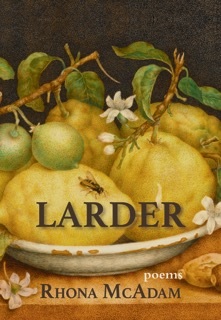
In her latest collection, Rhona McAdam navigates the dark places of human movement through the earth and the exquisite intricacies lingering in backyard gardens and farmlands populated by insects and pollinators, all the while returning to the body, to the tune of staccato beats and the newly discovered symmetries within the human heart.
“…A beautiful, filling collection, Larder is a set of poems to read at the change of the seasons, to appreciate alongside a good meal, and to remind yourself of the beauty in everything, even the things you may not appreciate before opening McAdam’s collection….”
Rhona McAdam is a writer, poet, editor, and Registered Holistic Nutritionist with a Master’s in Food Culture from Italy and a deep-rooted passion for ecology and urban agriculture. Her work spans corporate and technical writing to poetry and creative nonfiction, often exploring the vital links between what we eat and how we live. Based in Victoria, BC, and available via Zoom, Rhona is always open to new writing commissions, readings, or workshops on nutrition and the culinary arts.