-
Terra Madre
Read Full Post: Terra MadreSo much to say about Terra Madre, I’ll have to break it into bits.
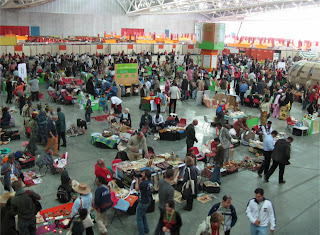
A food meeting with a difference: Terra Madre included a large open space to allow delegates to throw a blanket on the floor and sell – or just show – their wares.


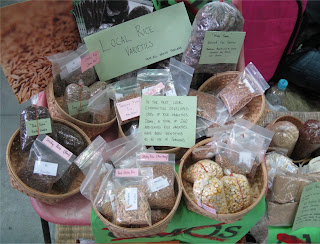
Biodiversity is a big thing in Slow Food’s mission. So much of today’s food has been bred into narrow, profit-oriented channels and lacks the flavour, seasonality and suitability to its terrain that traditional foods had evolved around. Here, a selection of local rice varieties from Thailand…
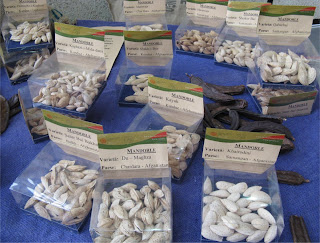
..and here, a selection of almond varieties from Afghanistan.
Green eggs from Temuco chickens, at the Chilean stand.

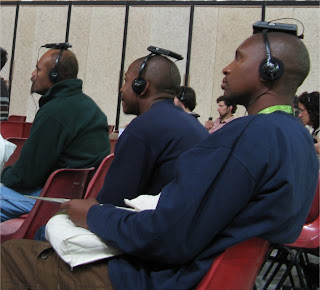
One of the many remarkable things about this event was the presence of simultaneous translation — into the 8 official languages of Terra Madre. It wasn’t always perfect or easy to hear, but it was an amazing achievement to do as much as they did. Some of the translators worked between two or three languages.

Some listeners demonstrate what could be described as the house style for positioning the translation receivers for maximum effect…
And someone offering henna services…

-
Naples and Rome Oct 20-21
Read Full Post: Naples and Rome Oct 20-21After Pompeii and Herculaneum we went to Naples – using our Arte cards which had given us three days of sightseeing and travel – to get to the National Archaeological Museum of Naples, which held all the ‘good stuff’ from the excavations.
First, though, we were in Naples, so…

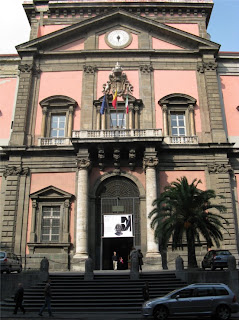
The museum. Big and pink!
Head of a poet.

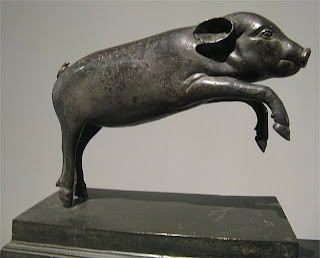
Dear little pig of Herculaneum.
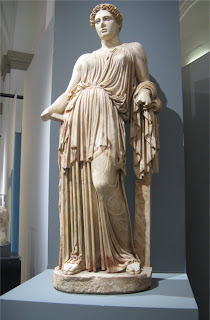
Demeter.
A recent treasure from Herculaneum, Testa di Amazzone, found in 2006. Showing that redheads ruled even then.

Absolutely stunning mosaics and wall paintings from Pompeii and Herculaneum:


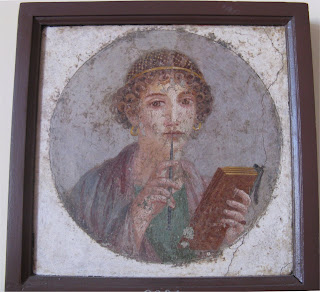
The famous Sappho painting from Pompeii.
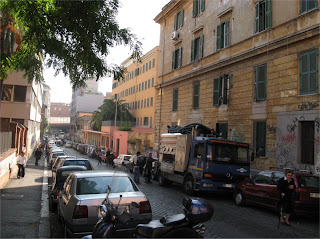
Then it was time to go to Rome. After a spell of wandering in the graffiti-heavy neighbourhood
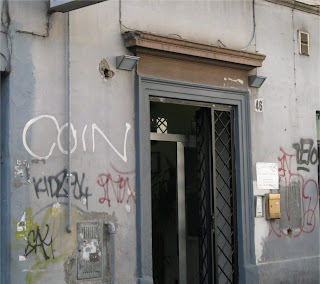
we found – with some difficulty – the door to our guest house. Happily much nicer on the inside than the outside.
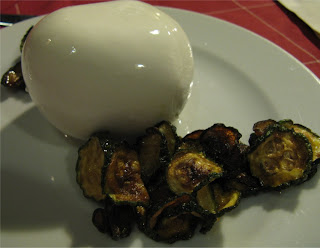
We asked for restaurant recommendations and ended up at a pleasant local restaurant where I had some buffalo mozzarella with zucchini alla scapece, an excellent combination.
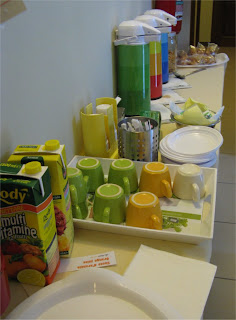
Did not touch the hotel breakfast as it all looked too toxic to be released from plastic:

Went on a tour of the city and eventually found our way to the Trevi Fountain, which was being serviced. But it still drew a sizeable crowd, some watching a man who’d jumped the barricade and was busy picking up the coins that didn’t make it into the fountain, chucking in the smallest ones and pocketing the rest, until he was escorted out by the security guards.

Near this street…
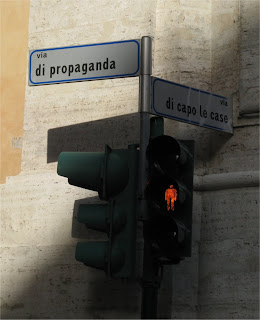
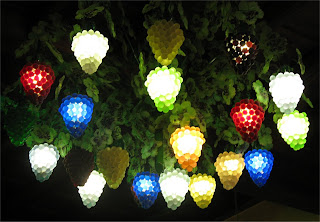
we found a good lunching spot with interesting lighting
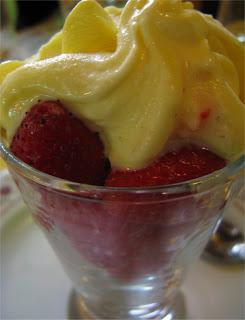
and excellent fragoli con gelato.
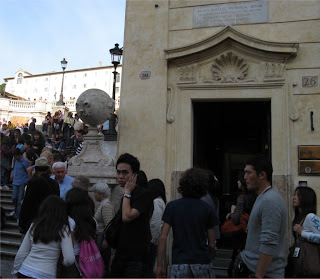
Next to the Spanish Steps where our first stop was Keats’ House, the lodgings where he died
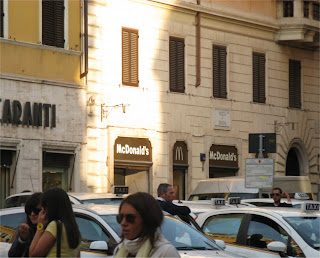
And of course, being a Slow Foodie, I had to note the McDonalds, just around the corner on the Piazza di Spagna, which was the final outrage that caused the founding of the Slow Food movement in 1986.
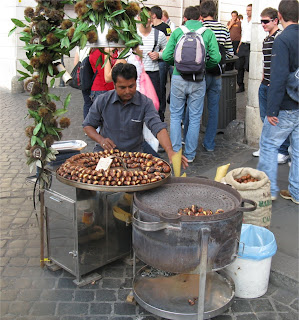
Chestnut seller.
And that was more or less it for me for Rome this time. One final meal – excellent and local and recommended by the hotel – and I left for Turin the following morning. Giving another wide berth to the scary breakfast buffet.
-
Herculaneum & Vesuvius Oct 19
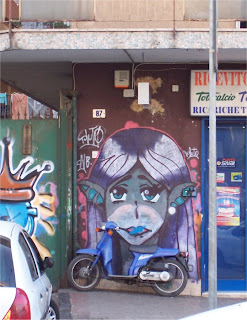
Read Full Post: Herculaneum & Vesuvius Oct 19It seemed to us that modern Herculaneum is covered, like most of what we saw of urban southern Italy, by a lot of graffiti.

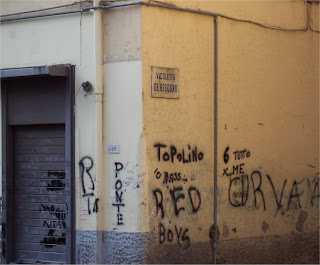
Kind of liked this street name:
And then we found it…
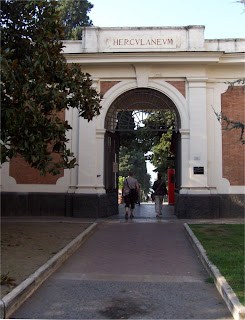
And it was amazing that anyone found anything here. The town was well buried, beneath another town. This is the depth of lava they had to dig through to find what was buried.

The streets of Herculaneum, unlike those of Pompeii, did not run with odure. They were straight and clean
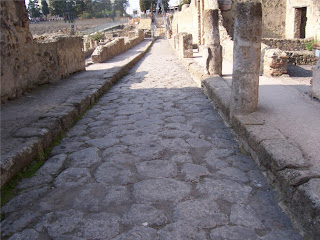
because householders could empty waste into the drains. The drains are in such good shape here there’s a whole field of study around them.

A 2000 year old bed
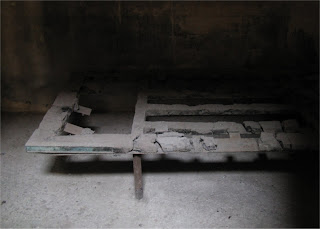
and the corner of another one:
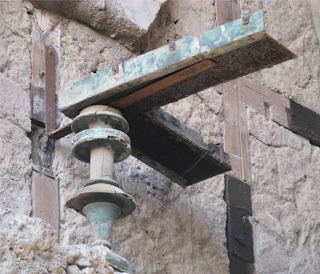
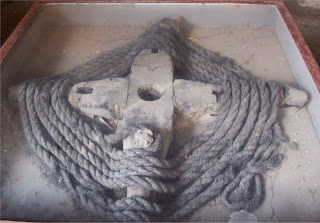
And some 2000 year old rope. For some things, surprisingly little has changed.
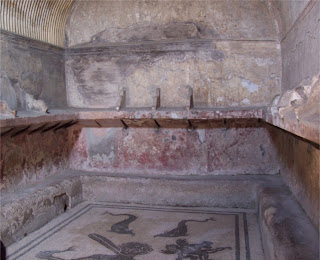
The baths, in good condition: benches still in place…
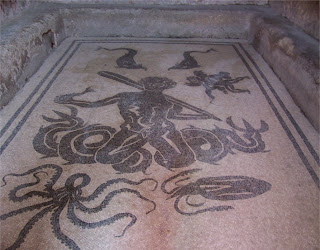
and a beautiful floor.
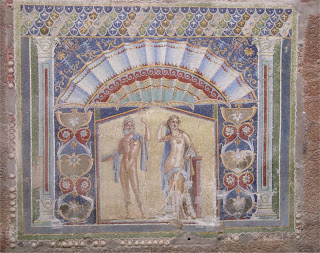
More amazing wall paintings…


and mosaics
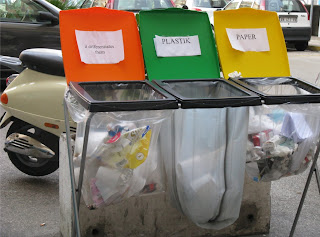
Had time to notice the interesting labels on the recycling bins near the mini-bus service to Vesuvius.
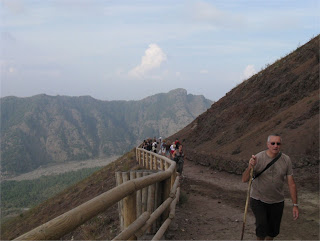
We had a swift and occasionally alarming ascent up to the summit of Vesuvius. It’s about a 20 minute drive followed by a 20 minute or so walk up the trail to the top.
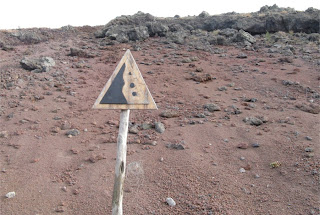
Helpful signpost.
Hard to know whether the inside or the outside of the path felt safer!

Rewards are many and heavy if you make it to the top. Or even nearly to the top. There were at least two souvenir stands up there. The local wine, Lacryma Christi del Vesuvio, is made, so they say, from the many vines growing on the slopes of Vesuvius and is named for the emotion Christ felt upon noticing the beauty of the Bay of Naples while he was ascending to heaven… or else for the tears Christ shed when Lucifer grabbed a chunk of heaven and threw it into the Bay of Naples. Or something. Anyway, we tried the red one night and found it a nice southern Italian wine, dark and mineral.

Big, big hole.
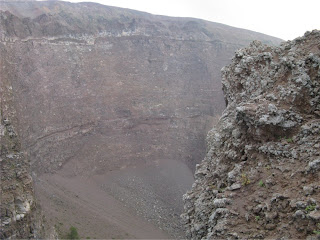
Still smoking. Quick visit.

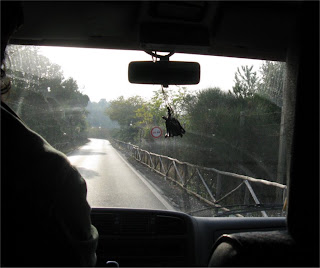
We zoomed down the hill again in our mini-van. Front seat passengers later revealed that the vehicle had no working speedometer (pah, who needs that??) and we’d already figured out there were only four working seatbelts… lucky for us there were only four passengers. Nobody was brave enough to point out to the driver what that ‘no passing’ sign meant as he had clearly decided it was not relevant to drivers in a hurry. However, we were under the protection of the caped crusader, so no harm befell us.


Latest Posts
- (no title)
- Sublime and Twisted Readings coming up!
- Sublime
- Good weather for reading
- The world, the world
- Sublime launch!
Aldeburgh Poetry Festival Barny Haughton BBC BC poets Berkswell blackberries Black Stilt Bologna book launch Borough Market Carlo Petrini Catalonia Cyrus Todiwala dairy Daunt's Books Dijon Edinburgh Fanny Bay Feast of Fields Food and Morality food history food journalism Jenna Butler lardo Malahat Review Michael Pollan Okanagan olive oil tasting olive trees Omnivore's Dilemma Our Food Our Future Oxford Parmigiano-Reggiano Planet Earth Poetry poetry poetry readings Poetry videos prosciutto salumi Sean O'Brien Suffolk ticks Wendy Morton Wired Writing Yvonne Blomer

In her latest collection, Rhona McAdam navigates the dark places of human movement through the earth and the exquisite intricacies lingering in backyard gardens and farmlands populated by insects and pollinators, all the while returning to the body, to the tune of staccato beats and the newly discovered symmetries within the human heart.
“…A beautiful, filling collection, Larder is a set of poems to read at the change of the seasons, to appreciate alongside a good meal, and to remind yourself of the beauty in everything, even the things you may not appreciate before opening McAdam’s collection….”
Rhona McAdam is a writer, poet, editor, and Registered Holistic Nutritionist with a Master’s in Food Culture from Italy and a deep-rooted passion for ecology and urban agriculture. Her work spans corporate and technical writing to poetry and creative nonfiction, often exploring the vital links between what we eat and how we live. Based in Victoria, BC, and available via Zoom, Rhona is always open to new writing commissions, readings, or workshops on nutrition and the culinary arts.
