-
Why I am not submitting anything to this anthology
Read Full Post: Why I am not submitting anything to this anthologyWhile I think “companion animals” sounds like a lovely idea for an anthology, and I commend the Ontario Veterinary College for thinking to celebrate its anniversary by promoting literature on this theme, I must grind my axe on the conditions they’re imposing on contributors, ever so carefully, so as to split just a few familiar hairs.
I have some problems generally with anthologists who invite submissions for which they will offer no payment. A well-worn response by writers to this situation is to ask whether the printers will be paid? The people who make the paper the book is printed on? The truck drivers who transport the finished product? Then why not the creators without whose work the book does not exist? Though even so, being provided copies of the final collection is often enough to mollify me (3 copies in this case).
However. The guidelines for contributors to anthologies suggested in 2006 by the Writers Union of Canada are, I think, worth reviewing, even if they may be overly optimistic in today’s book publishing environment:
Royalties: “As a contributor to an anthology you can reasonably ask for a proportionate share of the authors’ usual royalty calculated on the list or selling price”
Fees: “A rule of thumb is $100 per page per edition in which the contribution will appear”
But to do as the editors of this anthology have done: offer no payment, and then stipulate firstly that the work cannot have been previously published, and secondly, that a reading fee must be paid… either condition is too much, and the two together are downright insulting.
Honestly, do we need the glory of being in print so badly that unpaid writers are willing to subsidize the publication of a collection that celebrates a well-paid profession? (Although perhaps if the publication credit came with a free veterinary visit, I could be persuaded this is a good deal for both sides.)
One question I have is just why the editors specify the submissions must be previously unpublished, and I suspect it may be that they fear copyright entanglements over material published in book form. Perhaps they are simply ignorant of the difference between books and journals, where the latter takes only first serial rights and leaves the author free to publish the work elsewhere.
But I strongly suspect they haven’t actually thought about it in relation to their own unwillingness to pay for the work. Being able to offer a poem, in my case, that has appeared in print for a nominal fee (literary magazines are, with luck, able to offer somewhere between $30 and $60 per poem in this country) takes some of the sting out of having an unpaid second appearance. And if this poem in a literary journal should have been previously read by its small and select readership, what harm does that do to an anthology later on? Particularly in this case, where the aim is not to garner literary creds: it’s a veterinary college, for heaven’s sake, and I’d guess the anthology is destined for the veterinary offices of the nation, not shrines of literature.
But even if the editors were to loosen their restrictions on previous publication, I would be reluctant to spend most of what I might have already earned from a poem in paying a reading fee (between $20-30 depending where you live) to submit it. (Though this fee does provide you with one copy of the anthology, even if you are not accepted for publication in it.)
As you may infer, this is not the first anthology I’ve encountered that puts harebrained restrictions on its contributors and then doesn’t even pay them. Where Canadian publishing is concerned, I’m afraid I continue to feel the pull of a downward spiral of water and a whiff of odure in its vortex.
-
Things to be thankful for
Read Full Post: Things to be thankful forThanksgiving weekend has been and gone, but the sweet taste of harvest still lingers.
We enjoyed a thanksgiving salmon – grateful for the sockeye run this year – and baked it swiftly with garnishes of Black Krim tomato, sprigs of lovage, sliced ginger and lemon and a dollop of my brother’s white wine.

And it was good.
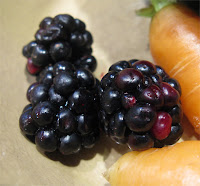
My neighbour passed a little acorn squash over the fence, and I found a trio of thanksgiving blackberries: tasting a bit Octoberish, but still, a glorious gift.
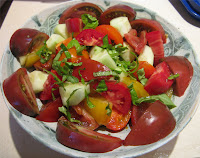
My carrots got a bit stunted but went well with the last of this fall’s epic yield of runner beans. Some organic beets and broccoli from Haliburton, salad of my cucumbers – still producing sweetly – and tomatoes,
a pie of local pumpkin,

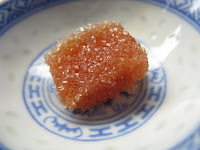
and a few postprandial squares of quince paste rounded things out in a quasi-traditional manner.
The preserving marathon continues unabated. A salmon canning frenzy led me to divvy a whole salmon into ten luscious jars yesterday
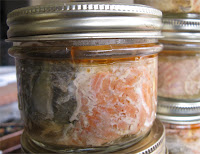
while I was making quince & apple sauce and more quince jelly, which offset any fishy aromas that might have sullied my kitchen.
Things are wrapping up in gardens everywhere. At Haliburton Farm, the harvest was running full-tilt late last week, bringing lots of colour to the farm stand.


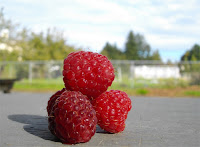
Some late raspberries
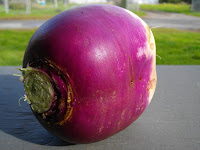
a giant turnip;
a couple of farmers bring it in from the fields.


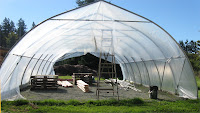
Thanks to time, money, patience and the hard work of volunteers, the greenhouse that was destroyed on Easter weekend has finally been repaired and covered:
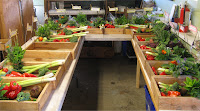
Tomorrow is the final vegetable basket of the year, with next year’s CSA program already oversubscribed:

-
A day of quince
Read Full Post: A day of quinceIt all started innocently enough, with a basket of quince, foraged from my dogsitter (in exchange for a share of the products) and a relatively free day. My ambitions were to make quince paste and quince jelly.


I peeled and trimmed the quince until I had 4 pounds of peels and trimmings, and 3 pounds of quince chunks. I put them in separate pots and started cooking.
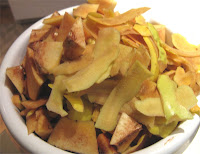


After a short while, the discolouration disappears and the kitchen becomes fragrant with the incomparable scent of cooking quince. It’s a perfume you don’t forget.
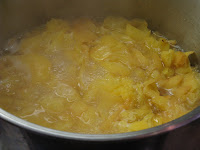
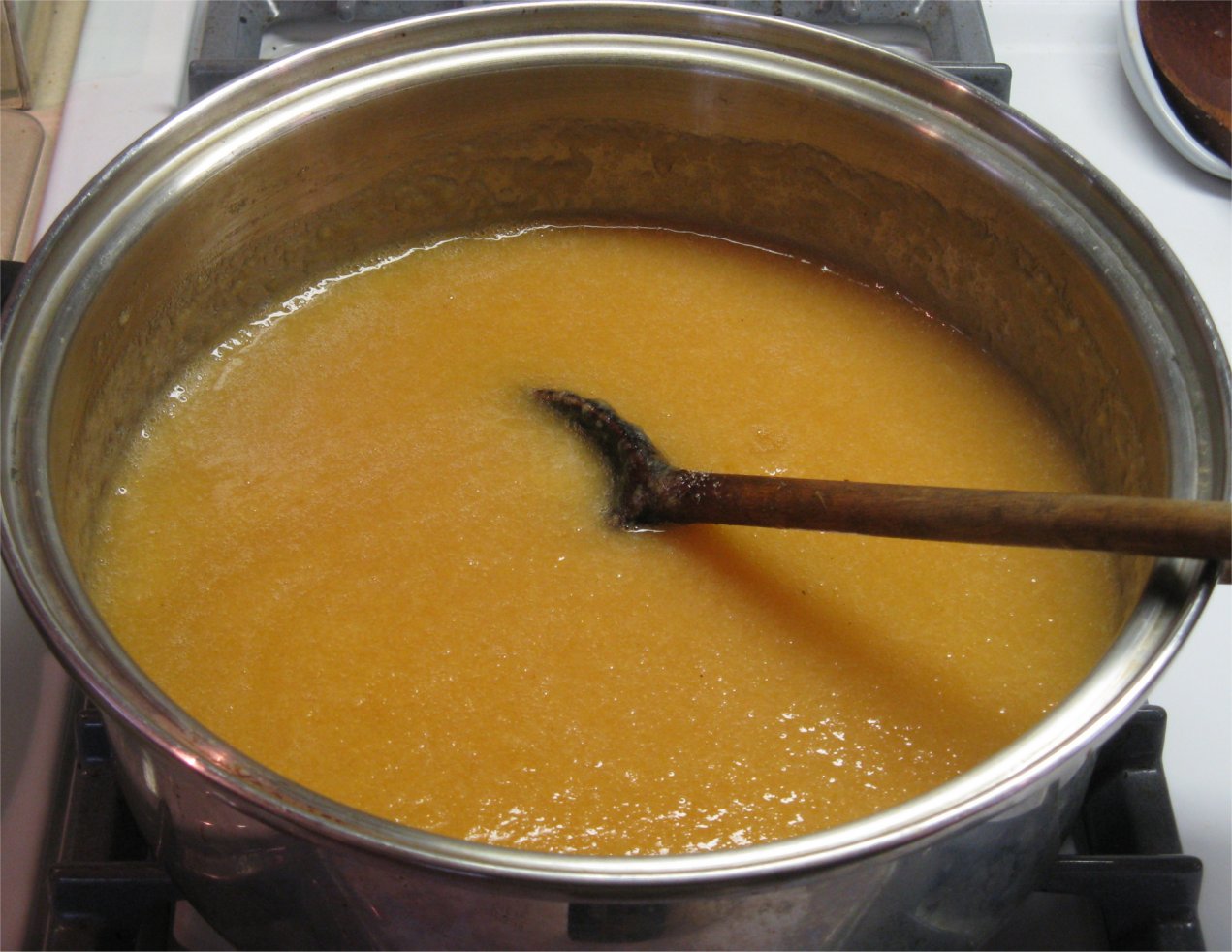
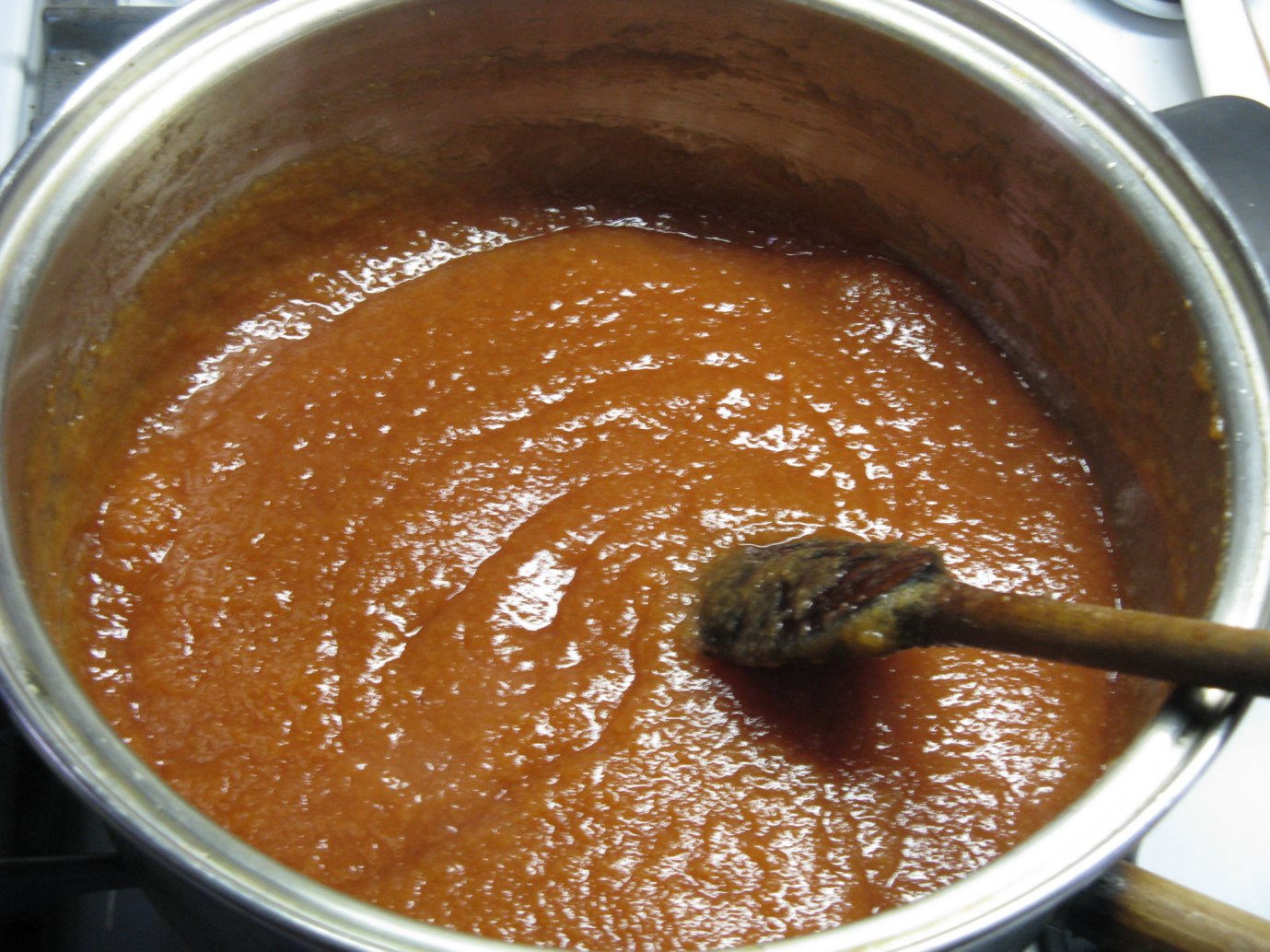
When the quince chunks cooks down and become soft, in about 40 minutes, pass them through a sieve, add sugar, and cook – stirring all the while – for another hour or so until they deepenin colour and become thick. After a point, it gets so thick it starts spitting molten fruit/sugar, which adds a certain frisson to the enterprise. Add the juice of a lemon and spread on oiled parchment paper (actually a teflex sheet in this case) to dry for a couple of days. Once it’s firm enough you can turn it to get air on the other side.


Cube it and roll the cubes in sugar. You can store them for months and months in airtight containers in the fridge.
Meanwhile, the peels and trimmings are cooking and colouring as well. After a couple of hours, they’re darker and ready to strain – never pressing them lest you cloud the liquid – in jelly bags for around 4 hours.

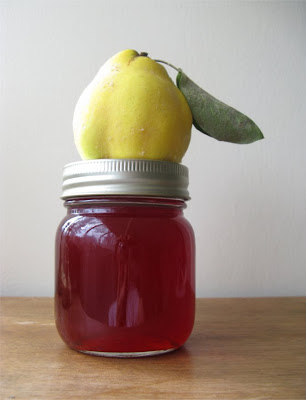
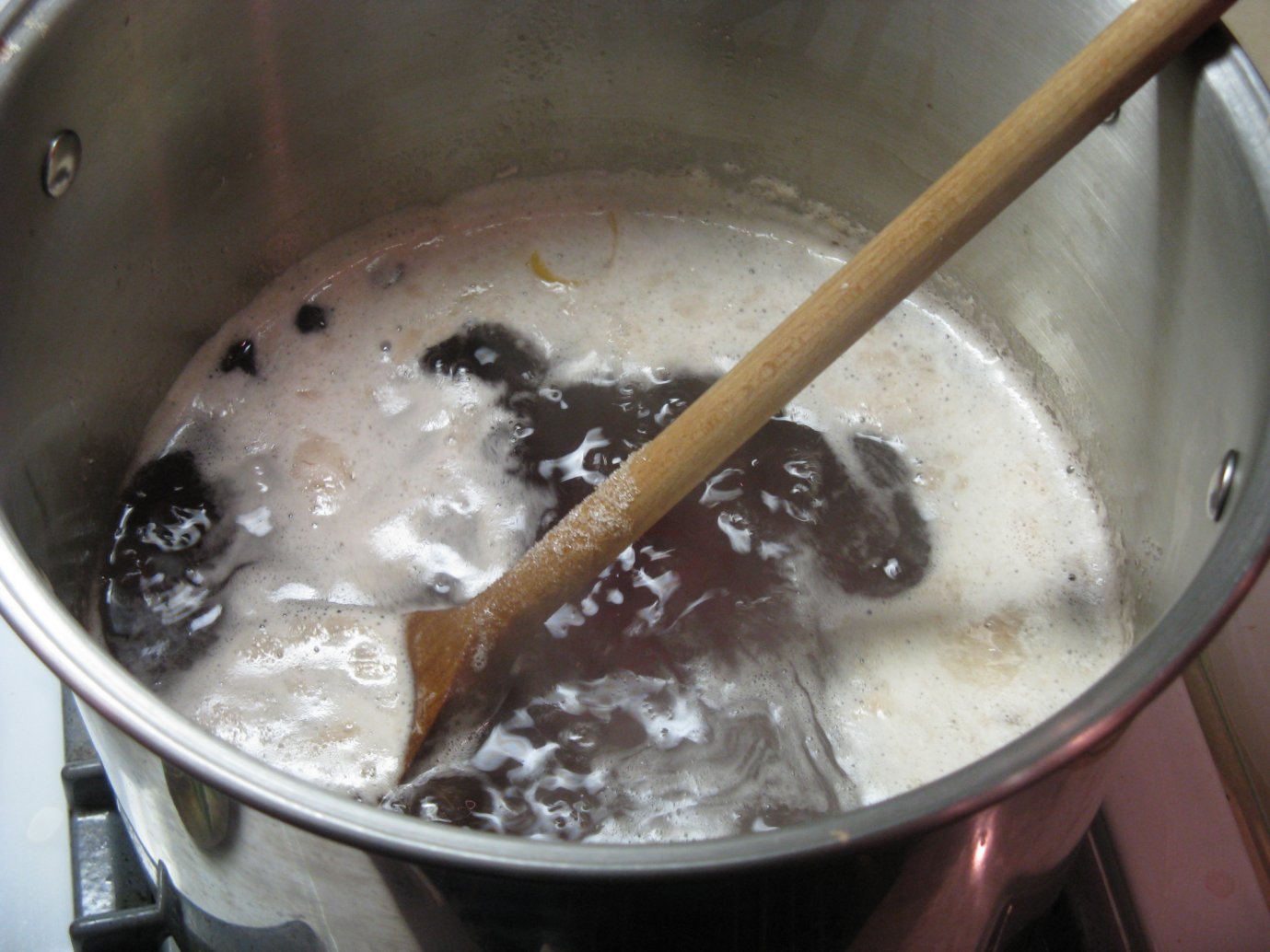
Once the liquid has stopped dripping, return it to the pot with some lemon juice. The sugar, according to my recipe, is measured out (1 pound sugar per imperial pint) and warmed in the oven before adding to the liquid. You then boil it merrily, skimming the foam, until it’s dark and fragrant, and you get a good set. Then jar it up and process as you will.


Hey presto. How pretty!








Latest Posts
- (no title)
- Sublime and Twisted Readings coming up!
- Sublime
- Good weather for reading
- The world, the world
- Sublime launch!
Aldeburgh Poetry Festival Barny Haughton BBC BC poets Berkswell blackberries Black Stilt Bologna book launch Borough Market Carlo Petrini Catalonia Cyrus Todiwala dairy Daunt's Books Dijon Edinburgh Fanny Bay Feast of Fields Food and Morality food history food journalism Jenna Butler lardo Malahat Review Michael Pollan Okanagan olive oil tasting olive trees Omnivore's Dilemma Our Food Our Future Oxford Parmigiano-Reggiano Planet Earth Poetry poetry poetry readings Poetry videos prosciutto salumi Sean O'Brien Suffolk ticks Wendy Morton Wired Writing Yvonne Blomer
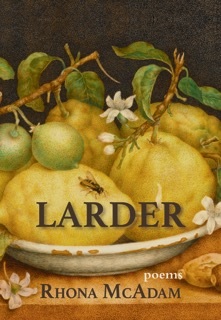
In her latest collection, Rhona McAdam navigates the dark places of human movement through the earth and the exquisite intricacies lingering in backyard gardens and farmlands populated by insects and pollinators, all the while returning to the body, to the tune of staccato beats and the newly discovered symmetries within the human heart.
“…A beautiful, filling collection, Larder is a set of poems to read at the change of the seasons, to appreciate alongside a good meal, and to remind yourself of the beauty in everything, even the things you may not appreciate before opening McAdam’s collection….”
Rhona McAdam is a writer, poet, editor, and Registered Holistic Nutritionist with a Master’s in Food Culture from Italy and a deep-rooted passion for ecology and urban agriculture. Her work spans corporate and technical writing to poetry and creative nonfiction, often exploring the vital links between what we eat and how we live. Based in Victoria, BC, and available via Zoom, Rhona is always open to new writing commissions, readings, or workshops on nutrition and the culinary arts.