-
Cosmetic pesticides, and a poetic loss to Planet Earth
Read Full Post: Cosmetic pesticides, and a poetic loss to Planet EarthThe Government of BC is seeking public input on cosmetic use of pesticides as they consider whether to ban pesticides in BC; email form makes it easy at the Canadian Cancer Society website.
Screenings of A Chemical Reaction – documentary about community action against pesticides and cancer – is being sponsored by the Canadian Cancer Society. Here’s the trailer, followed by two screening times. I think the book that’s being signed might be Paul Tukey’s Organic Lawn Care Manual. But I’m not sure.
VANCOUVER
Jan. 20 — 7 p.m.
(doors open at 6:30)
Park Theatre
3440 Cambie Street
Admission by donation
Book signing
For more information, contact:
Kathryn Seely, Canadian Cancer Society
kseely@bc.cancer.ca or
604-675-7108VICTORIA
Jan. 21 — 7 p.m.
(doors open at 6:30)
David Lam Auditorium
University of Victoria
Admission by donation
Book signing to follow
For more information, contact:
Nancy Falconer
nfalconer@bc.cancer.ca
or 250-380-2358On a final sad note, we in BC – and everywhere her poetry touched – are mourning the loss of our lovely poet PK Page, whose poem Planet Earth sparked much admiration, and a frenzy of glosas in this part of the world.
-
Inconvenient truths: dogs
Read Full Post: Inconvenient truths: dogsWe of the high minds will inevitably run into problems if we try to follow our principles to the letter. If we are pursuing sustainability in all realms – food, finance, environment – we will find along the way some aspect of our lives that does not fit completely, that cannot be perfectly adapted. We are human, living imperfect lives in an imperfect world.
One such imperfection is pets; in my case, elderly dog Anton. The higher principles under which he came to join my household are that he was abandoned – his owner unable to look after him – at too great an age (aged 9, five years ago) to be adoptable. His temperament is not one that allows him to live happily with other dogs, and he is potentially dangerously grumpy if manhandled, which would probably exclude most households with children. So had he ended up in a shelter he’d probably not have made it out the door to a new home. And now we are 14, the complaints and considerable expenses of age are descending with some force.
A recent article in the Calgary Herald points out the large ecological footprint dog ownership leaves, which likens the overall burden to that of a carelessly driven gas-guzzler. The concerns are many: food (largely meat and cereal, usually packaged in plastic bags or plastic-lined tins); poo bags (any old plastic bag has been the norm till recently); water and food dishes (metal and plastic); pet toys (usually plastic, often very cheap and breakable); mileage (driving to walks, grooming, obedience training or veterinary appointments); leashes and collars (a lot of plastics involved); dog houses (lots of plastics unless you build your own); beds (very often man-made fibres covering pillows made of plastic foam or styrofoam beads); veteriarian and grooming supplies (plastic bottles of pharmaceuticals and grooming supplies, pesticides to treat external parasites, plastic syringes, chew collars, combs, brushes, hairdryers, toothbrushes etc); and a whole other world of expenses if you get into dog trials or invest in extras like raincoats, boots, reflective or illuminated clothing/collars, etc. When you look at that list you can see the problem. Which was already indicated by the very presence of pet superstores.
We have got away from the idea of the family dog as a working animal who eats scraps, chews on sticks and defends the household, washing itself when it swims and getting veterinary attention (or the shotgun) when injured. Though some still work – as guide dogs, sniffers or farm animals – more often today’s pet is a sporting or fashion accessory, living therapy to shut-ins, or friend to those isolated by modern life or circumstance. These four-legged child-substitutes end up requiring the same array of appointments as humans – vaccinations, dental treatments, pedicures. We are the problem, and modern pet ownership is costing us dear.
Dog lovers have responded with suggestions on ways to lessen the impact, which are feeble at best. But I’ve been working on changing some of my things that can be done.
Food is something I think a lot about. I do spend about $65 a month on good quality dry dog food, packaged in large paper bags. It is made of meat and cereal, which do have those giant ecological footprints. I supplement this with home made wet dog food, which is made from rice, potatoes, grains and (usually discounted) meats like heart, liver, kidney. I used to buy carrots and frozen spinach, but now incorporate table scraps – very few of these since I seldom cook meat nowadays – and peelings instead, which I throw into the freezer till I have enough. It’s an imperfect mix, but it puts some variety into the dog food. Moreover I found that I could put wet food in the blender, add a bit of starch and bake it for dog cookies – though they also need an energy-intensive spell in the dehydrator as well, to store properly.
Suggestions like biodegradeable dog poo bags are kind of annoying, since biodegradeable plastic won’t degrade if it’s buried within the anaerobic mountain of a landfill. (Compostable bags – which at last sighting cost somewhere around 50 cents each – might do better; and a digester – placed away from food plants – would probably be best.)
The mileage question is a tricky one, and I’ve been thinking that although I can probably cope without a car, even in public-transport-starved Victoria, I can’t cope long-term without a car as long as I am responsible for an old dog. Unlike London, at least in days of yore, there is no option to take a dog on a bus here (unless you can put him in a carrier). Depending on the ailment, I can walk Anton to the vet for most things. But he’s old, and his joints are going, and some of his recent visits have been for cuts in his feet (I suspect thanks to local youth who find evening entertainment in smashing bottles on sidewalks). And the vets within walking distance might not be the ones who give best care. Because he gets hysterical in groomers, I end up having to drive him to a saintly woman in Sidney (about 25km away) for pedicures once a month or so: his nails were not well-tended from the start and do get overgrown and, particularly now he’s getting doddery, cause him mobility problems in the house.
Other things – leashes, collars, dishes – could and should be recycled through thrift stores. Bedding can be made from old blankets and cushions. Home grooming saves money and driving. I grew up with pets, often dogs, which were always treated as animals: they stayed on the floor and they ate what they were given and in return they gave us exercise, affection and entertainment. I am not ready to pull the trigger on old Anton, but when this dog has finally had his day I will have to think hard about whether to replace him.

-
Wicked chicken; meat and methane
Read Full Post: Wicked chicken; meat and methaneChicken is a pretty easy food to like, if you’re a meat eater. It can be made to suit almost any taste, and it’s grown remarkably cheap in my lifetime. The much quoted “chicken in every pot” promise made by – well, it turns out to be Henry IV of France (1553-1610) – suggests it was once a far more exotic food than we make it out to be today.
As usual, it’s a question of getting what you pay for. If you want to eat cheap and easy fast-food chicken strips or nuggets, you may be aware just by looking at them – assuming that you are familiar with what chicken meat looks like that these are certainly not made from strips of meat; rather, from a lot of re-formed chicken bits (mostly skin and fat) surrounded by a lot of salty batter.
If you buy skinless, boneless chicken breasts, or ready-to-cook products, read the label: is there a mention of “seasoning” among the ingredients? If so, you might well be paying for, in essence, salty water which plumps the meat up, adding weight that it will lose when this oozes out during cooking. All quite legal: Canadian Food Inspection guidelines allow it. And the Americans do it, as does Britain and the rest of the EU.
It’s not just chicken that is “seasoned” in this way: our guidelines allow any kind of meat to be injected with flavoured water. But in its industrialized state, chicken breast in particular is so lacking in flavour and texture that it needs something – anything – to try to make it remotely palatable. And if that’s what you get used to eating, that’s what you’re going to think chicken is. Someone told me recently about a colleague who doesn’t much like to cook, so buys those whole rotisserie chickens for the family; but none of them likes anything but white meat, so once they’ve stripped that off, they chuck the rest of the carcass.
And I’ve met people on my dog-walks who buy fresh chicken breasts to feed to their dogs. Indeed, I think Anton’s previous owner, if her departing instruction is to be believed, fed him this way as well.
Honestly. Do we deserve to eat chicken? If it’s only to provide cheap food for the white meat eaters and dog-cosseters that we subject all those miserable birds to short, sad lives, then we don’t deserve our plucky friends.
However, should you wish to right some wrongs and rear your own, wouldn’t it be lovely to do so in one of these darling Eglus? You can meet some other chicken lovers in this sweet documentary, Natural History of the Chicken, which is available (in 6 parts) on Youtube.
And if you’re in Victoria, you could come to the next meeting of the BC Sustainable Energy Association, Burnside Gorge Community Assn., 471 Cecelia Road, off Jutland Rd., 7-9pm, where we’ll have a talk about meat and methane from Dr. Peter Carter, of of the Canadian Association of Physicians for the Environment:
Getting to Zero Carbon: What’s Meat Got To Do With It?
Not only is the industrialized livestock industry one of the biggest emitters of potent greenhouse gases (methane and nitrous oxide as well as CO2) in the world, but
refraining from eating meat is the easiest and quickest way for individuals and families to reduce their carbon footprints on the way to the new age of renewable energy and zero carbon. Dr. Carter will focus on the methane part of the meat equation, since research shows its importance in potential runaway global heating.And I imagine we will be referred to the UN’s report (also cited by Mark Bittman, in Food Matters), Livestock’s Long Shadow.
Let me in closing refer you to this fine poem, Chicken Pig, by Jennifer Michael Hecht.


Latest Posts
- (no title)
- Sublime and Twisted Readings coming up!
- Sublime
- Good weather for reading
- The world, the world
- Sublime launch!
Aldeburgh Poetry Festival Barny Haughton BBC BC poets Berkswell blackberries Black Stilt Bologna book launch Borough Market Carlo Petrini Catalonia Cyrus Todiwala dairy Daunt's Books Dijon Edinburgh Fanny Bay Feast of Fields Food and Morality food history food journalism Jenna Butler lardo Malahat Review Michael Pollan Okanagan olive oil tasting olive trees Omnivore's Dilemma Our Food Our Future Oxford Parmigiano-Reggiano Planet Earth Poetry poetry poetry readings Poetry videos prosciutto salumi Sean O'Brien Suffolk ticks Wendy Morton Wired Writing Yvonne Blomer
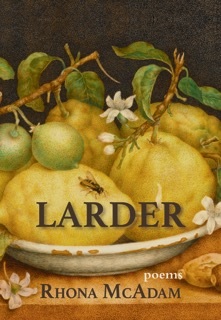
In her latest collection, Rhona McAdam navigates the dark places of human movement through the earth and the exquisite intricacies lingering in backyard gardens and farmlands populated by insects and pollinators, all the while returning to the body, to the tune of staccato beats and the newly discovered symmetries within the human heart.
“…A beautiful, filling collection, Larder is a set of poems to read at the change of the seasons, to appreciate alongside a good meal, and to remind yourself of the beauty in everything, even the things you may not appreciate before opening McAdam’s collection….”
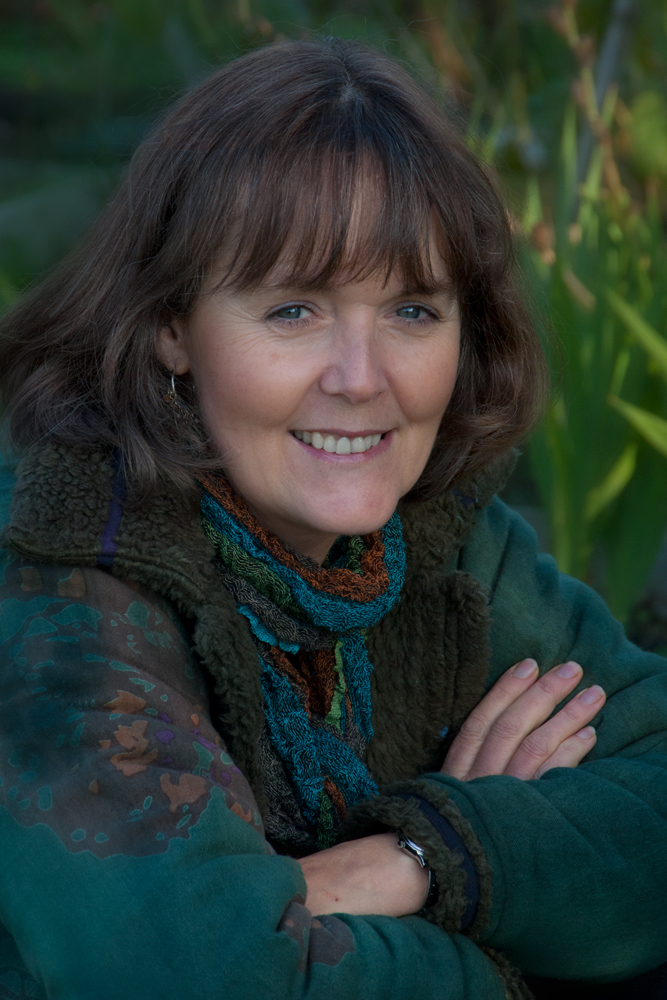
Rhona McAdam is a writer, poet, editor, and Registered Holistic Nutritionist with a Master’s in Food Culture from Italy and a deep-rooted passion for ecology and urban agriculture. Her work spans corporate and technical writing to poetry and creative nonfiction, often exploring the vital links between what we eat and how we live. Based in Victoria, BC, and available via Zoom, Rhona is always open to new writing commissions, readings, or workshops on nutrition and the culinary arts.