-
It’s all in the ingredients: molecular gastronomy and the onward march of genetics
Read Full Post: It’s all in the ingredients: molecular gastronomy and the onward march of geneticsPreferring as I do the simplicity of cooking with ingredients that are easy and relatively inexpensive to lay my hands on, I am suspicious of molecular gastronomy. It strikes me as an unsustainable novelty, requiring specialized equipment and highly processed ingredients. So I am with the feeling behind the Italian government’s ban on chemical ingredients used in molecular gastronomy, in the interests of public safety. Though I think if you really want to eat the stuff, you should be willing to bear the consequences – I doubt most people would be eating Gibbs, Vauquelin or Baumé on a daily basis anyway.
It is hard sometimes not to feel that big biobusiness is winning, through sheer massive persistence and economic might. The approval of genetically modified potatoes and feeds by the European Union is disappointing news, to say the least, coming as it does
“over the resistance of half or more of the EU’s 27 countries”
and
“opposition to such foods by European consumers, who worry about risks such as human resistance to antibiotics and the development of “superweeds” that are impervious to herbicides.”
The problem with letting GMO/GE (pick your acronym of choice) feeds into Europe is that this contaminates European animal products, and it also allows the strong possibility (inevitability?) of rogue crops springing up where the seed falls. EU legislators have apparently learned nothing from the experiences of Mexican corn farmers and Canada’s own Percy Schmeiser.
Meanwhile, Canada has more GE headaches, around the flax contamination issue. Here’s how the GE-Free BC folk are tackling it, by asking for support for Alex Atamanenko‘s private members Bill C474, An Act respecting the Seeds Regulations (analysis of potential harm) with a call to action before the bill is debated on March 17:
In the wake of the discovery of Genetically Engineered flax in shipments to Europe 10 years after that flax was removed from the market, and subsequent bans on Canadian exports of flax to Europe, Bill C-474 will help put pressure on the Canadian government to test adequately GE crops.
Please contact your MP through the CBAN website.
If you would like to start a petition to present to your MP, contact GE Free BC at gefreebc07@yahoo.ca to get a blank petition form. Your MP must present the petition in the House of Commons if you get 200 signatures.
-
Transitioning
Read Full Post: Transitioning
I’ve been to a few meetings of Transition Town Victoria now, including its first birthday party at the end of January
and some momentum seems to be building.

The group, descended from its grandparent in Totnes, addresses the community concerns of those of us who want to start planning now for a life without cheap fossil fuel, which eventuality will change every aspect of our lives, but which politicians and vested corporate interests are apparently trying their best to pretend ain’t going to happen. Which, when it does, could leave us as a species unprepared to face the many inherent challenges of life in a time of energy descent. So small groups of people in many countries are starting to build communities of interest to teach themselves what they will need to know, without waiting for the great lumbering beast of politics to change direction and actually make plans on our behalf.
I’ve been interested in many of the group’s committees, including – no-brainer – the Food group. Most recently I attended a gathering on Reskilling – which aims to identify the skills needed to live in a post-carbon world. Last night we met in the Solstice Cafe


to talk about where to go next.
The possibilities are endless, which makes beginnings elusive; so at our next meeting we’ll define a project we can work on together, which will teach us necessary skills while doing something tangible and useful.
-
Levenson & Cockburn at PEP; First work party at Haliburton Farm
Read Full Post: Levenson & Cockburn at PEP; First work party at Haliburton FarmFriday night’s PEP reading featured Vancouverian Christopher Levenson

and Victorian Grace Cockburn.

Saturday was the first work party of 2010 at Haliburton Community Organic Farm. There was work to be done

and workers to do it

Apple trees to be planted

A hoop house to move and then reassemble

Coffee break

Work started on the nursery greenhouse

Indoor work to be done

Lovely lunch

Workers large and small

Make hay while the rain holds off


Latest Posts
- (no title)
- Sublime and Twisted Readings coming up!
- Sublime
- Good weather for reading
- The world, the world
- Sublime launch!
Aldeburgh Poetry Festival Barny Haughton BBC BC poets Berkswell blackberries Black Stilt Bologna book launch Borough Market Carlo Petrini Catalonia Cyrus Todiwala dairy Daunt's Books Dijon Edinburgh Fanny Bay Feast of Fields Food and Morality food history food journalism Jenna Butler lardo Malahat Review Michael Pollan Okanagan olive oil tasting olive trees Omnivore's Dilemma Our Food Our Future Oxford Parmigiano-Reggiano Planet Earth Poetry poetry poetry readings Poetry videos prosciutto salumi Sean O'Brien Suffolk ticks Wendy Morton Wired Writing Yvonne Blomer
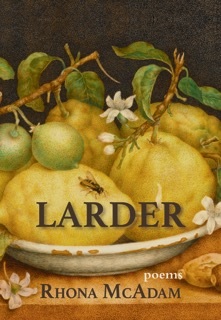
In her latest collection, Rhona McAdam navigates the dark places of human movement through the earth and the exquisite intricacies lingering in backyard gardens and farmlands populated by insects and pollinators, all the while returning to the body, to the tune of staccato beats and the newly discovered symmetries within the human heart.
“…A beautiful, filling collection, Larder is a set of poems to read at the change of the seasons, to appreciate alongside a good meal, and to remind yourself of the beauty in everything, even the things you may not appreciate before opening McAdam’s collection….”
Rhona McAdam is a writer, poet, editor, and Registered Holistic Nutritionist with a Master’s in Food Culture from Italy and a deep-rooted passion for ecology and urban agriculture. Her work spans corporate and technical writing to poetry and creative nonfiction, often exploring the vital links between what we eat and how we live. Based in Victoria, BC, and available via Zoom, Rhona is always open to new writing commissions, readings, or workshops on nutrition and the culinary arts.