-
Back online to see out 2013
Read Full Post: Back online to see out 2013 Things have been on hold here at the cafe for a couple of months. There has been activity I could have reported on, but I’ve been tied up with other matters, and took an unscheduled break while paddling the river of life and pondering the future of this forum. It’s been nearly nine years since I started, and many things have changed.
Back in 2006, I started the blog to muse on food and poetry which were my main interests du jour. There has been, sadly, much less poetry in my life over the past year or so, although writing of various kinds has been happening. But I can happily announce that a new poetry collection – Ex-ville – will be published by Oolichan, hopefully in late 2014.
I’ve been paying more attention to nonfiction over the past couple of years, while
 Digging the City came into being – and continues to gratify me with positive reviews both published and anecdotal (anyone out there want to review it on Amazon by the way?). The rest of my writing has been sparse posts here and more numerous but sparser posts in my Facebook pages (and please feel free to Like those pages – one for Digging and one for me the writer).
More of my time over the past year has continued to be spent on food, as eater, cook, writer and student. The food security concerns I documented in Digging the City have unfortunately not changed much. My experience at the University of Gastronomic Sciences continue to inform my interests, and my writing, but nutritional studies at the Canadian School of Natural Nutrition have led me into a different way of looking at food. I’m fascinated by the possibilities for healing by simply eating the right foods; but there seems to be little agreement on what those are. (Lots of consensus on what many of the wrong foods are, though!) My chief concerns are for foods that are healing, nutritious and able to be locally produced.
So.. watch for posts from the blog in the new year; maybe not so frequent, but trying to bridge food security, urban agriculture and nutrition with the usual odd sprinklings of poetry and travel.
Meanwhile: happy new year! Be sure to eat something nice and read something good. Here are my books of the year = enjoy!!

-
It’s all about the apples
Read Full Post: It’s all about the apples Actually, other fruit trees too, but this weekend is a double whammy: Plant a Fruit Tree Day and the Salt Spring Island Apple Festival. There will be rain, but there will be fruit as well.. ya can’t have one without the other.
Plant a Fruit Tree Day Saturday Sept 28th 10am-4pm!
In partnership with the Victoria Compost Education Centre and Fernwood NRG, this will be a day of community orchard education and celebration. There will be fruit and nut tree growers, live music, food and mini workshops on home orchard creation all day. (Note: for those watching for it, the talk by Seann Dory, SoleFood Farms, has been cancelled)
When: Sat September 28th 10am-4pm
Where: Fernwood Community Centre 1240 Gladstone Avenue, Victoria BCAnd after last year’s disappointing cancellation (bad weather plus tent caterpillar devastation of the orchards on Salt Spring) there will be a lot of enthusiasm for this year’s Salt Spring Island Apple Festival, coming up on Sunday September 29. Just take a peek at the 300+ varieties exhibited in 2011!
When: Saturday September 29 from 9am till 5pm.
Tickets: $10 each, students $5, kids under 12 free. Tickets available ONLY on Festival day at Fulford hall and outside the Ganges tourist info centre. Admission includes a map of Salt Spring showing locations of host farms descriptions of each. Participants choose locations they wish to visit and will be challenged to see everything within the hours of between 9-5.
Location: Fulford Hall, 2591 Fulford Ganges Rd, Salt Spring Island and host farms around the island. -
Public market opens
Read Full Post: Public market opens Victoria’s long-awaited public market at the Hudson’s grand opening sprawls over this entire weekend.
Want to get out of the drizzle on Sunday? Come and say hello in the nice dry market space where from 11am till 5pm, I’ll be perched at a table for Digging the City. with books and a bit of community information about the Gorge Tillicum Urban Farmers. At 11:15 I’ll be stepping into the community kitchen to read from my book, and talk about the Gorge Tillicum Urban Farmers community seed bank initiative.
There will also be
local food, fun, entertainment, featuring local food centered non-profits, who will have day tables to highlight their good work and will provide programing for the Community Kitchen (cooking demonstrations. Kids entertainment will include free face-painting (11-2pm) and balloon twisting (12-2pm), and food and garden focused activities by Lifecycles and Compost Ed Centre.


Latest Posts
- Writers at Word!
- Sublime and Twisted Readings coming up!
- Sublime
- Good weather for reading
- The world, the world
- Sublime launch!
Aldeburgh Poetry Festival Barny Haughton BBC BC poets Berkswell blackberries Black Stilt Bologna book launch Borough Market Carlo Petrini Catalonia Cyrus Todiwala dairy Daunt's Books Dijon Edinburgh Fanny Bay Feast of Fields Food and Morality food history food journalism Jenna Butler lardo Malahat Review Michael Pollan Okanagan olive oil tasting olive trees Omnivore's Dilemma Our Food Our Future Oxford Parmigiano-Reggiano Planet Earth Poetry poetry poetry readings Poetry videos prosciutto salumi Sean O'Brien Suffolk ticks Wendy Morton Wired Writing Yvonne Blomer
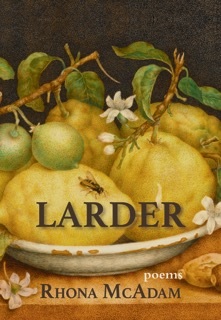
In her latest collection, Rhona McAdam navigates the dark places of human movement through the earth and the exquisite intricacies lingering in backyard gardens and farmlands populated by insects and pollinators, all the while returning to the body, to the tune of staccato beats and the newly discovered symmetries within the human heart.
“…A beautiful, filling collection, Larder is a set of poems to read at the change of the seasons, to appreciate alongside a good meal, and to remind yourself of the beauty in everything, even the things you may not appreciate before opening McAdam’s collection….”
Rhona McAdam is a writer, poet, editor, and Registered Holistic Nutritionist with a Master’s in Food Culture from Italy and a deep-rooted passion for ecology and urban agriculture. Her work spans corporate and technical writing to poetry and creative nonfiction, often exploring the vital links between what we eat and how we live. Based in Victoria, BC, and available via Zoom, Rhona is always open to new writing commissions, readings, or workshops on nutrition and the culinary arts.