-
Permaculture & poetry
Read Full Post: Permaculture & poetry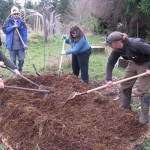 The last couple of weeks have swung past in a mainly permacultural haze.
The first screening at a new permaculture film night series was Anima Mundi, a bit of a collective disappointment for the 20-odd souls who crowded into the Community Microlending Society office, but a cheery networking session, lively discussion and helpful information share ensued.
I went for my second round of Permaculture Design classes last weekend, in which we built a hot compost bed in a classically low-maintenance permacultural manner (meaning: let nature do its thing). We prepared the ground by sheet-mulching with layers of cardboard; built a hollowed shell from horse manure; filled it with weeds and seriously rotten kitchen waste; and then covered it with more horse manure. Rats apparently don’t care to dig through manure to get to rotten food. You can then plant squash on top, which keeps the weeds down and thrives on the nitrogenous waste beneath. And harvest fresh soil in a year’s time, when the hill will have sunk to about ground level. Or leave it in place and plant something else there.


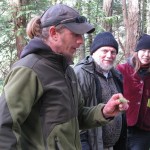
Later we went for a forest walk with Brandon Bauer in order to test our powers of observation and taste a few ants. Very tasty indeed. A sharp organoleptic explosion that Brandon likened to tamarind or vinegar; I’d say a very acerbic sorrel.
There’s a nice-sounding workshop I won’t make it to this weekend, An Introduction to Home-Scale Permaculture with Elaine Codling; and the Duncan Seedy Saturday takes place that day as well.
And finally, back to poetry. I read with Ruth Pierson and Ted Blodgett at Vancouver Public Library last night and a good time was had by all, I’d say. I read food poems to one of the most responsive and delightful audiences ever, and sold lots of books, including the last few copies of Sunday Dinners. If you have one, you can now officially treasure it as a rare book.
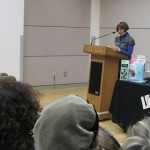
Ruth Roach Pierson 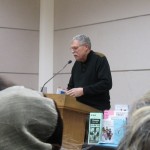
E.D. Blodgett -
Catching up: farmer-writers, DIY publicity, food swap & Wade Davis
Read Full Post: Catching up: farmer-writers, DIY publicity, food swap & Wade Davis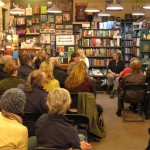 I had the chance a couple of weeks ago to mosey down to Cadboro Bay Books to catch Farmers at the Mike – an evening with organic farmer-authors Heather Stretch, Robin Tunnicliffe, Rachel Fisher (who make up Saanich Organics) with special guests Mary Alice Johnson and Lana Popham. They were promoting All the Dirt: Reflections on Organic Farming and talking about the life and times of organic farming. It was a packed house and a congenial time.
I then had a chance to check out The Writers Union of Canada‘s professional development workshop, How to Be Your Own Publicist, which was outstandingly good. Heavy on use of social media, it also gave some good practical ideas for promoting books and relationship-bulding with readers. I’m not sure how far I want to go with social media but I’m pretty much in there for now: with this blog, a facebook page and twitter account I think I have as much as I can cope with. I took a look at Pinterest which was touted as the next new thing but swiftly went off it when I learned you could seemingly only access it through Facebook or Twitter and that it wanted to take some control of these media: most off-putting was its statement that if I joined it through Twitter I’d be giving it permission to see who I follow, and have me follow new people; update my profile; and post tweets for me. Which rather defeats the point of having one’s own profile and posting one’s own tweets, I would have thought.
Then it was on to Nanaimo for permaculture classes. I’m enrolled in a permaculture design certificate program that will keep me busy until mid-May. I’ve heard bits and pieces about it – knew some of the permaculture principles, had seen bits and pieces about permaculture’s founders, Bill Mollison and David Holmgren – but wanted to get a more coherent picture. This course was perfectly timed I thought: every other weekend, so time to think, absorb, apply; and running through the spring when there is the possibility to put some of the ideas into action in one’s own garden. Though the Bullock Brothers are held up as the gold standard for permaculture training, their courses are residential, in a two week block in the middle of summer when it’s hardest to get away.. and I’m a bit past wanting to camp for the duration. So I’m happy with this, and Javan Bernakevitch is proving an excellent facilitator. We did mostly introductory work, getting to know one another (16 in the class now) and some exercises in familiarizing ourselves with zones, sectors and elements. This week we’re getting into the compost, so that should be fun.
The course is being held in the Pacific Gardens Cohousing Community which is a housing concept I’d been interested in for a while, so it’s good to have a chance to really get to know it and see how things work there. It’s only been going for a couple of years and is in a pretty wonderful location. I like the common spaces – workshop, crafts room, music room – and most importantly, the compost, orchard and raised beds for food production.
I returned in time to host a food swap which yielded some fine bounty: freshly ground garam masala spice mix; freshly ground flour; fresh farm eggs; and some canned peaches and a chocolate-beet-hazelnut cake.
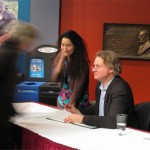 Wade Davis spoke to a packed house in Victoria last week – he filled the IMAX theatre in his home town, on a tour to promote his latest book and cause, The Sacred Headwaters. It’s about the northwestern part of BC where the Skeena, Nass and Stikine Rivers originate. All are important salmon rivers, and the tribal homes of the Tahltan First Nation who hunt and trap in the area. There is also abundant wildlife – grizzly bears, stone sheep and Osbourn caribou – and unfortunately for all of the above, abundant minerals including copper and coal.
Imperial Minerals has already got the go-ahead from the BC government to run the Red Chris mine, (open-pit mining of copper and gold) in the area for 30 years; now Royal Dutch Shell wants to extract coal bed methane gas there. Both operations are of course hugely contaminating. The Red Chris mine will be turning pristine lakes into toxic tailing ponds, and methane gas extraction involves drilling and fracking, which means prolific water use and contamination.
The Skeena Watershed Conservation Coalition offers some ways to get involved in asking Shell to back off: petition, letters and actively joining the campaign.
-
Visiting Cuban agronomist at UVic this Friday, with music
Read Full Post: Visiting Cuban agronomist at UVic this Friday, with musicThe University of Victoria’s Geography department with the Office for Community-Based Research, the SOGS (Society of Geography Students), and the department of Sociology are pleased to co-present:
Travelling from Agri to Culture:
The secrets of Myko on Rural Innovation in CubaFriday, March 2nd: 3-5pm
Geography dept, Social Sciences and Math Building, Room B211
3-4pm The talk: This special Friday colloquium will illustrate Dr. Rios’ work through a musical journey telling the story of Myko – a folk musician and an agricultural sciences PhD student traveling the Cuban countryside as the country switched from industrial farming to ecological agricultural practices.
Dr. Humberto Ríos Labrada was the 2010 recipient of the Goldman Environmental Prize, one of the highest distinctions for grassroots leaders of environmental initiatives. Working towards increasing biodiversity and resilience in agricultural systems, Dr. Rios’ work includes participatory plant breeding and farmer to farmer knowledge sharing as key components.
All undergrad, graduate students, faculty, staff and community are invited to attend the talk and join in the music hosted by Humberto Ríos Labrada and his son Humberto Ríos Rodriguez this Friday afternoon!!
4-5pm – MUSIC Jam!
Bring instruments ! Some refreshments provided !
Check out a Youtube video of Dr. Rios’ work.
Latest Posts
- Sublime
- Good weather for reading
- The world, the world
- Sublime launch!
- Planet Earth Poetry – Readings by Volunteers, Victoria 2026
- Poetry at the Goldfinch
Aldeburgh Poetry Festival Barny Haughton BBC BC poets Berkswell blackberries Black Stilt Bologna book launch Borough Market Carlo Petrini Catalonia Cyrus Todiwala dairy Daunt's Books Dijon Edinburgh Fanny Bay Feast of Fields Food and Morality food history food journalism Jenna Butler lardo Malahat Review Michael Pollan Okanagan olive oil tasting olive trees Omnivore's Dilemma Our Food Our Future Oxford Parmigiano-Reggiano Planet Earth Poetry poetry poetry readings Poetry videos prosciutto salumi Sean O'Brien Suffolk ticks Wendy Morton Wired Writing Yvonne Blomer
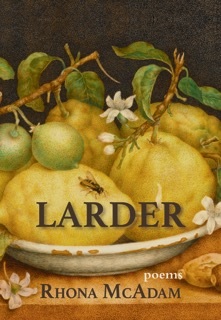
In her latest collection, Rhona McAdam navigates the dark places of human movement through the earth and the exquisite intricacies lingering in backyard gardens and farmlands populated by insects and pollinators, all the while returning to the body, to the tune of staccato beats and the newly discovered symmetries within the human heart.
“…A beautiful, filling collection, Larder is a set of poems to read at the change of the seasons, to appreciate alongside a good meal, and to remind yourself of the beauty in everything, even the things you may not appreciate before opening McAdam’s collection….”
Rhona McAdam is a writer, poet, editor, and Registered Holistic Nutritionist with a Master’s in Food Culture from Italy and a deep-rooted passion for ecology and urban agriculture. Her work spans corporate and technical writing to poetry and creative nonfiction, often exploring the vital links between what we eat and how we live. Based in Victoria, BC, and available via Zoom, Rhona is always open to new writing commissions, readings, or workshops on nutrition and the culinary arts.