-
Meat and cheese
Read Full Post: Meat and cheeseToday when the UK is again struggling with Foot & Mouth disease, I have retreated to the couch where I have been reading a terrific book, Last Chance to Eat, by a Canadian (via England) food writer, Gina Mallet.
Although it’s full of interesting facts, figures, anecdotes and recipes, I’ve found (thanks to this year’s education) two factual errors. One of the errors – that sent me running for my cheese technology notes – has to do with Parmigiano Reggiano cheese, which she says can only, according to the rules of the “Dominazione di Origine Controllata… be made only between 15 April and 11 November, when the cattle – producers of a quality milk called Pezzato Rosso – are grazing on fresh grass rather than eating silage.”
What is wrong with this statement is: there is no date restriction on production of Parmigiano-Reggiano cheese (it’s made year round); and the cattle are not allowed to eat silage or to graze on fresh grass because of the risk they might eat wet grass that has the same fermentative effect as silage. Fermented feed puts the milk at risk of developing heat-resistant bacteria, butyric clostridia, which causes cracks and holes in the cheese paste, making the cheese unsaleable as Parmigiano-Reggiano. (The cows producing milk for Parmigiano-Reggiano are, for this reason, not free range; they spend their lives in cow sheds.)
The regulations actually specify no silage, to preserve the safety of the cheese, the reliability of the ripening process, and the purity of the flavour. The rules are laid out and administered by the Consorzio del Formaggio Parmigiano-Reggiano.
The Pezzata Rossa she mentions is a traditional breed of cow once widely used for Parmigiano-Reggiano production, and is still used for a more exclusive product, Parmigiano-Reggiano delle Vacche Rosse. But since there is no restriction on the type of cow used for Parmigiano-Reggiano, dairies use higher yield breeds like Friesians.
The other error I came upon is to do with BSE, mad cow disease and its human incarnation, variant CJD, which Mallet attributes to 109 sufferers identified in 1993 having eaten more veal than others. But I remembered it being reported that the 10 sufferers identified in 1996 had eaten more beef (except for the one case who was vegetarian, presumably) – the highly processed kind, found in pre-fab meat pies, frozen burgers and the like, where presumably there is more animal byproduct than you’d normally be consuming.
And according to a WHO fact sheet on the subject, “infectivity is mainly found in the brain and spinal cord of clinically ill animals over two years of age.”
Anyway, the latest statistics for world-wide infection show that there have been a world-wide total of 201 infected through to July 2007. So I’m not sure where the figure of 109 UK cases came from; perhaps there was some early confusion between sporadic CJD and variant CJD.
Anyway it led me into some interesting reading around veal, including a piece by the rather fierce Guardian food writer, Joanna Blythman, which is a good summary of the ‘why to eat more veal’ argument – which hinges on the biological fact of dairy, namely that cows must get pregnant and give birth in order to lactate and give us milk and dairy products, resulting in a living byproduct, namely veal. Which is a point most of us, in our blissful detachment from the source of our food, have never considered, in our haste to condemn veal crates, which are banned in Europe from this year in any case.
An amusing animation about dairy farming in the US…
And finally, if you liked The Matrix, you’ll love The Meatrix.
-
Friday in Parma
Read Full Post: Friday in ParmaHappy to say the weather has continued to be bearable – verging on glorious. Amazing what a couple of weeks of devastating heat can do to your standards of what is ‘hot’. It does help not to have to get on a sweltering bus twice a day as well, of course.
It’s been a week of catching up – on sleep, on correspondence, and cleaning and packing up ready for what lies ahead. We are all heading towards our internships: a couple of months of assorted projects. Some will go to Slow Food, others to Eataly, another to the Barcelona markets; others will be slinging curds at Murray’s Cheese or bopping round Bordeaux Quay. Me, I’ll be back in London, and working at London Food Link.
Meanwhile, a couple of lost friends reappeared in various guises: like Aileen Downey, a fabulous voiceover actress whose history has included a role as a rabble-rousing Russian revolutionary at the ill-fated London MOMI, as well as time spent slaving over database entries. (Some of you will be able to guess which of those career highlights converged with mine.)
I filled in my registration form for the Food & Morality conference in Oxford, and looked over the offerings at the Bristol Poetry Festival. I’m doing a reading in Bath in September and sniffing round for others, though it’s probably too late to set anything more up at this point.
Cousin Tina sent me to this article about losing your parents in adulthood, which I share now with my fellow orphans. I liked this bit:
While the fact of your parents’ death ceases, with time, to be your first waking thought, the map of grief has many roads which, I suspect, one travels in some form or another for the rest of one’s life.
-
Slightly cooler and ever so much nicer in Parma
Read Full Post: Slightly cooler and ever so much nicer in ParmaIt’s a mercifully cooler day here in Parma, and I’m sitting with my windows boldly open at 11.30 in the morning, fans off, enjoying a breeze. I can honestly say that’s a sentence I haven’t been able to write for months, and I’m grateful to be able to do it now.
Last night we had another farewell gathering: they get smaller and smaller as people take off for their summers ‘n stages. About half a dozen of us were having a glass of wine together around 9pm when our chairs began to shake gently. We’d been talking about fast food, and although at first we suspected it was the Wrath of Carlini, we swiftly arrived at the conclusion we’d just experienced a mild earthquake (measuring 4.6, as it happens).
Oddly enough, I had been reading only on Sunday in my guidebook which told me that Parma’s duomo was
“erected on the present site by heretic bishop Cadalus, who later became antipope Honorius II, but was destroyed by the violent earthquake of 1117 that shook the whole Po valley and left only parts of the apses standing.”
We finished our glasses and headed into a breezy, almost chilly, evening and washed up at Sorelle Picchi, where I’d had my lunch, and this time ordered a big bowl of cappelletti in brodo, which were absolutely delicious.
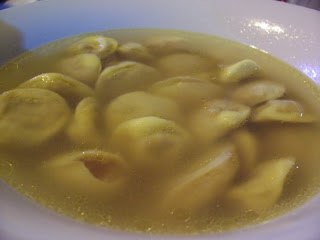
While we were waiting for our food, we saw a man who’d stopped us on the street to ask if we’d felt the earthquake. He was in his seventies, I’d guess, and had his white table napkin draped around his neck: he and his wife, who hovered in the background, had been eating supper in their fourth floor apartment when they felt the vibrations and fled into the street, thinking Parma must be at the epicentre of some awful disaster, and were too afraid to go back inside. He paced up and down stopping everyone – passers-by, tourists, policemen – looking for some kind of reassurance. he disappeared eventually, but I saw him out on the street again this morning, still anxious but lacking his napkin.
Meanwhile I was spending some time today looking at YouTube videos and happened upon one for Unisg. It starts off well but then gets a little draggy with fuzzy tourist shots of Delhi and chops off suddenly at the end. But it was a delightful surprise:


Latest Posts
- Writers at Word!
- Sublime and Twisted Readings coming up!
- Sublime
- Good weather for reading
- The world, the world
- Sublime launch!
Aldeburgh Poetry Festival Barny Haughton BBC BC poets Berkswell blackberries Black Stilt Bologna book launch Borough Market Carlo Petrini Catalonia Cyrus Todiwala dairy Daunt's Books Dijon Edinburgh Fanny Bay Feast of Fields Food and Morality food history food journalism Jenna Butler lardo Malahat Review Michael Pollan Okanagan olive oil tasting olive trees Omnivore's Dilemma Our Food Our Future Oxford Parmigiano-Reggiano Planet Earth Poetry poetry poetry readings Poetry videos prosciutto salumi Sean O'Brien Suffolk ticks Wendy Morton Wired Writing Yvonne Blomer
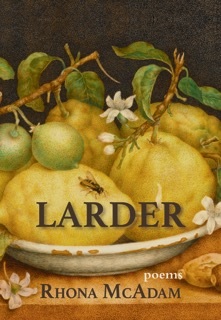
In her latest collection, Rhona McAdam navigates the dark places of human movement through the earth and the exquisite intricacies lingering in backyard gardens and farmlands populated by insects and pollinators, all the while returning to the body, to the tune of staccato beats and the newly discovered symmetries within the human heart.
“…A beautiful, filling collection, Larder is a set of poems to read at the change of the seasons, to appreciate alongside a good meal, and to remind yourself of the beauty in everything, even the things you may not appreciate before opening McAdam’s collection….”
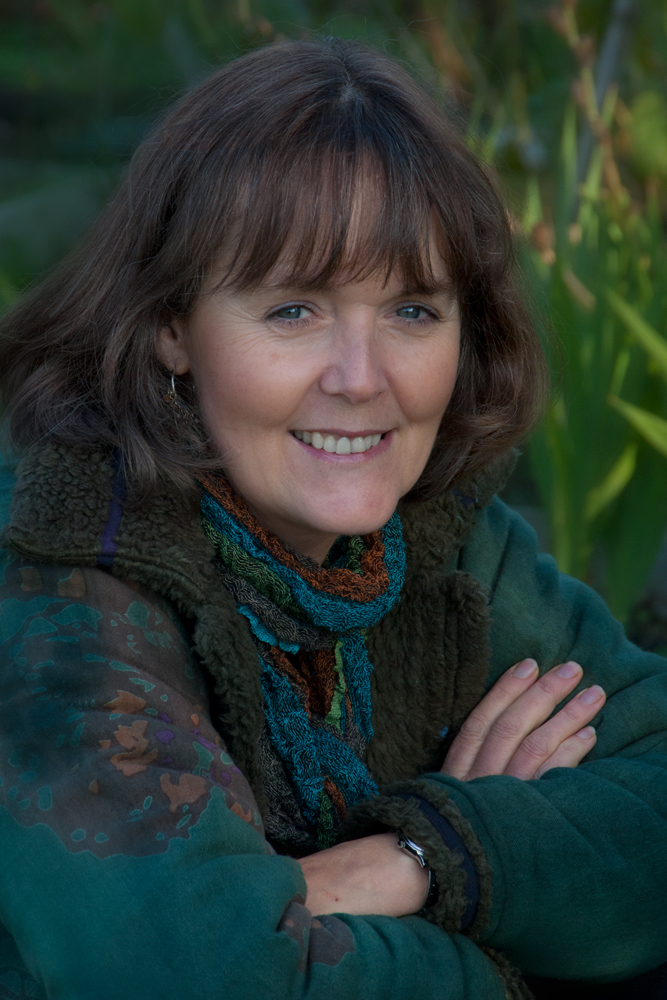
Rhona McAdam is a writer, poet, editor, and Registered Holistic Nutritionist with a Master’s in Food Culture from Italy and a deep-rooted passion for ecology and urban agriculture. Her work spans corporate and technical writing to poetry and creative nonfiction, often exploring the vital links between what we eat and how we live. Based in Victoria, BC, and available via Zoom, Rhona is always open to new writing commissions, readings, or workshops on nutrition and the culinary arts.