-
Scared of our food
Listening to the periodic updates on the salmonella in your fast food tomato (or is it the peppers or is it the salsa or what the heck is it anyway) made me run back to Michael Pollan for comforting words. His 2006 article (remember the spinach E. coli scare?), the Vegetable-Industrial Complex, has a lot to say to today’s issues and is worth revisiting, or just plain visiting if you missed it the first time.
If you don’t want to read the whole article, I like this bit in particular:
Wendell Berry once wrote that when we took animals off farms and put them onto feedlots, we had, in effect, taken an old solution–the one where crops feed animals and animals’ waste feeds crops–and neatly divided it into two new problems: a fertility problem on the farm, and a pollution problem on the feedlot.
Timely thoughts, now that we’re in the season of growing and farmers marketing. The trust that Pollan talks about with respect to produce he buys from stallholders he’s known and patronised for years is missing from what you pick up off a supermarket shelf, or from a fast food counter. And he makes another important point, one that small BC meat producers will recognise, about governments punishing small farmers in their efforts to impose safety measures on industrial-scale farming.
On that very topic, I happened upon a recent podcast of the always interesting Kootenay Coop Radio program, Deconstructing Dinner, which was about The Culture of Meat and features an interview with Susan Bourette, the author of Carnivore Chic: From Pasture to Plate, A Search for the Perfect Meat.
-
Organic Islands, featuring Percy Schmeiser
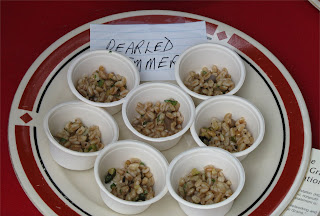
The Organic Islands festival took place last weekend, and we went for a sunny Saturday afternoon of tastings and talks and music. Found some Emmer (aka Farro, in Italy) an ancient wheat now being grown for the first time on Vancouver Island.
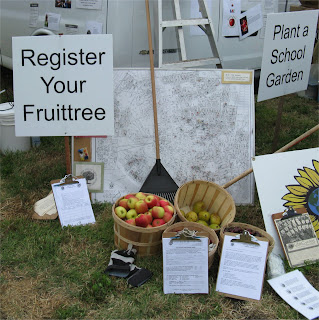
There were interesting causes to support, like this one where you can register your fruit tree and have others pick and use your fruit if you don’t want all of it.
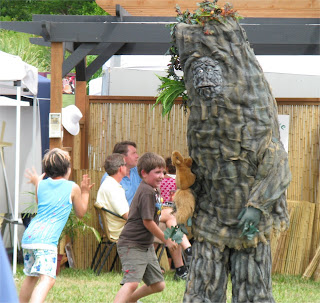
A lost tree being tormented by small children.
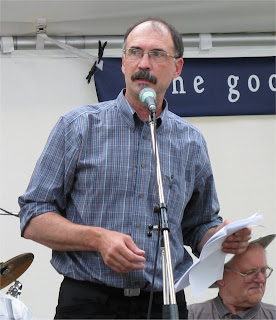
One of the events we wanted to catch was the GE Free BC panel, featuring Yukon farmer Tom Rudge,
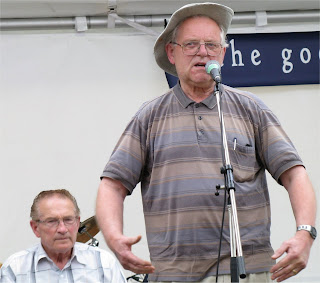
Powell River politician Colin Palmer,
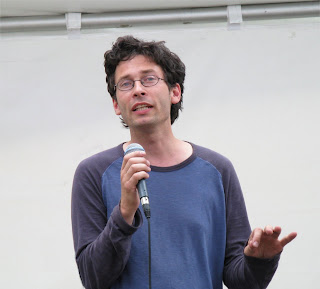
activist Josh Brandon from Greenpeace,
and special guest Percy Schmeiser,
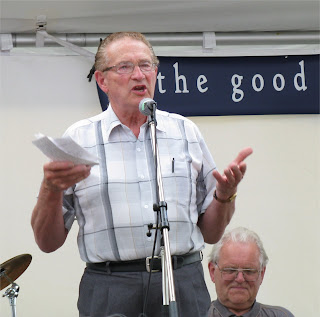
whose story I knew from CBC coverage and films like The Future of Food and Life Running Out of Control.
Schmeiser impressed me with his speaking skills. I hadn’t known he was a former MLA as well as a farmer. I did know he was a life-long seed developer who had spent $400,000 and 7 years of his life fighting Monsanto on the grounds of patent infringement when Monsanto found GM (Roundup-Ready) canola growing on Schmeiser’s field in 1998.
The rather alarming issue of GM canola crossing itself with non-GM canola is something Schmeiser talks a lot about: “You can’t contain nature” is his mantra, and the message he dearly wants to deliver to regions tempted to introduce GM crops alongside non-GM.
Canola, a Canadian cross-bred (not genetically-modified) brassica plant that was developed in the 1970s, is an important crop because it is used for vegetable oils (lower in saturated fats than any other oil) and animal feed as well as a rotation crop.
Canola has proven it doesn’t obey corporate laws of ownership and whether through wind, rain, pollen drift, flood or spillage, GM and non-GM canola have interbred right across Canada and pretty much killed the country’s organic production of canola (no GM crops or products are allowed in Canadian organic production).
Not only does being GM make the contaminated crops unexportable to the many countries which do not allow GM imports, it also – from Schmeiser’s experience – makes those crops, and their seeds, the property of Monsanto, since you have, willingly or not, and no matter to what degree, ended up growing a Monsanto-engineered plant. This is anathema to farmers who have traditionally saved seed from their own crops to plant the next year. But if you grow GM plants, Canadian patent law prevents you from saving and sowing or trading or selling that seed, since it includes Monsanto technology and is therefore not yours to do with as you please. To reinforce this message, farmers who buy the seed are required to sign Technology Use Agreements which forbid farmers from re-using seed, and require that they purchase new seed each year
Schmeiser also talked about the promises Monsanto had made: higher crop yields, better nutritional content, decreased use of pesticides (insecticides and herbicides), an end to world hunger. Instead, the crop yields from GM crops are lower, nutritional values from industrial crops are demonstrably down, and the potency of today’s Roundup is 4x what it was ten years ago because glyphosate-resistant strains of weeds (superweeds) have evolved; the content of new herbicides currently used in Saskatchewan includes Dioxins, which have toxic effects on human health and are largely passed to humans through the food supply.
Standing ovation…
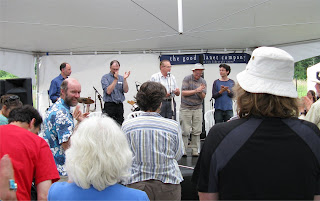
Also discussed by the panel was the point about there being no research about GM crops aside from what Monsanto itself funds, selects and publishes, and how that just might be a problem in terms of credibility and human safety.
The GE Free BC campaign aims to make BC a GE free region. They’re also linked with campaigns to promote that seemingly elusive goal of requiring food containing genetically engineered substances to be labelled in this country, and another worth-while movement to ban Terminator technology, which would allow corporations to genetically sterilise their crops, ensuring farmers would have no choice but to purchase seed from them each year.
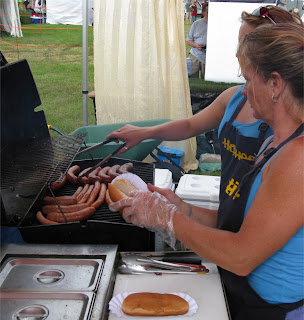
After that we needed a hot dog, from the eternally popular organic hot dog stand where we managed to get the last three hot dog buns on offer for the day.
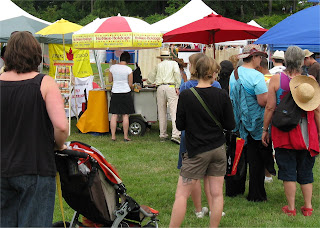
Then we wandered beneath the attractive drystone arches of the Green Drinkery
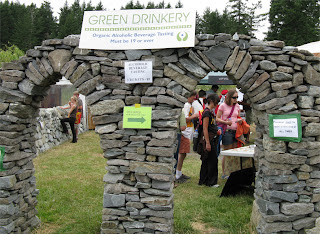
for a glass of local wine
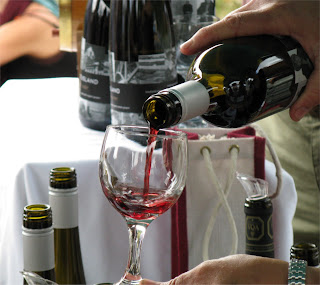
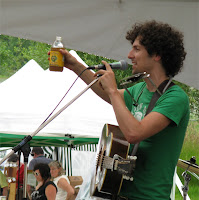
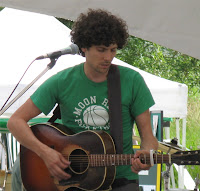
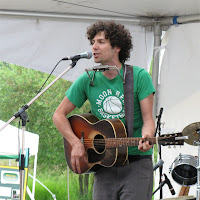
and a prime location to hear former Victoria resident Jeremy Fisher play us out.
-
Canada Day on the Gorge
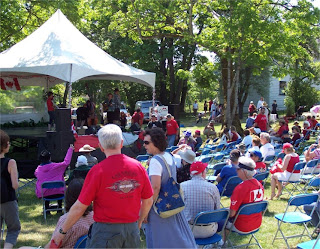
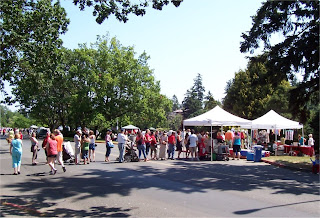
I got back to Victoria just in time for Canada Day, last Tuesday, which is a happy time on the Gorge, as they block the road off and throw a big party, starting with a parade



and featuring music
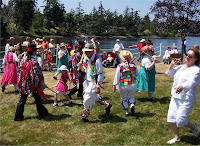
(Morris) dancing
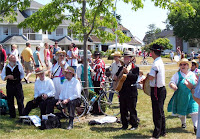
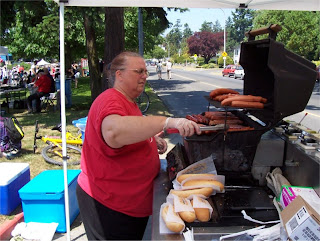
and food, including these popular items from Café Vieux Montreal.
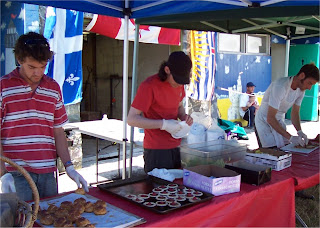
We had earlier seen some besieged diners walking down the road bearing bbq salmon with pea shoot salads, asked at every turn where they’d got them, and this was where. They also served cream puffs with maple syrup, chocolate tarts with strawberries and Montreal smoked meat sandwiches.
But nothing beats the popularity of Mr Tubesteak.
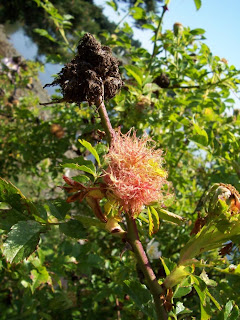
Walking along the pathway, we saw what looked like an alien invasion on some wild roses and asked the plant guy, who told us it was rose canker. But it doesn’t look like any picture I’ve seen of rose canker, so I’m still thinking it’s more likely extraterrestrial.
There’s a vintage car show and a few crafts stalls and eventually everyone wanders off for a Canada Day barbeque. By the time night falls on the Gorge
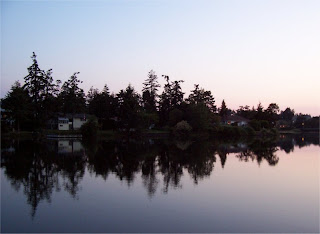
gangs of youth, red and white and drunk all over,
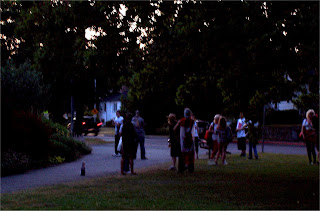
make their way to the Inner Harbour to see the fireworks.


Latest Posts
- Sublime
- Good weather for reading
- The world, the world
- Sublime launch!
- Planet Earth Poetry – Readings by Volunteers, Victoria 2026
- Poetry at the Goldfinch
Aldeburgh Poetry Festival Barny Haughton BBC BC poets Berkswell blackberries Black Stilt Bologna book launch Borough Market Caerphilly Carlo Petrini Catalonia culatello Cyrus Todiwala dairy Dijon Edinburgh Fanny Bay Feast of Fields ferries Food and Morality food journalism Michael Pollan olive oil tasting Omnivore's Dilemma Our Food Our Future Oxford Parmigiano-Reggiano persimmons Planet Earth Poetry poetry poetry readings Poetry videos prosciutto salumi Sean O'Brien sensory analysis Suffolk ticks tortelli di zucca Troubadour Wendell Berry Wendy Morton Yvonne Blomer
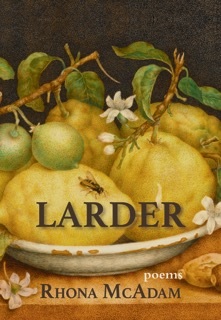
In her latest collection, Rhona McAdam navigates the dark places of human movement through the earth and the exquisite intricacies lingering in backyard gardens and farmlands populated by insects and pollinators, all the while returning to the body, to the tune of staccato beats and the newly discovered symmetries within the human heart.
“…A beautiful, filling collection, Larder is a set of poems to read at the change of the seasons, to appreciate alongside a good meal, and to remind yourself of the beauty in everything, even the things you may not appreciate before opening McAdam’s collection….”
Rhona McAdam is a writer, poet, editor, and Registered Holistic Nutritionist with a Master’s in Food Culture from Italy and a deep-rooted passion for ecology and urban agriculture. Her work spans corporate and technical writing to poetry and creative nonfiction, often exploring the vital links between what we eat and how we live. Based in Victoria, BC, and available via Zoom, Rhona is always open to new writing commissions, readings, or workshops on nutrition and the culinary arts.