-
GM Alfalfa… again
An issue that may affect any of us who like to buy organic food is rearing its head south of the border. In Canada, a large percentage of our organic foods are imported from the US, so anything they do affects us directly as consumers. In the last (failed) attempt to get GE labelling on our foods in this country, our own politicians told us that if we wanted to buy GE-free products, we should buy organic.
In 2007, Monsanto was blocked temporarily and nationally from introducing genetically engineered alfalfa into the US, because they had failed to do an environmental impact study proving no harm to other farmers (etc.). They have fought this ruling up to the American supreme court, which expects to rule on the matter by the end of June, and reapplied to the USDA to introduce their GE substance again. The matter is to be decided by mid-February when the USDA releases its environmental impact statement. Because favourable USDA rulings usually mean subsequent rubber-stamping in Canada, this puts us at risk too.
The reason we should all be concerned is because alfalfa is a widely used rotation crop – in both conventional and organic agriculture – and is also a hugely important animal feed, for livestock and dairy producers among others. And it is consumed directly, as alfalfa sprouts, juice or teas. Importantly, alfalfa is a perennial, unlike all other licensed GE crops in this country.
If GE alfalfa is planted, non-participating farmers are at high risk of cross contamination, and ending up, like Canadian canola farmers have done, with an almost entirely contaminated product. Once cross-contamination happens, organics go out the window, because no organic farmer who uses alfalfa can claim to be GE-free as the certification requires, and even conventional exports suffer because many countries don’t want to import or eat GE foods. This would mean Canadian milk and cheese products as well as meat would be unexportable to those countries. (More information on the organic trade arguments here)
Here, from The True Food Network (who helpfully offers a handy downloadable GE-free shopping guide on its website), is the US campaign, which includes a template for a lobbying letter you might like to customize and send to the USDA and to your favourite Canadian politicians. They need to know we care.
-
A little more on beef and climate change
Think it and it shall be published. Time magazine features an article this week called “Save the planet: Eat more beef” which offers much the same arguments that Joel Salatin gives: feed ruminants what they are designed to eat, manage them properly and they will replenish the soil that produces their own feed.
The basic message about environmental damage caused by eating beef remains the same, of course, when that beef has been fed grain instead of grass, raised industrially in feedlots, and slaughtered inhumanely. And as long as meat production is in the hands of industrialists instead of small scale farmers, it will be treated as an industry – subject to economies of scale, cost and corner-cutting – rather than a virtuous circle.
-
Meat & Methane
Last Monday’s meeting of the BCSEA was billed as “Getting to Zero Carbon: What’s Meat Got To Do With It?” but there was in the end little discussion of meat. Instead the speaker, Dr. Peter Carter, spent most of the time building the case for removing meat from our diets by updating us on climate change research.
According to the FAO report (Livestock’s Long Shadow), meat production accounts for 18% of greenhouse gases. The World Watch Institute (in State of the World 2009: Into a Warming World) upped the figure to 50% (although it was pointed out that there were a great many errors in this report and many have discounted its findings).
A point made repeatedly was the urgency of the situation: even going to zero carbon right now will not stop the climactic damage, but zero carbon is the only way to slow it. Carbon trading (cap & trade) will not work; only a carbon tax will.
Carter’s key observations on meat specifically were on a slide that identified three aspects of meat production which produced three different greenhouse gases:
- Methane – CH4 – from livestock digestive processes;
- Nitrous Oxide – N2O- from manure (and synthetic fertilizer used to produce feed);
- Carbon Dioxide – CO2 – from the slaughter industry (with its demands on heat and hot water; CO2 gas may also be used to stun pigs before slaughter) and deforestation (to create cereal cropping to feed livestock)
We had some helpful refreshers on several of the greenhouse gases. Methane is one of the most damaging of greenhouse gases, causing 100% more heating than carbon dioxide, and lasting 12 years in the atmosphere. Nitrous oxide has an atmospheric lifetime of approximately 120 years and has a heat-trapping effect which is about 310 times more powerful than carbon dioxide. Carbon dioxide’s atmospheric lifetime is apparently very difficult to pin down because from the air it moves into the ocean (causing ocean warming and acidification which are at unprecedented levels of increase). He mentioned as well the enduring presence of chlorofluorocarbons (CFCs) (most commonly from refrigerants, solvents, and foam blowing agents) which are implicated in ozone layer depletion as well as climate change, and which also have lengthy lifespan (tens to hundreds of years depending on which source you consult).
Regarding the skeptics’ assertion that global warming is a myth because of a decade’s worth of low average temperatures, he pointed out that underlying this is a common mistake: confusing temperature with climate. The climate as a whole is warming despite a 10 year blip in temperatures; the ocean, which tempers climate, has incontrovertably continued to warm. (We’d also heard at an earlier BCSEA talk that although 10 year dips have been seen through the earth’s history, dips of longer than 10 years have not. And were reminded that climate change is not a gentle, steady warming, but presents as a drastic climactic change that produces unpredictable and extreme weather, which we are seeing now.)
Another concern Carter raised was the release of greenhouse gases that had been stored within the earth and ocean. In the Arctic, massive methane deposits (four times more than is currently in the atmosphere) have been held in permafrost, which is of course at risk of melting. If/when this happens, global temperature rises would be accelerated at unpredictable rates. There is as well methane on the ocean floor, which is being released by global warming.
In conclusion… Carter’s suggestion was to stop eating meat right now and forever. But he didn’t have the time or space to say how to do that: what happens to the livestock currently out there on the hoof? An overnight global elimination of meat-eating is unthinkable; and what would we replace it with? Would we carry on clearing rainforest to grow GM soya for human consumption? And how would we alter our growing practices to avoid releasing more greenhouse gases?
The idea of global vegetarianism is an intriguing one but would call for a complete reconstruction of food and agricultural practices worldwide, which doesn’t give nature its due either, since a new diet needs to be grown, harvested, processed and distributed.
Missing, too, was any analysis of the difference in emissions between industrial production vs. small-scale farms where animals are integrated into overall crop management as well as providing protein products (including the Duck-Rice project and Joel Salatin’s ideas).
So, the talk was great for outlining the problem, but fell short on considered solutions. But certainly, it would not hurt those of us who have the power to act to reduce our meat consumption drastically while that solution is being formulated. And so here we are: a good day to celebrate with a Meatless (and Meat-Free) Monday!


Latest Posts
- Sublime
- Good weather for reading
- The world, the world
- Sublime launch!
- Planet Earth Poetry – Readings by Volunteers, Victoria 2026
- Poetry at the Goldfinch
Aldeburgh Poetry Festival Barny Haughton BBC BC poets Berkswell blackberries Black Stilt Bologna book launch Borough Market Caerphilly Carlo Petrini Catalonia culatello Cyrus Todiwala dairy Dijon Edinburgh Fanny Bay Feast of Fields ferries Food and Morality food journalism Michael Pollan olive oil tasting Omnivore's Dilemma Our Food Our Future Oxford Parmigiano-Reggiano persimmons Planet Earth Poetry poetry poetry readings Poetry videos prosciutto salumi Sean O'Brien sensory analysis Suffolk ticks tortelli di zucca Troubadour Wendell Berry Wendy Morton Yvonne Blomer
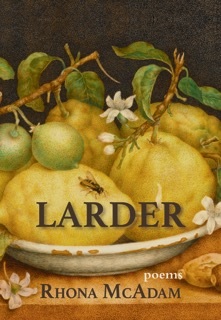
In her latest collection, Rhona McAdam navigates the dark places of human movement through the earth and the exquisite intricacies lingering in backyard gardens and farmlands populated by insects and pollinators, all the while returning to the body, to the tune of staccato beats and the newly discovered symmetries within the human heart.
“…A beautiful, filling collection, Larder is a set of poems to read at the change of the seasons, to appreciate alongside a good meal, and to remind yourself of the beauty in everything, even the things you may not appreciate before opening McAdam’s collection….”
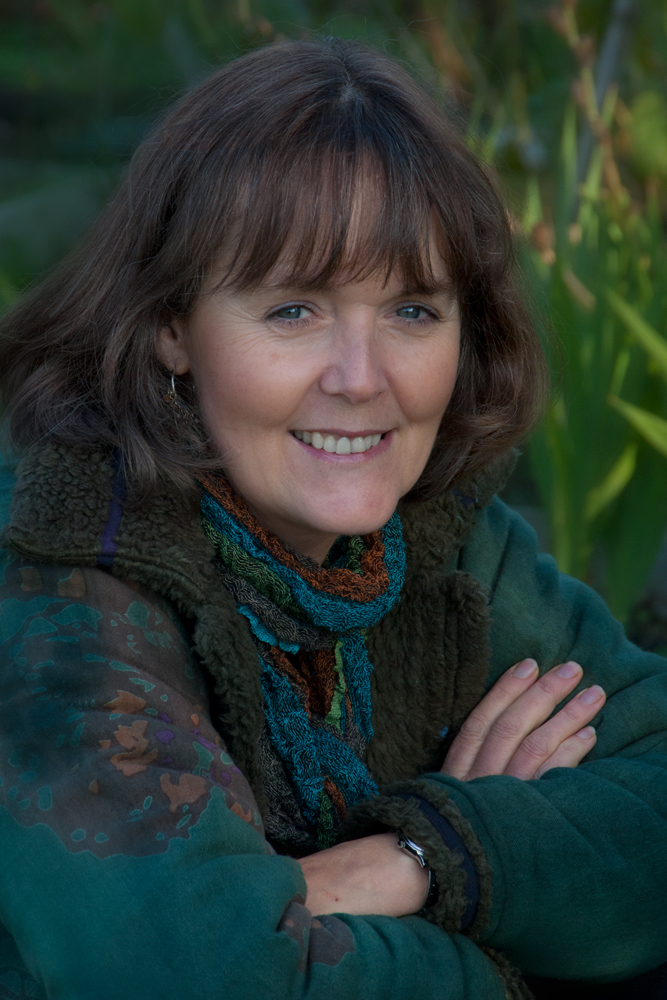
Rhona McAdam is a writer, poet, editor, and Registered Holistic Nutritionist with a Master’s in Food Culture from Italy and a deep-rooted passion for ecology and urban agriculture. Her work spans corporate and technical writing to poetry and creative nonfiction, often exploring the vital links between what we eat and how we live. Based in Victoria, BC, and available via Zoom, Rhona is always open to new writing commissions, readings, or workshops on nutrition and the culinary arts.