-
Nutrition Month; Season with lead, phthalates and a pinch of salmonella…
March is Nutrition Month in Canada, and the theme is “Celebrate Food, from Field to Table”. The Vancouver Island Health Authority’s suggestions for ways to celebrate include:
- Plant a garden in your backyard, a container garden on your balcony, or herbs on your windowsill.
- Get children involved in preparing food and eat family meals often. When kids take part in meals, they are more likely to make healthier choices.
- Enjoy fresh food in season. Shop at local farmers markets and farm gates. Freeze or preserve local fruits and vegetables to eat a greater variety throughout the year.
Tips for supporting your community to grow a local food system:
- Start, support or get involved with a local community garden project to grow food close to where you live.
- Join a community kitchen group to cook and enjoy meals with friends.
- Work with your local school board to create ways to showcase local foods either in the classroom, school cafeteria or schoolyard.
- Encourage your grocery store to carry more local foods.
Meanwhile. as people have been discovering with the recall of North American food products containing Hydrolyzed Vegetable Proteins, a little can mean a lot to food safety. Time magazine’s recent article about the lead content of Indian spices is another argument for buying or using local – including the seasonings in your foods. Many spices and herbs are sold in organic versions which, of course, cost more – but what we’re learning nowadays about the dangers of even tiny amounts of toxins in our foods show why it can sometimes be critical to pay more for less.
-
Food Safety and the Browning of the Green Revolution
The Canadian Food Inspection Agency has a Food Safety website where you can see the latest hazards, recalls and alerts. It is a nightmarish list of undeclared milk and wheat and egg, product tampering, prosecution bulletins, and instances of Salmonella and Listeria Monocytogenes. All of which have to do with commercial food processing products and facilities. If nothing else, it affirms the value of staying away from processed foods and cooking with fresh, organic ingredients wherever possible.
And speaking of organics, the Organic Center, out of Boulder, Colorado, has posted The Browning of the Green Revolution, (which summarizes the full paper – available here – published in the open access Journal of Environmental Quality) that found adding artificial nitrogen to soil actually depletes nitrogen, and has a diminishing effect on soil fertility. Just as Dirt! The Movie and a thousand other sources will tell you, the authors find that:
Half a century after the onset of input-intensive agriculture, many of the world’s most productive soils have been degraded and cereal production is increasingly exceeded by grain demand for a burgeoning human population.
Plug this into what we know about world food shortages and you get a rather obvious conclusion:
This dilemma warns of the critical need to reevaluate nitrogen fertilizer management and usage, and may ultimately require a transition toward agricultural diversification utilizing legume rotations, instead of further intensifying inputs under the auspices of another Green Revolution. An inexorable conclusion can be drawn: the prevailing system of agriculture does not provide the means to intensify food and fiber production without degrading the soil resource.
I wonder who’s listening… Will our government be able to untangle itself from the knots of influence it’s bound itself to with agri-business multinationals and actually plan for an enduring agricultural industry that produces food for generations to come, or will we stick with short-sighted methods that feed us and starve the future? The problem is that the future appears to be upon us.
-
Gwynne Dyer and his take on climate change
Gwynne Dyer’s on a speaking tour of Canada and we were fortunate enough to join a packed house at the McPherson Playhouse to catch his Climate Wars talk last Thursday. He was of course selling his book – and provided a great capsule view of what it covers – but also offering some lessons learned while writing it. I’d heard the gist of the science he described at BCSEA meetings, but it was sobering stuff nonetheless.
My thumbnail version of significant points is:
- Climate change is moving faster than predicted because the predictions widely quoted by media are from the 2007 IPCC Intergovernmental Panel report. Which, if you track it back would have been based on 2003 data at the latest (tracking back to allow a year for meetings and editing; perhaps a cut-off of 2005 published papers which would have been using data gathered from 2003 or earlier), which doesn’t include the rapid advancements in newly industrializing nations like India and China.
- The speed of the climate changes are alarming the scientists who study them.
- Climate change reaches an irreversable point at 2 degrees increase in world temperatures; beyond this, natural climate feedback mechanisms kick in and there is nothing we can do to slow the damage.
- We are living on borrowed grain. The world is consuming more than it produces for the first time in its history; the reason we have not yet reached the crisis point is because we are dipping into global grain reserves. The figure he quoted, that reserves are sufficient to feed the world for 57 days, was actually published in 2006 – before the full effects of the Australian drought were felt – so it would be good to know what the current figure is (but in 2006, 57 days was cited as the lowest since the 56 day point reached in 1972.)
- The world loses 10% of its food production capability for every 1 degree increase in global temperature: it’s estimated that a 2 degree rise would reduce India’s food production capacity by 25%; China is expected to lose 38%. Dwyer noted that the World Bank has gathered information on the effects of temperature change on world food production but does not want to release it for fear of causing panic. But, he said, the governments are well aware of it.
- But what the governments can do to safeguard their citizens’ food security – without which there cannot be civil rule – is fraught with problems. You cannot make food grow without suitable climate or adequate water, and both are at risk. One of the cornerstones of world agriculture as we’ve practiced it is the wanton and excessive use of irrigation to grow crops: we’ve depleted our reserves and are busy tapping fossil water, which will not be replenished in our – or our great-grandchildren’s – lifetime. So water shortages loom, and conflicts between upstream and downstream states are a possibility.
- Governments who have some economic and environmental buffers against imminent disaster in the face of climate change also face complex problems in securing their own borders against climate refugees. Taking Mexico/USA as one example, Dyer pointed out that any border can be secured if you really want to do it, but the Americans do not have the political will to secure the Mexican border: without the illegal immigrants who fuel the agricultural and service economies, the country would cease to function, so it is in the interests of the US to keep the border porous. And in the case of the Americans, you can’t secure a border when 25% of your population originates in or is related to the population of the countries you are trying to keep out. And that’s a reality everywhere today, thanks to globalization and the dependence of all wealthy nations on black market or sweatshop labour to keep costs (pesky matters like salary levels and working conditions) down so that the rich can keep getting richer.
- One thing those rich folk won’t want to do is pay to clean up their mess, however. Dyer explained why a deal was not possible at Copenhagen, using the example of our own government. He asked us to imagine Stephen Harper returning to Ottawa to announce that Canadians would face an immediate 40% reduction in carbon emissions as well as a multi-billion dollar support package to the likes of India and China to help them prepare for a carbon-neutral future. The fact is that wealthy nations are wealthy because we built our wealth on cheap oil, which has fuelled both our standard of living and the environmental disaster we are collectively facing. The only way forward is that we have to pick up the tab for this, and no government on earth is going to get re-elected once it’s done so.
- Dyer predicts we will not make the 350ppm target for emissions.
- He does believe that the world will eventually act, belatedly, because it will have to for all the reasons above and then some. And the one tool we have available is geoengineering climate change, to temporarily reduce the increase in average global temperatures while the necessary changes to the way we live are implemented. A couple of examples are to either seed the stratosphere with sulphur dioxide, mimicking the effects of volcanic eruptions; or seeding stratocumulus clouds above the ocean with salt water, to enhance their cooling effect.
- Geoengineering, he stressed, is not a cure, but it is likely to be all we have in our emergency kit down the line when it’s too late for positive political action. And at the point drastic measures are taken, it will quite possibly be too late to save the earth’s oceans. (And it will certainly be too late to feed the entire global population, since crops take time to grow and harvest, although he did not go there specifically.)
- The question of who funds this kind of research, and who gets to make the decision to use it – since it will affect every living thing on the planet – is the subject of a conference he was travelling to next.
- He also stressed that the world is about as peaceful as it’s ever been and is ever able to get, so the social conditions are right to implement drastic action to save our world. Once the climate changes kick in, governments will be distracted by their own emergencies. So it’s now or never.
- The “what do we do” question received the usual answer: demand political action at every level; impress upon your representatives the urgency of the situation and be ready to embrace the somewhat drastic changes that will need to be made if the world is to survive to be handed on to future generations.
If you haven’t heard him talk on this subject, here’s a podcast version from TVO which is similar to the talk I attended. Worth watching.


Latest Posts
- Sublime
- Good weather for reading
- The world, the world
- Sublime launch!
- Planet Earth Poetry – Readings by Volunteers, Victoria 2026
- Poetry at the Goldfinch
Aldeburgh Poetry Festival Barny Haughton BBC BC poets Berkswell blackberries Black Stilt Bologna book launch Borough Market Caerphilly Carlo Petrini Catalonia culatello Cyrus Todiwala dairy Dijon Edinburgh Fanny Bay Feast of Fields ferries Food and Morality food journalism Michael Pollan olive oil tasting Omnivore's Dilemma Our Food Our Future Oxford Parmigiano-Reggiano persimmons Planet Earth Poetry poetry poetry readings Poetry videos prosciutto salumi Sean O'Brien sensory analysis Suffolk ticks tortelli di zucca Troubadour Wendell Berry Wendy Morton Yvonne Blomer
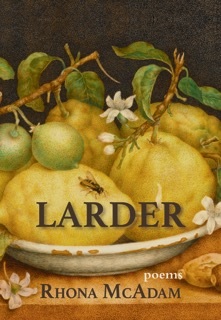
In her latest collection, Rhona McAdam navigates the dark places of human movement through the earth and the exquisite intricacies lingering in backyard gardens and farmlands populated by insects and pollinators, all the while returning to the body, to the tune of staccato beats and the newly discovered symmetries within the human heart.
“…A beautiful, filling collection, Larder is a set of poems to read at the change of the seasons, to appreciate alongside a good meal, and to remind yourself of the beauty in everything, even the things you may not appreciate before opening McAdam’s collection….”
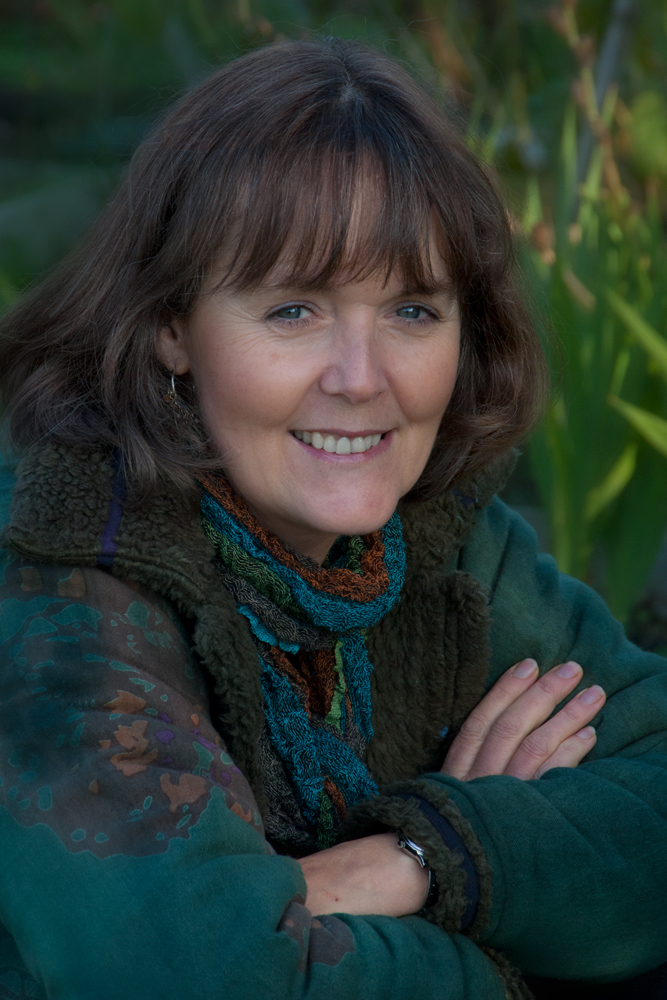
Rhona McAdam is a writer, poet, editor, and Registered Holistic Nutritionist with a Master’s in Food Culture from Italy and a deep-rooted passion for ecology and urban agriculture. Her work spans corporate and technical writing to poetry and creative nonfiction, often exploring the vital links between what we eat and how we live. Based in Victoria, BC, and available via Zoom, Rhona is always open to new writing commissions, readings, or workshops on nutrition and the culinary arts.