-
88 years later
Read Full Post: 88 years later
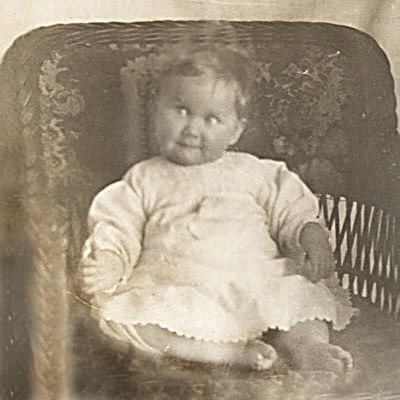
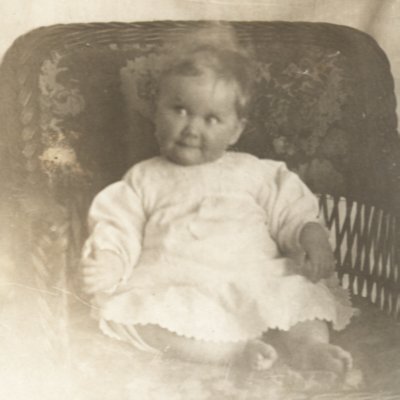
Today would have been my mother’s 88th birthday.
In her honour, I made a batch of her oatmeal squares, which I rediscovered in England under the name of flapjacks. These ones are not as sticky as flapjacks, which use golden (or corn) syrup as a bonding agent instead of a glue of brown sugar and butter. Rather they are, at their best, crispy with a slightly raised border and a subtle chew in the middle. And they are wheat and dairy free. Melt half a cup of butter or margarine; add three-quarters of a cup of dark brown sugar and then two cups of quick oats and half a teaspoon baking soda. Press lightly into a square (8×8) cake pan and bake 10-20 minutes at 350f. Cut while warm and remove to a plate or baking rack.
I have been reading a bit of Heather McHugh, who read in Vancouver last year. A poet of terrifying intellect, she is a very funny reader – I think I was responding to some essence of irony that we must surely attribute to her Canadian parentage. It is comforting to know she is just across the water in Seattle.
-
Words on the Water and after
Read Full Post: Words on the Water and afterSo: the Words on the Water writers festival (check out the virtual tour of Campbell River!) was a good old time. We arrived, on a day of brilliant sunshine, at 8:30 sharp and purchased $40 worth of tickets for all the day’s readings, of which there were eight, in four sessions. We heard that the Friday night gala had been a success, and were offered a few newly added (thank you fire department) seats for the Saturday night literary cabaret. But in the end we decided against staying for the evening as well, since all the readers were the same as for the daytime sessions, and we felt in our bones – and a few other places – that sitting through the first 8 hours of readings was probably enough.
Evelyn Lau kicked things off with some poems from her new collection, Treble. She talked about the autobiography of writing: even when she’s writing fiction, she said, she’s in the story. She came across well and was warmly received by the audience; though she had some serious zing in some of her poem endings I opted to spend my cash instead on another gorgeous Gaspereau poetry collection by Jan Zwicky, Thirty-seven Small Songs & Thirteen Silences. As she’d been asked, she talked a bit about philosophy, music and poetry and how these come together for her; and she quoted Don Paterson, in an introduction to his translations of Spanish poet Antonio Machado, who’d observed that Spanish is a guitar, while English is a piano.
We had a break then, with treats supplied by Save-on-Foods, the official festival sponsor. Although I’d raised an eyebrow when I saw the supermarket was also selling the books, after a day feeding on their goodies (including a very nice lunch buffet) I came round. But it would have been nice to see a local independent bookseller, if there is such a thing in Campbell River, reap a little of the benefit of the event, which saw about 150 people attend the day’s readings.
We heard some prose then, from Claudia Casper, and some poems – read in his characteristic moaning growl- by poet, typographer and bringer of tales from the Haida, Robert Bringhurst. One of his suggestions was that all Canadian children should be required to learn at least one indigenous language so that they may read, in their original words, stories in which humans are not the most important elements.
And stood in a long long queue for lunch, after which we had more prose, from Annabel Lyon who talked about music, prose and law school, and read a bleak little tale she’d gleaned from a murder trial she’d once watched; and some new and hilarious writing from our favourite storyteller David Carpenter.
Another break and we sped toward the finish with poetry: first, Gregory Scofield demonstrated that had he chosen another path he could easily charm the words from the trees as a singer. Then Patrick Lane wrapped things up with a reading from his memoir and a few newer poems. He remarked on once being stunned to discover that a metaphor he was teaching about a wren was lost on a group of first year university students, only a couple of whom were aware that a wren was a bird.
We enjoyed a sunny afternoon drive back to Courtenay, where we stopped in to enjoy a bit of gin and some patatas bravas and some spicy squid in garlic yogurt at the Union Street Grill and Grotto before pressing on to Fanny Bay to put our feet up and rest our weary heads. In the morning we scooted back down the island, pausing to make a side trip to Thetis Island for lunch, and then on to Victoria in the sprinkling rain.
-
Glosas & a few words about rejection
Read Full Post: Glosas & a few words about rejectionI’ve been working on a glosa arising from a quatrain by our late lamented high priestess of Canadian poetry, Gwendolyn MacEwen. An interesting thing, the glosa. Aside from Marilyn Hacker, who seems to have tried every form invented, you don’t really see them much by any but Canadian poets. That PK Page has a lot to answer for! In her inspiring collection, Hologram, she defines it as a stanza form, based on a quatrain by another poet, consisting of four 10-line stanzas where the 6th and 9th lines rhyme with the 10th. (Pah, child’s play, sez I after wrestling through 9 stanzas of terza rima..)
But my research tells me that it is also considered pretty much a nonce (love that word) form, also known as a glose (that seems to be how the Americans spell it) and that you can use any number or kind of lines as your starting point: they need not even be poetry. Neither is there any law that says the stanzas must be ten lines or follow any particular rhyme scheme.
The art of it is, I think, firstly to find a way to make the source lines your own, so that they have – fully – two lives; and secondly to walk a fine balance between bringing your poem to its own life and paying appropriate tribute to the source poet’s words. Choosing those source lines is difficult enough, and it’s good to know we can look beyond quatrains for them.
Rejection. Ouch: it never stops hurting, but I guess in this world so overcrowded with words we can’t write without it. One of the AWP sessions in Austin that I wasn’t able to make centred on The Resilient Writer, a collection of interviews with writers who survived to talk about rejection. Meanwhile, I found a blog about rejection by an editor who helpfully and comprehensively explains the nature and context of rejection letters… in a way that doesn’t hurt… TOO much.
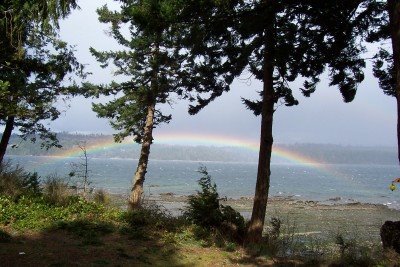
So up here in Fanny Bay we might not have escaped another day of rain, but we did get a bucket of oysters for supper last night, and this morning a real live rainbow!



Latest Posts
- (no title)
- Sublime and Twisted Readings coming up!
- Sublime
- Good weather for reading
- The world, the world
- Sublime launch!
Aldeburgh Poetry Festival Barny Haughton BBC BC poets Berkswell blackberries Black Stilt Bologna book launch Borough Market Carlo Petrini Catalonia Cyrus Todiwala dairy Daunt's Books Dijon Edinburgh Fanny Bay Feast of Fields Food and Morality food history food journalism Jenna Butler lardo Malahat Review Michael Pollan Okanagan olive oil tasting olive trees Omnivore's Dilemma Our Food Our Future Oxford Parmigiano-Reggiano Planet Earth Poetry poetry poetry readings Poetry videos prosciutto salumi Sean O'Brien Suffolk ticks Wendy Morton Wired Writing Yvonne Blomer
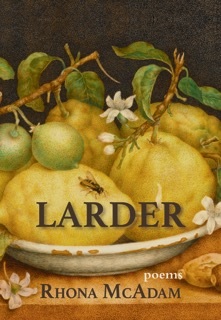
In her latest collection, Rhona McAdam navigates the dark places of human movement through the earth and the exquisite intricacies lingering in backyard gardens and farmlands populated by insects and pollinators, all the while returning to the body, to the tune of staccato beats and the newly discovered symmetries within the human heart.
“…A beautiful, filling collection, Larder is a set of poems to read at the change of the seasons, to appreciate alongside a good meal, and to remind yourself of the beauty in everything, even the things you may not appreciate before opening McAdam’s collection….”
Rhona McAdam is a writer, poet, editor, and Registered Holistic Nutritionist with a Master’s in Food Culture from Italy and a deep-rooted passion for ecology and urban agriculture. Her work spans corporate and technical writing to poetry and creative nonfiction, often exploring the vital links between what we eat and how we live. Based in Victoria, BC, and available via Zoom, Rhona is always open to new writing commissions, readings, or workshops on nutrition and the culinary arts.