-
Spain 6: wine and Bulli
Read Full Post: Spain 6: wine and BulliWe arrived at Viticultors Espelt, a winery in Girona that opened in 2000, and decanted the able-bodied for tour and tasting, while a pair of sufferers and their translators headed to hospital in search of antibiotics for respiratory tract infections.
We were presented with jolly orange sun-hats in which we set off in hot windy sunshine for a look at the vineyards.

It’s a new estate, only aquired three years ago, and the winemakers are busy learning about their terroir, by experimenting with different harvests, agings and blendings. In this baking climate, the plantings are done strategically, matching the varietal to sun exposure, and using stronger vines like grenache to protect more fragile ones like syrah from the wind that blows in from the sea, visible from the hilltop we were standing on. The terraces along the hillside are being restored by dry stone walling, three km achieved in two years, by two people working full time. Global warming is playing its part here, and the harvests are coming earlier each year: traditionally done in mid September, they are now taking place in mid to late August. Such is the heat, the harvest takes place between 4am and 11am, otherwise the grapes would start fermenting in their skins as soon as they were picked.
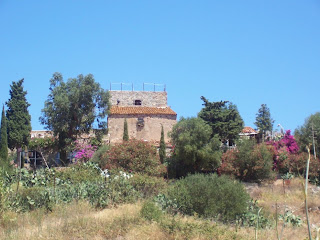
As we walked back for our tasting, we passed a charming but unremarkable farmhouse, which the winemaker told us was by night a very exclusive and popular disco, Ranch Frank, started by Salvador Dali and his American girlfriend.
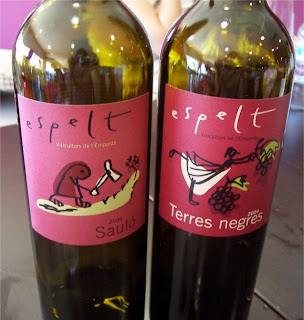
We dashed through the tasting – Mareny 2006 (Sauvignon Blanc and Muscat), Quinze Roures 2006 (Grenaches gris and blanc); some nice full-bodied reds, Saulo 2006 (Grenache and Carinyena) and Terres Negres 2004 (Carinyena and Cabernet); and finished off with Airam 1998, a sweet wine made in very limited quantities from Grenache grapes, using the Solera (“fractional blending”) method, which is also used for sherry. It’s aged in half full barriques using a complicated method of adding partially aged wines to the new (in a process I’d be reminded of when we learned about balsamico tradizionale) all of which allows controlled oxidation to leave its mark.
The bus with its slowly reviving occupants arrived and whisked us off to a lively seafront town called Roses,
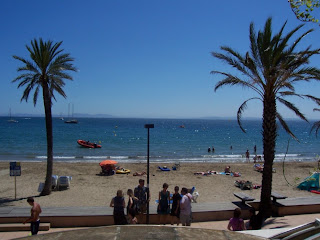
where we had an excellent tapas lunch – sweet shots of gazpacho; mussels both in a cold vinaigrette and hot stuffed; a gorgeous but too-small school of anchovies in garlic oil; quail eggs;

calimari; octopus; patatas bravas;
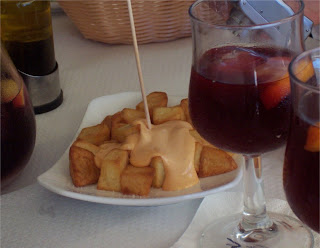
and then some noodle-style paella with, of course, allioli, and strawberries and ice cream to finish, all washed down with lots of sangria.
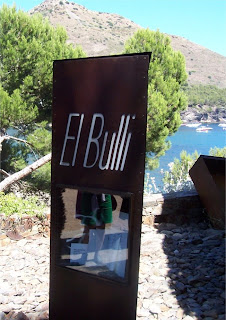
A lucky thing we’d eaten well as we weren’t offered so much as a speck of foam at El Bulli where all hands were busy preparing for supper.
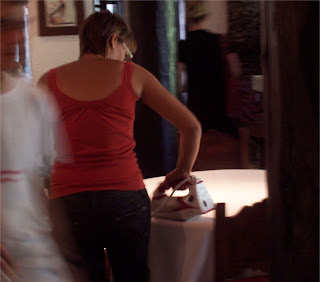
A spectacular and slightly terrifying cliff-side drive from Roses, the much revered restaurant is only open six months a year, and they begin taking reservations from October.

The numbers involved are revealing… of something. In order to assure newcomers a place in the experience (which is around 30-35 small and ever-changing dishes for 185 euros per head plus wine and taxes) they have a policy of booking half the total 8,000 seasonal seats in repeat business and half new diners. There are 1,700 items on the book-like wine list, representing some 19,000 bottles in their cellars, and so the sommelier recommends you consult online before they start pouring into one of the 60 different wine glasses and 5 types of decanters. They have an electronic menu which you can use to filter your wine selections through your 30 food items if you want to complicate your life further; and of course there is a water list to choose from too.
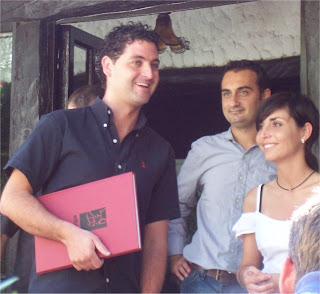
The staff (67) outnumber the diners (50) but are not all paid employees, since there are 45 trainees (4 this year will be selected from 4000 applicants).
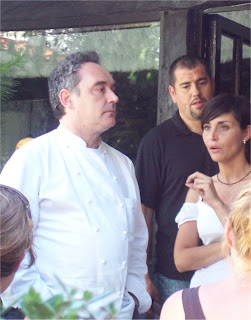
Ferran Adria stepped out of the kitchen long enough to engage in a bit of verbal ping pong about what is art (El Bulli is officially known this year as Pavilion G in the German art festival Documenta) and revealed he spends about 30 percent of his time talking to media and conferences.

After one last look at the dandy view from El Bulli’s courtyard, we hopped back on our bus and arrived at Mataro, which Carlo explained was another word for Mourvedre, very appropriate. It was a nice hotel in a bad location – across the road from what I heard was not a great beach, and a couple of kms from town, so taxis were needed for any expeditions. After we tried the first night’s hotel restaurant fare, we concluded these would henceforth have to include supper. Gazpacho in a wine glass? Phooey.
-
Spain 5: olive oil, peaches and lots of fish
Read Full Post: Spain 5: olive oil, peaches and lots of fishWith one down (massive cava hangover) and a few more beginning to falter (3 head colds, 1 sore back), we set off for Reus (birthplace of Antoni Gaudi!) where we had a tasting of DOP Siurana olive oil (made from small arbequina olives) at the beautiful art nouveau (modernisme) building housing the Consell Regulador de la Do Suriana:
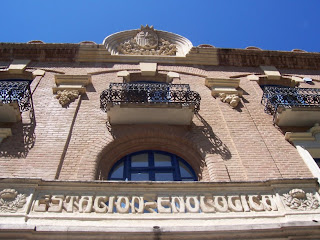
and heard about various other geographically designated products, including rice, hazelnuts, potatoes and tangerines.
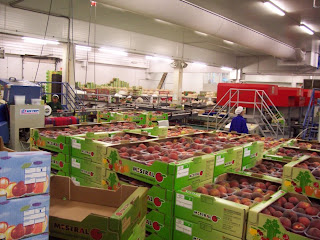
Next stop Cambrils, at the Cooperativa de Cambrils y Borges, where we observed the packaging of peaches, destined entirely (or maybe 90%, depending on who you asked) for external markets. Not an organic or artisanal coop, but a very busy one. We visited the agricultural museum which is part of its headquarters, and had a lunch of salad, spaghetti (Spanish local specialty?) and fried fish.
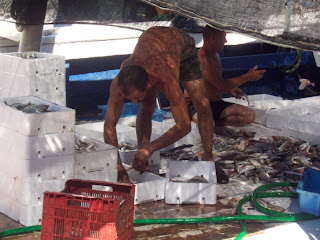
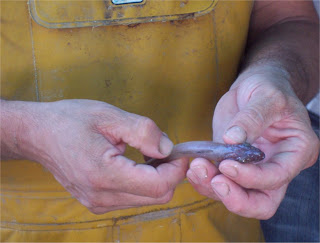
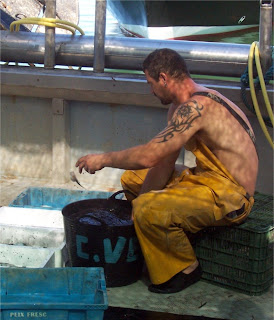
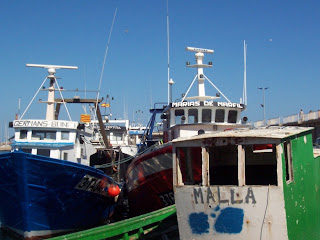
Off we sped to the docks, where we watched a fish market in action. Instead of an auction, like the one we’d seen in Puglia, here the prices are pre-determined, and buyers gather round a conveyor belt where they drop identifying tags on boxes of fish, and then pay the going rate at the end. Anything not sold off the boats in this way goes to the bigger markets at Valencia and Barcelona. We heard about the EU’s method of conserving fish stocks (they buy back the boats and licenses of small fishermen, removing them permanently from the sea — unfortunately as we’d learned elsewhere the slack is being taken up by large scale trawlers). We stepped onto a fishing boat to see the cleaning and sorting involved. The men were hand-sorting the takings from their dragger nets, which scour across the sand and bring up all manner of crabs, crustaceans and smaller sea life. Larger enterprises would chuck these back in the water, dead, but here they were hand-sorted and sold.
-
Spain 4: bubbly
Read Full Post: Spain 4: bubbly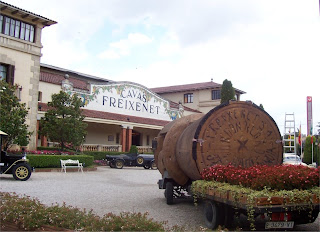
It being the fourth of July, and our class more than fifty percent American, we celebrated their holiday by first visiting Freixenet, the market leader in cava (a word meaning sparkling wine produced in a cave). It’s a massive enterprise, with three areas: traditional, mostly manual production; mechanised production; and fully automated (robotic) production.
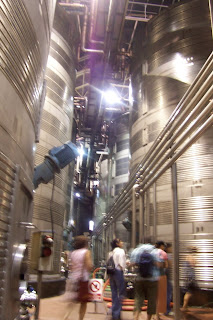
The scale of the cellars is awesome, as you would expect from a company that exports 140 million bottles a year of this serious competitor in the sparkling wine market. Such a company also requires a high degree of standardisation, so unlike some of the smaller wineries we’ve produced, who accept that the grape is a growing thing that will differ in quality and flavour each year, Freixenet has had to marshal many techniques to standardise its product, and relies therefore on cultivated yeasts (artisanal producers use wild ones, whose flavour will vary) and blending the three base wines they produce from Macabeo, Xarello and Parellada grapes.

The Spanish grape varietals they use are what makes the wine distinct in flavour from French champagne, which is made from blends of Chardonnay and Pinots (Noir and Meunier). But the same method of production is used: methode champenoise, which must now, because of geographical protection legislation for Champagne, be called methode traditionnelle. The basic technique involves crushing the grapes, filtering and fermenting the grape juice in vats or barrels, and then putting it through a secondary fermentation in the bottle: to each is added a bit of sweet liqueur (made from yeast, sugar and wine); the bottles are turned by hand (in the manual production area) or by machine or robot in the other areas, at intervals until the fermentation is complete, between one and four years at low temperatures.

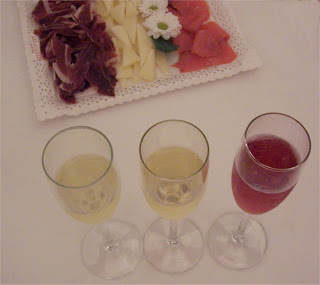
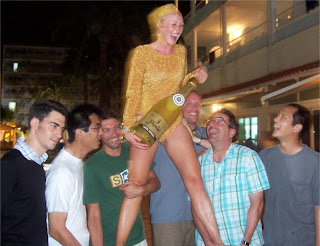
Later that evening, one of us already sporting the most exotic injury of the trip (a jellyfish sting), we laid into the cava and an excellent spread including tortilla, cold chicken and (what American party would be complete without it) Lay’s potato chips, as well as a chocolate cake. Despite the airborne arrival of one randomly thrown egg (which missed hitting celebrants) the party went well and included rousing versions of Star Spangled Banner and Take Me Out to the Ball Game. The grand finale was a surprise appearance from the Freixenet bubble girl…


Latest Posts
- (no title)
- Sublime and Twisted Readings coming up!
- Sublime
- Good weather for reading
- The world, the world
- Sublime launch!
Aldeburgh Poetry Festival Barny Haughton BBC BC poets Berkswell blackberries Black Stilt Bologna book launch Borough Market Carlo Petrini Catalonia Cyrus Todiwala dairy Daunt's Books Dijon Edinburgh Fanny Bay Feast of Fields Food and Morality food history food journalism Jenna Butler lardo Malahat Review Michael Pollan Okanagan olive oil tasting olive trees Omnivore's Dilemma Our Food Our Future Oxford Parmigiano-Reggiano Planet Earth Poetry poetry poetry readings Poetry videos prosciutto salumi Sean O'Brien Suffolk ticks Wendy Morton Wired Writing Yvonne Blomer
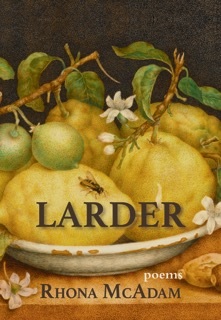
In her latest collection, Rhona McAdam navigates the dark places of human movement through the earth and the exquisite intricacies lingering in backyard gardens and farmlands populated by insects and pollinators, all the while returning to the body, to the tune of staccato beats and the newly discovered symmetries within the human heart.
“…A beautiful, filling collection, Larder is a set of poems to read at the change of the seasons, to appreciate alongside a good meal, and to remind yourself of the beauty in everything, even the things you may not appreciate before opening McAdam’s collection….”
Rhona McAdam is a writer, poet, editor, and Registered Holistic Nutritionist with a Master’s in Food Culture from Italy and a deep-rooted passion for ecology and urban agriculture. Her work spans corporate and technical writing to poetry and creative nonfiction, often exploring the vital links between what we eat and how we live. Based in Victoria, BC, and available via Zoom, Rhona is always open to new writing commissions, readings, or workshops on nutrition and the culinary arts.