-
Something for the new year
Read Full Post: Something for the new yearA lot of you expressed envy at my departure for Italy to study food for a year, and to anyone of that mindset in the Victoria area I offer glad tidings: my classmate Don Genova is offering a course at UVic called Food Culture: Fast Food to Slow Food which covers a lot of the sorts of things we learned in Italy. It gives you the opportunity to meet local food producers and doesn’t incur the cost of travel to Italy (though you might feel a need to go once it’s over!).
Here’s Don’s blog/podcast site if you want to get a sense of who he is. He’s a good speaker and he knows everyone, so I think it will be a great class. (And no, I’m not getting a commission, though I have certainly offered to be his assistant!!)
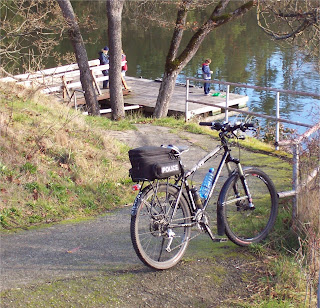
Anyone not in Victoria will perhaps enjoy looking at the scenery (from a walk along the Gorge on Boxing Day) and wishing you were here…

But it’s not all fun and games in Lotusland. We do have a police presence here, and environmentally-minded transportation for them. We weren’t sure what crimes were being fought at this point but it may have been that one of the fisherfolk needed help with a dodgy lure..?
-
Sustainable resolution
Read Full Post: Sustainable resolutionLooking for a new year’s resolution? How about aiming for sustainable consumption?
A handy guide to sustainable food has been published on Sustain‘s website. It’s a term that gets bandied around a lot, so it’s good to have a working (and workable) definition, which goes something like this:
- Buy local, seasonally available ingredients as standard.
- Buy food from farming systems that minimise harm to the environment, such as certified organic.
- Reduce the amount of foods of animal origin (meat, dairy products and eggs) eaten and eat meals rich in fruit, vegetables, pulses, wholegrains and nuts.
- Stop buying fish species identified as most ‘at risk’ and buy fish only from sustainable sources.
- Choose Fairtrade-certified products for foods and drinks imported from poorer countries
- Avoid bottled water and instead drink plain or filtered tap water.
- Protect your and your family’s health and well-being by making sure your meals are made up of generous portions of vegetables, fruit and starchy staples.
-
Hampers, hampered, hampering
Read Full Post: Hampers, hampered, hamperingDid my Christmas bit last Wednesday – enjoyed an afternoon hanging out in beautiful big Earle Clarke House
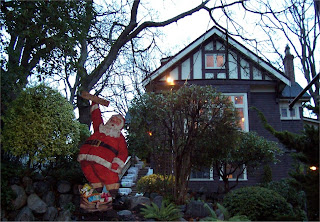
with Joyce and Peter, who every year host a gathering of 70-100 elves who come and go throughout the day bringing food and packing it into giant hampers for needy families in the area. This year the Salvation Army was seeking to provide some 1300 hampers in all, which come from local organisations and community groups as well as more informal groups like this one.
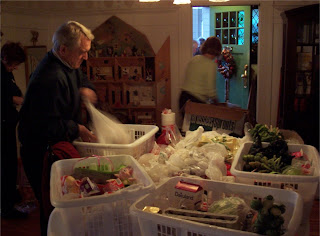
When I left, the turkey (and therefore hamper) count was a record-breaking 65; after I left the tally rose to an amazing 76. Not bad for word of mouth.
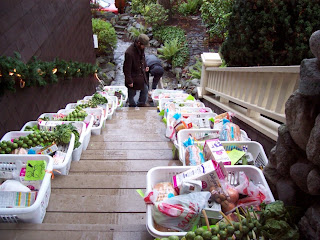
It’s a fiendishly simple idea: you just invite everyone you know, ask them to bring what they wish from the list – or raise cash donations to buy what’s needed – and then feed and water them while they work, and somehow it all comes together. It helps that Joyce is supremely well-organised and understands the power of good sign-posting.


She also makes a gorgeous Christmas cake, terrific pea soup and great eggnog,
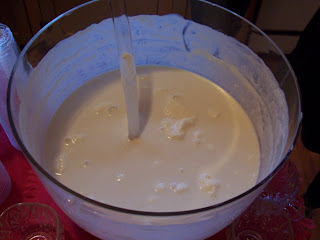
and cranberry punch
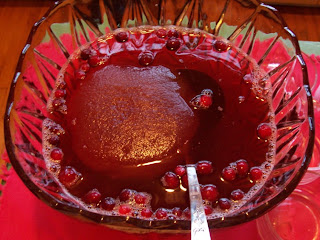
for her grateful workers.Joyce reports that three of the hampers went to the Fetal Alcohol Syndrome Disorder Community Circle’s “Moms Mentoring Moms,” which provides support services to mothers trying to raise families where addiction has been a problem. The other 73 hampers went to the Salvation Army, along with cases of extra carrots, brussels sprouts and potatoes. She says that it took seven burly Salvation Army volunteers and two big trucks to collect it all.


Latest Posts
- (no title)
- Sublime and Twisted Readings coming up!
- Sublime
- Good weather for reading
- The world, the world
- Sublime launch!
Aldeburgh Poetry Festival Barny Haughton BBC BC poets Berkswell blackberries Black Stilt Bologna book launch Borough Market Carlo Petrini Catalonia Cyrus Todiwala dairy Daunt's Books Dijon Edinburgh Fanny Bay Feast of Fields Food and Morality food history food journalism Jenna Butler lardo Malahat Review Michael Pollan Okanagan olive oil tasting olive trees Omnivore's Dilemma Our Food Our Future Oxford Parmigiano-Reggiano Planet Earth Poetry poetry poetry readings Poetry videos prosciutto salumi Sean O'Brien Suffolk ticks Wendy Morton Wired Writing Yvonne Blomer
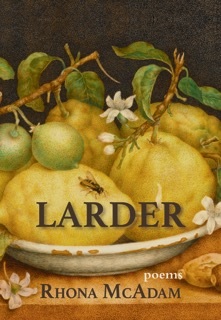
In her latest collection, Rhona McAdam navigates the dark places of human movement through the earth and the exquisite intricacies lingering in backyard gardens and farmlands populated by insects and pollinators, all the while returning to the body, to the tune of staccato beats and the newly discovered symmetries within the human heart.
“…A beautiful, filling collection, Larder is a set of poems to read at the change of the seasons, to appreciate alongside a good meal, and to remind yourself of the beauty in everything, even the things you may not appreciate before opening McAdam’s collection….”
Rhona McAdam is a writer, poet, editor, and Registered Holistic Nutritionist with a Master’s in Food Culture from Italy and a deep-rooted passion for ecology and urban agriculture. Her work spans corporate and technical writing to poetry and creative nonfiction, often exploring the vital links between what we eat and how we live. Based in Victoria, BC, and available via Zoom, Rhona is always open to new writing commissions, readings, or workshops on nutrition and the culinary arts.