-
Food: let’s celebrate!
Read Full Post: Food: let’s celebrate!By now I am sure that you are all well into your own celebration of this the International Year of the Potato, but in case you haven’t got everything in place, here’s a handy list of world-wide events you can still catch. What to do after that? Well, it can be a busy year if you let it.
Europain 2008 is coming up 29 March-2 April; sounds uncomfortable but delicious. Maybe closer to home (for some of us) it would be worth checking out the Seattle Cheese Festival May 16-18. How about joining the Nicosians for their annual Cherry Festival in June? Or there’s also the Prague Food Festival June 20-26. Stavanger, Norway holds its annual Garlic Festival in April, and this year is also hosting the real life rather weird cooking competition, the Bocuse d’Or Europe July 1-2: real life meets reality television. July 4-13 it’s time for the Ledbury Poetry Festival, which has spawned a poetry trail in a Herefordshire Orchard.
One could then return to Canada and attend the South Cariboo Garlic Festival August 16-17. After that, go Really Wild in Wales 30-31 August, and then down to Chichester for the Totally Tomato Show Sept 6-7, and back up to Ludlow Sept 12-14 (unless you are going to the excellent Oxford Symposium on Food & Cookery) and across to Galway to celebrate some oysters September 25-28. Or round off the month with a visit to Sweden to catch Öland’s Harvest Festival 2008 September 25-28 and the Kivik Apple Market, September 29-30.
After that, you’ll want a little rest before Chocaday celebrations on October 12, and then make your plans for Eurochocolate 2008 in Perugia October 18-26, which should give you time to nip up to Torino to catch Salone del Gusto and Terra Madre which run concurrently from October 23 to 27. Then on to Austria for Salon Suisse des Gouts et Terroirs October 29-November 2. November 14-15 it’s the Clayoquot Oyster Festival in Tofino. On November 24 there’ll be tears before bedtime if you miss the Zibelemärit, the onion market in Berne.
In other news, giving some support to world-wide moves against bottled water, Venetians are giving up mineral water for Lent, which I guess won’t win them any friends in the Global Bottled Water Congress. Won’t bother the hibernating cod or dieting teenagers who’ve just been told again they can’t skip breakfast.
-
Omega 3 & 6 fatty acids
Read Full Post: Omega 3 & 6 fatty acidsGoodness, here it is March. Where did that come from?
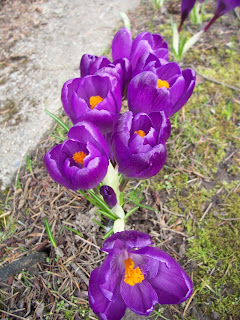
And here are some February crocuses.
The more I read, the more complicated the world seems. Recently I’ve been reading about Omega 3 fatty acids; there was a helpful article in the Times a little while ago that shed some light on one part of the puzzle – the difference between ‘good’ (EPA and DHA) and ‘bad’ (ALA) Omega 3 fatty acids, and the tendency of vitamin supplement marketers to blur the distinctions between them.
The ‘aha’ for me was discovering that the ideal balance of Omega 3 and Omega 6 in our diet should be about 4 (Omega 6) to 1 (Omega 3). Today’s diners are more likely to be in the 20 to 1 range, thanks to the transition that Michael Pollan describes as a catastrophic shift of our “western diet” from leaf- to seed-based feeding.
The outcome is that it’s harder all the time to get enough Omega 3 in our diets, since it comes mainly from green leafy vegetables and cold-water fish, and our diet is increasingly heavy on cereals such as wheat, corn and rice, and we eat more meat than we should (beef is a special case — but more about that later).
More problematic still is the question of whether or not fish is a good thing to be eating nowadays. Between over-fishing and dangerously high mercury levels in some fish, it’s hard to know what to do. There’s a helpful chart in an exceedingly helpful article called Mercury in Fish vs. Omega-3 Fatty Acids Health Benefits that clarifies many of the questions.
Someone had told me they’d heard mackerel was particularly bad for several reasons, but it turns out that King Mackerel is bad; Atlantic Mackerel is ok. From a mercury point of view, at least. But how do you know what you’ve got when the tin in your hand simply says “Mackerel”?
I’d been shocked to read in The Omnivore’s Dilemma and again in Not on the Label about the alarming transformation in beef of ‘good’ Omega 3’s into less helpful Omega 6s through the beef industry’s switching them from grass-eating animals to grain-fed meat products. It’s true even for a cow that ‘you are what you eat’, and by eating Omega 6-laden grain, the cow’s flesh becomes likewise heavy on the Omega 6, and therefore so does the meat we consume.
By the same reasoning, we should be wary of farmed salmon – once a favoured source of Omega 3s – that are fed corn and other grains instead of their Omega 3-rich natural diet. (But then the natural diet – requiring anywhere from two to five kg of fish (as feed), depending on whose statistics you read, to produce one kg of farmed salmon – is also unsustainable.)
An otherwise thoughtful article about salmon farming by Cameron MacDonald in the Globe & Mail (Feb. 23 Focus) fell a bit short, I thought, by not discussing these health implications when promoting grain-fed salmon as the solution to the destructive practices that harvest the fish that go into the fish pellets being fed to farmed salmon in BC. But then, as the author rightly says, eating wild salmon isn’t helping either in these times of over-fishing.
Eat less of all meats and fish, I guess is the only sustainable answer. Eat mostly plants, as Pollan says.
And here he is:
-
Reading for writing and weather for leaving
Read Full Post: Reading for writing and weather for leavingWhat a farewell gift from the weather gods.
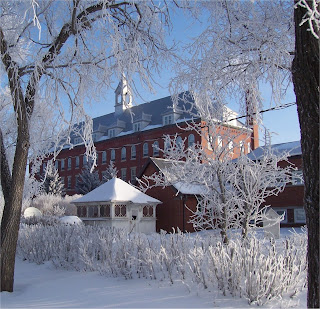
Although I got lots of writing done at the writers and artists’ colony this year, I also enjoyed the reading time. I spent my evenings with Edward Hirsch, browsing his Poet’s Choice, which led me down interesting paths — including one that led to Yusuf Komunyakaa, whose name I’m sure had not crossed my radar (though Brenda tells me she also came across him recently and was impressed).
I brought a chapbook called When Now Is Not Now, produced by The Poetry Trust for Alastair Reid‘s 2006 appearance at the Aldeburgh Poetry Festival, where he was one of my clear favourites, and after re-reading those poems still is.
For criticism and theory, I brought Annie Finch, The Body of Poetry, which had a fabulous piece in it about how the DWM canon came to be and what to do if you don’t like it. And some welcome introduction to the work of Sara Teasdale, which delighted me.
Other books I’ve read over the past couple of weeks include Jane Hirschfield‘s After; Vona Groarke‘s Shale, Paul Farley‘s Tramp In Flames, the 2007 Forward Prize Anthology, Helena McEwan’s Ghost Girl, Medbh McGuckian‘s The Currach Requires No Harbours, Mimi Khalvati’s The Meanest Flower, and Naomi Guttman’s Wet Apples, White Blood.
So here we are, having had a fabulous if freezing view of the lunar eclipse; last night having seen some absolutely gorgeous layered photographic slides from Regina’s own Cherie Westmoreland, and had our farewell reading. It’s time to pack up.
So long to Benedict…

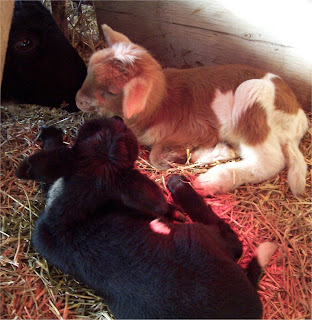
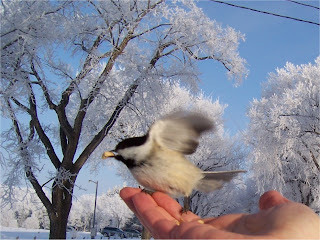
And to these newcomers, who were born out in a -25c field and luckily spotted and brought inside for a little time under the heatlamp…
And today, all the colonists fly away home.


Latest Posts
- (no title)
- Sublime and Twisted Readings coming up!
- Sublime
- Good weather for reading
- The world, the world
- Sublime launch!
Aldeburgh Poetry Festival Barny Haughton BBC BC poets Berkswell blackberries Black Stilt Bologna book launch Borough Market Carlo Petrini Catalonia Cyrus Todiwala dairy Daunt's Books Dijon Edinburgh Fanny Bay Feast of Fields Food and Morality food history food journalism Jenna Butler lardo Malahat Review Michael Pollan Okanagan olive oil tasting olive trees Omnivore's Dilemma Our Food Our Future Oxford Parmigiano-Reggiano Planet Earth Poetry poetry poetry readings Poetry videos prosciutto salumi Sean O'Brien Suffolk ticks Wendy Morton Wired Writing Yvonne Blomer
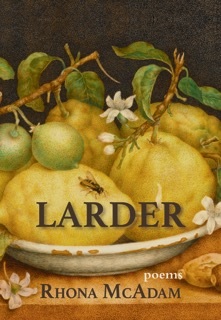
In her latest collection, Rhona McAdam navigates the dark places of human movement through the earth and the exquisite intricacies lingering in backyard gardens and farmlands populated by insects and pollinators, all the while returning to the body, to the tune of staccato beats and the newly discovered symmetries within the human heart.
“…A beautiful, filling collection, Larder is a set of poems to read at the change of the seasons, to appreciate alongside a good meal, and to remind yourself of the beauty in everything, even the things you may not appreciate before opening McAdam’s collection….”
Rhona McAdam is a writer, poet, editor, and Registered Holistic Nutritionist with a Master’s in Food Culture from Italy and a deep-rooted passion for ecology and urban agriculture. Her work spans corporate and technical writing to poetry and creative nonfiction, often exploring the vital links between what we eat and how we live. Based in Victoria, BC, and available via Zoom, Rhona is always open to new writing commissions, readings, or workshops on nutrition and the culinary arts.