-
Life on Planet Poetry
Read Full Post: Life on Planet PoetryWay back in 1988 I visited England for the first time as an adult. I had just published my second poetry collection, with a third on the way, and was keen to learn more about what was going on poetically in the UK. Before I left I got in touch with Mike Shields, then editor of the long running litmag Orbis, where I had had a few poems published. I asked if he knew any London poets I could meet, and he sent me the names Judi Benson and Peter Kenny, both of whom I met that visit and who both became longtime friends.
Towards the end of last year, Peter started up a podcast, Planet Poetry, with fellow poet Robin Houghton. Still fairly new, it charmed me from the outset with its straightforward approach; it feels like joining these two in the pub for a pleasant chat about poets they like, and what they’ve been reading and what they think about it.
So I was charmed to be invited into the virtual pub recently for a chat with Peter about long ago poems and themes of Arrivals/Departures. Hope you enjoy the trip!
-
Poetry & the Wild
Read Full Post: Poetry & the WildI attended a livestreamed reading and talk called Poetry & the Wild: A Reading and Conversation with Jane Hirshfield last Thursday. Hosted by Tom Fleischner, of the Natural History Institute, the conversation touched on poetry, Zen, natural history… whale trails, Poets for Science, climate change, and much more.
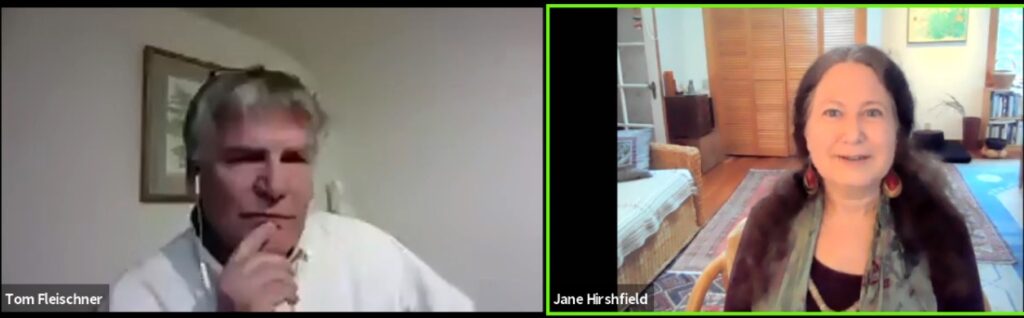
Hirshfield is a poet who’s embraced, or perhaps entered, the natural world more than many. Her Zen practice informed many of her observations. “When the self disappears, the self is happiest” she said, discussing the need to be open to observation in order to engage fully with the world. And citing Robinson Jeffers – “falling in love outward”.
She was asked, how does poetry help us? It’s thinking and understanding with the whole body, she replied. Poetry is a journey of discovery for her, as a reader and a writer. With all that is before us just now, she said, poetry can provide assistance towards a sense of resilience. It can help us engage with what feels beyond understanding — or simply respond to a curiosity. You want to be left changed when you read a poem, and “to find wholeness among the broken”.
When she asked in return why natural history? the answer was also zen-like: the practice of focused attentiveness to the more than human world; “the practice of falling in love with the natural world”, and an observation that natural history should be seen as a verb rather than a noun. And nurtures the deeper feelings about engagement with the world that poetry does.
Fleischner quoted Hirshfield’s own words: “Everything changes, everything is connected, pay attention.”
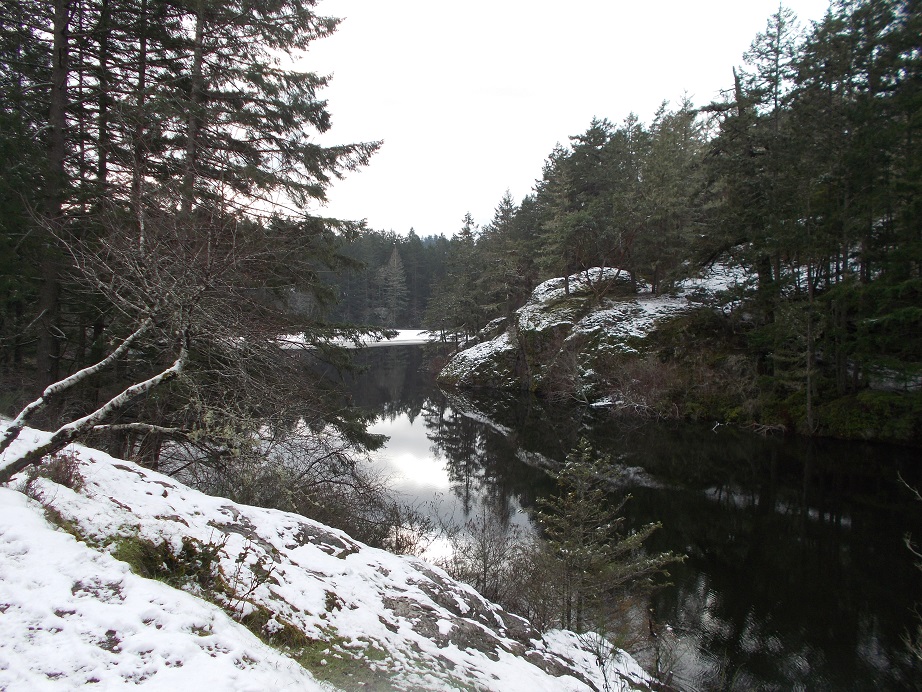
Thetis Lake Park, Victoria BC -
Over and Out: BC Seedy Saturday 2021
Read Full Post: Over and Out: BC Seedy Saturday 2021Well – long in the preparation and now over! Some 450 people from around the province registered for BC’s Virtual Seedy Saturday, and there were audiences of around 150 for each session.
I attended most of the events, with growing admiration for the Farm Folk City Folk team’s stamina. They were on hand at every session to keep on top of technical issues, monitor the chat and field the questions, so speakers were well supported.
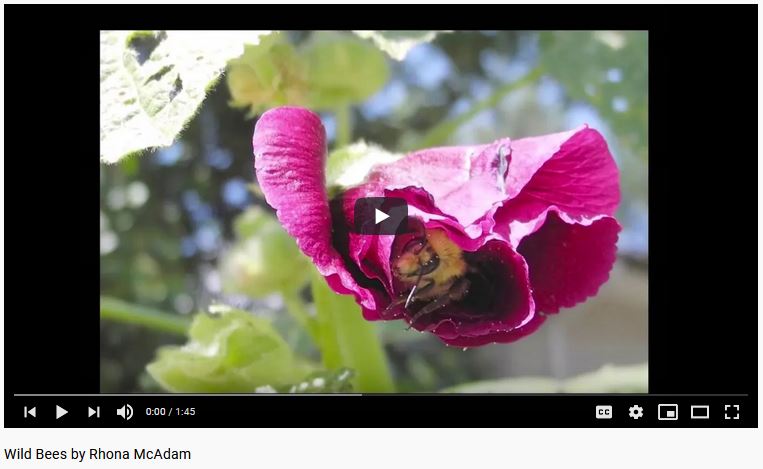
Poetry videos began most of the sessions (and can now be viewed here: )
The live sessions were not recorded. These zoom days we have become accustomed to having recordings at our disposal if we cannot attend an event. The organizers explained, when this came up on the last day, that a great deal of thought and discussion had gone into the decision not to record sessions. One reason was simple logistics: how to distribute recordings after the fact to participants. Another was permissions: the speakers would have had to consent to having their images and content shared, potentially to people other than those who had registered.
And my feeling is that the sense of constant availability really knocks participation down, since many people (guilty!) do sign up for things and then don’t attend, thinking they will watch later. But this means fewer people in a live audience – which affects the energy in the ‘room’ and means some questions don’t get asked or answered.
Among my favourite sessions, though, and there were many…
Vandana Shiva kicked things off on Friday night with a fiery talk on the importance of seed and food security, and the value of local action for both.
On Saturday The Master Gardeners Q&A was lively and well-attended, with MGs from around the province, able to discuss garden issues that differ hugely in the wide range of growing climates in this province. Kristen Miskelly of Saanich Native Plants (at Haliburton Farm) gave a great overview on the value – environmental, cultural and ornamental – of native plants for gardens and restoration. Saturday’s screening of Gather was a pleasure – I’d long wanted to see this film on indigenous foodways.
On Sunday, a panel on invasive species gave some helpful reminders on the perils of random seed and plant sharing, an update on problematic species of plants and insects, and recommendations on contacting local experts to report suspects when spotted. There was Bob Wildfong‘s (Seeds of Diversity) helpful talk on how to preserve seeds and build a usable local seed collection of any size. And Connie Kuramoto gave thorough coverage of seed germination and healthy soil.
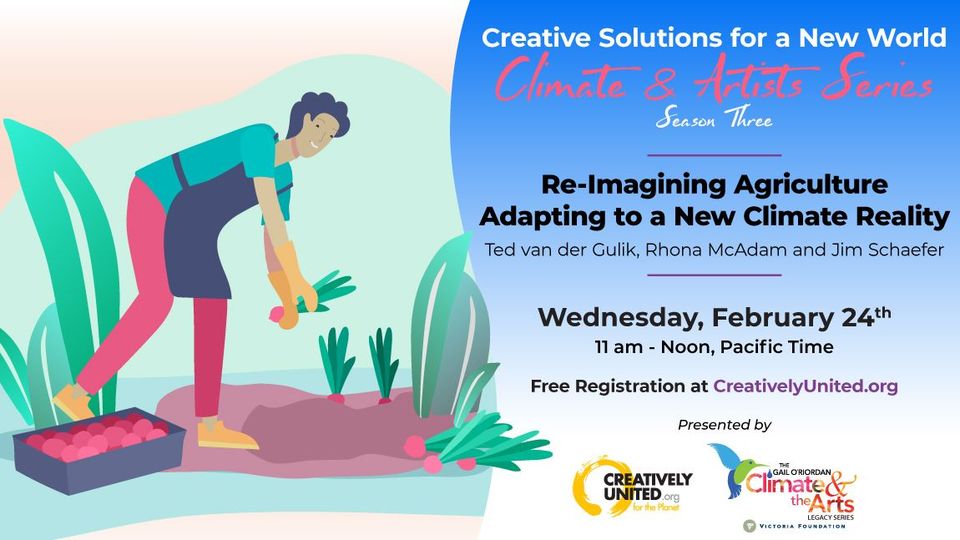
I’ll be reflecting further and then discussing my takeways from the weekend at Frances Litman‘s Creatively United webinar on Wednesday Feb 24.
Latest Posts
- (no title)
- Sublime and Twisted Readings coming up!
- Sublime
- Good weather for reading
- The world, the world
- Sublime launch!
Aldeburgh Poetry Festival Barny Haughton BBC BC poets Berkswell blackberries Black Stilt Bologna book launch Borough Market Carlo Petrini Catalonia Cyrus Todiwala dairy Daunt's Books Dijon Edinburgh Fanny Bay Feast of Fields Food and Morality food history food journalism Jenna Butler lardo Malahat Review Michael Pollan Okanagan olive oil tasting olive trees Omnivore's Dilemma Our Food Our Future Oxford Parmigiano-Reggiano Planet Earth Poetry poetry poetry readings Poetry videos prosciutto salumi Sean O'Brien Suffolk ticks Wendy Morton Wired Writing Yvonne Blomer
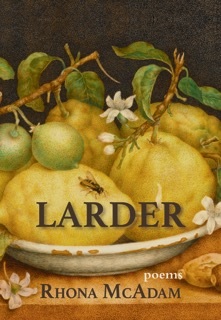
In her latest collection, Rhona McAdam navigates the dark places of human movement through the earth and the exquisite intricacies lingering in backyard gardens and farmlands populated by insects and pollinators, all the while returning to the body, to the tune of staccato beats and the newly discovered symmetries within the human heart.
“…A beautiful, filling collection, Larder is a set of poems to read at the change of the seasons, to appreciate alongside a good meal, and to remind yourself of the beauty in everything, even the things you may not appreciate before opening McAdam’s collection….”
Rhona McAdam is a writer, poet, editor, and Registered Holistic Nutritionist with a Master’s in Food Culture from Italy and a deep-rooted passion for ecology and urban agriculture. Her work spans corporate and technical writing to poetry and creative nonfiction, often exploring the vital links between what we eat and how we live. Based in Victoria, BC, and available via Zoom, Rhona is always open to new writing commissions, readings, or workshops on nutrition and the culinary arts.