-
Did we really have to wait for the data? Livers and kidneys: The health costs of Genetically Modified crops and High Fructose Corn Syrup
Read Full Post: Did we really have to wait for the data? Livers and kidneys: The health costs of Genetically Modified crops and High Fructose Corn SyrupA sweet little article about whether the body’s seasonal health needs can be satisfied by eating seasonal foods is a timely one, in light of a couple of recent stories about risks to kidneys and livers by things we must have known we shouldn’t be eating. It’s not completely helpful to those of us above the citrus growing belt – article observes that colds and flu coincide with citrus and kiwi harvest – but it’s a nice idea. (Though winter vegetables like broccoli and squash do contain vitamin C as well) And the bottom line is that eating fresh vegetables and fruits is always the best way to go.
Because processed foods are getting more and more bad press. High Fructose Corn Syrup (HFCS – or by its additive names, dextrose, glucose-fructose, fructose-glucose or isoglucose) was rumbled by Michael Pollan and many others for its role in increasing the heft of its consumers. Now, in addition to its contribution to obesity levels, it has been identified as damaging to human livers in people who already have liver disease.
Avoiding HFCS is difficult, if you buy processed foods, because it has been embraced by food processors for its cheapness (thank you US farm subsidies), and can be found in foods including (but not limited to) soft drinks, fruit drinks, sports drinks, flavoured yogurts, frozen dinners, frozen desserts, canned food, breads, muffins, cakes, stuffing mixes, breakfast cereals, pancakes, waffles, cookies, crackers, ice cream, children’s vitamins, cough syrup, candy bars, ketchup, relish, mustard, barbecue sauce, drink mixes, jams, jellies, syrups, meats, salad dressings, sauces, marinades and snack foods and chocolate bars.
Assuming you successfully dodge products containing HFCS, you can now start trying anew to avoid genetically modified foods, because there is evidence that GM crops are harmful to kidneys and livers. Indeed, this has only been proven in animal tests, but who wants to be the human lab rat?
Kidney disease is of course linked to obesity (see HFCS, above). Then again, it might be pure coincidence, but the rise in kidney disease over the past ten years coincides pretty neatly with the increase in unlabelled GM food ingredients (found in about 60% of our processed foods nowadays, according to a 2004 CBC article) like corn, canola, dairy, soy, potatoes, rice and now sugar beet products into North American diets: worth a bit of independent study, I’d think. We know already that Health Canada does not require independent testing on GM food safety for human consumption, but relies on the studies that the producers choose to release.
So. You know what to do. Get your copy of Michael Pollan’s Food Rules, consult your GE-free shopping guides and a good basic cookbook, and get thy processed foods behind thee.
BTW: was I the only one who found the beverages consumed in the movie Juno disturbing, particularly when the consumer was pregnant? Without wanting to know what was in the blue liquid whose surplus the character disposed of at various points, the ingredients in the jug of what she drank before her pregnancy test (amounting to 1539 calories, by the way) are:
Water, High Fructose Corn Syrup and 2% or Less of Each of the Following: Concentrated Juices (Orange, Tangerine, Apple, Lime, Grapefruit). Citric Acid, Ascorbic Acid (Vitamin C), Beta-Carotene, Thiamin Hydrochloride (Vitamin B1), Natural Flavors, Food Starch-Modified, Canola Oil, Cellulose Gum, Xanthan Gum, Sodium Hexametaphosphate, Sodium Benzoate To Protect Flavor, Yellow #5, Yellow #6.
-
Daily bread
Read Full Post: Daily breadIn her book English Bread & Yeast Cookery, Elizabeth David, writing in 1977, makes a point of value to us in these days when we are so distanced from our food supply: that for every ounce of bread we eat (a thin slice), an ounce of grain has been grown, harvested, transported (often long distances) to mills, cleaned, dried, conditioned, ground into flour, treated, stored and finally delivered to bakeries and bread factories.
Wanting to get closer to my bread, I attended an artisan bread-making class last weekend, and here’s what I did at school that day….
Started off with lessons on yeast. Active dry yeast is the yeast of choice since it’s reliable and durable (can be stored for years in a freezer, though officially has a 3 month shelf life)
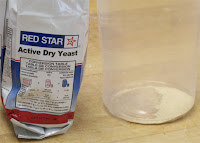
But fresh yeast is preferred by purists (assuming they are making bread in volume, since a cake only keeps for a month) – can be hard to find though.
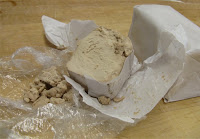
Instant yeast comes in big granules; what the purists don’t like about it is that coating on the granules means you’ll get about 25-30% dead yeast together with the live cells, meaning you need to use about twice as much as active yeast, and soak in water, for reliable results.

Moving on from yeasts, we were introduced to sourdough and rye starters


Rye is particularly valued, because of its high amylase content, stable at high (baking) temperatures. Amylase is an enzyme – also present in seeds (contributing to germination) and saliva – which converts starch into sugar; starch is what hardens during baking to create firm, airy loaves. Since amylase breaks starch down during baking, rye contributes a moist, dense texture in bread. We didn’t use the rye starter in this class, but I hope to take the next installment which is all about fermentation techniques.
Then there was Poolish – which originated in French kitchens (the name a nod to the Polish bakers who probably introduced it). Simple to make and only needing a night to ferment, it is gooey and puffy, and went into our baguettes:
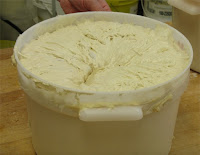
and Biga, an Italian starter, which is thicker and sturdier than Poolish, and used later that day to make ciabatta.
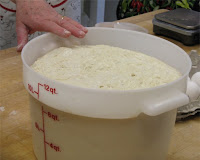
We watched our instructor – Martin Barnett – make a Challah dough
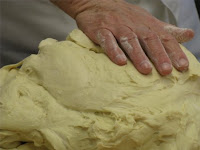
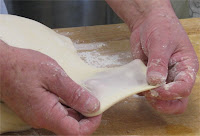
while he explained why it is better to weigh ingredients than go by volume (a cup of plain flour is not the same as a cup of whole wheat, etc.) and paused at intervals to demonstrate different stages of gluten development


stopping only when it had advanced to the stage when you can make a window to read through. Then he covered it and left it to carry on with its first rising (primary fermentation).
Lessons learned, we proceeded to make buttermilk seed bread
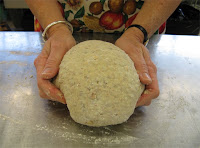
and some dough for baguettes.
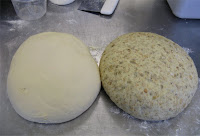
Some of us made ciabatta, and others (like us) Tuscan loaves; then we readied our ingredients for wholemeal brioche and went for lunch (pizzas we assembled ourselves on fresh pizza dough). After lunch we put our bread into loaves, and then made the brioche dough, rolled it flat, buttered it and sprinkled it with sugar, cinnamon and raisins; rolled it up
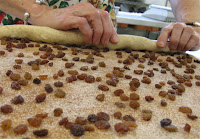
and cut it into buns
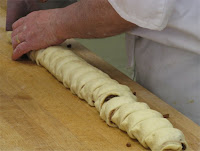
which were baked and then brushed with apricot glaze
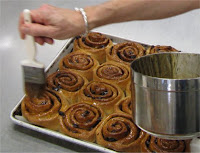
and some lemony icing.

We rolled our baguettes and popped them into forms to rise
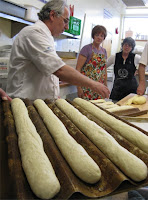
and then started reaping the bounty. Ciabatta

baguettes
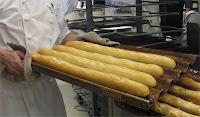
and our seed and Tuscan olive breads. Not a bad haul for 8 hours’ work.

-
Nutrition Month; Season with lead, phthalates and a pinch of salmonella…
Read Full Post: Nutrition Month; Season with lead, phthalates and a pinch of salmonella…March is Nutrition Month in Canada, and the theme is “Celebrate Food, from Field to Table”. The Vancouver Island Health Authority’s suggestions for ways to celebrate include:
- Plant a garden in your backyard, a container garden on your balcony, or herbs on your windowsill.
- Get children involved in preparing food and eat family meals often. When kids take part in meals, they are more likely to make healthier choices.
- Enjoy fresh food in season. Shop at local farmers markets and farm gates. Freeze or preserve local fruits and vegetables to eat a greater variety throughout the year.
Tips for supporting your community to grow a local food system:
- Start, support or get involved with a local community garden project to grow food close to where you live.
- Join a community kitchen group to cook and enjoy meals with friends.
- Work with your local school board to create ways to showcase local foods either in the classroom, school cafeteria or schoolyard.
- Encourage your grocery store to carry more local foods.
Meanwhile. as people have been discovering with the recall of North American food products containing Hydrolyzed Vegetable Proteins, a little can mean a lot to food safety. Time magazine’s recent article about the lead content of Indian spices is another argument for buying or using local – including the seasonings in your foods. Many spices and herbs are sold in organic versions which, of course, cost more – but what we’re learning nowadays about the dangers of even tiny amounts of toxins in our foods show why it can sometimes be critical to pay more for less.


Latest Posts
- Writers at Word!
- Sublime and Twisted Readings coming up!
- Sublime
- Good weather for reading
- The world, the world
- Sublime launch!
Aldeburgh Poetry Festival Barny Haughton BBC BC poets Berkswell blackberries Black Stilt Bologna book launch Borough Market Carlo Petrini Catalonia Cyrus Todiwala dairy Daunt's Books Dijon Edinburgh Fanny Bay Feast of Fields Food and Morality food history food journalism Jenna Butler lardo Malahat Review Michael Pollan Okanagan olive oil tasting olive trees Omnivore's Dilemma Our Food Our Future Oxford Parmigiano-Reggiano Planet Earth Poetry poetry poetry readings Poetry videos prosciutto salumi Sean O'Brien Suffolk ticks Wendy Morton Wired Writing Yvonne Blomer
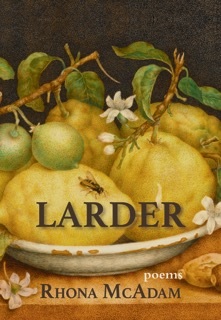
In her latest collection, Rhona McAdam navigates the dark places of human movement through the earth and the exquisite intricacies lingering in backyard gardens and farmlands populated by insects and pollinators, all the while returning to the body, to the tune of staccato beats and the newly discovered symmetries within the human heart.
“…A beautiful, filling collection, Larder is a set of poems to read at the change of the seasons, to appreciate alongside a good meal, and to remind yourself of the beauty in everything, even the things you may not appreciate before opening McAdam’s collection….”
Rhona McAdam is a writer, poet, editor, and Registered Holistic Nutritionist with a Master’s in Food Culture from Italy and a deep-rooted passion for ecology and urban agriculture. Her work spans corporate and technical writing to poetry and creative nonfiction, often exploring the vital links between what we eat and how we live. Based in Victoria, BC, and available via Zoom, Rhona is always open to new writing commissions, readings, or workshops on nutrition and the culinary arts.