-
The future of fish
Read Full Post: The future of fishA convergence of schools of thought on fish, and some opportunities to make your views known:
Alexandra Morton is inviting Canadians to take action on proposed federal Pacific aquaculture regulations, which have been offer a 60-day public input period (page 1933 of this hefty document). Now is the time to give some thought to how you want to see Canada’s Pacific coast used in future: the deadline is September 12.
Morton’s views on fish farms are well known and always make interesting reading; she delivers again in this article which unpicks the politics of Canadian fish farm regulation for The Tyee.
Also chugging through its 60 day public input is this document on Canadian organic aquaculture standards. Deadline for this one is August 30.
Some good background reading on the question of wild vs farmed fish can be found on Barry Eastabrook’s excellent Politics of the Plate blog, which features a review of Four Fish: The Future of the Last Wild Food, by Paul Greenberg. Discussing the fate of salmon, sea bass, cod, and tuna, and offering thoughtful suggestions for going forward with, the book sounds unmissable.
-
War on local food
Read Full Post: War on local foodThere’s an amazing exhibition of wartime posters about food and agriculture which you can enjoy virtually, if you are unable to visit the National Library of Agriculture in Beltsville, Maryland.
Back here in nambypambyland, you’d think you were in some kind of wartime, and maybe you are. Just across the Salish Sea, farmers and food producers are revolted by the behaviour of the Canadian Food Inspection Agency which has come down on a local food store in Vancouver, The Home Grow-In Grocer (which was celebrating its first birthday on my last trip to the big city) for stocking local products which (gasp) don’t have bilingual (French) labelling. And various other labelling infractions, rendering many foods officially unsaleable.
Seizing perfectly good stock on such lame grounds would be bad enough, but the repercussions for the food producers are in some cases crippling, as it makes their products unsaleable until they are able to find the time and money to invest in conforming to standards which are (here we go again) in place mostly because we can’t trust multinationals to tell the truth about our food supply.
And why is the CFIA picking on a neighbourhood grocery anyway, when Vancouver boasts a world of non-compliant ethnic groceries, and one of the biggest selection of Chinese and other Asian foods in the continent – many of those items not even labelled in English? I bought a jar of jam in Quebec last month that had no English on it at all; since I was in a French-speaking part of Canada I was neither surprised nor moved to call the inspection agency over it.
This is not, it seems to me, an issue of food safety: rendering a product label into French in an English-speaking part of the country is not going to make a food any safer for anyone. So why are the inspectors wasting time and money on all this? When you look at their list of recalls, you wonder how they have time to do anything but keep up with the industrial scale producers that cause most of the trouble.
Certainly I think it’s important to include ingredient labelling on a product: I wouldn’t normally buy anything that lacks such information, and I would agree producers should be required to produce such labels if they don’t have them. Nutrition labels… I don’t know; maybe. But for heaven’s sake: locally-produced food in a local shop doesn’t need to carry translated labels.
Canada is not the only one struggling with this misdirection of its food inspectors. The Americans do it as well. I’m sure Europe has a catalogue of incidents too, since its labelling regulations are as complex as its membership’s food traditions, in cultures where those traditional foods are fighting for survival against easier-to-regulate mass-produced industrial products. And where there is a long history of attempting to balance food safety against traditional methods of food preparation and preservation. Understandable in a region where food safety concerns like BSE have created catastrophic problems for consumers. But these illnesses are overwhelmingly the product of overproduction and profiteering, not artisanal production.
One happy note in the food world is the enlightened thinking of Canada’s Governor-General, who has seen fit to recognize food and drink for national honours. Sinclair and Frédérique Philip who founded Sooke Harbour House and nurtured a generation of excellent chefs, were among the recipients for the first Governor General’s Award in Celebration of the Nation’s Table this year. They have been tireless advocates for local and sustainable eating and have managed to deliver world-class dining in an unlikely location, a long drive from Victoria, which they’ve made a stunningly beautiful restaurant and b&b.;
-
Summer on the farm stand
Read Full Post: Summer on the farm standI’ve been spending a little time on the Haliburton farm stand, which has been a great opportunity to ogle seasonal produce.

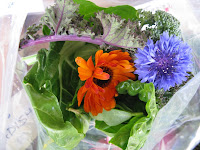
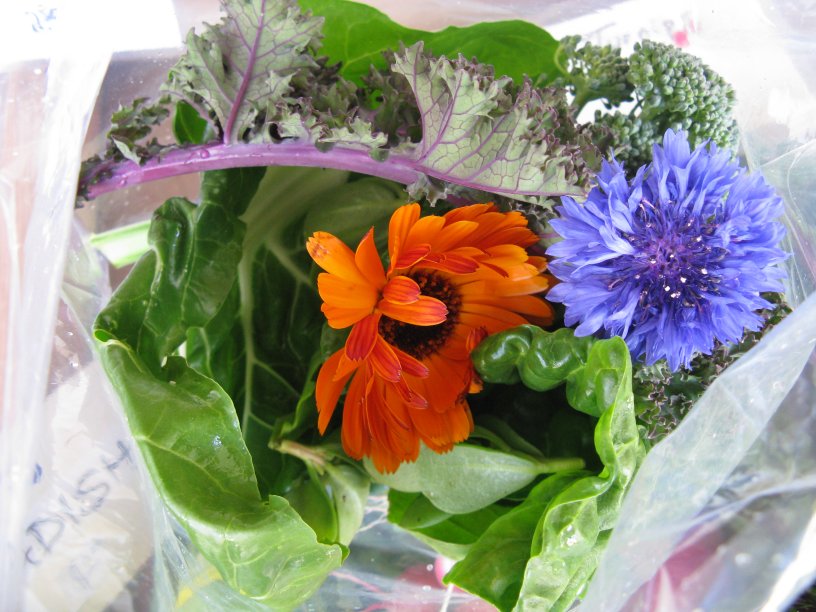
Braising greens have never looked so beautiful.
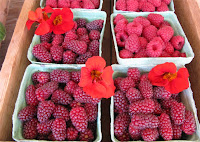
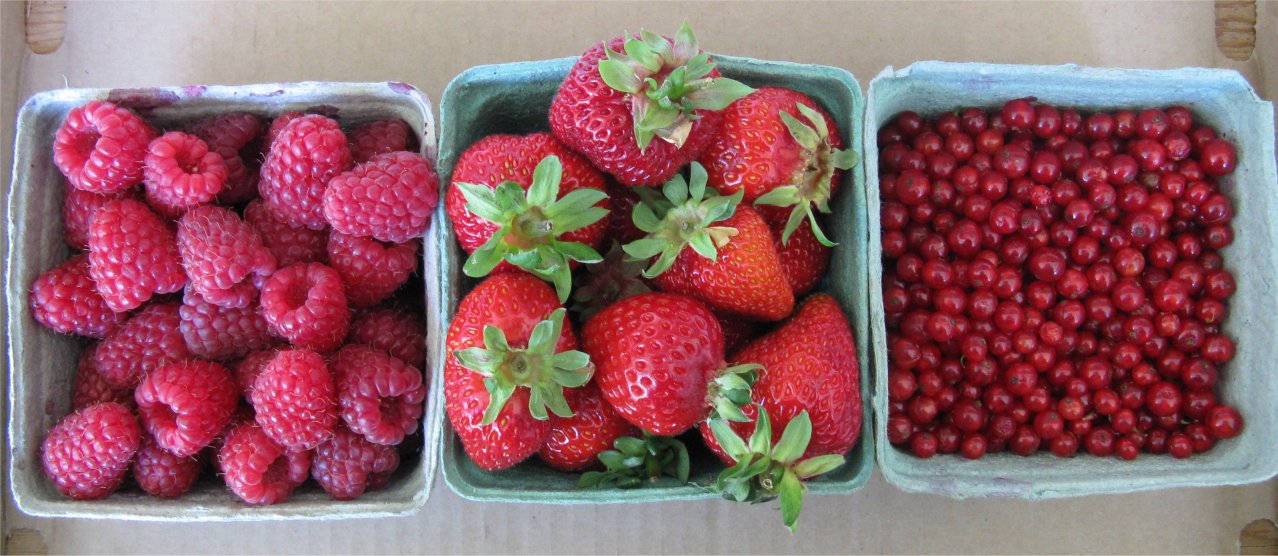
Tayberries are about done now, but there are lots of raspberries, strawberries and a few red currants.

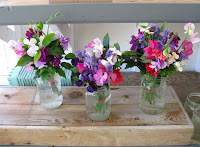
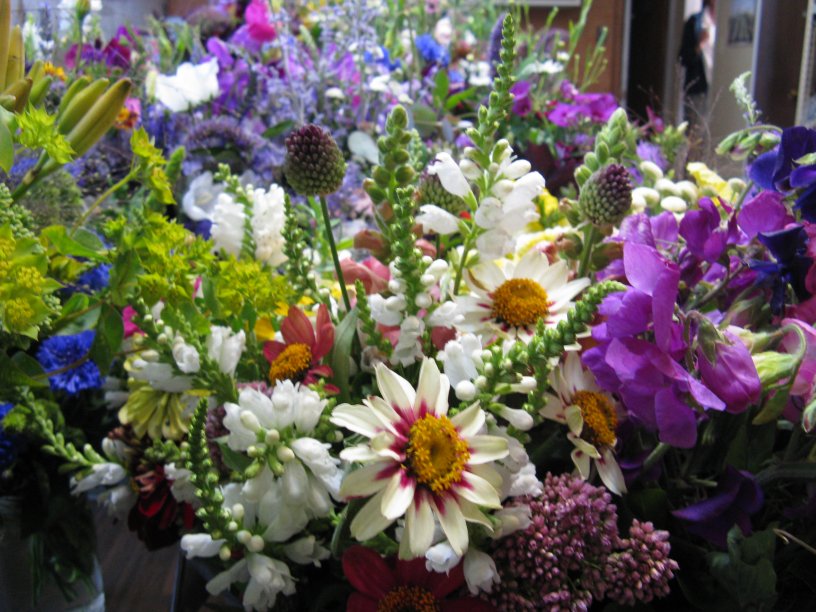
Marty, who is part of Sunbird Farms (one of the three farming operations at Hali), produces staggeringly beautiful organic flower arrangements. Here they are getting ready to go to Moss Street Market last Saturday.
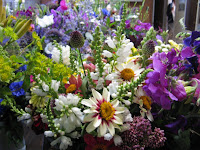
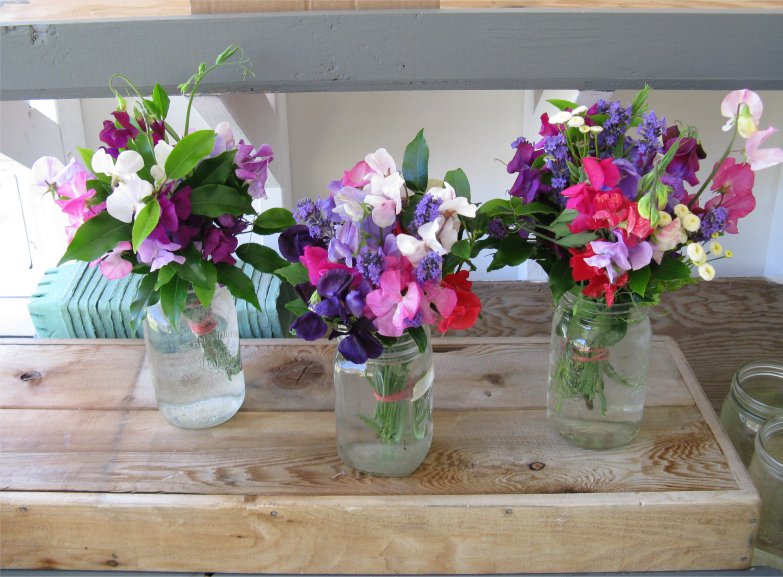
And some sweet peas on the farm stand:
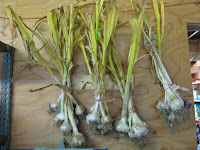
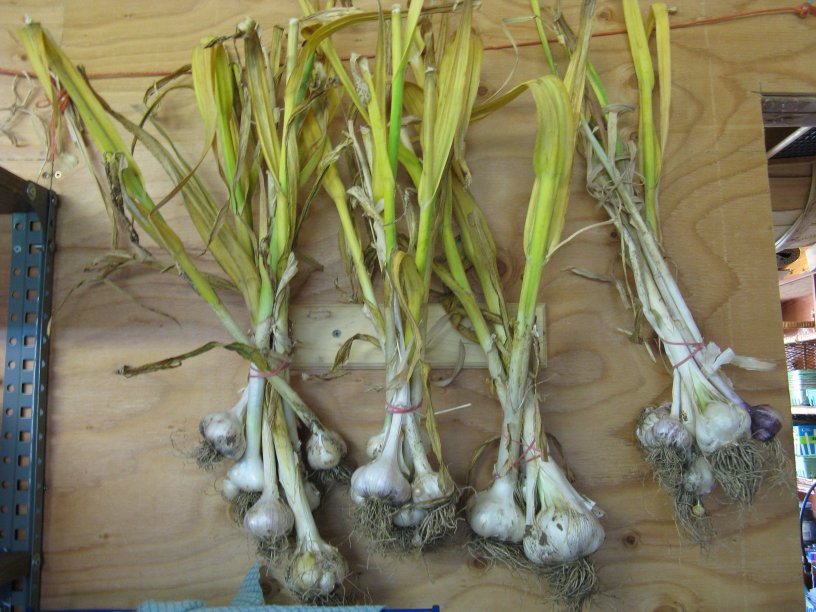
It’s garlic harvest time. Hang ’em where you may…
Edible flowers are as beautiful an addition to the farm stand as to salads: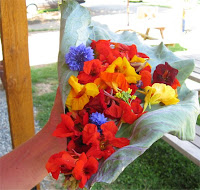
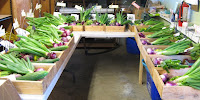
Our CSA veg baskets are looking lovely. Actually I think it looks like a CSA seminar.
And finally, I am a Poem of the Week poet on the Acumen website this week (see Guest Poem button). Catch me while you can…





Latest Posts
- Writers at Word!
- Sublime and Twisted Readings coming up!
- Sublime
- Good weather for reading
- The world, the world
- Sublime launch!
Aldeburgh Poetry Festival Barny Haughton BBC BC poets Berkswell blackberries Black Stilt Bologna book launch Borough Market Carlo Petrini Catalonia Cyrus Todiwala dairy Daunt's Books Dijon Edinburgh Fanny Bay Feast of Fields Food and Morality food history food journalism Jenna Butler lardo Malahat Review Michael Pollan Okanagan olive oil tasting olive trees Omnivore's Dilemma Our Food Our Future Oxford Parmigiano-Reggiano Planet Earth Poetry poetry poetry readings Poetry videos prosciutto salumi Sean O'Brien Suffolk ticks Wendy Morton Wired Writing Yvonne Blomer
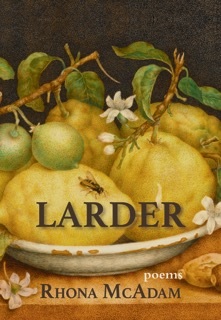
In her latest collection, Rhona McAdam navigates the dark places of human movement through the earth and the exquisite intricacies lingering in backyard gardens and farmlands populated by insects and pollinators, all the while returning to the body, to the tune of staccato beats and the newly discovered symmetries within the human heart.
“…A beautiful, filling collection, Larder is a set of poems to read at the change of the seasons, to appreciate alongside a good meal, and to remind yourself of the beauty in everything, even the things you may not appreciate before opening McAdam’s collection….”
Rhona McAdam is a writer, poet, editor, and Registered Holistic Nutritionist with a Master’s in Food Culture from Italy and a deep-rooted passion for ecology and urban agriculture. Her work spans corporate and technical writing to poetry and creative nonfiction, often exploring the vital links between what we eat and how we live. Based in Victoria, BC, and available via Zoom, Rhona is always open to new writing commissions, readings, or workshops on nutrition and the culinary arts.