-
Slow Food Lamb Roast
 Cory Pelan loves lamb, and he likes it best in a farmer’s field with lots of people bringing lots of lovely food to go with it. So yesterday afternoon he and the Slow Island convivium put on a summer party to raise funds for sending Vancouver Islanders to Terra Madre this October.
We sat on hay bales (invited to bring blankets to cover them) and watched the lamb turn on its spit until it was time to dine. Some idled away the time visiting the pig pens to see the heritage breed pigs that farmer Tom Henry raises there. Cory did the carving, assisted by Peter Zambri and watched by a host of hungry foodies.


By this time platter after platter of side dishes had arrived (I think it best to let the food speak for itself):


…and there was a groaning board of desserts as well.


-
Seediness & worminess
 A group of Gorge Tillicum Urban Farmers visited the Garden Path last week, to have a look around at a garden going (deliberately) to seed.
Carolyn Herriot walked us round the garden she carved out of broom and bracken about 12 years ago, and which over the years has been an organic plant nursery, a source of local organic seed, and now a fruitful training centre for interns. Carolyn has increasingly turned her hand to writing and is awaiting release of her new cookbook, The Zero-Mile Diet Cookbook, which follows her last book, The Zero Mile Diet: A Year Round Guide to Growing Organic Food.
Here she checks artichokes, which are ready for seed collection when the flower turns to fluff. Her leeks are in bloom, to the delight of the many bees who visit the garden. And she showed us a box of peas that had been collected and put into a container for freezing. Although they’d been carefully checked for pea weevil, freezing the peas for several days would make sure that anything missed would not hatch.


Pea weevil is a problem in summer peas; any planted after June should be resistant varieties, as the weevils bore through the pods and into the peas to lay eggs, which hatch out and can stunt or destroy seedlings as well as ruining the peas for eating.


Below, Carolyn shows off her Jerusalem artichokes. Every year, she said, she digs them up and leaves none behind, and every year they gallop back larger than life: I am grateful I had only planted mine in containers, and even there they happily go on self-propagating. Another reliable returnee is oca (oxalis tuberosa), a hardy little tuber from Peru via New Zealand, which sports lush, four-leafed foliage and produces lemony morsels ideal for roasting. Carolyn has introduced it to our area, selling tubers at Seedy Saturdays for several years now, and they volunteer back each year. New this year is the asparagus pea (Tetragonolobus purpurea) which looked a lot like one of the wild greens we picked when I was in Crete – probably was the same, since this hails from the Mediterranean. Pretty and tasty.


One other nov
 elty item Carolyn’s been selling through Seeds of Victoria is the strawberry spinach (Chenopodium capitatum), which was rather beautiful.
After that it was time for a sip of juice – which Carolyn makes with a steam extractor – and a look at some of her seed-saving. We also got a pep talk about the gut flora which have become a great topic of interest to her through her research for her cookbook, as have recipes involving fermentation which feed those beneficial organisms.


Last weekend marked the 20th anniversary party and plant sale at the Greater Victoria Compost Education Centre, where a life-sized red wiggler was handing out gummi-worms and birthday cake, while outside were a number of vendors, including foodista turned tea-wallah, Libby Seabrook, offering some delicious herbal concoctions. Also spotted was Farmer Tina from Corner Farm in North Saanich, digging a nearly released local book.


-
Bee-gone cruel world
 As mentioned previously I returned home to find my Bombus box deserted and only a couple of sickly bees still staggering about under the bedding.
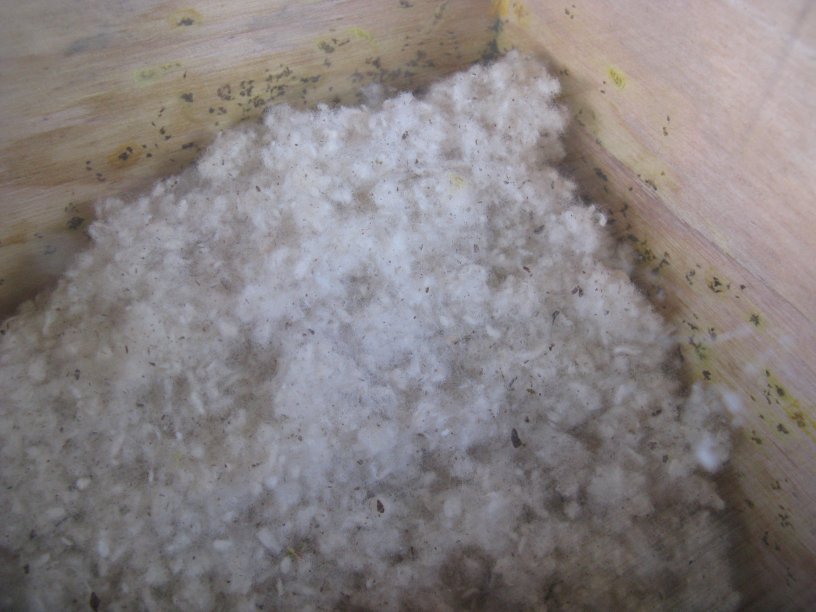
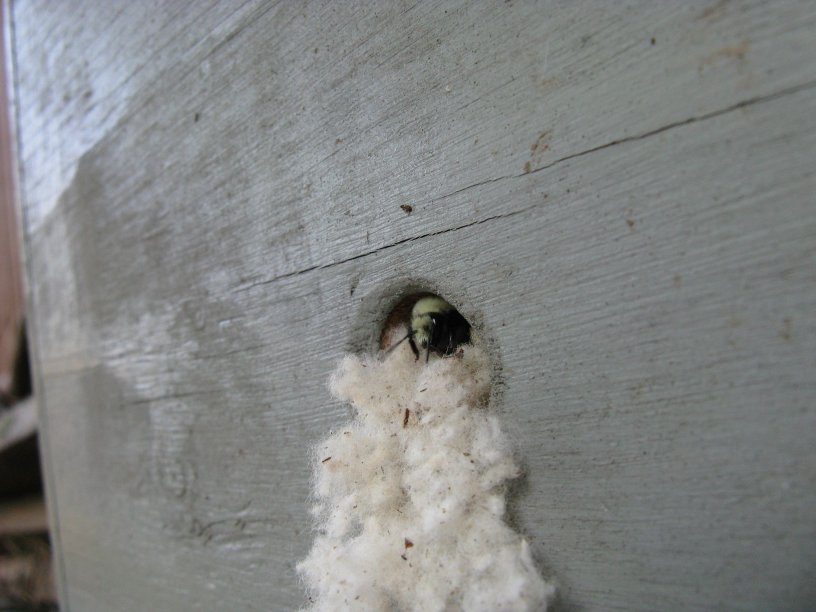
Mine were Bombus vosnesenskii or yellow-faced bumblebees, and I’d lured them into the box in the spring by placing it their path after I’d noticed the queen bumbling around my wood pile with the determined air of a house hunter. The box came pre-bedded with cotton mattress stuffing, and the first sign that the box was occupied was a spill of bedding out the entry hole. When I lifted the lid to look, the bedding seemed mounded up, and there was, well, bee dung on the walls. As soon as the lid was open, a bee shot out the front to ask what my business was, and after a while I noticed there was always at least one bee stationed at the entrance, with workers coming and going around her.


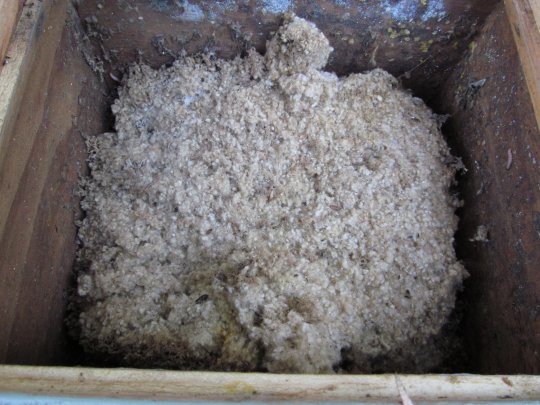
The hive was thriving up until the time I left, in late July. When I returned last weekend I noticed there was no bee in the doorway, and when I poked around inside, there was no more activity, and the bedding was grey, the walls were grey, and there were moths and maggots crawling around.

I asked my friendly neighbourhood entomologist (every neighbourhood should certainly have one!) for advice. He said it had happened to him as well sometimes, and put me onto a bumblebee specialist, who swiftly replied with the following comforting words:
That’s a pretty standard finding towards the end of the colony. There are many parasites that take over once the queen is done laying her eggs and the males and new queens leave the nest.
Well, comforting for me anyway. I had seen a yellow-face bopping around in my tomato flowers just the other day, so I knew they were still about, and I hoped that the tomato-lover had been one of the hearty offspring of “my” hive.
In truth I was a tiny bit relieved they had gone as they were quite frisky, if not downright aggressive: for some reason one would always emerge to dive bomb me when I went into my compost bin for any length of time, and then zoom around in the bin while I was trying to dig it over. I finally had to resort to wearing a headscarf if I wanted to dig things into the pile to keep them from tangling in my hair.
But then yesterday as I was starting to clean the box out – all maggoty and grey and sticky – I paused at the compost bin and darned if I wasn’t bopped in the head by a bombus. A big one, a queen I guess, as she was about three times the size of the workers who’d been hanging out the door in days gone by. She flew around and around the space where the box had been until I ran and fetched it. She entered and quickly backed out, then wandered around the front as if checking to be sure it was her own front door. Put her head in the door again, backed out, and so on for five or ten minutes, until she finally gave up and flew away.


I emptied the box, washed it and set it out on the grass to dry. I’ll bleach it later. But as I was climbing the ladder to the apple tree nearby, darned if she didn’t buzz me again. Clearly she has assigned blame for the whole sorry state of affairs, and I am the villain. But how do you apologize to a bee?
Here’s a good video showing the amazing things that happened in bombus world, under all that cotton fluff.. for a few months anyway.




Latest Posts
- Sublime
- Good weather for reading
- The world, the world
- Sublime launch!
- Planet Earth Poetry – Readings by Volunteers, Victoria 2026
- Poetry at the Goldfinch
Aldeburgh Poetry Festival Barny Haughton BBC BC poets Berkswell blackberries Black Stilt Bologna book launch Borough Market Caerphilly Carlo Petrini Catalonia culatello Cyrus Todiwala dairy Dijon Edinburgh Fanny Bay Feast of Fields ferries Food and Morality food journalism Michael Pollan olive oil tasting Omnivore's Dilemma Our Food Our Future Oxford Parmigiano-Reggiano persimmons Planet Earth Poetry poetry poetry readings Poetry videos prosciutto salumi Sean O'Brien sensory analysis Suffolk ticks tortelli di zucca Troubadour Wendell Berry Wendy Morton Yvonne Blomer
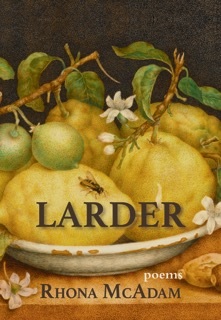
In her latest collection, Rhona McAdam navigates the dark places of human movement through the earth and the exquisite intricacies lingering in backyard gardens and farmlands populated by insects and pollinators, all the while returning to the body, to the tune of staccato beats and the newly discovered symmetries within the human heart.
“…A beautiful, filling collection, Larder is a set of poems to read at the change of the seasons, to appreciate alongside a good meal, and to remind yourself of the beauty in everything, even the things you may not appreciate before opening McAdam’s collection….”
Rhona McAdam is a writer, poet, editor, and Registered Holistic Nutritionist with a Master’s in Food Culture from Italy and a deep-rooted passion for ecology and urban agriculture. Her work spans corporate and technical writing to poetry and creative nonfiction, often exploring the vital links between what we eat and how we live. Based in Victoria, BC, and available via Zoom, Rhona is always open to new writing commissions, readings, or workshops on nutrition and the culinary arts.