-
Laughing oysters, food forests and a trip to Bellingham
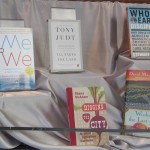 Last weekend I happened upon this rather lovely book display in the window of the Laughing Oyster book store in Courtenay. I’m keeping good company!
This afternoon I go head-to-head with the Superbowl, whatever that might be, giving a book talk at 4pm at the beautiful Village Books in Fairhaven, Bellingham. I took the marvelously efficient and comfortable Amtrak train from Vancouver, which gave me a little time to wrap my head around a new laptop, purchased reluctantly after my previous faithful companion died a lingering death of old age (obsolete after 5 whole years: why is this legal??).
The trip also gave me time to reflect on last night’s thoughtful and inspiring talk by
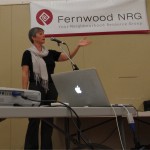 Seattle’s food forest designer, Jenny Pell. She spoke about community-driven food security initiatives in Washington and Oregon, including the Beacon Hill Food Forest in Seattle, a 7-acre parcel that is being developed as the largest public food forest in all of North America. It’s had lots of media coverage.
Pell, like many permaculturalists I’ve met, was a broad thinker who has passed the stage of thinking about change: the time for change is already here, and she wants to see movement into a more sustainable and positive way of life. Why, she asked, do we behave like zoo visitors, simply marveling over model achievements (like the Bullock Brothers’ permaculture homestead, or the solitary Sea Street in Seattle) and never creating multiples of them? We know what’s coming and that change is needed, but somehow we keep our heads down and live on as if we had nothing to do with making a sustainable world possible.
She admitted she was unusual, having never had a credit card nor made a mortgage payment, so was free of the economic traps that have wrapped so many in knots. Do what you need to do, was her message, and you too can live in a world where a salad costs less than a heavily subsidized hamburger, or you don’t have to call in the media in order to be allowed to keep your front yard food garden; where municipal planners can encourage home owners and builders to incorporate features like greywater harvesting and composting toilets; and where it’s not illegal to sell produce grown in your own garden.
-
More seeds

GTUF 2013 seed swap Lost a bit of time to computer troubles, but we seem to be back on our virtual feet again.
This abnormally warm West Coast winter is blending seamlessly into spring with an alarming showing of buds on bushes even as the snowdrops do their seasonal duty. We’re all thinking about seeds just now. The weekend before last the Gorge Tillicum Urban Farmers seed swap attracted around 50 GTUFers and other interested parties. It was a friendly and interesting time, comparing notes on what had grown well in our
 neighbourhood, and enlivened by the arrival of several cases of last year’s seed stock donated by a good neighbourly commercial seller.
Among my trophies, I collected seeds for:
- cucumbers (field and pickling)
- kohlrabi (one can never have too much)
- scarlet runner beans (some unusual & beautiful brown and cream coloured seeds)
- mammoth pot leeks (I have regretfully given up on onions – just don’t have enough sun in my garden)
- a Kashmiri brassica called Haak
- spinach
And I left small quantities of a large number of different plants including broccoli, celery, amaranth, calendula, oca, bulb fennel, black radish and eight different kinds of tomatoes, sugar snap peas and the remains of some unneeded seed packs, like onion (my plant list is here)
On Monday I was invited to speak to the fruit & veg group of the Victoria Horticultural Society. Rather than try to cross secateurs with more seasoned gardeners I chose community seed banks as my topic, and a lively discussion (several in fact) ensued. The GTUF seed bank, like many in these parts, was started after Dan Jason’s inspirational article on the topic. A good way to build goodwill, seed stocks and, ultimately, food security in your neighbourhood!
-
First seeds
 Even here in Lotusland we were reminded it’s still winter with a run of frosty nights, but the chill gave way to a clear sunny day last Saturday in which Haliburton Farm’s friends and neighbours gathered at the farmhouse to buy seeds, plant starts and organic produce and talk about the gardens to come. It was the first Seedy Saturday on Vancouver Island and the beginning of a long season for the seed-sellers who attended: Salt Spring Seeds, Seeds of Victoria and some of the farmers of Haliburton Farm: New Mountain Farm, H&R Veggies and Sunbird Farm II.
Below, Dan Jason – representing Salt Spring Seeds – and farmer Heather – with a tasty selection of organic produce from H&R Veggies – await customers as the day begins. Visitors, board members and farmers alike listen to Dan Jason’s noontime talk about the importance of seed saving and the value to food and community of knowing where your seeds come from. New Mountain farmers Nate and Mike offered seeds and produce.


Latest Posts
- Sublime
- Good weather for reading
- The world, the world
- Sublime launch!
- Planet Earth Poetry – Readings by Volunteers, Victoria 2026
- Poetry at the Goldfinch
Aldeburgh Poetry Festival Barny Haughton BBC BC poets Berkswell blackberries Black Stilt Bologna book launch Borough Market Caerphilly Carlo Petrini Catalonia culatello Cyrus Todiwala dairy Dijon Edinburgh Fanny Bay Feast of Fields ferries Food and Morality food journalism Michael Pollan olive oil tasting Omnivore's Dilemma Our Food Our Future Oxford Parmigiano-Reggiano persimmons Planet Earth Poetry poetry poetry readings Poetry videos prosciutto salumi Sean O'Brien sensory analysis Suffolk ticks tortelli di zucca Troubadour Wendell Berry Wendy Morton Yvonne Blomer
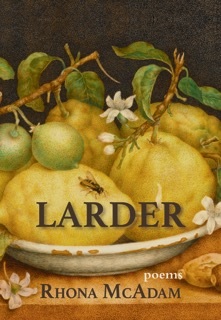
In her latest collection, Rhona McAdam navigates the dark places of human movement through the earth and the exquisite intricacies lingering in backyard gardens and farmlands populated by insects and pollinators, all the while returning to the body, to the tune of staccato beats and the newly discovered symmetries within the human heart.
“…A beautiful, filling collection, Larder is a set of poems to read at the change of the seasons, to appreciate alongside a good meal, and to remind yourself of the beauty in everything, even the things you may not appreciate before opening McAdam’s collection….”
Rhona McAdam is a writer, poet, editor, and Registered Holistic Nutritionist with a Master’s in Food Culture from Italy and a deep-rooted passion for ecology and urban agriculture. Her work spans corporate and technical writing to poetry and creative nonfiction, often exploring the vital links between what we eat and how we live. Based in Victoria, BC, and available via Zoom, Rhona is always open to new writing commissions, readings, or workshops on nutrition and the culinary arts.