-
Bee-gone cruel world
 As mentioned previously I returned home to find my Bombus box deserted and only a couple of sickly bees still staggering about under the bedding.
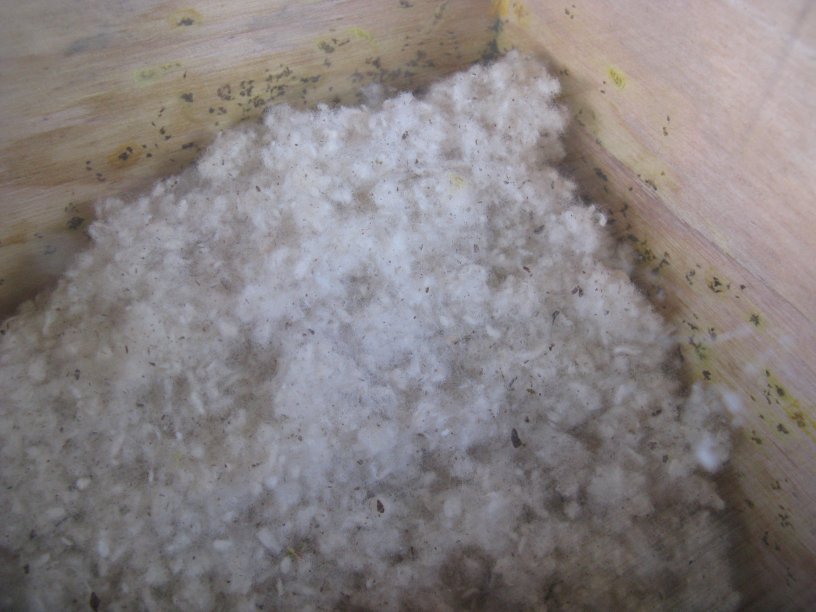
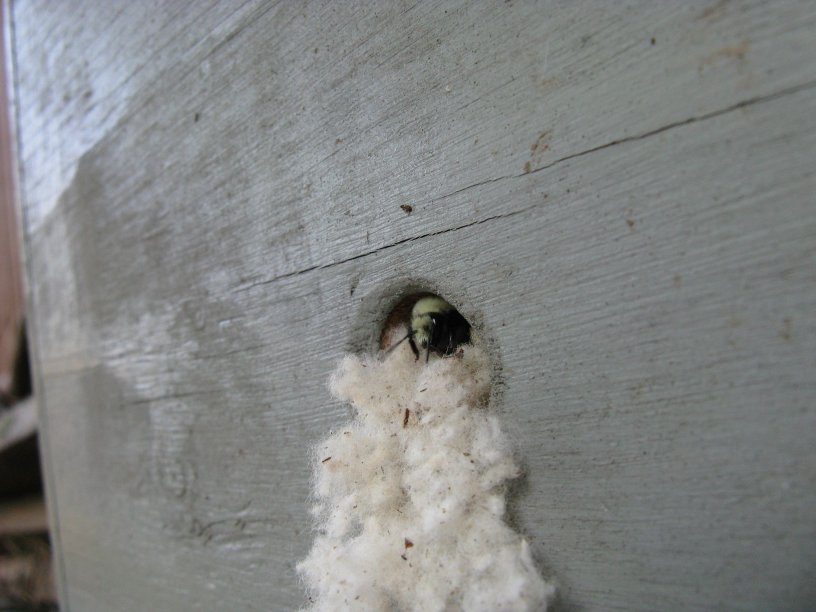
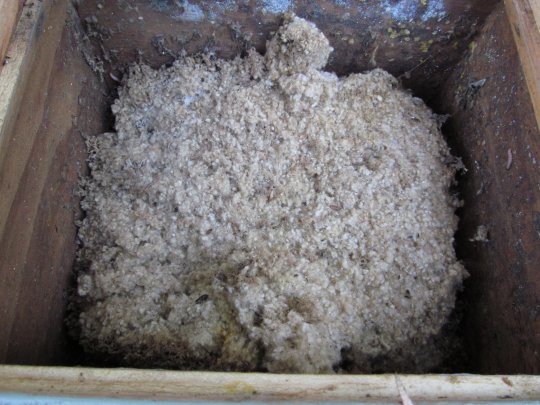
Mine were Bombus vosnesenskii or yellow-faced bumblebees, and I’d lured them into the box in the spring by placing it their path after I’d noticed the queen bumbling around my wood pile with the determined air of a house hunter. The box came pre-bedded with cotton mattress stuffing, and the first sign that the box was occupied was a spill of bedding out the entry hole. When I lifted the lid to look, the bedding seemed mounded up, and there was, well, bee dung on the walls. As soon as the lid was open, a bee shot out the front to ask what my business was, and after a while I noticed there was always at least one bee stationed at the entrance, with workers coming and going around her.


The hive was thriving up until the time I left, in late July. When I returned last weekend I noticed there was no bee in the doorway, and when I poked around inside, there was no more activity, and the bedding was grey, the walls were grey, and there were moths and maggots crawling around.

I asked my friendly neighbourhood entomologist (every neighbourhood should certainly have one!) for advice. He said it had happened to him as well sometimes, and put me onto a bumblebee specialist, who swiftly replied with the following comforting words:
That’s a pretty standard finding towards the end of the colony. There are many parasites that take over once the queen is done laying her eggs and the males and new queens leave the nest.
Well, comforting for me anyway. I had seen a yellow-face bopping around in my tomato flowers just the other day, so I knew they were still about, and I hoped that the tomato-lover had been one of the hearty offspring of “my” hive.
In truth I was a tiny bit relieved they had gone as they were quite frisky, if not downright aggressive: for some reason one would always emerge to dive bomb me when I went into my compost bin for any length of time, and then zoom around in the bin while I was trying to dig it over. I finally had to resort to wearing a headscarf if I wanted to dig things into the pile to keep them from tangling in my hair.
But then yesterday as I was starting to clean the box out – all maggoty and grey and sticky – I paused at the compost bin and darned if I wasn’t bopped in the head by a bombus. A big one, a queen I guess, as she was about three times the size of the workers who’d been hanging out the door in days gone by. She flew around and around the space where the box had been until I ran and fetched it. She entered and quickly backed out, then wandered around the front as if checking to be sure it was her own front door. Put her head in the door again, backed out, and so on for five or ten minutes, until she finally gave up and flew away.


I emptied the box, washed it and set it out on the grass to dry. I’ll bleach it later. But as I was climbing the ladder to the apple tree nearby, darned if she didn’t buzz me again. Clearly she has assigned blame for the whole sorry state of affairs, and I am the villain. But how do you apologize to a bee?
Here’s a good video showing the amazing things that happened in bombus world, under all that cotton fluff.. for a few months anyway.
-
A lesson in not waiting for permission
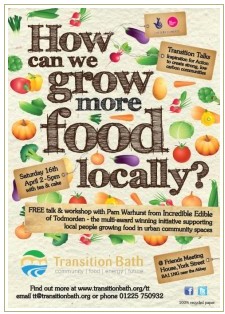
 The Transition Network (and Transition Towns) exist because governments are too slow to respond to the need for urgent change. Community action can fill the void, and the town of Todmorden in West Yorkshire proves the case in point. All you need is a group of people with passion and vision and the will to plant in every scrap of land and teach one another the how and why of growing food. Check out the Incredible Edible Todmorden website, but first watch this inspiring TED talk.
 -
ALECC 2012 – Space + Memory = Place (days 4&5)
Saturday morning we repaired (by schoolbus) to the beautiful spaces at Okanagan College, where the luckiest presenters spoke in the curvy pod at the top of the stairs, but really everything was lovely there, including a fine breakfast of fresh muffins (featuring Okanagan apricots) and lots of fruit.


The best overall session of the conference for me was one called Looking Away, Looking In, Looking Under: Perspectives on the Okanagan on Saturday morning, which featured a lively talk by Kelowna’s own George Grinnell on Patrick Lane’s novel Red Dog, Red Dog which is set in the Okanagan; followed by an entertaining if depressing look at development by another local speaker, Daniel Keyes (White + Green Space Invader: The Rhetoric of Development in the Okanagan) – check out the toe-curling promotional video. Poet, blogger and essayist Harold Rhenisch finished things off with Caraway & Pippins, a luscious essay that circled around the Newtown Apple (each “a tiny earth, a green planet”) as an emblem of the cultural and agrarian changes wrought by commerce and industrialization on the Okanagan.
The Saturday junket to the farmers market was a brilliant idea, but much too short a visit. No sooner had I downed my black bean-chickpea quesadilla than I was sprinting up and down the aisles, power-shopping for produce – a giant fennel bulb, a jar of local salsa, a box of sweet yellow cherry tomatoes – the latter from Curtis Stone, who had mentored another SPIN farmer at the market, Janice Elliott – and trying to find an organic peach grower.


I had come to the Okanagan with a mission: organic peaches were on my mind. As you may know, dear reader, peaches are right near the top of the Dirty Dozen, a couple of fruits below apples, and so one of the best places to put your money when buying organic produce. I’d been warned that I might have to make a side trip to Cawston or Keremeos to find organic growers, as most of the Okanagan fruit in the Kelowna area is chemically produced. At the 11th hour (12:58 in fact, since the stallholders start packing up at 1pm) I was pointed to the Fruit Guy, Michael Welsh, who grows without pesticides and sold me a 20lb case of beauties (he also writes very fine poetry, according to Nancy Holmes, but I didn’t know that at the time.) The catch was I had to drag it back on the bus and get it back to our residence so I could pack it into the car for the morrow’s trip back to Victoria.
Mission accomplished, fruit in hand, grateful to be back in the cool of the building, I settled into an easy chair in the pod for the last Saturday session, Unmemoried Heights? Thinking In/With the Rockies, starring Gyorgyi Voros who took us on an excellent adventure: Wallace Stevens‘ hunting trip to BC; Tempest Emery who talked about landscape and memory in Sid Marty‘s work; and Benedict Fullalove who invoked a host of odd characters, from Rupert Brooke to Viscount Milton & WB Cheadle and Howard O’Hagan before the clock ran out on his Unmemoried Heights: Historicizing the Rockies.
Sunday morning began with probably the best yoga session I’ve ever attended, at 7am on a sunny, dewy lawn overlooking the valley. After that, temperatures already starting to climb, came a blur of packing and vacating and hanging about waiting for the most welcome coffee, fruit and pastries which arrived mid-session: our saintly panel chair released us to seek refreshment mid-panel, while being entertained on the subject of Generation A by Richard Pickard, Cate Sandilands and Jenny Kerber.
I had to depart after that session in order to get to the ferry with reasonable confidence of getting home before midnight; the traffic was horrendous, stop and go for an hour or two on the baking highway beyon
 d Hope, until I got nearer Tsawwassen and those welcome sea breezes. Ironically, given the last session of the conference, the saddest news awaiting me when I returned to my garden later that night was the death of my bumblebee colony. My local entomologist can’t be sure what the cause was, just disease of some kind he thinks.



Latest Posts
- Sublime
- Good weather for reading
- The world, the world
- Sublime launch!
- Planet Earth Poetry – Readings by Volunteers, Victoria 2026
- Poetry at the Goldfinch
Aldeburgh Aldeburgh Poetry Festival Barny Haughton BBC BC poets Berkswell blackberries Black Stilt Bologna book launch Borough Market Carlo Petrini Catalonia Cyrus Todiwala dairy Dijon décroissance Fanny Bay Feast of Fields Food and Morality food journalism Malahat Review Michael Pollan Monsanto Okanagan olive oil tasting Omnivore's Dilemma Our Food Our Future Oxford Parmigiano-Reggiano Planet Earth Poetry poetry poetry readings Poetry videos prosciutto salumi Sean O'Brien Suffolk ticks Troubadour Wendell Berry Wendy Morton Wired Writing women poets Yvonne Blomer
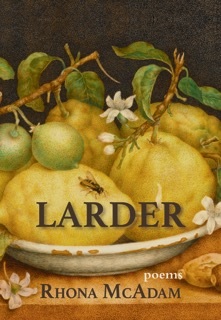
In her latest collection, Rhona McAdam navigates the dark places of human movement through the earth and the exquisite intricacies lingering in backyard gardens and farmlands populated by insects and pollinators, all the while returning to the body, to the tune of staccato beats and the newly discovered symmetries within the human heart.
“…A beautiful, filling collection, Larder is a set of poems to read at the change of the seasons, to appreciate alongside a good meal, and to remind yourself of the beauty in everything, even the things you may not appreciate before opening McAdam’s collection….”
Rhona McAdam is a writer, poet, editor, and Registered Holistic Nutritionist with a Master’s in Food Culture from Italy and a deep-rooted passion for ecology and urban agriculture. Her work spans corporate and technical writing to poetry and creative nonfiction, often exploring the vital links between what we eat and how we live. Based in Victoria, BC, and available via Zoom, Rhona is always open to new writing commissions, readings, or workshops on nutrition and the culinary arts.