-
Permaculture and wholesale markets
Read Full Post: Permaculture and wholesale marketsIt’s been a busy week in London, somewhat typically so as it included sun, wind, rain, security alerts on the tube, too much food and drink, too many nights out in a row, a couple of days grappling with bureaucracy (2 days and 3 visits to Canadian high commission offices trying to get registered for a mail-in ballot for the upcoming Canadian election, somehow eclipsed by some other election I think is happening on that side of the pond).
The rest of the time I’m delighted to be back at Sustain for a very brief spell, working on some articles for the relaunch of the in-house magazine the Jellied Eel, which will soon be magically appearing all over London in full and glorious colour.
Tuesday was the London Food Link networking do followed by a wildly over-subscribed talk by Cuban biologist and permaculture activist Roberto Perez. The talk, prefaced by a preview of the irresistably-titled film The Power of Community: How Cuba Survived Peak Oil, covered bio-fuels, agribusiness & the food crisis. Perez works for the Antonio Núñez Jiménez Foundation for Nature and Humanity in Havana; it’s described as a socio-cultural environmental organisation which fronts research, advocacy and educational activities in environmental, sustainability and biodiversity. During questions, Perez revealed his great interest in worms, which it turns out were the subjects of his thesis; and I think we’ll hear more and more about them as vermiculture is a growing trend for building soil, in conjunction with composting.
Wednesday morning I crawled out of bed as early as I could (but not as early as some) to get down to join the crowd
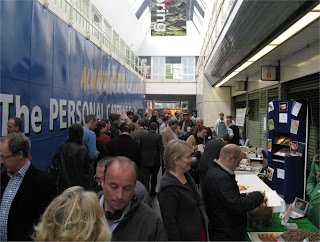
at the New Covent Garden wholesale market for a tour and day of talks and workshops, a Local to London trade event designed to bring together producers, wholesalers and end users in a bid to encourage food service sector to source more regional produce.
There were master classes by an amazing fishmonger from James Knight, who dazzled with the speed of his knifework. He prepared fish
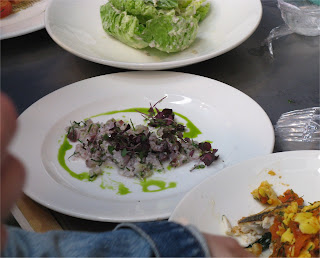
 while chef Patrick Williams, of The Terrace in the Fields, demonstrated Caribbean-influenced dishes like this mackerel tartare, seasoned with vodka, lime and salt.
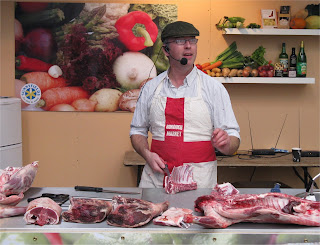
 Andrew Sharp, butcher and Cumbrian meat advocate, who also displayed dazzling speed and facility with many different blades while talking about hill lamb and the use and aging of mutton and discussing some of the difficulties of marketing lesser known cuts. He is the marketing face of a farmers’ cooperative and sells beef and lamb at Borough Market under the name Farmer Sharp.
 There was also a talk by a herb grower, who addressed some of the difficulties around growing herbs seasonally and importing others to feed a year-round demand for herbs in a climate that is only able to grow what it can for about 8 months of the year. And a fruit wholesaler talked about issues to do with seasonality, size and quality in British apples.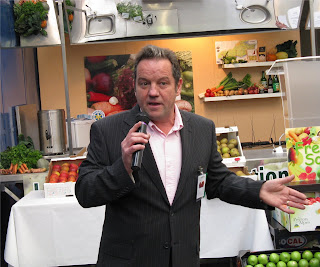
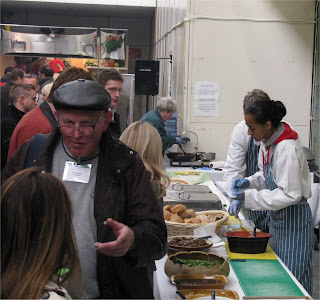
One popular stand: Food Fore Thought supplied the organic bacon and sausage sandwiches for breakfast and the lamb ones for lunch.
-
A Saturday at the Aldeburgh Food Festival
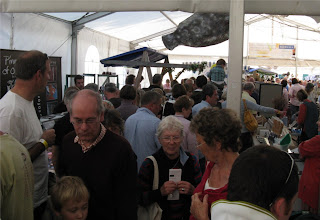
Read Full Post: A Saturday at the Aldeburgh Food FestivalA busy place, the Aldeburgh Food Festival. Only in its third year and utterly mobbed as the organisers sought to top the 15,000 visitors they had last year. I am blessed by friends who had sussed this little corner of foodie heaven out and took me along to see this year’s offerings.
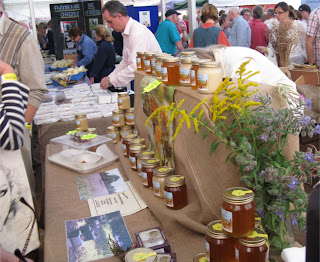
There were some honey-sellers there and we stopped for a short chat. They asked me if the African Bee had been seen in my neighbourhood (nope, not so far, so far as I’ve heard) and told me they’d successfully experimented with the icing sugar method of varroa mite control. They also said that borage had been a great source of nectar up until this year, when the Suffolk growers lost the oil contract to China. So no borage planted, no flowers for the bees, and a great deal less honey. Another blow for monoculture…
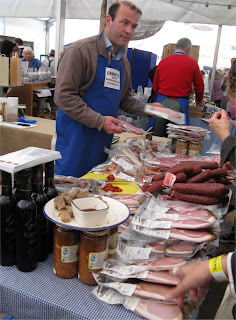
We paid a happy visit to Emmett’s meaty stall, where the seller presided over acres of what I hear is gorgeous black (from the treacle cure) bacon, and was dishing out irresistible samples of imported chorizo. We weakened and he handed one over, apologising for having run out of bags, and suggested we walk around with it hanging from the string. I asked about storage – having had a stern lecture from a French sausage seller earlier in the month about the evils of refrigerating dry-cured sausage like this, and our man agrees there is nothing worse for the flavour and texture of the sausage. The best storage for chorizo is (pats stomach); otherwise, hang it from its string in a cool, dry place (my kingdom for a larder). If it gets mouldy, cut the mould off. Consume at a swift but leisurely pace as it will gradually dry out which impairs the flavour somewhat. And makes it hard to slice.
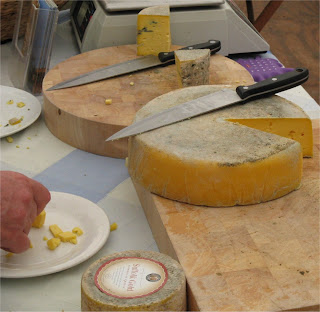
Another old friend: Suffolk Gold cheese (with Suffolk Blue in the background).
On to the celebrity chefs. We caught the end of Tom Aitken

and were sooner into the scrum for a taste of the lobster risotto than this group were. We also got in there while there were still spoons. Hah.

A little later we saw Mark Hix scoring a giant puffball from the man from the Red Poll Beef stand who we’d seen earlier harbouring several of them …
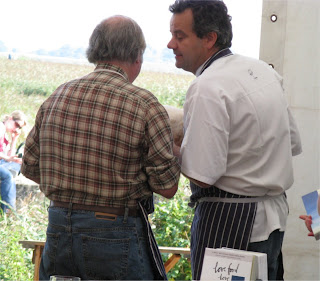
and he explained how you really have to know people to get hold of these monsters as they’re hard to find in the shops (though our local wundershop sometimes has them around this time of year).
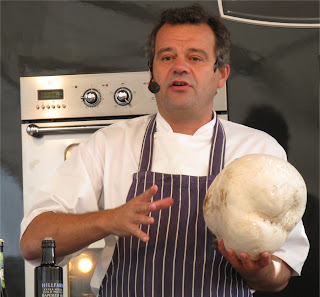
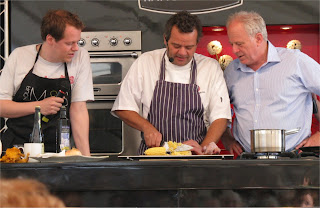
Then he sliced a slab off and fried it up to sit under some game he was preparing, with creamed corn, under the watchful gaze and microphones of Tom Parker-Bowles and Matthew Fort.
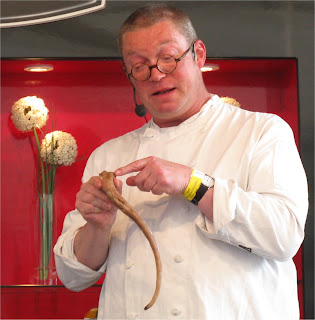
We had a grisly presentation from Fergus Henderson, working on the pig tail end of his nose-to-tail weekend (he gave a workshop on cooking a pig’s head on the Sunday, which we missed, alas). We were not convinced after sampling the finished product – braised, cooled, coated and pan fried – which just tasted a bit like, well, pan fried fat. But now we can move on and eat something else.
We didn’t choose crepes, although we were able to queue for something else in sight of the beautiful van.

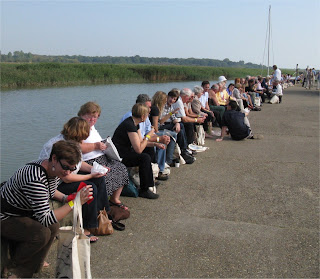
And we dined al fresco. With everyone else. A beautiful day for it…
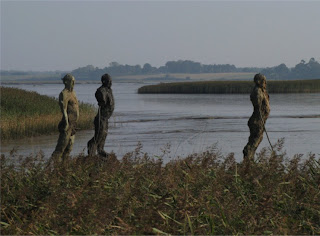
…and for a walk out to see the Creek Men afterwards.
Finally, home to superbly cooked partridge. Mmmm.

-
Luck in London
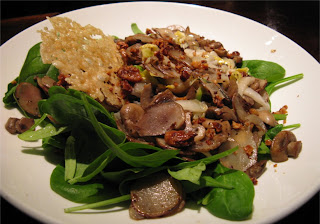
Read Full Post: Luck in LondonYesterday netted me two excellent meals in a row: a great welcome back to London. Lunch was at the Royal Court Theatre Cafe where we lucked into three delightful dishes, for me a fabulous warm salad of Jerusalem artichokes, mushrooms and baby spinach, with a Parmesan crisp to nibble on…
and reportedly delicious others: a pumpkin and goat’s cheese tart crusted with almonds; and a Lancashire hotpot in its own little basin:


We weakened when faced with the dessert menu, and luckily so: the Sticky Toffee Pudding was ethereal

while the almond and fig tart was exquisite, a study in texture and colour:

Later that same day, at Carvosso’s, I struck gold again with the duck leg confit, with roasted figs, green beans and mashed potato

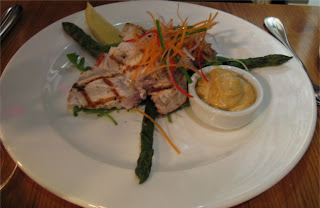
while my companion fell upon her swordfish with glee and said it was absolutely perfect.


Latest Posts
- (no title)
- Sublime and Twisted Readings coming up!
- Sublime
- Good weather for reading
- The world, the world
- Sublime launch!
Aldeburgh Poetry Festival Barny Haughton BBC BC poets Berkswell blackberries Black Stilt Bologna book launch Borough Market Carlo Petrini Catalonia Cyrus Todiwala dairy Daunt's Books Dijon Edinburgh Fanny Bay Feast of Fields Food and Morality food history food journalism Jenna Butler lardo Malahat Review Michael Pollan Okanagan olive oil tasting olive trees Omnivore's Dilemma Our Food Our Future Oxford Parmigiano-Reggiano Planet Earth Poetry poetry poetry readings Poetry videos prosciutto salumi Sean O'Brien Suffolk ticks Wendy Morton Wired Writing Yvonne Blomer
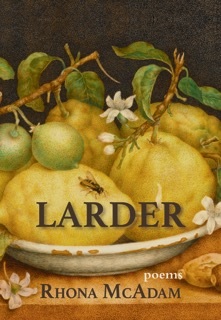
In her latest collection, Rhona McAdam navigates the dark places of human movement through the earth and the exquisite intricacies lingering in backyard gardens and farmlands populated by insects and pollinators, all the while returning to the body, to the tune of staccato beats and the newly discovered symmetries within the human heart.
“…A beautiful, filling collection, Larder is a set of poems to read at the change of the seasons, to appreciate alongside a good meal, and to remind yourself of the beauty in everything, even the things you may not appreciate before opening McAdam’s collection….”
Rhona McAdam is a writer, poet, editor, and Registered Holistic Nutritionist with a Master’s in Food Culture from Italy and a deep-rooted passion for ecology and urban agriculture. Her work spans corporate and technical writing to poetry and creative nonfiction, often exploring the vital links between what we eat and how we live. Based in Victoria, BC, and available via Zoom, Rhona is always open to new writing commissions, readings, or workshops on nutrition and the culinary arts.