-
After the meeting but still in Calgary
Read Full Post: After the meeting but still in CalgaryLast Sunday I got what will probably be my first and last tour of the Calgary Farmers Market.

The place is Alberta-sized, and housed – for the moment – in a former airplane hangar


at the Currie Barracks, which is being razed

to make way for new development. The search is on for a new, permanent home. Such is the public support for the market that it received a temporary reprieve until this can be found. Meanwhile, you can get your tomato sauce
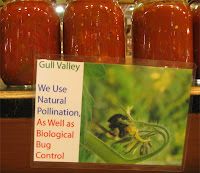
and your ostrich soap
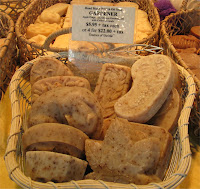
and your fruit tarts there.

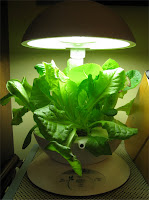
Having found enough bits and pieces, Susan primed us with cherry wine and, after I admired her lettuce lamp,
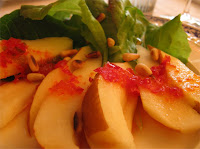
produced an excellent meal, including pear and pine-nut salad with chili dressing
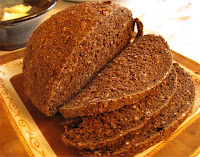
which went well with Dee’s pumpernickel bread
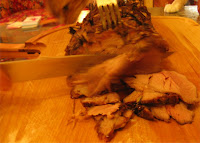
followed by some Hutterite-reared lamb.
Throughout proceedings, the ginger cat brigade
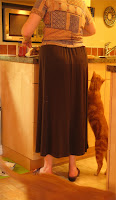
kept a careful eye on us.

Back in Victoria, I’m looking ahead to this weekend where I can’t be everywhere at once. If I could, I would be at the Spot Prawn Festival in Cowichan Bay, as well as the Island Chefs Collaborative festival: Defending Our Backyard.
-
TWUC Calgary: Business & pleasure
Read Full Post: TWUC Calgary: Business & pleasure
This weekend’s Writers Union of Canada AGM, held jointly with the Writers Guild of Alberta, took place in the comfort of Calgary’s Hotel Arts – quite a step up from days of yore when we used to hunker down in the end-of-term halls of residence in universities across the country. We are, as was often discussed, an older group of writers nowadays, and well up to the delicacies that fell in our paths through the weekend.
The annual Margaret Laurence Memorial Lecture was this year delivered by literary biographer Elspeth Cameron,
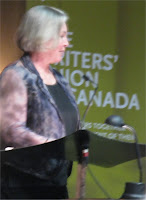
whose revelations on the scale of the persecution she and her family, friends and network suffered after she published Irving Layton‘s biography (in the form of around 500 hate letters Layton sent them) sent us running for the wine jellies.
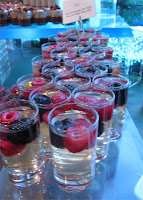
Our appetites were tempered by the discovery that the spoons provided didn’t actually fit into the charming little glasses..
Workshop sessions included an enlightening discussion about new technologies, in which Ross Laird walked us through some of the new electronic demands on our time and energies

and began addressing the question that has been asked throughout the 20+ years that I’ve been a member of the union: how do we attract the next generation of writers to keep this going? It is obvious, I guess, that our roots are showing: we began as a print-oriented union, obsessing over copyright payments and fairness in book contracts. This year’s debate and discussion about the Google Book Settlement and electronic rights indicates where things are leading. How and how much is the union to change to incorporate the writing life in largely electronic environments;
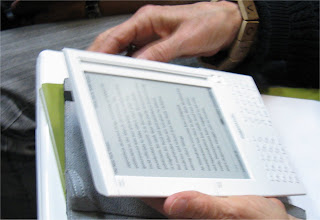
and how to attract a generation that hasn’t yet learned yet to fight together to improve its collective lot in this most individualist age… The questions will be asked for some time to come.
The Saturday night banquet was marred somewhat by the lack of chairs, in a meal designed for schmoozing and grazing, but attended by diners more inclined to sit down with enough room to wield their cutlery. The fare included some darling little pickled golden beets with chevre
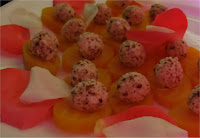
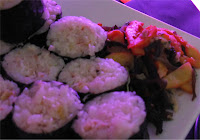
Dungeness crab maki rolls
beef (this was Alberta after all)

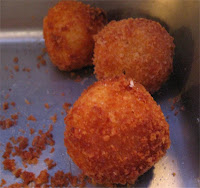
and precious little for vegetarians, who seem to have been designated friends of the deep fryers: risotto balls were not very big or very interesting (neither the saffron aioli which was really just yellow mayo)
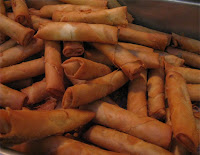
and the vegetable spring rolls, while they lasted, were nothing to write home about.
After a few more wine jellies and other small delectables, we hunkered down to listen as Writers Guild of Alberta president Blaine Newton
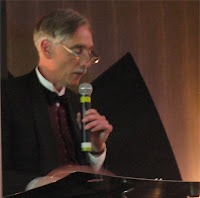
did an admirably witty job of orchestrating the WGA awards and the Danuta Gleed prize for short fiction.

There was a door prize (which I did not win) containing many desirable items, thanks to the generosity of the Calgary Slow Food convivium and its fearless and well-published leader, Dee Hobsbawn-Smith.

Otherwise, there was much to eat in Calgary. We found a good harvest in The Catch, an unlikely thing, a seafood restaurant on the prairies (the fare flown in daily, so it’s all fresh). Interesting and beautiful food:


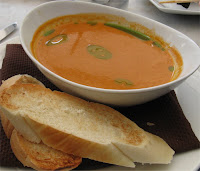
And I enjoyed Hotel Arts’ soups, which are not described as soups on the menu, but rather Chef’s Epiphanies. I had celery & apple soup with blue cheese, and this tomato & fennel soup, both excellent:
-
John Harvey’s 100th
Read Full Post: John Harvey’s 100thCatch it while you can (till Friday): John Harvey on Front Row (about 19 minutes in), talking (with Michael Morpurgo and Nora Roberts) about being prolific. This is in part to mark his 100th book, Far Cry, which has just been released. The interview offers a lesson on how to cut your teeth writing pulp fiction, and some interesting comments about how to keep those ideas coming for pages and pages and pages and pages and pages…


Latest Posts
- Writers at Word!
- Sublime and Twisted Readings coming up!
- Sublime
- Good weather for reading
- The world, the world
- Sublime launch!
Aldeburgh Poetry Festival Barny Haughton BBC BC poets Berkswell blackberries Black Stilt Bologna book launch Borough Market Carlo Petrini Catalonia Cyrus Todiwala dairy Daunt's Books Dijon Edinburgh Fanny Bay Feast of Fields Food and Morality food history food journalism Jenna Butler lardo Malahat Review Michael Pollan Okanagan olive oil tasting olive trees Omnivore's Dilemma Our Food Our Future Oxford Parmigiano-Reggiano Planet Earth Poetry poetry poetry readings Poetry videos prosciutto salumi Sean O'Brien Suffolk ticks Wendy Morton Wired Writing Yvonne Blomer
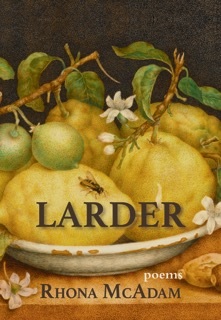
In her latest collection, Rhona McAdam navigates the dark places of human movement through the earth and the exquisite intricacies lingering in backyard gardens and farmlands populated by insects and pollinators, all the while returning to the body, to the tune of staccato beats and the newly discovered symmetries within the human heart.
“…A beautiful, filling collection, Larder is a set of poems to read at the change of the seasons, to appreciate alongside a good meal, and to remind yourself of the beauty in everything, even the things you may not appreciate before opening McAdam’s collection….”
Rhona McAdam is a writer, poet, editor, and Registered Holistic Nutritionist with a Master’s in Food Culture from Italy and a deep-rooted passion for ecology and urban agriculture. Her work spans corporate and technical writing to poetry and creative nonfiction, often exploring the vital links between what we eat and how we live. Based in Victoria, BC, and available via Zoom, Rhona is always open to new writing commissions, readings, or workshops on nutrition and the culinary arts.