-
A small culinary diversion
Read Full Post: A small culinary diversion I was lucky to be able to attend a Slow Food dinner last night, when Chef Naotatsu Ito collaborated in the Sooke Harbour House kitchen with Chef Robin Jackson. They offered us a menu that celebrated and honoured vegetables and featured winter bounty from Umi Nami farm served with local fish, seaweed and foraged mushrooms. Each of the eight courses was paired with teas from Silk Road Tea, chosen by Japanese Tea Master Daniela Cubelic; others took advantage of the chance to try Osaka Artisan Sake from Granville Island in Vancouver –made with local rice!
First course was a winter vegetable terrine (kabu, chard, broccoli, daikon) held together with agar rather than gelatin, and served on a green sauce potato puree with Nootka rose vinegar. Next came some pretty little morsels of crab meat seated on a bit of broth-infused daikon wrapped in coppa.


And then came octopus – some lightly cooked and sliced, the rest simmered and mixed with kabocha and daikon and then garnished with shredded vegetables and a dribble of red wine sauce. Next we had marinated freshly-caught albacore tuna wrapped in daikon and served with pretty and crunchy watermelon radishes. The next course required some audience participation: we were brought bowls containing lingcod rolled around green onion, seated on a bed of fir and seaweed beneath which was a hot rock. The servers poured hot tea in and covered it, and after five minutes or so we uncovered and enjoyed.
After which arrived some sauteed lingcod, served on a delicious kabocha–miso puree with a green “barlotto” and green onions and nodding onion. More kabocha appeared in the next course, combined with fresh local mushrooms and some bacon. Slivers of kabocha peel had been fried and arranged around all. The finale was a trio of desserts: green tea & turnip ice cream terrine, black turtle-bean cake and an exceptionally good matcha tea cookie (what a custard cream cookie might dream of being in its next life), with tart and sweet Japanese plum cherry jelly and subtle little drops of minty syrup.


-
Food & mood, sleep & diabetes
Read Full Post: Food & mood, sleep & diabetes Having kicked off my conference by hearing from the magnificent Sandor Katz, I wondered how the rest would compare. My second session, Depression & Anxiety Epidemic: How, why & what works better than anti-depressant drugs, though interesting, was a little disappointing. Julia Ross MD (author of The Mood Cure) had clearly spent some of her thunder in the first of her three-part appearance (while I was hearing Katz) and so left unexplained in this session some of the technical aspects of her talk that she’d covered earlier.
However, she gave some good causal information: that people have a 51% greater chance of mood disorder if they eat the Standard American Diet. The top three causes of mood disorder problems are the dietary changes since the seventies (when refined foods replaced home cooking, cereal product and sugar consumption increased, and refined industrial vegetable oils replaced animal fat); the increased addictiveness of refined sugars; and low calorie dieting, where the brain chemistry needed to support mood (and much else) is literally starved out.
She sketched out the diet needed for proper brain function, and explained a useful fact about the WAPF dietary principles’ obsession with pastured meat (grass-fed and finished beef, for example), which is that corn-fed protein is deficient in tryptophan, the amino acid without which serotonin – the body’s chief mood regulator – cannot be produced or function. There was much else, including a discussion of how caffeine, aspartame and ritalin block the effects of the body’s natural relaxants, keeping it in a perpetual state of stimulation, which of course doesn’t allow the brain to rest and recharge. She observed that most people on SSRI (antidepressants) really need them, but may be unaware of the side effects or addictive qualities, or the non-pharmaceutical alternatives (she provides amino acid therapies to her patients).
After a break, she moved on to discussing Insomnia. She observed we’ve been sleeping so badly for so long, we don’t know what good sleep is, so she defined it for us:
- 8-10 hours in the dark, with no awakening
- dream recall in the morning
- regular breathing (no apnea)
- waking up rested
Insomnia is rampant in Western culture – she said that a third of teenagers report having it – and is costing us in many ways: it correlates with food cravings (increasing them by 30%), insulin resistance/diabetes, depression/anxiety, ADHD, fatigue and injury. There is also a fourfold increased risk of mortality with the use of sleep medications. So it’s a good idea to solve this without. The first step is to identify the type of insomnia (night owl who enjoys staying up late; can’t get to sleep/don’t enjoy it; light sleeper waking several times through the night; or some combination of these; apnea sufferer; person in chronic pain; restless leg; short sleeper needing only around 5 hours a night; or caffeinated or medicated – ADHD – manic type). Each one corresponds to a different neurotransmitter or amino acid treatment (details in her Mood Cure book, I imagine).
After a hearty supper we were off again, and I chose Treating Diabetes with Dr Deborah Gordon as my post-prandial entertainment. It was excellent. She had much to say on the subject (more info on her website) but the (by now) usual advice applied: no sugar or refined carbohydrates; lots of high quality protein; and the inclusion of dietary fat. She cited a study that was done of 311 women following the Atkins (high protein, low carb), LEARN (low fat, high carb) and Ornish (low fat, plant-based) diets which showed that the Atkins diet was the most successful: it’s very similar to both the Paleo and Weston A Price eating plans. She also recommended lifestyle choices including avoiding environmental toxins (pesticides, cleaning products), reducing stress, getting enough sleep, avoiding iron supplements (shown to contribute to diabetes), and doing strength training such as the HIIE exercise plans, like Tabata Training.
-
Food for thought
Read Full Post: Food for thought
Santa Clara Topiary The older I get the more I experience the Whoosh factor: one minute I’m staring at West Coast rain, and the next it’s a sunny morning in Silicon Valley, and I’m part of a 1,700-strong hive of health at the Santa Clara Conference Center. We’re buzzing round stands promoting magnetic beds, fermented cod liver oil, natural cosmetics, books on healthy stomach acid and fermentation and nutritional cures for mood disorders. There’s a seafood stand doing a brisk trade in Alaskan salmon roe, a couple of guys selling crispy nuts – raw almonds which have been soaked and dried according to principles laid down by Sally Fallon Morrell, our queen bee if ever there was – and someone offering tastes of a new product made with ratfish oil.
Soon my hands are warmed by my cup of beef broth and I’m balancing a bowl of full fat
 sheep’s milk yogurt with frozen blueberries. I have some organic fruit and cheese in my pocket for later and am considering how I can manage to juggle a couple of boiled eggs before grabbing a bottle of raw milk to wash it all down. In my bag I have a small jar of coconut oil, some pecan nut butter and a small package of granola made from pre-soaked grains and coconut.
Such was the sweet beginning to my first Weston A Price Foundation conference. Those breakfast items were purchased for Moolah, tickets sold in support of the
 Farm-to-Consumer Legal Defense Fund, which exists to help those persecuted by the FDA for living the WAPF dream of eating nutrient-dense foods, including raw milk.
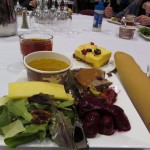
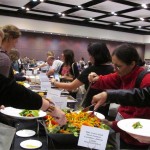
And eat we did over those three days. If I saw one person raising a piece of sourdough wholemeal rye topped with half an inch of butter to their lips, I saw a hundred, at every meal. The lunch and supper buffets were groaning with pastured meats, whole fat cheese and sour cream, fresh green salads, liver sausage and fermented foods of all descriptions. We had sauerkraut pretty much every meal, plus kimchi, fermented apple butter, lightly pickled beets and kombucha. (In keeping with the foundation’s food principles, there were no refined carbohydrates or sugar or caffeine.) Several times the meal lines stalled while the kitchen scrambled to keep up with
 demand. At every table there was a shaker of Celtic sea salt with which we could lavish minerals as well as flavour onto our food. More than one mealtime conversation embellished the theme of “how great is it to be able to trust conference food?” And it was good.
And given all that food, what was really unusual here was the size of the participants. There was another event going on at the same time in the centre, a spirituality conference: the participants there were strikingly like most large gatherings of Americans that I’ve been to: a good proportion were morbidly obese, most were at least chunky. The Weston A Price people were proportioned more like Canadians or Europeans: not many would have been described as heavy, very few obese, and most were either slender or fit. And this wasn’t because they were all in the first flush of youth: middle age was the norm.
 Living proof that fat doesn’t make you fat.
I’ll follow this entry up with more about the talks I attended that left my brain buzzing even while my body hummed with contentment.


Latest Posts
- Writers at Word!
- Sublime and Twisted Readings coming up!
- Sublime
- Good weather for reading
- The world, the world
- Sublime launch!
Aldeburgh Poetry Festival Barny Haughton BBC BC poets Berkswell blackberries Black Stilt Bologna book launch Borough Market Carlo Petrini Catalonia Cyrus Todiwala dairy Daunt's Books Dijon Edinburgh Fanny Bay Feast of Fields Food and Morality food history food journalism Jenna Butler lardo Malahat Review Michael Pollan Okanagan olive oil tasting olive trees Omnivore's Dilemma Our Food Our Future Oxford Parmigiano-Reggiano Planet Earth Poetry poetry poetry readings Poetry videos prosciutto salumi Sean O'Brien Suffolk ticks Wendy Morton Wired Writing Yvonne Blomer
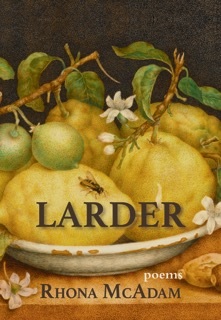
In her latest collection, Rhona McAdam navigates the dark places of human movement through the earth and the exquisite intricacies lingering in backyard gardens and farmlands populated by insects and pollinators, all the while returning to the body, to the tune of staccato beats and the newly discovered symmetries within the human heart.
“…A beautiful, filling collection, Larder is a set of poems to read at the change of the seasons, to appreciate alongside a good meal, and to remind yourself of the beauty in everything, even the things you may not appreciate before opening McAdam’s collection….”
Rhona McAdam is a writer, poet, editor, and Registered Holistic Nutritionist with a Master’s in Food Culture from Italy and a deep-rooted passion for ecology and urban agriculture. Her work spans corporate and technical writing to poetry and creative nonfiction, often exploring the vital links between what we eat and how we live. Based in Victoria, BC, and available via Zoom, Rhona is always open to new writing commissions, readings, or workshops on nutrition and the culinary arts.