-
Windiana
There are several sub-themes to the ASLE conference this year, but I don’t believe wind is one of them. The epic thunderstorm that ranted around Indiana on Monday
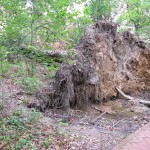 blew over or damaged a couple of hundred trees on Bloomington’s Indiana U
 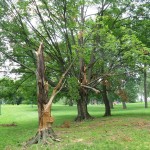 campus, I hear, though so far it’s been relatively calm since delegates started arriving Tuesday.
But let me start in Indianapolis, because that’s what I did. Aside from dear friends reunited, an early m
 ajor thrill was spending Monday afternoon (after the storm had passed) in the State Library, which is a wonderful place, and wonderfully popular with all kinds of folks. How’s this for a reading room in a public library?
As if that was not enough excitement for one day, I was then hustled into the grand old City Market building where we attended a beer tasting event, a fundraiser for IKE which works for better environmental (air, water etc.) quality for kids in Indiana, at the Tomlinson Tap Room, where there were five mystery beers awaiting thirsty minds, with taste profiles that hinted at their identities.
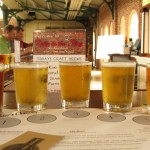 I can modestly report that I guessed all five right, which was about five times the number of questions I could answer on the Indiana / environment quiz that followed. Fortunately my team-mates were much better informed. In fact one extremly interesting question they answered for me was the purpose of the
 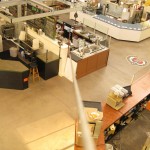 wire that runs from the Taproom directly to the Three Days in Paris creperie below. This I know, thanks to them, is a zipline linking hungry Tappers to a source of fresh crepes. Civilized? I think so.
After a much too short visit to the Indianapolis Art Museum, it ws time for my final Indy treat: visiting the excellent food and winerie Goose the Market,
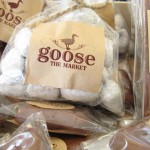 which has lots of fine things including coffee toffee chocolates, house-cured meats, amazing cheeses from near and far, beautiful wines, amusing
  beers, and a dazzling array of local and not local condiments and essentials, like smoked salt, bourbon-casked vanilla and shagbark hickory syrup.
What could I do but pick up some cheese for the next leg of my
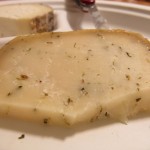 journey? From the store’s Virginia collection I chose a herbed Piedmont: a raw sheep’s milk cheese from Everona Cheeses. Nice one. Very nice.
But the ravest of reviews were saved for this Monte Enebro, a gorgeous goat’s milk
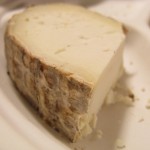 cheese from northern Spain, its rind blooming with blue mold and vegetable ash. I’m afraid it has already entirely disappeared, but with rapture all round.
And there I will leave you, for the moment as I think that is enough for one day. More on ASLE next installment…
-
Tansey on food, wealth gaps and the Canadian Wheat Board
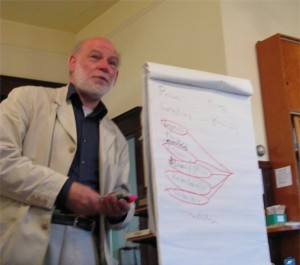 I was at a small and far too short evening with British food activist Geoff Tansey the other night. He was on holiday but kindly agreed to stop in at the Victoria Quakers meeting house to give up a couple of hours talking to local people interested in food issues, and we were treated to a mini-version of the presentations he’s been give at conferences in Nova Scotia and Montana this month.
About 20 of us gathered on a quiet evening when much of the population was tucked up in front of its televisions watching hockey. We started off with a short review of our various breakfasts: the cereals, eggs, breads and fruits were all, noted Tansey, the historical residue of European colonial trade, not local (aside from the salmon that one person had had) – relics, really, of the food systems created by colonial powers that are all on the wane today. And a reminder that food lays its historical tracks down our lives whether we notice or not.
Next it was on to the pillars of food politics. There are always four elements that affect contemporary food systems: power, control, risk and benefit. Power and control contain risks and benefits; understanding who benefits and whose interests are put at risk by the current system is one way of revealing flaws in the structure. Food security definitions, Tansey remarked, do tend to omit mention of power, control and biosphere issues.
He spoke about the economic concentration of power in our food systems which works against broader human interests: there’s a widening gap between the 10% of the world population which holds 80% of global wealth. The wealthy minority will carry on practising what he calls Liddism (keeping a lid on) where the fundamental truths are that we’re living in a bitterly divided adn finite world.
It’s important to acknowledge how greatly technology affects our food system as well, from genetic engineering of food products to customer profiling cards that drive the control of the food products we’re offered.
If we carry on as we are today, Tansey sees three options for global food in the future.
1. The system simply collapses.
2. There’s a technological fix, leading to what he calls an era of corporate feudalism: the rich minority doing all in their power to hold their position at the expense of everyone else.
3. Diversity/equity systems bring a more universal food system into play. There’s a lot of work being done now, but it’s often not very connected.The tech fix might have a role to play, he added, but only if it aims to meet the goal of diversity/equity. Unfortunately what it’s aiming for right now is economic power and control which simply widens the gap between rich and poor.
There was more discussion after that during which he talked about his recent book, The Future Control of Food: A Guide to International Negotiations and Rules on Intellectual Property, Biodiversity and Food Security. Also about the Food Justice Report of the Food Ethics Council which provides tools for decision makers and is available as a pdf download on the web. And he recommended Thinking in Systems by Donella Meadows.
He mentioned Manitoba film-maker Katharina Stieffenhofer (whose film …And This is My Garden “is about the power of education to foster healthier lifestyles and to reconnect youth to the earth”) in the context of concerns over the future of the Canadian Wheat Board, the farmer-controlled marketing agency that sells Canadian wheat, durum and barley on world markets, and which Stephen Harper has sworn to dismantle.
Harper thinks he has a mandate to take away the power over wheat marketing from its farmers, so please read all about it in Maclean’s. Then consider the pillar of control, and who his “free trade” solution will really benefit. And if you don’t think it’s going to help make food available more fairly and widely, write to him and to the agriculture minister and tell them what you think.
-
Island Chefs – another good spread

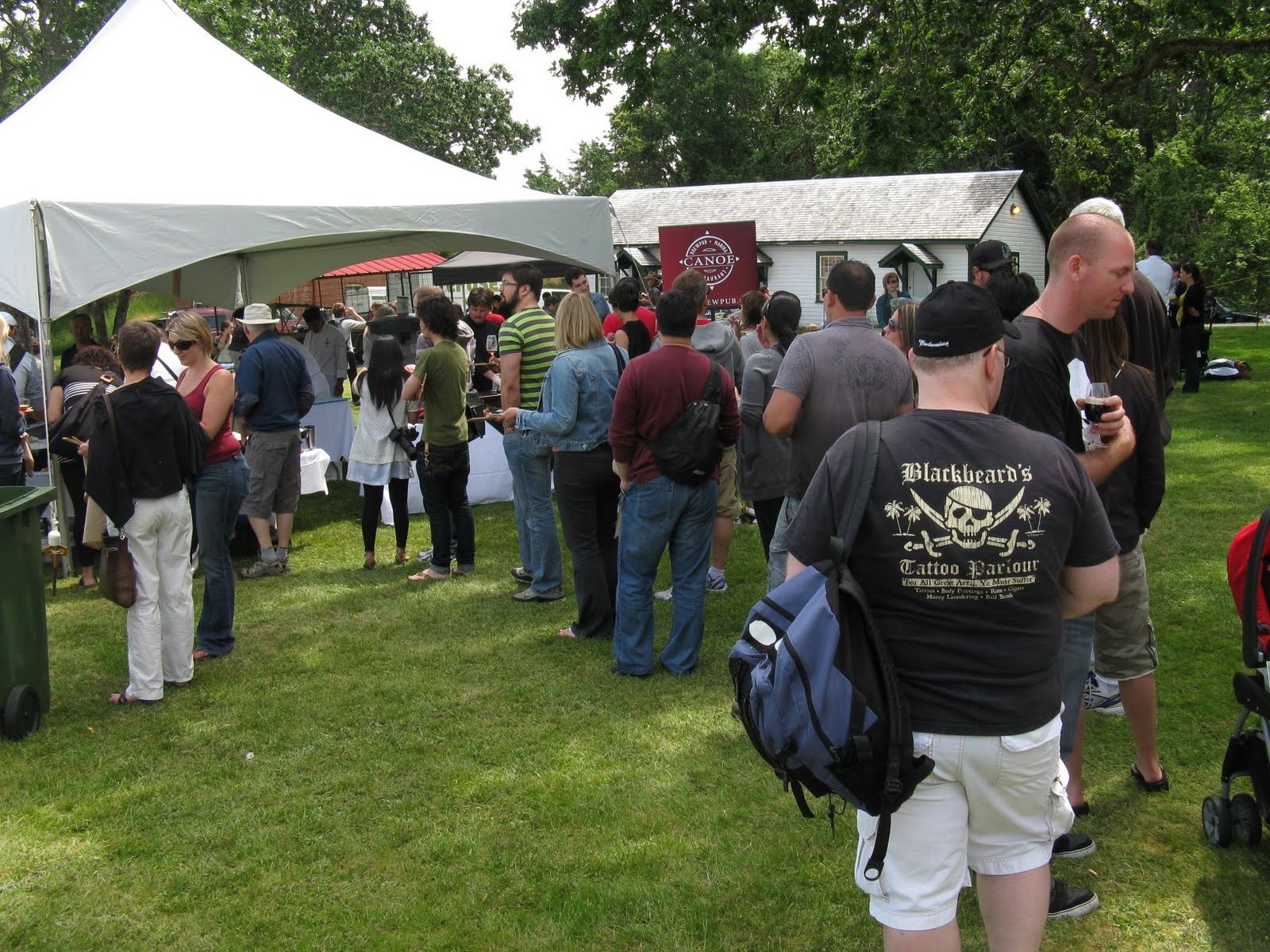
Today’s Island Chefs Collaborative Food Fest has just ended as I write. I got there early and enjoyed the offerings on this sunny, if not overly warm, Sunday. The festival is a fundraiser for the ICC and its program of micro-loans and grants to local farms, food producers and nonprofits who are working to improve the sustainability of local food systems. They have lots of community support
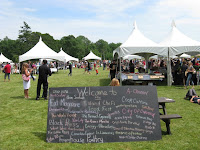
and of course a lot of happy eaters willing to put their mouth where their money is, including more than a few cyclists.

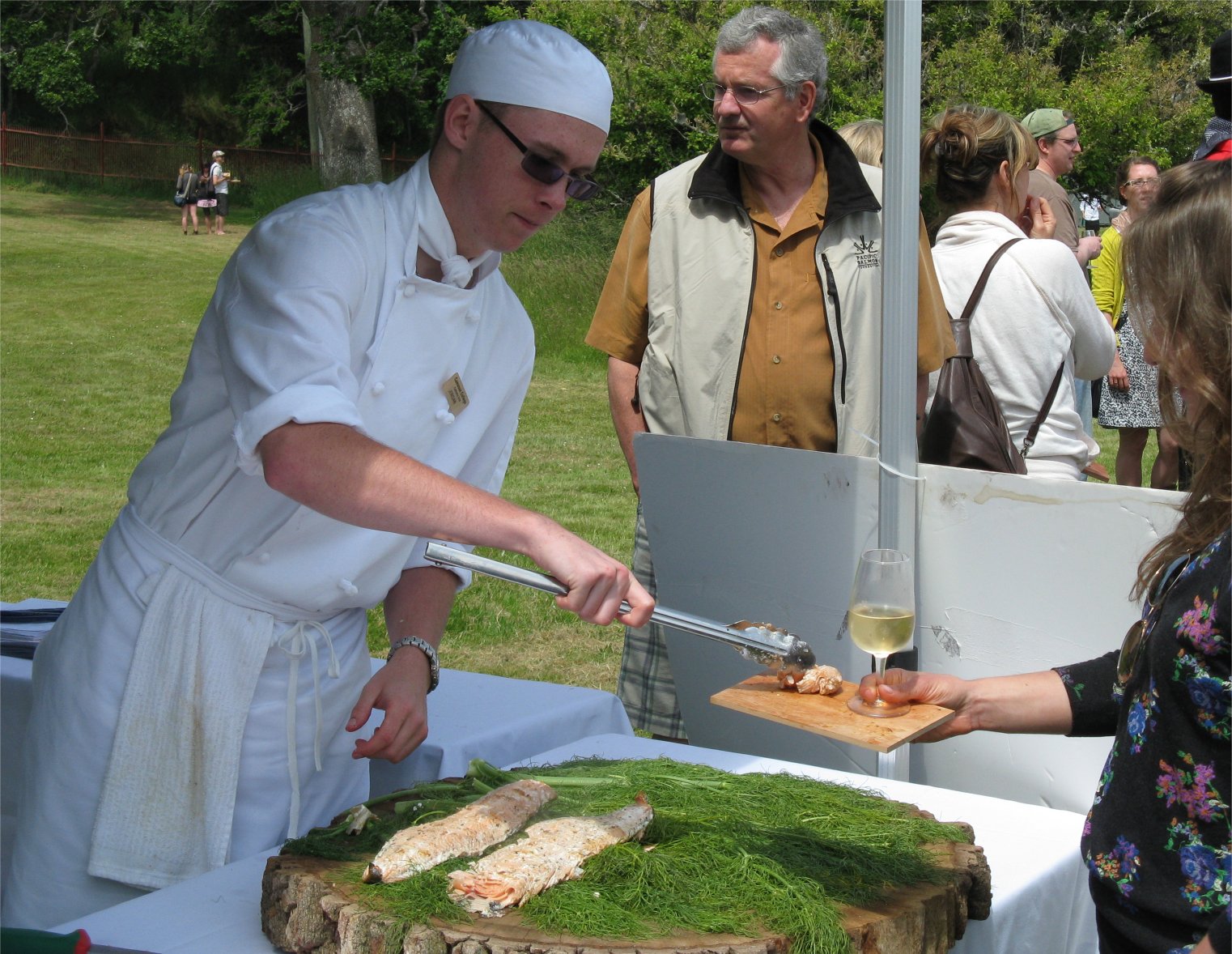
There was a bit of everything happening. Some salmon, of course
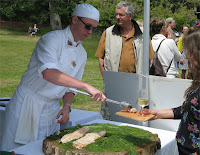
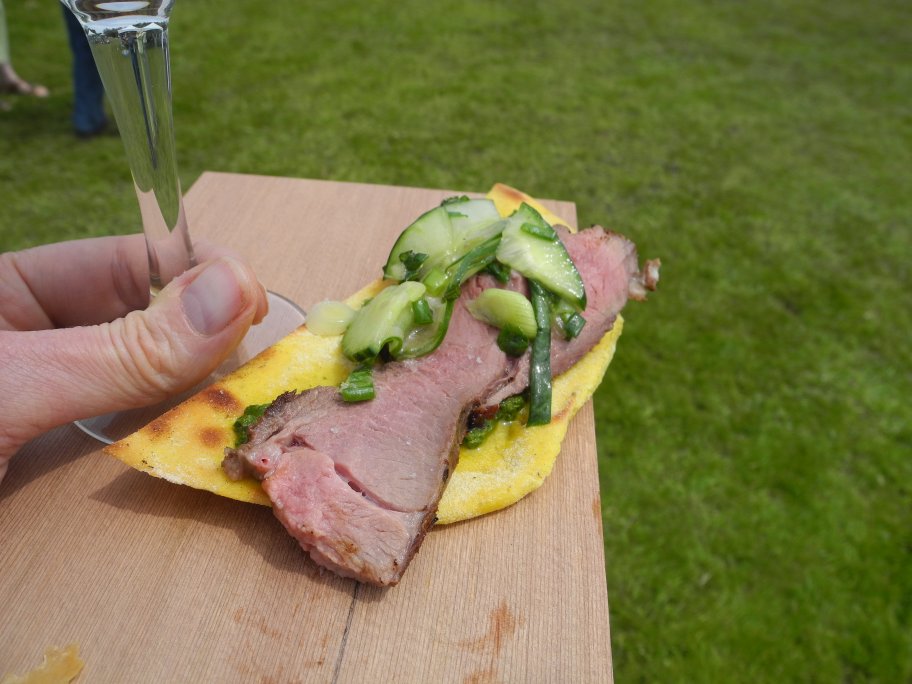
and melting Metchosin lamb, cooked whole on a spit and lovingly carved by Cory Pelan and his team.
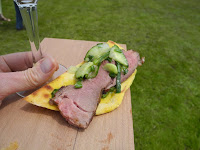

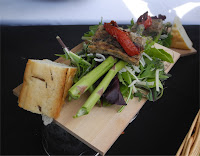
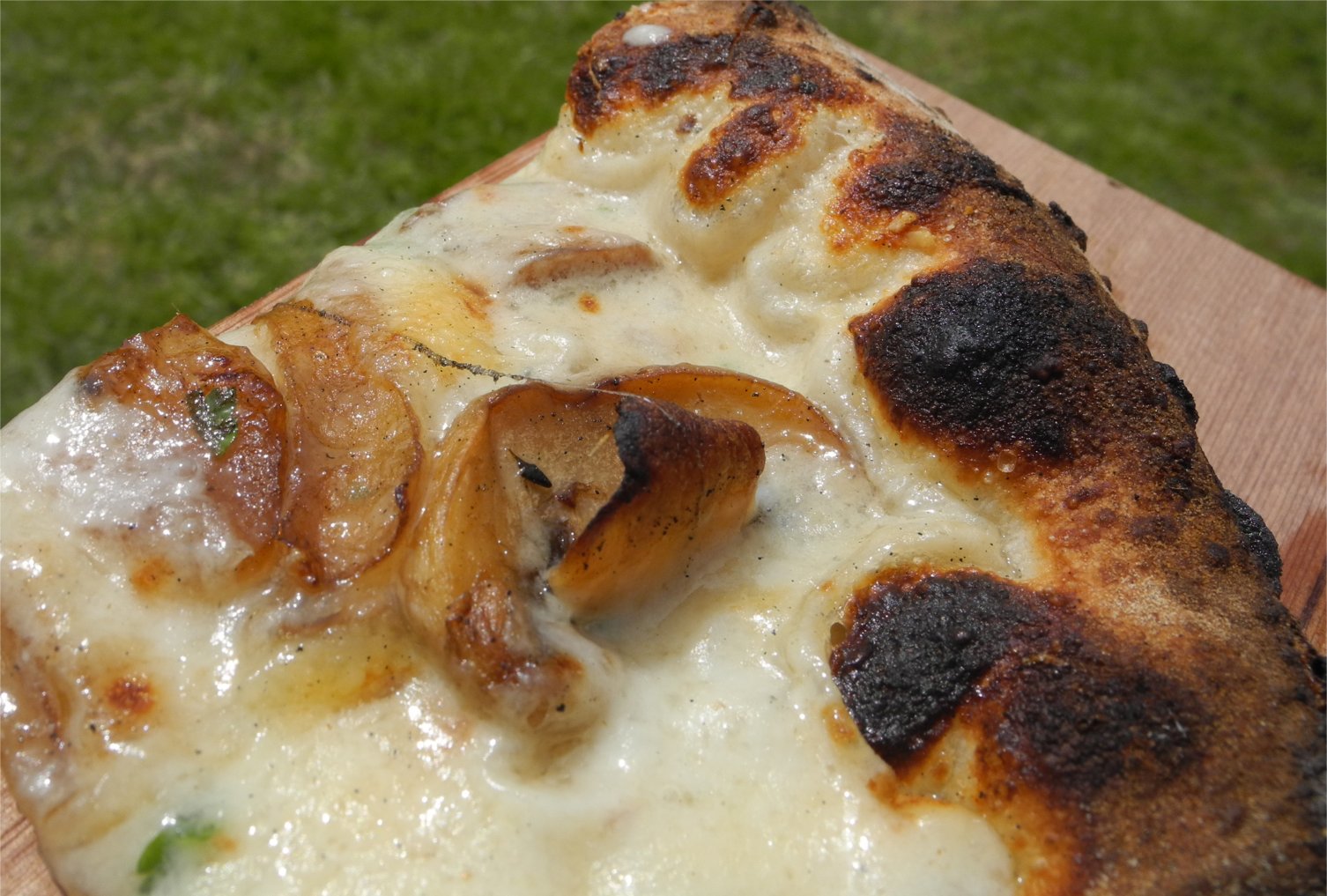
Vegetarians could glory in Prima Strada pizza and a lovely assemblage that included Madrona Farm salad, asparagus roasted with balsamic vinegar and a chanterelle tart topped with a piece of oven-roasted Sun Wing tomato.

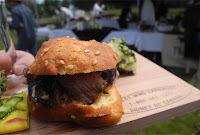
For the gluten-intolerant, there was pulled pork (barbecued in tomato-rootbeer sauce, apparently) in a gluten-free bun, and vegan chocolate cake.

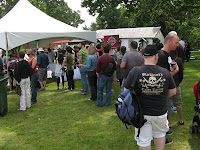
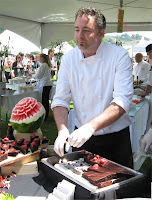
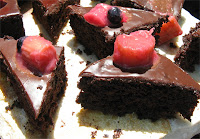
The longest line always leads to chocolate: in this case a gorgeous chocolate cake from Canoe Club (and some nice looking beer to go with).
Nice things to drink: local beer, cider, wine, tea – and Victoria Spirits gin and vodka:
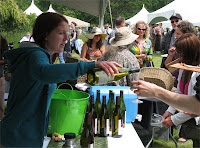
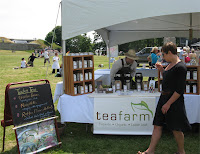
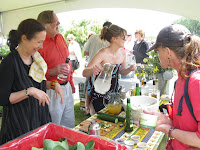
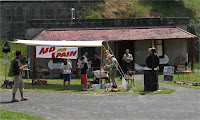
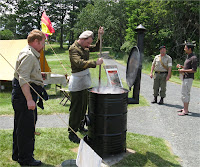
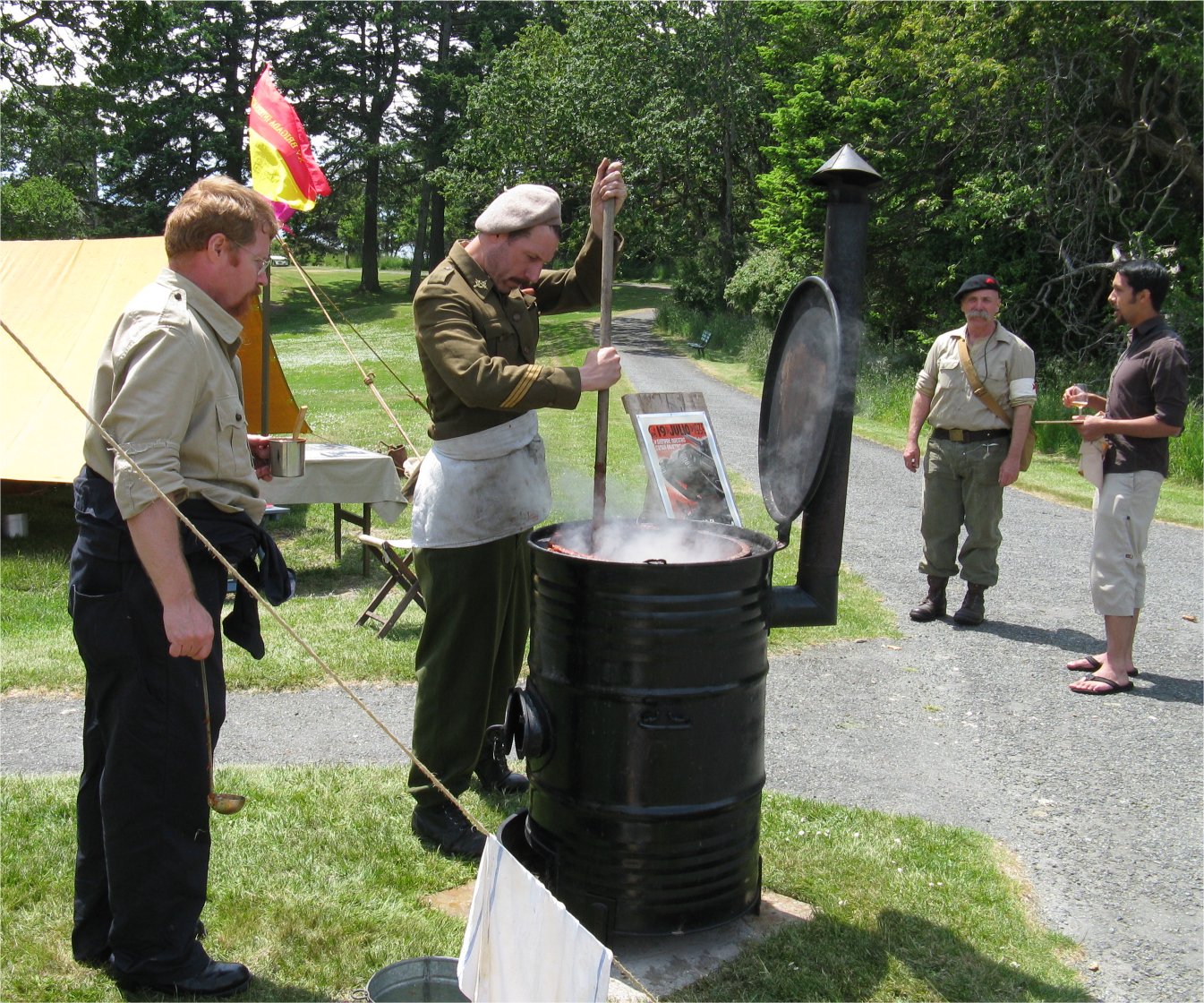
The festival’s site on Fort Rodd Hill meant that military history was not far away. A cook tent was set up to serve a bit of Spanish stew and tell people about Canada’s involvement in the Spanish Civil War, including our most famous participant, Norman Bethune.
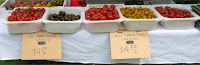
Some farmers and nonprofits represented too: beautiful wares from Sun Wing greenhouses
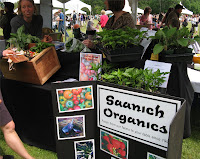
and Saanich Organics, selling vegetables and starts, and our own Gorge Tillicum Urban Farmers, alongside our local SPIN farming operation, Donald Street Farms, selling inspiration for urban agriculture.









Latest Posts
- Sublime
- Good weather for reading
- The world, the world
- Sublime launch!
- Planet Earth Poetry – Readings by Volunteers, Victoria 2026
- Poetry at the Goldfinch
Aldeburgh Poetry Festival Barny Haughton BBC BC poets Berkswell blackberries Black Stilt Bologna book launch Borough Market Caerphilly Carlo Petrini Catalonia culatello Cyrus Todiwala dairy Dijon Edinburgh Fanny Bay Feast of Fields ferries Food and Morality food journalism Michael Pollan olive oil tasting Omnivore's Dilemma Our Food Our Future Oxford Parmigiano-Reggiano persimmons Planet Earth Poetry poetry poetry readings Poetry videos prosciutto salumi Sean O'Brien sensory analysis Suffolk ticks tortelli di zucca Troubadour Wendell Berry Wendy Morton Yvonne Blomer
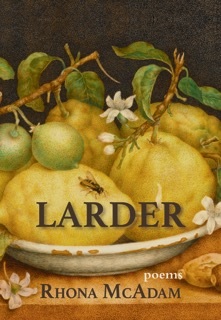
In her latest collection, Rhona McAdam navigates the dark places of human movement through the earth and the exquisite intricacies lingering in backyard gardens and farmlands populated by insects and pollinators, all the while returning to the body, to the tune of staccato beats and the newly discovered symmetries within the human heart.
“…A beautiful, filling collection, Larder is a set of poems to read at the change of the seasons, to appreciate alongside a good meal, and to remind yourself of the beauty in everything, even the things you may not appreciate before opening McAdam’s collection….”
Rhona McAdam is a writer, poet, editor, and Registered Holistic Nutritionist with a Master’s in Food Culture from Italy and a deep-rooted passion for ecology and urban agriculture. Her work spans corporate and technical writing to poetry and creative nonfiction, often exploring the vital links between what we eat and how we live. Based in Victoria, BC, and available via Zoom, Rhona is always open to new writing commissions, readings, or workshops on nutrition and the culinary arts.