-
Last goggle at google settlement
The Google Book Settlement opting-0ut deadline is upon us: by September 4 you must decide whether you’re in or out. Staying in means allowing Google to digitize and own (for distribution purposes) your copyrighted works, for which you will be compensated (via a registry and your publishers) what remains of the approximately $60 per book after any fees or percentages have been deducted.
The dissenting voices in the Writers Union of Canada (TWUC) have offered the following view, relevant bits excerpted:
Google controls all the information and, there is no auditing system in place to prove their numbers.
It would be a minimum of five years before any money is received.
By opting in (or doing nothing), writers give Google non-exclusive rights to copyrighted material.
There are other electronic options [besides] Google [–and these might better compensate copyright holders].
To opt out… access Google online but no proof of receipt is generated from this. …a registered letter should also be mailed to Google. As an additional safeguard …a separate letter should also be written to Google, telling them that they do not have the rights to digitize your material without your express permission.
For future contracts… an “out of print” clause should be added to protect copyrighted material.
Some internal discussion points out that the settlement addresses past wrongs (the unauthorized digitization of copyrighted works) but frees Google to sail ahead unrestricted in future, which seems hardly fair to the people who’ve worked so hard to create those works. And that other electronic options besides Google may afford the possibility of earning more than the pittance Google offers.
-
Green development: Elkington Forest
Went on a field trip on the weekend, with the BC Sustainable Energy Association, to see the Elkington Forest development site, way up on Malahat Mountain.
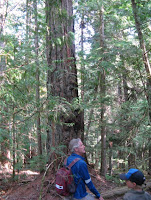
The site is not the easiest place to get to – steep windy roads which would be pretty much inaccessible when it’s foggy or icy, and the developers intend to keep the roads between the development clusters as narrow as possible, to intrude less on the landscape.
On our way up, we passed acre after acre of clear-cuts, with ‘for sale’ signs stuck on a number of the lots, which are divided into 5-25 acre parcels. It is this kind of development that the Living Forest Communities is trying to counter. The problem with hacking forest land into parcels is that the developers can’t resist cutting down the trees (great profit in that) before selling them off. When you do that on a large scale in a watershed area, you’re looking at creating erosion, destroying ecosystems and contaminating water supplies.
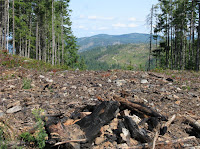
Have a look at the deforestation story told by these aerial photographs – covering just the last eight years. Precious little forest remains on the mountain, and the damage is only just starting to be visible on the Malahat Drive where heavy equipment, “for sale” signs and clear-cutting are intruding on what used to be a pristine forest drive.
Pristine in my lifetime anyway. The Elkington family bought the property as a summer retreat, after it had been clear-cut in the 1920s, and let the forest regrow. It has been logged since, but not clear cut, so there is still a lot of actual forest left.


The developers hope that by clustering the houses that are built – and all to strict environmental standards, including state of the art sewage treatment – more forest will be left, preventing erosion, protecting habitat and allowing sustainable enjoyment of the area for years to come. The Trans-Canada Trail will cross the property at the first of three housing clusters, in fact.
There is land set aside for agro-forestry purposes, which include a community garden for all the residents. There will be an eco-lodge, and several thousand square feet of commercial property, but the population will be too small, the developers think, to sustain much in the way of shops or services, and the commute not really feasible. So the site is intended for families who can live and work independently: they hope for artisans and telecommuters. Local businesses have expressed interest in supplying the residents with food and services, and there is a train line which – should it survive its latest round of critical assessment – could conceivably serve the community.
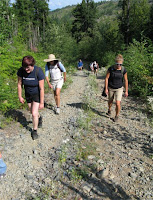
It was a nice hike on a beautiful day, anyway, and when we finally stopped at the top for lunch,

we were ready to sit down and drink in the view for a while.


-
Many apples
I have a quantity – indeed quantities – of yellow transparent apples to work with, so it has been apple everything of late.
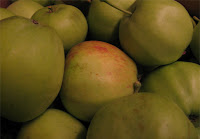
These apples are tart and soft in the cooking, and so sometimes give the illusion there’s been lemon at work. I use them while they’re still green but even when fully ripe they are sharp and puckery. I stew some with blackberries and freeze that; I juice some, using carrots for sweetener and freeze that; and I make a bit of applesauce. I might try dehydrating some, but they are awfully tart. For the rest, I peel, chop and freeze in ziplock bags and leave a few in the veg bin in the fridge. They don’t last as well as some apples, they shrink and wrinkle, but will endure for some months – in fact I made a cake from some 2008 vintage ones I found malingering in the fridge back in April. And they can be chopped and added to everything from soup to curry to dog food (if you make your own!).
Some of the best things I’ve made include Apple Crème Brulée; Dan Lepard‘s Apple, Walnut & Custard pudding; Apple Raisin Cake; my enduring favourite, Delia Smith‘s Caramelised Apple Flan (cheat’s Tarte Tatin);
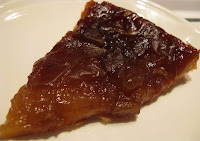
the recently remarked Blackberry-Apple Clafoutis; and a variation on German Apple Cake. Recipes yet to be attempted might include an Apple Soufflé, and one day when I am feeling ambitious enough to marshal the ingredients: Delia’s Prune, Apple & Armagnac Cake with Almond Streusel Topping.


Latest Posts
- Sublime
- Good weather for reading
- The world, the world
- Sublime launch!
- Planet Earth Poetry – Readings by Volunteers, Victoria 2026
- Poetry at the Goldfinch
Aldeburgh Poetry Festival Barny Haughton BBC BC poets Berkswell blackberries Black Stilt Bologna book launch Borough Market Carlo Petrini Catalonia Cyrus Todiwala dairy Daunt's Books Dijon Edinburgh Fanny Bay Feast of Fields Food and Morality food history food journalism Jenna Butler lardo Malahat Review Michael Pollan Okanagan olive oil tasting olive trees Omnivore's Dilemma Our Food Our Future Oxford Parmigiano-Reggiano Planet Earth Poetry poetry poetry readings Poetry videos prosciutto salumi Sean O'Brien Suffolk ticks Wendy Morton Wired Writing Yvonne Blomer
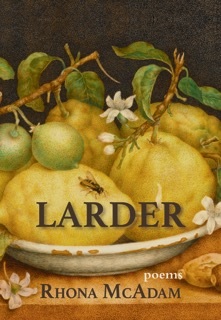
In her latest collection, Rhona McAdam navigates the dark places of human movement through the earth and the exquisite intricacies lingering in backyard gardens and farmlands populated by insects and pollinators, all the while returning to the body, to the tune of staccato beats and the newly discovered symmetries within the human heart.
“…A beautiful, filling collection, Larder is a set of poems to read at the change of the seasons, to appreciate alongside a good meal, and to remind yourself of the beauty in everything, even the things you may not appreciate before opening McAdam’s collection….”
Rhona McAdam is a writer, poet, editor, and Registered Holistic Nutritionist with a Master’s in Food Culture from Italy and a deep-rooted passion for ecology and urban agriculture. Her work spans corporate and technical writing to poetry and creative nonfiction, often exploring the vital links between what we eat and how we live. Based in Victoria, BC, and available via Zoom, Rhona is always open to new writing commissions, readings, or workshops on nutrition and the culinary arts.