-
Food in cities and snow on mountains
This TED talk by architect and author Carolyn Steel has been circulating recently and, while it does simply discuss a lot that’s pretty well known now – urbanization, the planetary cost of meat and dairy consumption – gives some historical context to urban food production, asking us to think about food as an essential aspect of city planning, and how we’ve severed that connection in recent decades.
http://video.ted.com/assets/player/swf/EmbedPlayer.swf
Speaking of cities, I was sad to see this message appearing on Victoria’s public library website. Municipal budget cuts are, ironically, impairing a service that is enjoying peak demand right now as people turn from bookstores to libraries to help them save money:

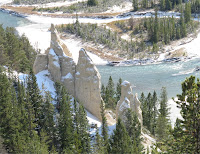
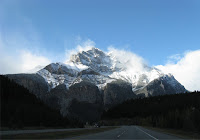
Here in Banff we’ve had our first snowfall and it’s warmed and cooled enough to make paths slippery. But not too cold or slippery for some of the walks we’ve had between the literary doings. Yesterday to the Hoodoos
and Saturday’s treat was a visit to Johnson Canyon
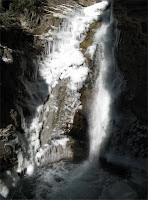
followed by a soak in the hotsprings. We’ve also been visiting the Wild Flour Bakery in town, which has fantastic cookies and beautiful bread.
-
Watch those salads
This article about the top foods linked to food-borne illnesses is worth reading if you’re going on holiday, particularly if you’re going anywhere with large scale industrial food growing and processing (like, oh, Canada or the US?). The items on the FDA’s top-10 list are not always what you’d think (potatoes?? ice cream???):
Leafy greens: 363 outbreaks involving 13,568 reported cases of illness.
Eggs: 352 outbreaks with 11,163 reported cases of illness.
Tuna: 268 outbreaks with 2,341 reported cases of illness.
Oysters: 132 outbreaks with 3,409 reported cases of illness.
Potatoes: 108 outbreaks with 3,659 reported cases of illness.
Cheese: 83 outbreaks with 2,761 reported cases of illness.
Ice Cream: 74 outbreaks with 2,594 reported cases of illness.
Tomatoes: 31 outbreaks with 3,292 reported cases of illness.
Sprouts: 31 outbreaks with 2,022 reported cases of illness.
Berries: 25 outbreaks with 3,397 reported cases of illness.As the article makes clear, the problem is with the scale of manufacture and processing, not inherent in the foods. Illnesses are usually carried by cross-contamination through equipment and handling, or unsafe storage that typically results from using poorly trained (and badly paid) factory workers. These same foods might be perfectly safe if obtained from small organic growers or artisans working with local, fresh produce.
Here at the Banff Centre we are enjoying many salads, but following them with perhaps too many desserts.


It is all fuel for the writing of course, and last night we had some introductory readings, with more to follow on Friday. Three of the faculty read: Caroline Adderson, Sid Marty and Stan Dragland. A measure of the quality, I think, that fourteen readers did their five minutes each and the time flew by. Of course not having a watch might have helped with that…
-
Sustainability on land and sea
Glad to see Red Fish Blue Fish get some more media attention. They produce some excellent grub from their tiny home in a green-roofed shipping container in Victoria’s Inner Harbour.
Had a note from BCSEA giving some follow-up NotStupid suggestions for positive actions following last week’s screening of The Age of Stupid. They are local to BC but I offer them in case they inspire thought for elsewhere. Here they are:
A. Five Political Actions
1. Sign BCSEA’s online petition to Let LiveSmart Live — to be presented in the BC Legislature as soon as possible. Sign the petition now. We know there’s a desire among many people within government to get the program renewed, but we must apply pressure.
2. Send an email to Prime Minister Stephen Harper, urging him to stop messing around with our children’s future and make a serious commitment before the Copenhagen Conference to reduce Canada’s GHGs by 25% below 1990 by 2020, as Japan has done. pm@pm.gc.ca
3. Send a similar email to Michael Ignatieff, leader of the Liberal Party. Ignatieff.M@parl.gc.ca
4. Attend the free lunchtime lecture on Friday, October 2, Greening the Future? Climate Change, Energy Systems, and Sustainability with UVic’s Dr. Kara Shaw . Call 250-472-4747 to register (Lecture Code: ASDS240 2009F E02)
5. Plan to join the October 24th International Day of Climate Action, starting in Centennial Square at 12 Noon. At the time of writing, 1528 actions are being organized in 125 countries. See 350.org and 350.org/Victoria. This day brings an amazing opportunity for us all to work together. If you can’t make Centennial Square, create your own event, however small.B. Three Personal Actions
1. If you are not already a member of the BC Sustainable Energy Association, please consider becoming one. Members not only allow BCSEA to put on events like The Age of Stupid, but they’re the driving force behind our projects too. Join now!
2. If you do not already receive EcoNews, Victoria’s monthly environmental newsletter, click here to receive it. And check out the EcoNews monthly Green Diary.
3. Adopt your local MP or MLA, and become their personal climate solutions email service, sending them regular stories that make you concerned or hopeful.C. Five Household Actions to Reduce your Carbon Footprint
1. Get your home energy-audited, and invest in measures to save energy (EcoEnergy grants available).
2. Take advantage of special homeowner grants – still available for a limited time – to install a solar hot water system. See BCSEA’s SolarBC website for details.
3. Grow your own food, and buy more locally grown organic food. Start eating a more vegetarian diet. There are lots of courses at the Greater Victoria Compost Education Centre and elsewhere.
4. Dust off your bicycle, or buy a new or a second hand one. Join the Greater Victoria Cycling Coalition, and work with them to push for more cycling paths and lanes.
5. Think about ride-sharing for regular trips to work, school, sports, choir, or church. Consider selling your car and joining the Victoria Car Share Cooperative.The poetry part of this blog is about to make a return as I set off for Banff to work on my food poems for a couple of weeks. See you over the mountains!


Latest Posts
- Sublime
- Good weather for reading
- The world, the world
- Sublime launch!
- Planet Earth Poetry – Readings by Volunteers, Victoria 2026
- Poetry at the Goldfinch
Aldeburgh Poetry Festival Barny Haughton BBC BC poets Berkswell blackberries Black Stilt Bologna book launch Borough Market Caerphilly Carlo Petrini Catalonia culatello Cyrus Todiwala dairy Dijon Edinburgh Fanny Bay Feast of Fields ferries Food and Morality food journalism Michael Pollan olive oil tasting Omnivore's Dilemma Our Food Our Future Oxford Parmigiano-Reggiano persimmons Planet Earth Poetry poetry poetry readings Poetry videos prosciutto salumi Sean O'Brien sensory analysis Suffolk ticks tortelli di zucca Troubadour Wendell Berry Wendy Morton Yvonne Blomer
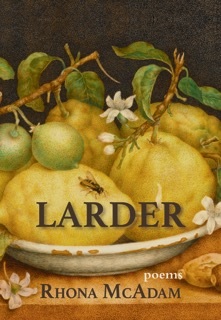
In her latest collection, Rhona McAdam navigates the dark places of human movement through the earth and the exquisite intricacies lingering in backyard gardens and farmlands populated by insects and pollinators, all the while returning to the body, to the tune of staccato beats and the newly discovered symmetries within the human heart.
“…A beautiful, filling collection, Larder is a set of poems to read at the change of the seasons, to appreciate alongside a good meal, and to remind yourself of the beauty in everything, even the things you may not appreciate before opening McAdam’s collection….”
Rhona McAdam is a writer, poet, editor, and Registered Holistic Nutritionist with a Master’s in Food Culture from Italy and a deep-rooted passion for ecology and urban agriculture. Her work spans corporate and technical writing to poetry and creative nonfiction, often exploring the vital links between what we eat and how we live. Based in Victoria, BC, and available via Zoom, Rhona is always open to new writing commissions, readings, or workshops on nutrition and the culinary arts.