-
Fresh-washed folk festival (& another market)
Read Full Post: Fresh-washed folk festival (& another market)The Ottawa Folk Festival was smaller than others I’ve been to, with a lot of names and voices that were new to me. The highlight for me was the stomping performance by Hoots & Hellmouth, at the dance tent (what a great concept!); also liked Jim Bryson and The Weakerthans at the main stage. A sampling of others: cheeky vocalists from Quebec: Galant, tu perds ton temps –

with unseen percussionist Jean-François Berthiaume, who pitched in on a number with Scottish trio-minus-one LAU

and the highly energetic Welsh guitarissimo Gareth Pearson

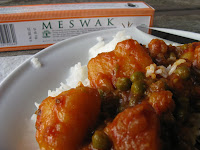
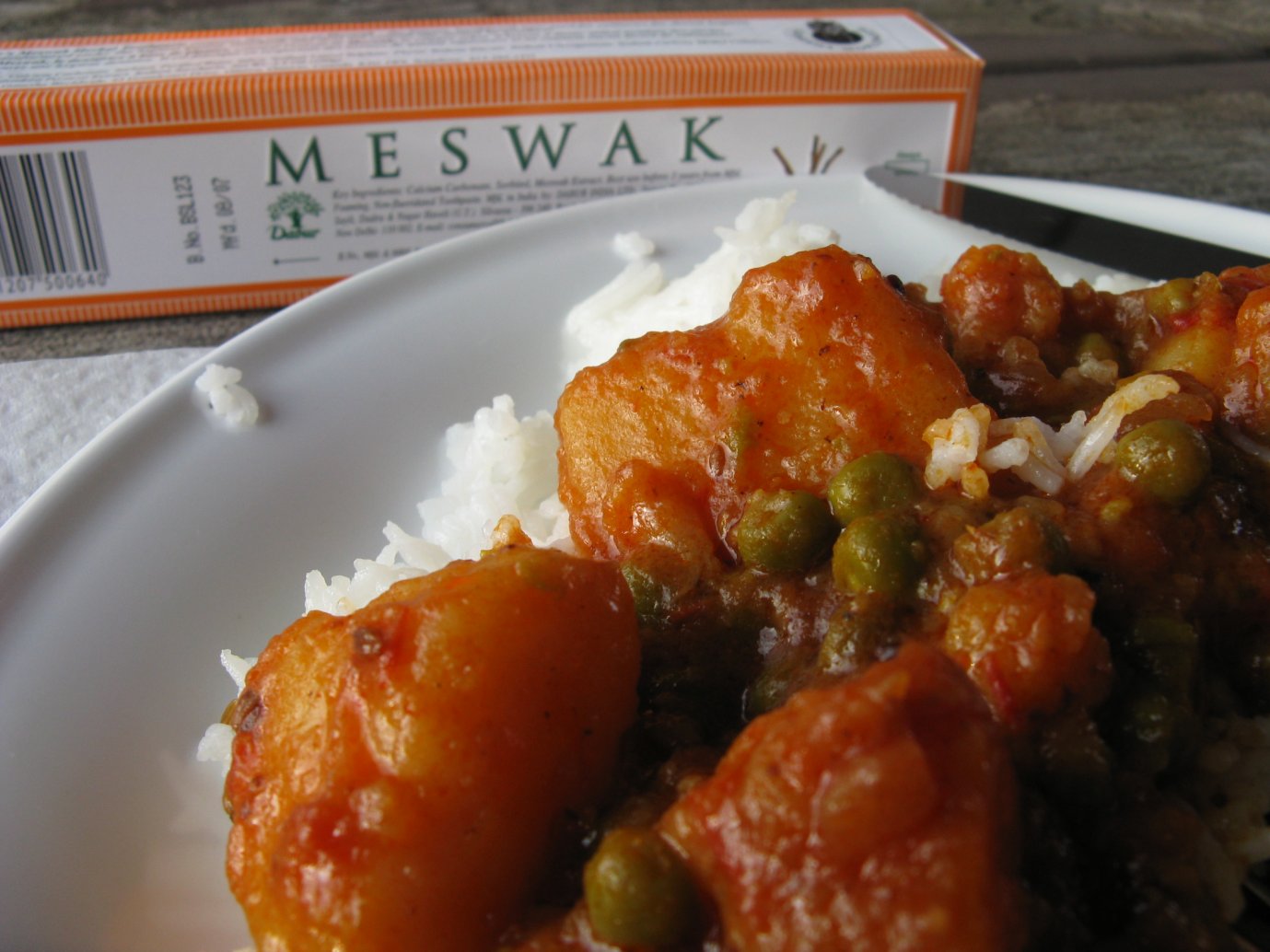
The food offerings were not great, an odd assortment that included two Thai and two curry joints. Naturally I opted for a veg curry at the one that was giving away a tube of toothpaste with each order.
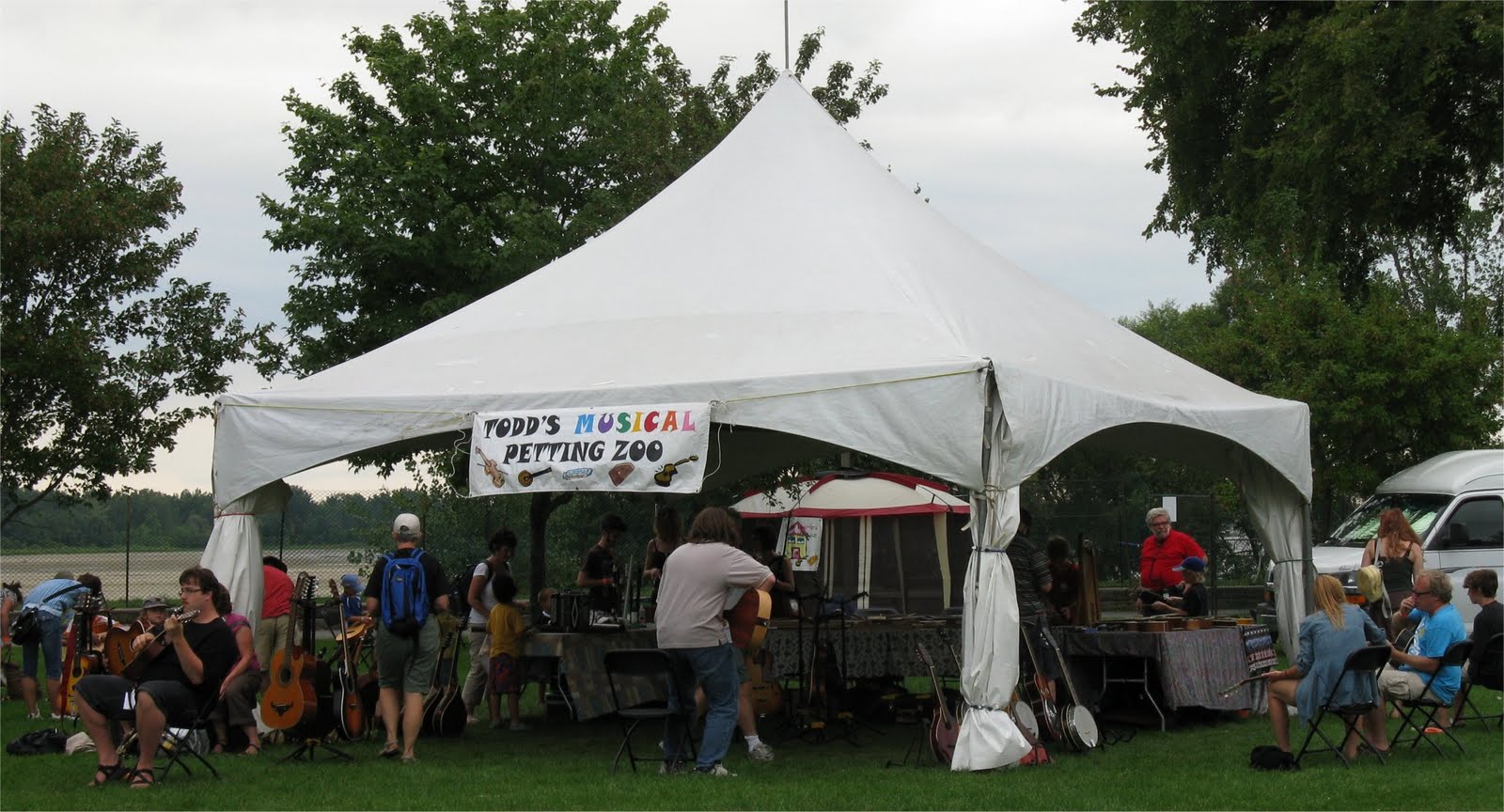
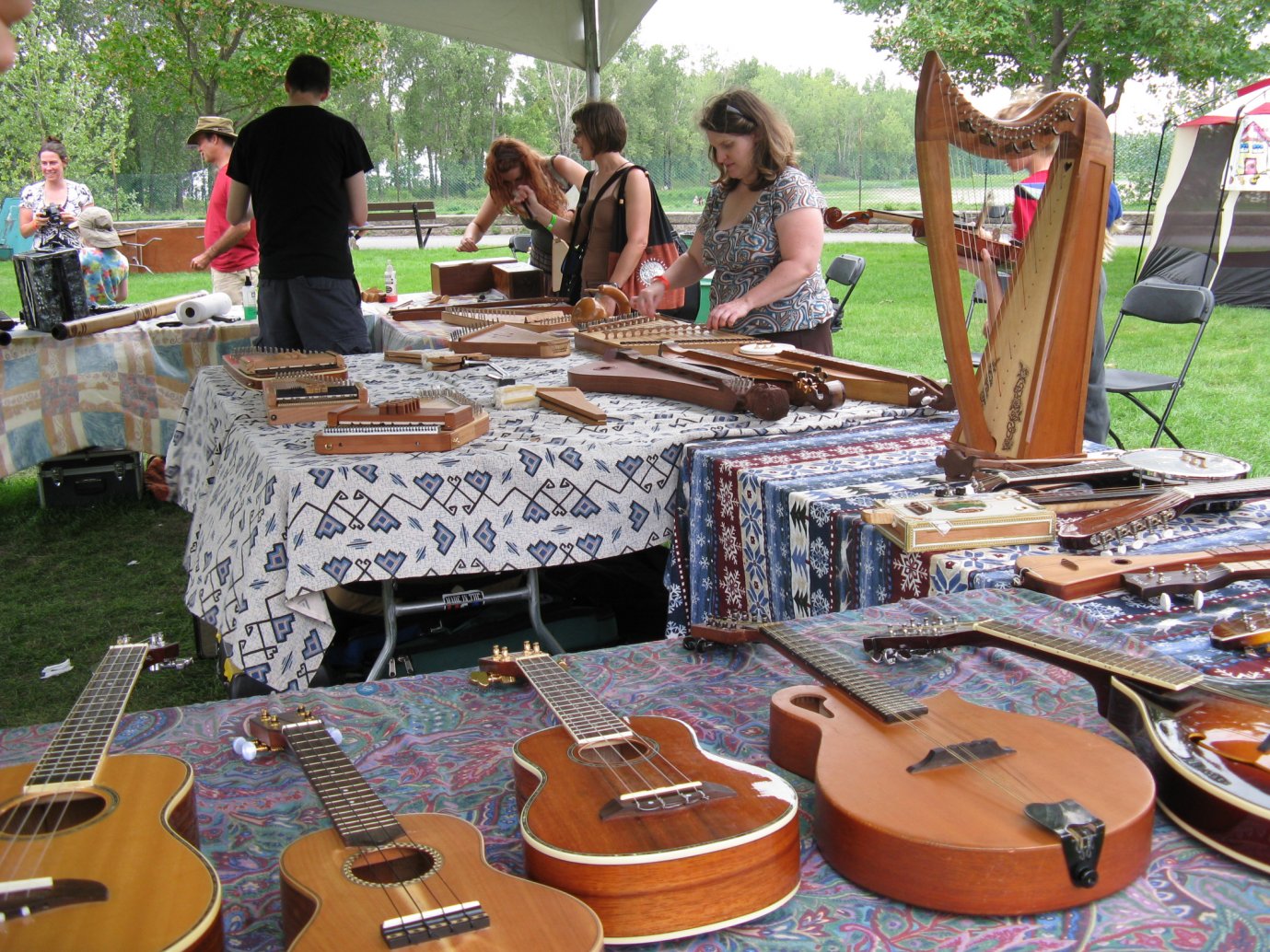
The festival offered a lot of practical fun for musicians, aspiring and otherwise, with plenty of jam sessions and workshops. The musical petting zoo let you try out all kinds of instruments, and get a little guidance on how to play them.


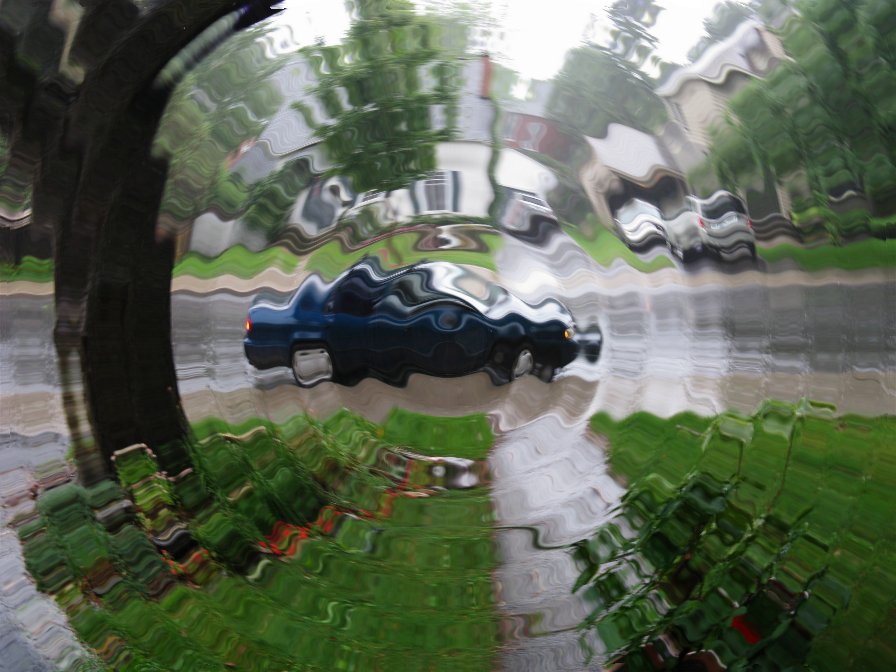
Sunday looked kind of like this from early morning:
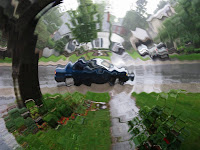
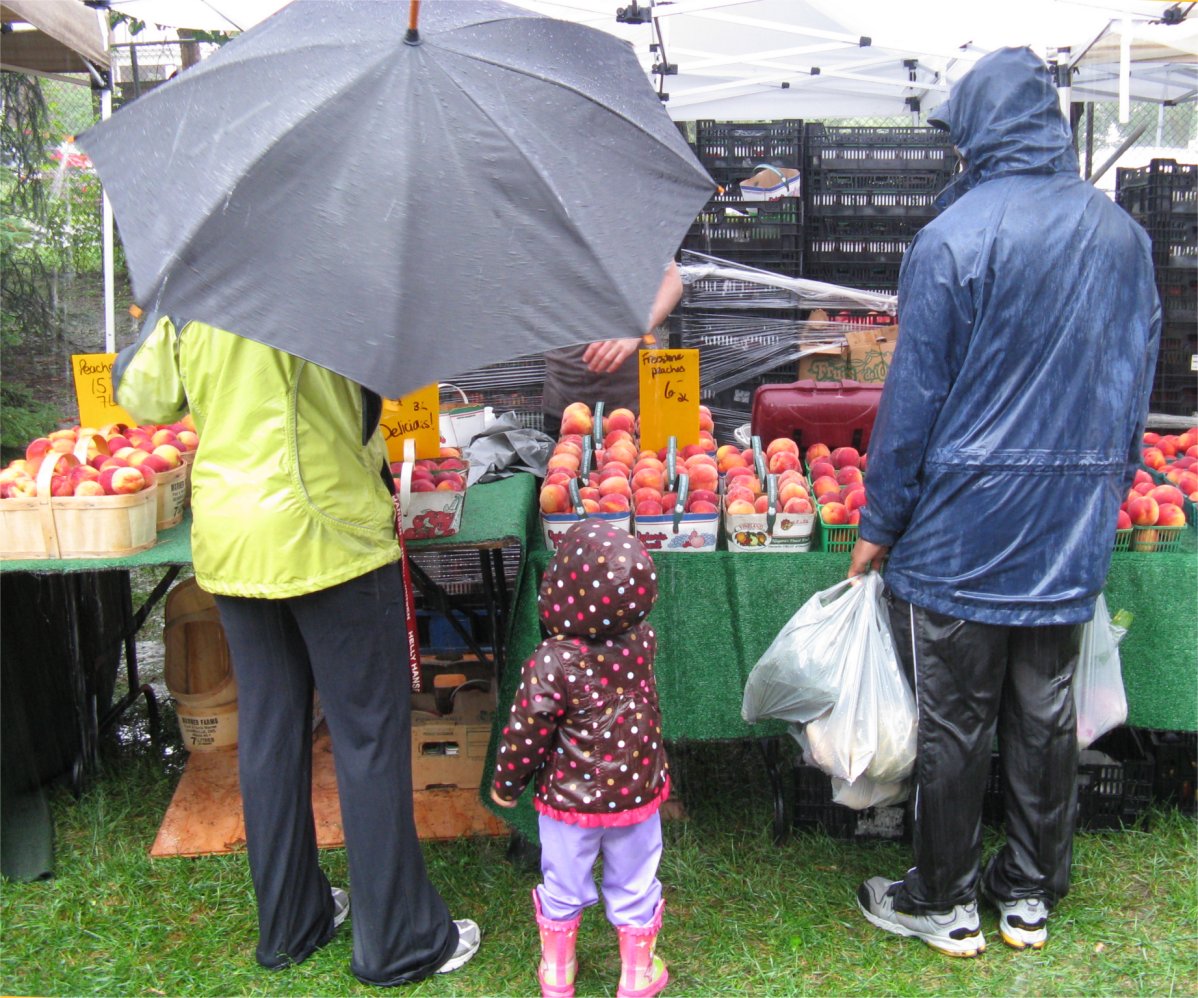
with severe thunderstorms in the forecast, so we skipped a last muddy day in the park. We did not let a little rain stop us checking out the Ottawa farmers’ market at Lansdowne Park, though, which was very wet indeed. My strongest sympathies were with the plucky baker from Art Is In Bakery, which has no shop front but sells through specialist retailers and markets.


The fruit and veg stalls got off a bit more lightly
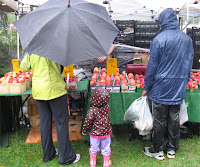
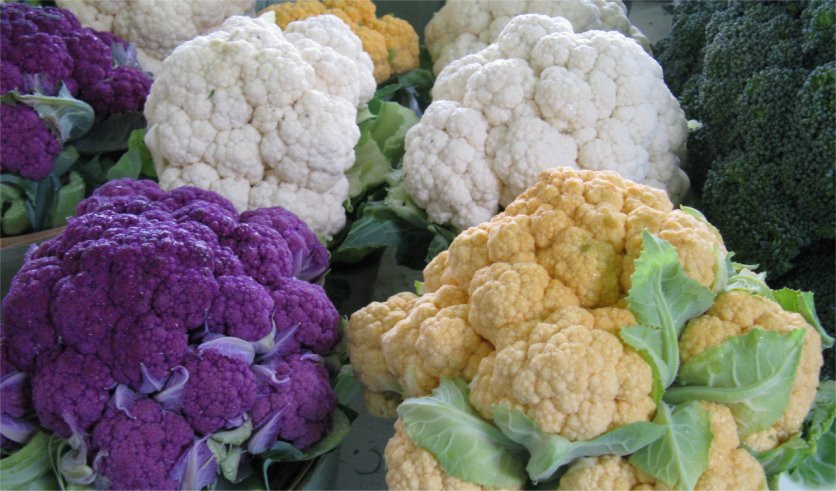
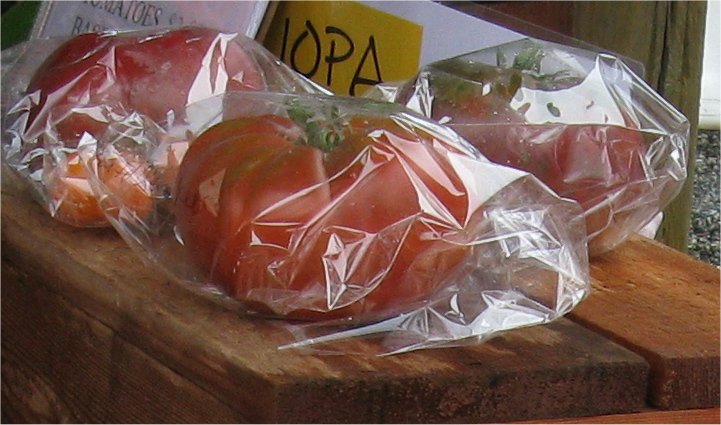
with freshly washed produce on offer, like German Stripe tomatoes, local grapes and multicoloured cauliflower.


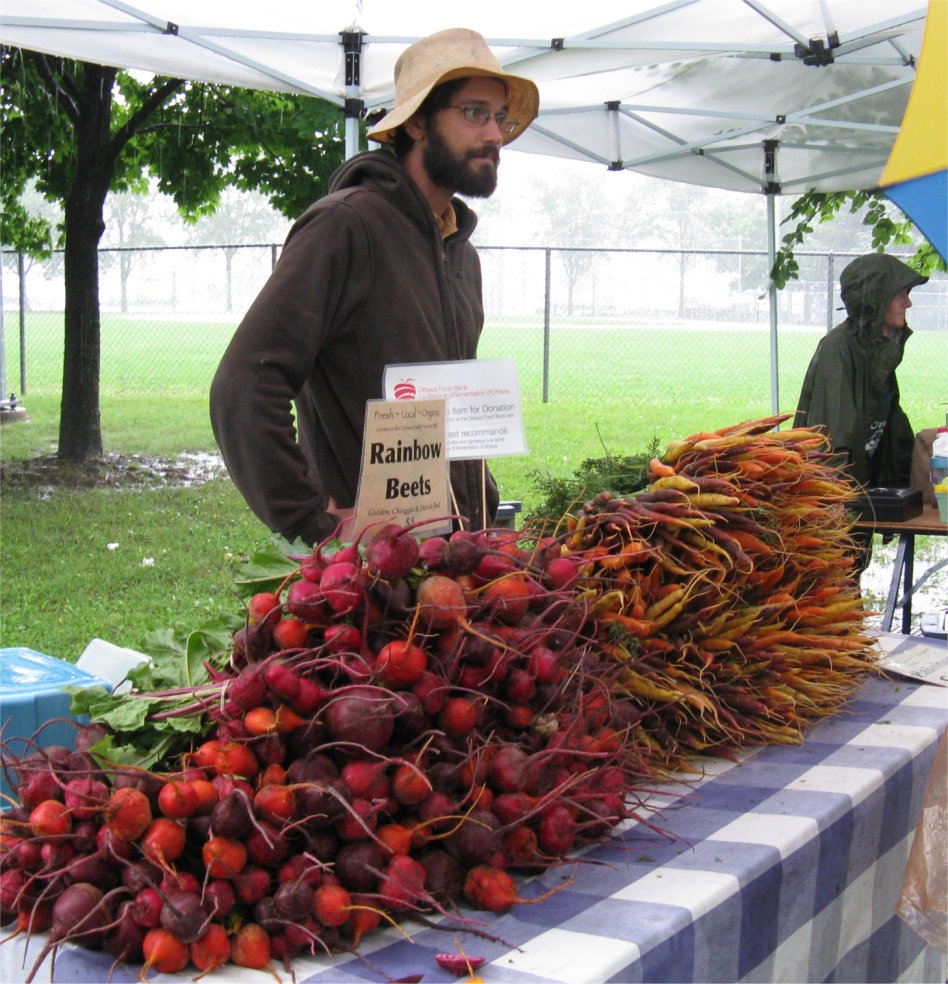
Corn, of course, and carrots and cheese:


-
Fresh-washed market
Read Full Post: Fresh-washed market
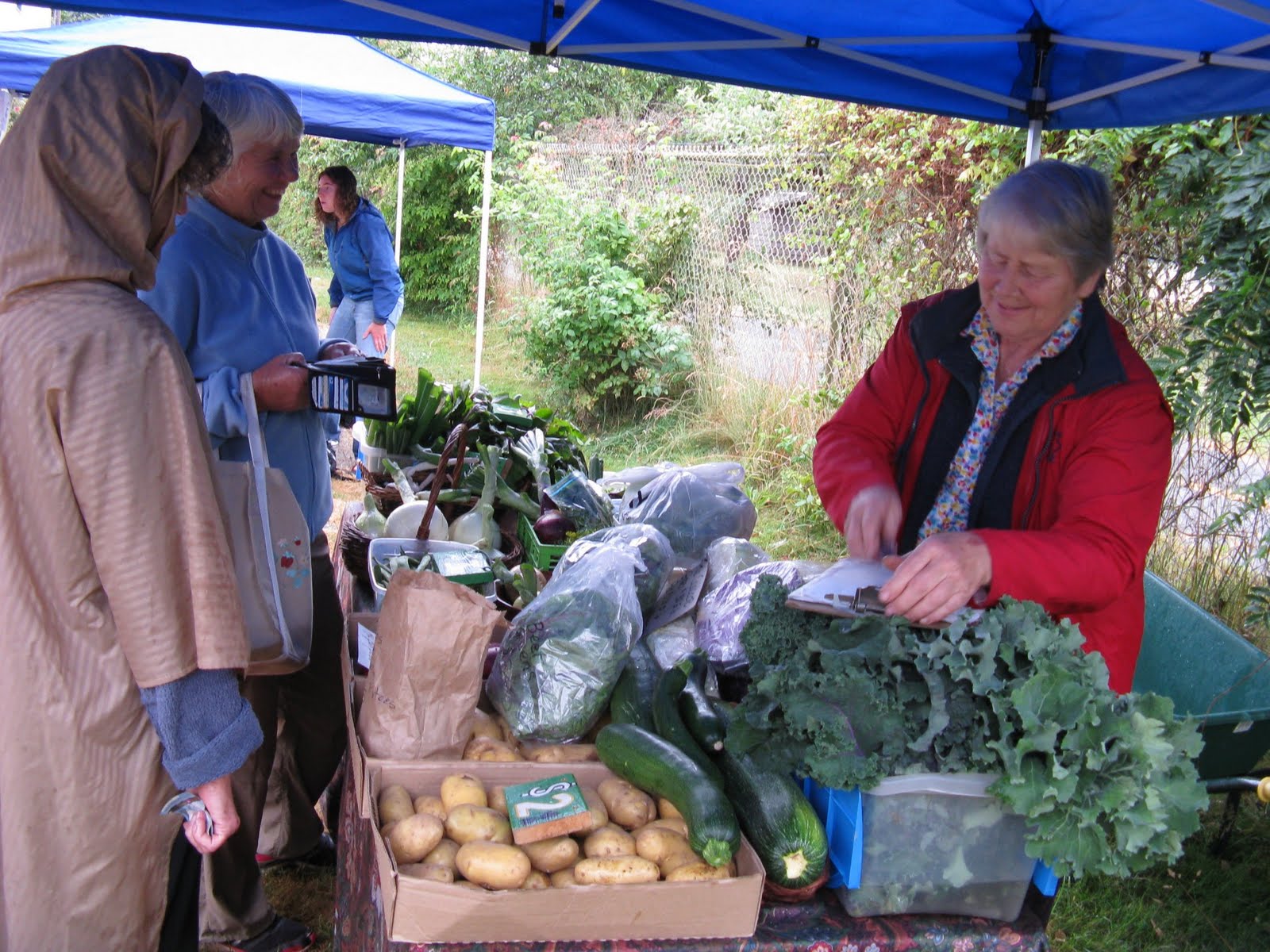
After six weeks of straight sunshine, last Saturday’s rainfall was a pleasure to the gardeners, not so much to those of us being dripped upon at the North Saanich Farm Market, where Slow Food had, for a second year, been invited to set up an information booth.
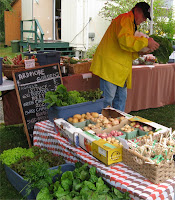
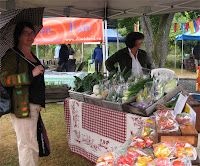
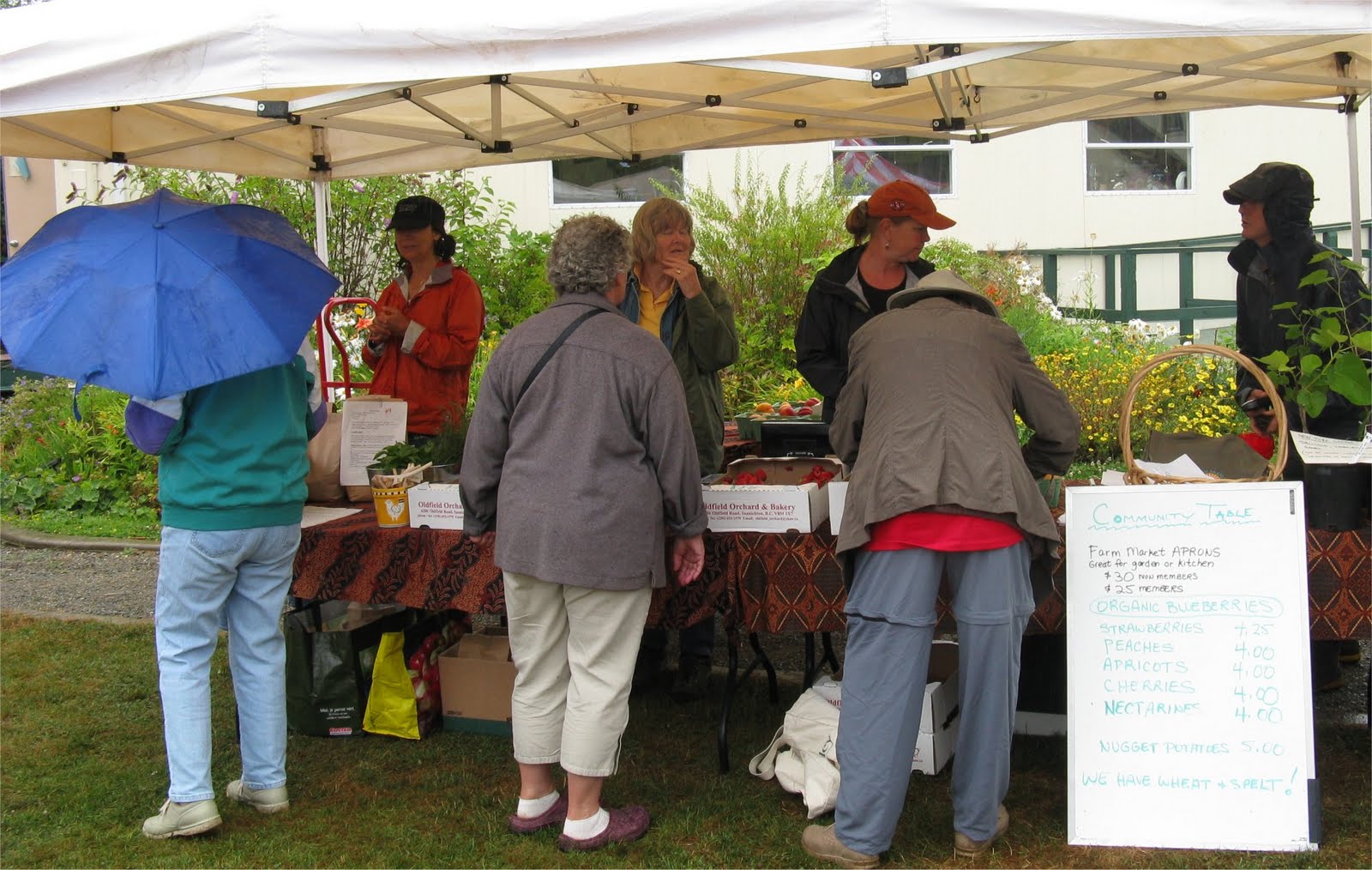
The experience was eerily similar to last year, since we managed to catch a rainy Saturday then as well. Be that as it may, the market is a small but lively one with a committed following, who simply brought umbrellas along and reaped the local bounty.
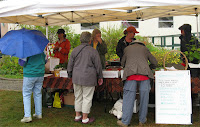
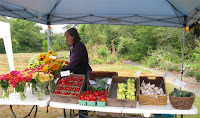
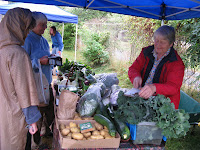
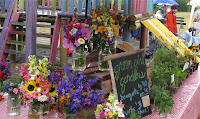
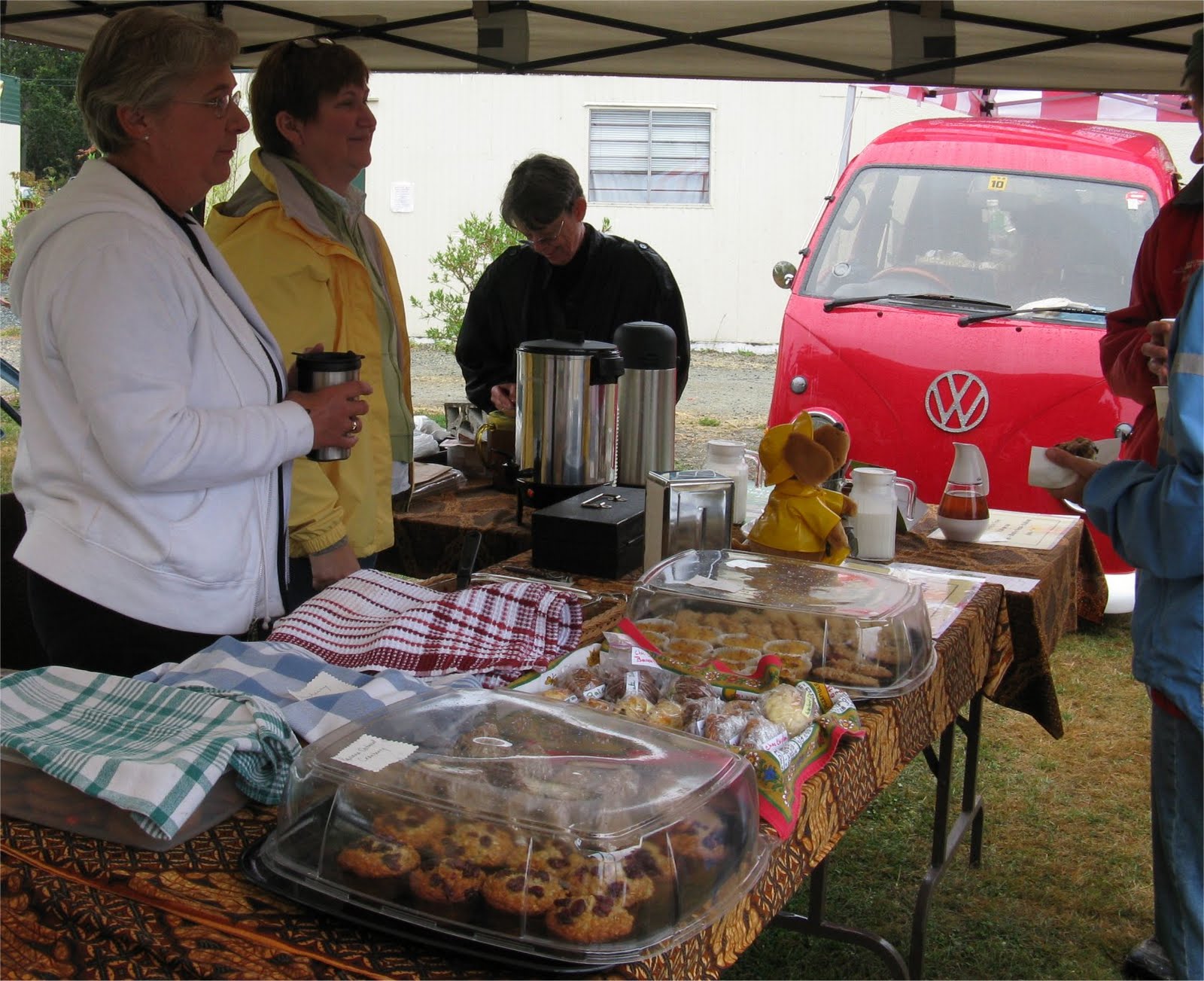
Rainy weather makes for a popular coffee concession, and the baking to go with it.

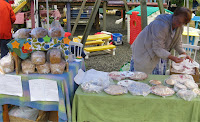
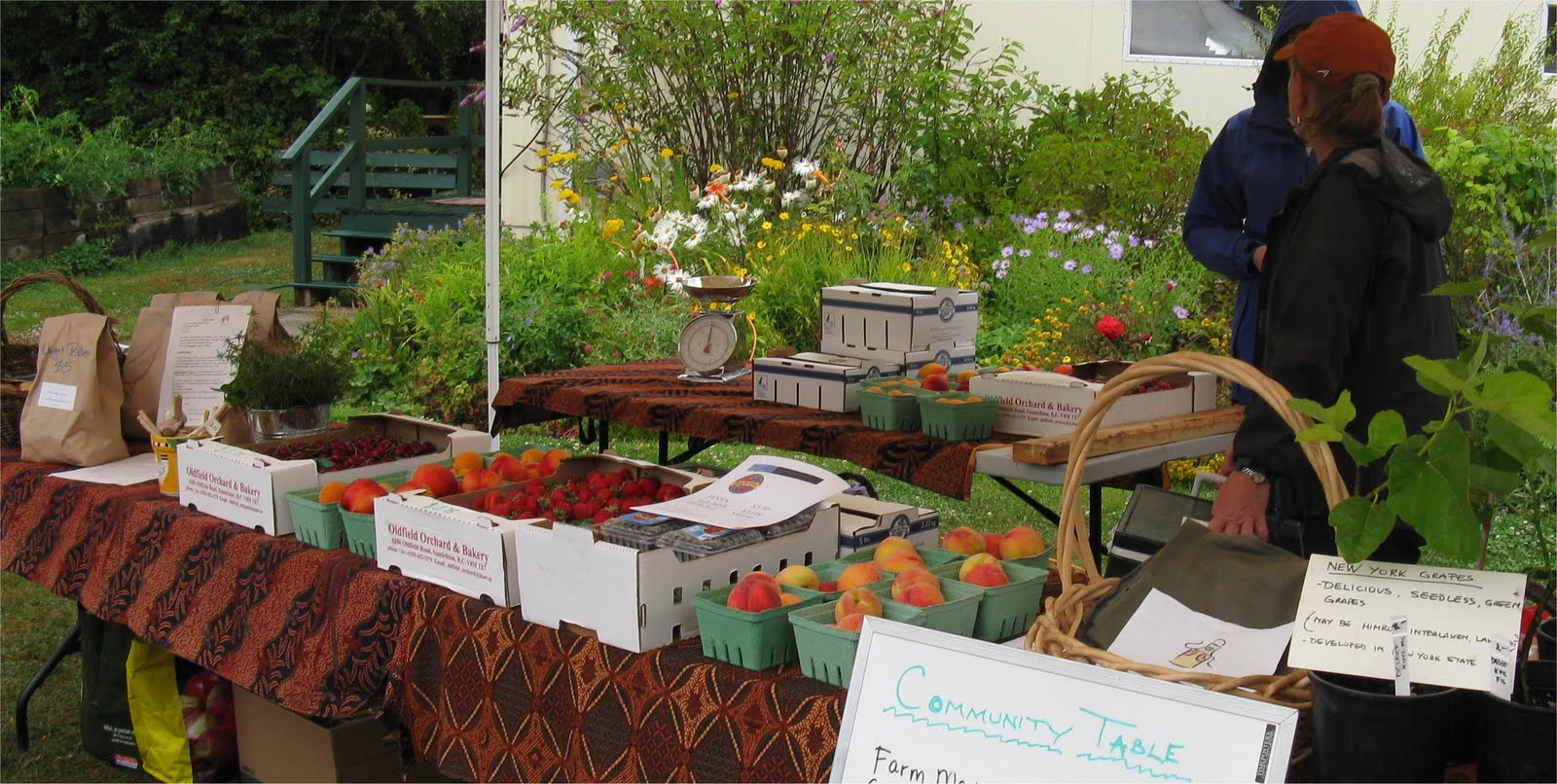
Luscious local fruit at the community table:
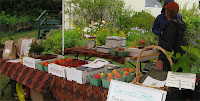
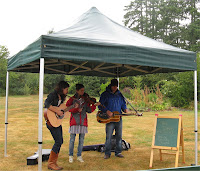
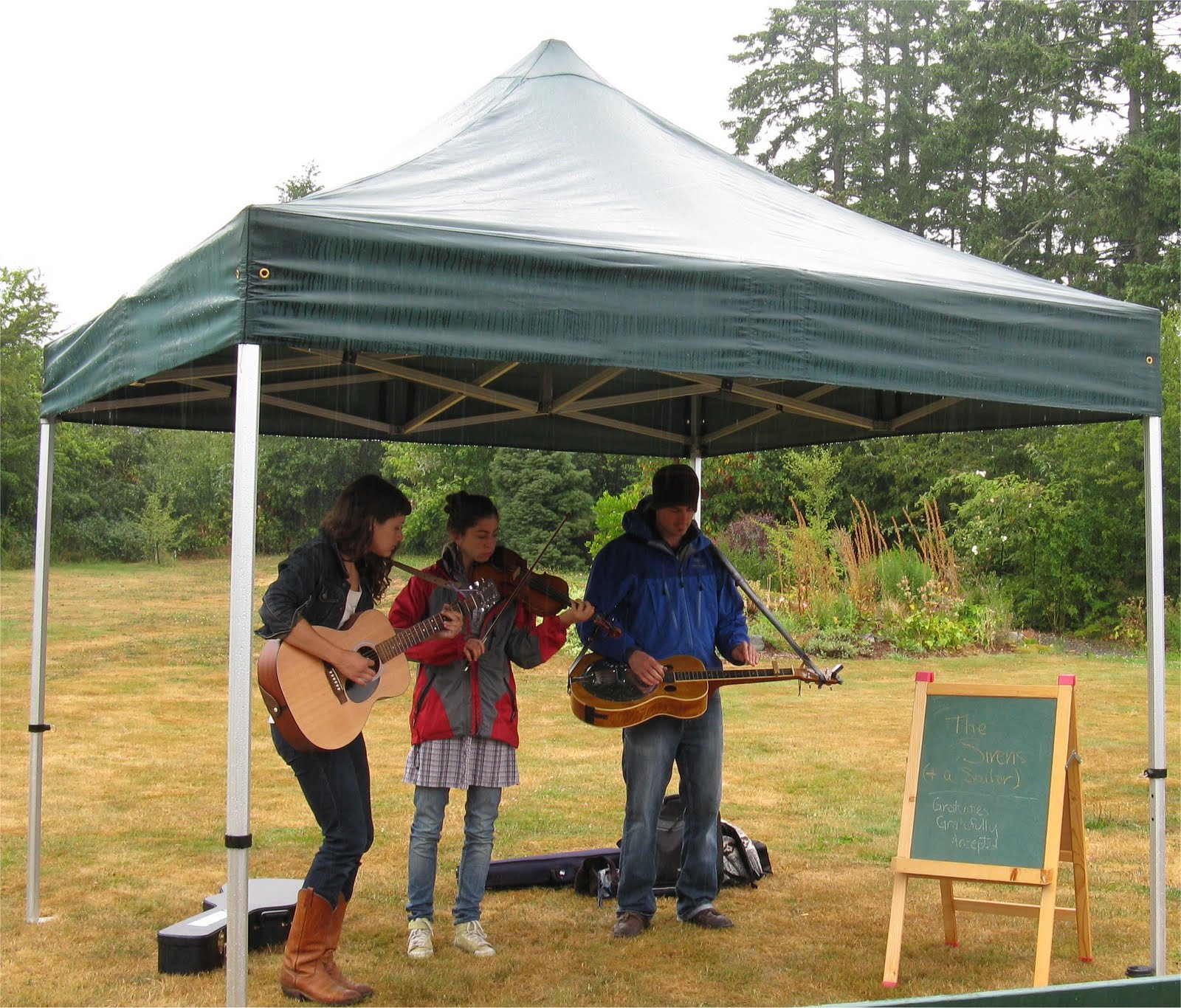
The market offers great local music every week (without a sound system on rainy days). This week it was The Sirens.
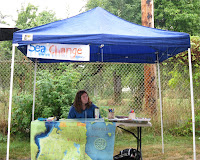
Information from Sea Change, working for marine conservation.
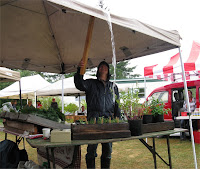
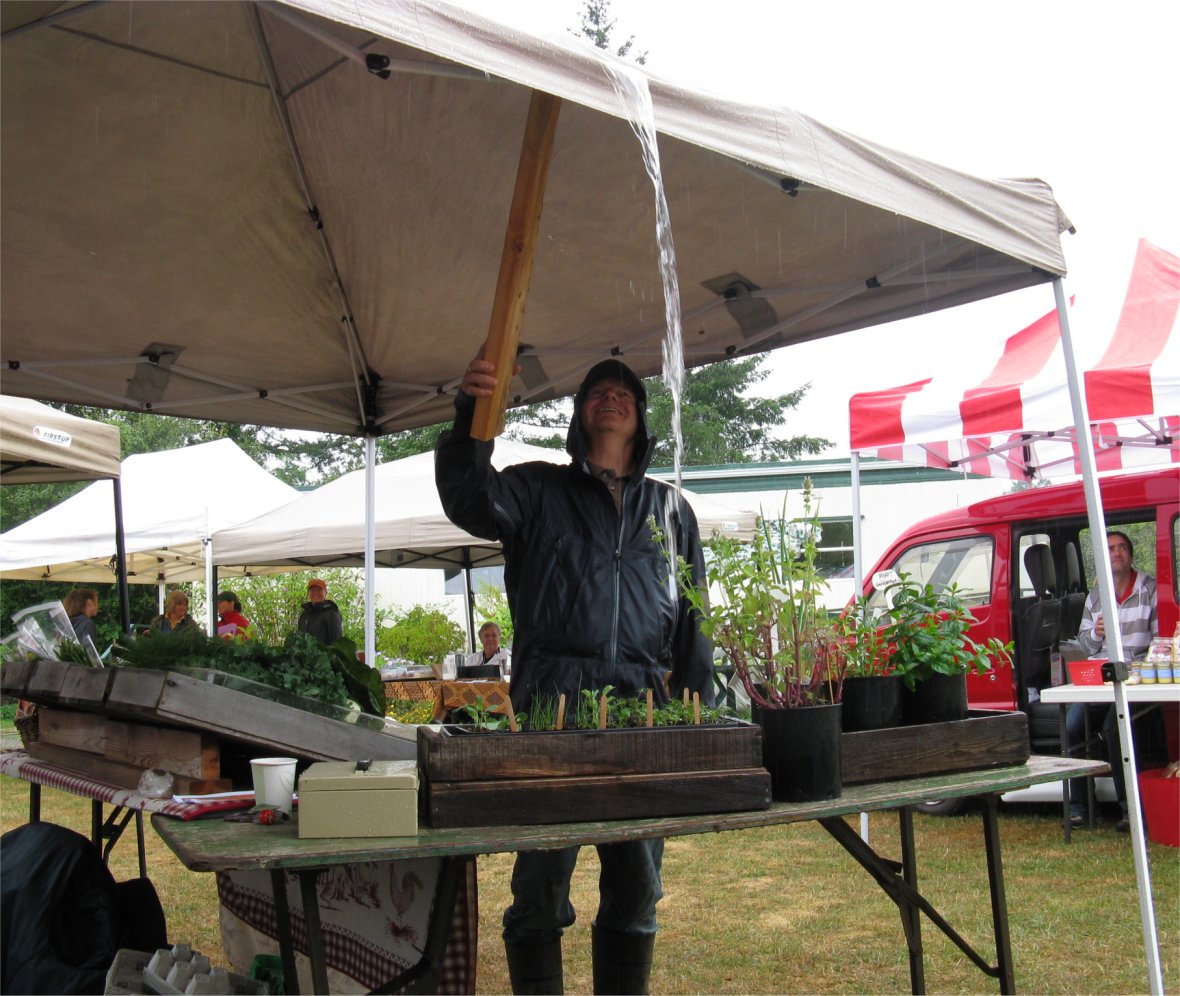
Every market should have its husbands. This one took care of tent drainage.
-
Cutting the mustard
Read Full Post: Cutting the mustardApparently August 7 is National Mustard Day, at least in Wisconsin. They were already celebrating it in the Napa Valley with a mustard festival earlier this year. You could get in on a six-course mustard dinner which sounded like a hot ticket.
And this is the moment in any mustard conversation when good Canadians quietly ask whether you know that 90% of all mustard seed used in Dijon mustard production in France is imported from Canada?
And if you are interested in the politics of mustard seed oil in India, you can read this piece by the wondrous Vandana Shiva, about another Monsanto dirty trick.
Other things to know about mustard include its use in crop rotation trials in Prince Edward Island, where the potato crops are being ravaged by wireworm. It seems to be of some value there, as brown mustard is high in chemicals called glucosinolates, which when they break down produce isothiocyanates, compounds which are actually toxic to wireworms.
On the darker side of the family, Garlic Mustard is a problem weed that’s invading fields in BC and many other parts of North America, where it was introduced by settlers as a salad green and medicinal herb (it’s said to be helpful internally against bronchitis, asthma and eczema, and externally for minor injuries, slow-healing skin problems, rheumatism and gout).















Latest Posts
- Writers at Word!
- Sublime and Twisted Readings coming up!
- Sublime
- Good weather for reading
- The world, the world
- Sublime launch!
Aldeburgh Poetry Festival Barny Haughton BBC BC poets Berkswell blackberries Black Stilt Bologna book launch Borough Market Carlo Petrini Catalonia Cyrus Todiwala dairy Daunt's Books Dijon Edinburgh Fanny Bay Feast of Fields Food and Morality food history food journalism Jenna Butler lardo Malahat Review Michael Pollan Okanagan olive oil tasting olive trees Omnivore's Dilemma Our Food Our Future Oxford Parmigiano-Reggiano Planet Earth Poetry poetry poetry readings Poetry videos prosciutto salumi Sean O'Brien Suffolk ticks Wendy Morton Wired Writing Yvonne Blomer
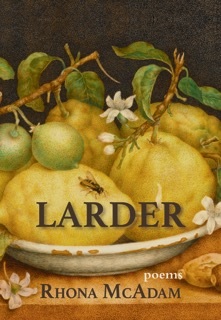
In her latest collection, Rhona McAdam navigates the dark places of human movement through the earth and the exquisite intricacies lingering in backyard gardens and farmlands populated by insects and pollinators, all the while returning to the body, to the tune of staccato beats and the newly discovered symmetries within the human heart.
“…A beautiful, filling collection, Larder is a set of poems to read at the change of the seasons, to appreciate alongside a good meal, and to remind yourself of the beauty in everything, even the things you may not appreciate before opening McAdam’s collection….”
Rhona McAdam is a writer, poet, editor, and Registered Holistic Nutritionist with a Master’s in Food Culture from Italy and a deep-rooted passion for ecology and urban agriculture. Her work spans corporate and technical writing to poetry and creative nonfiction, often exploring the vital links between what we eat and how we live. Based in Victoria, BC, and available via Zoom, Rhona is always open to new writing commissions, readings, or workshops on nutrition and the culinary arts.