-
Springtime in Saskatchewan
Well, nearly. A delayed springtime. I missed the one they had last weekend, but on the other hand I also missed the snowfall that left this behind,
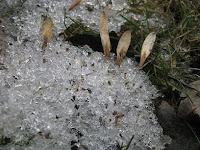
though the ground is mostly bare and the sun comes out every so often, even as a powdery sprinkling comes and goes that I am trying to pass off as pollen, while I prepare for tomorrow’s food poetry workshop, followed by my reading at TiP.
-
Mushrooms & poets
It sounds like the start of a bad joke, doesn’t it? When is a poet like a mushroom..? If I had been to more meetings of the South Vancouver Island Mycological Society, I’m sure I’d be able to fill in a punchline. We’ll have to come back to that another time I think.
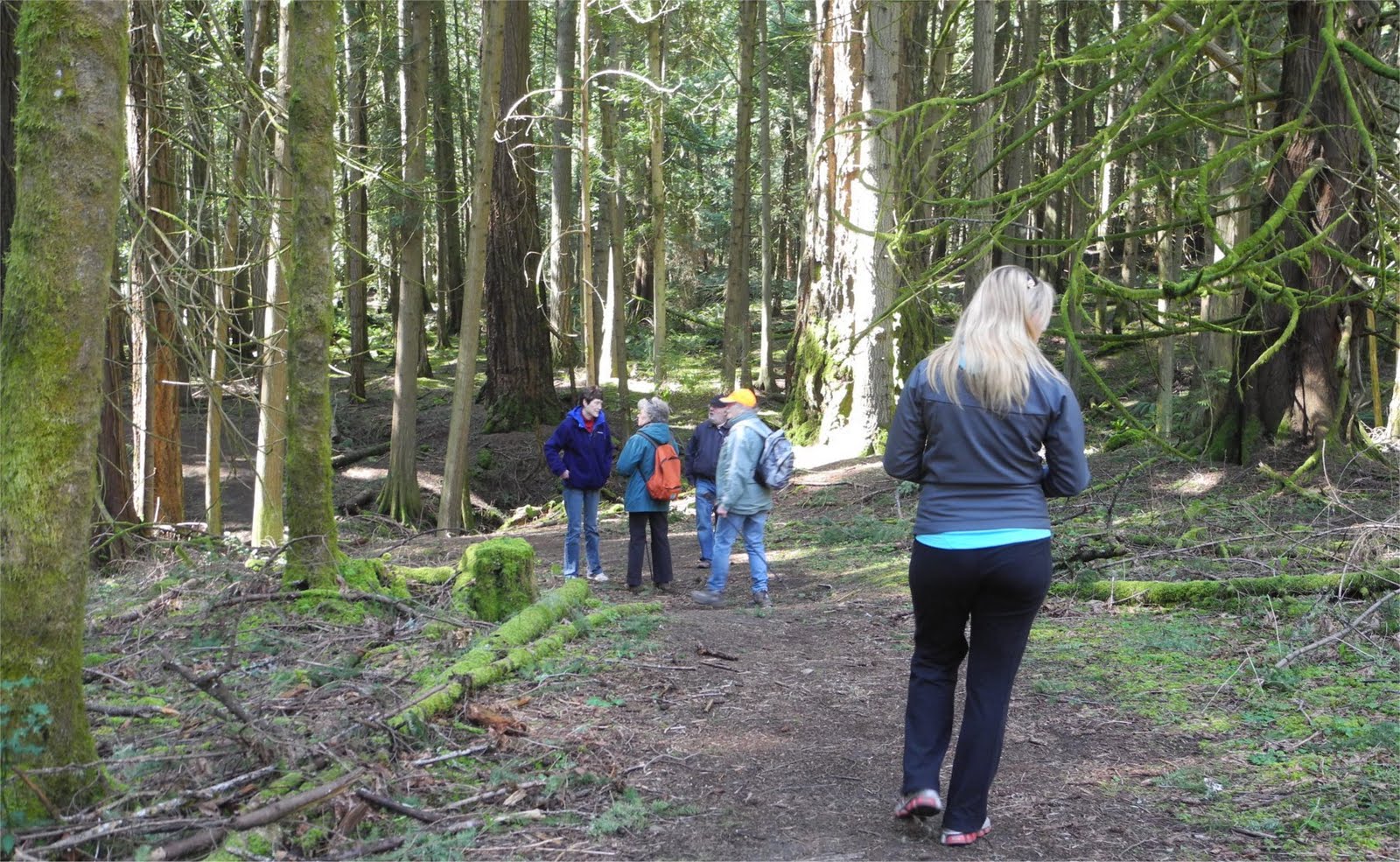
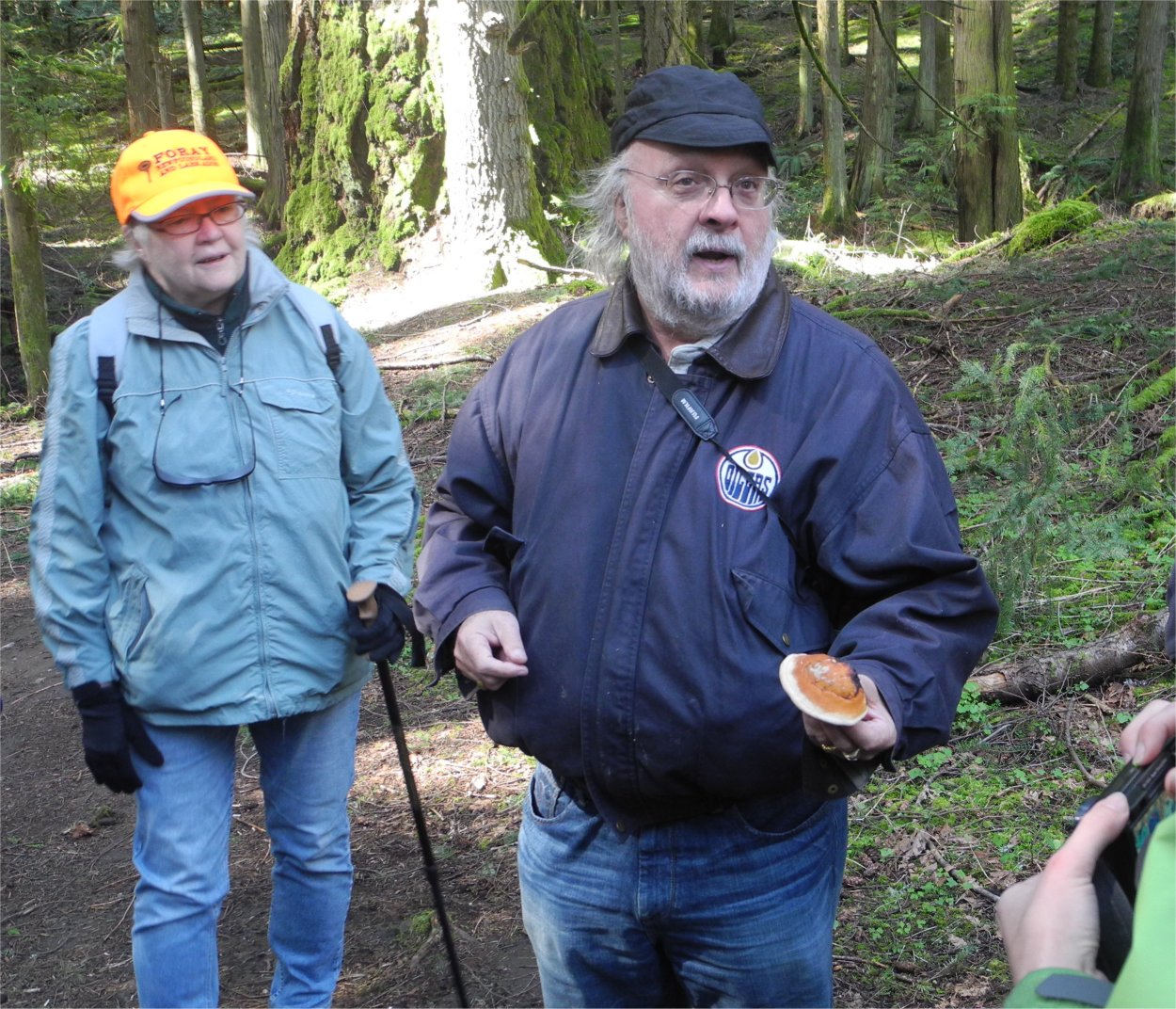
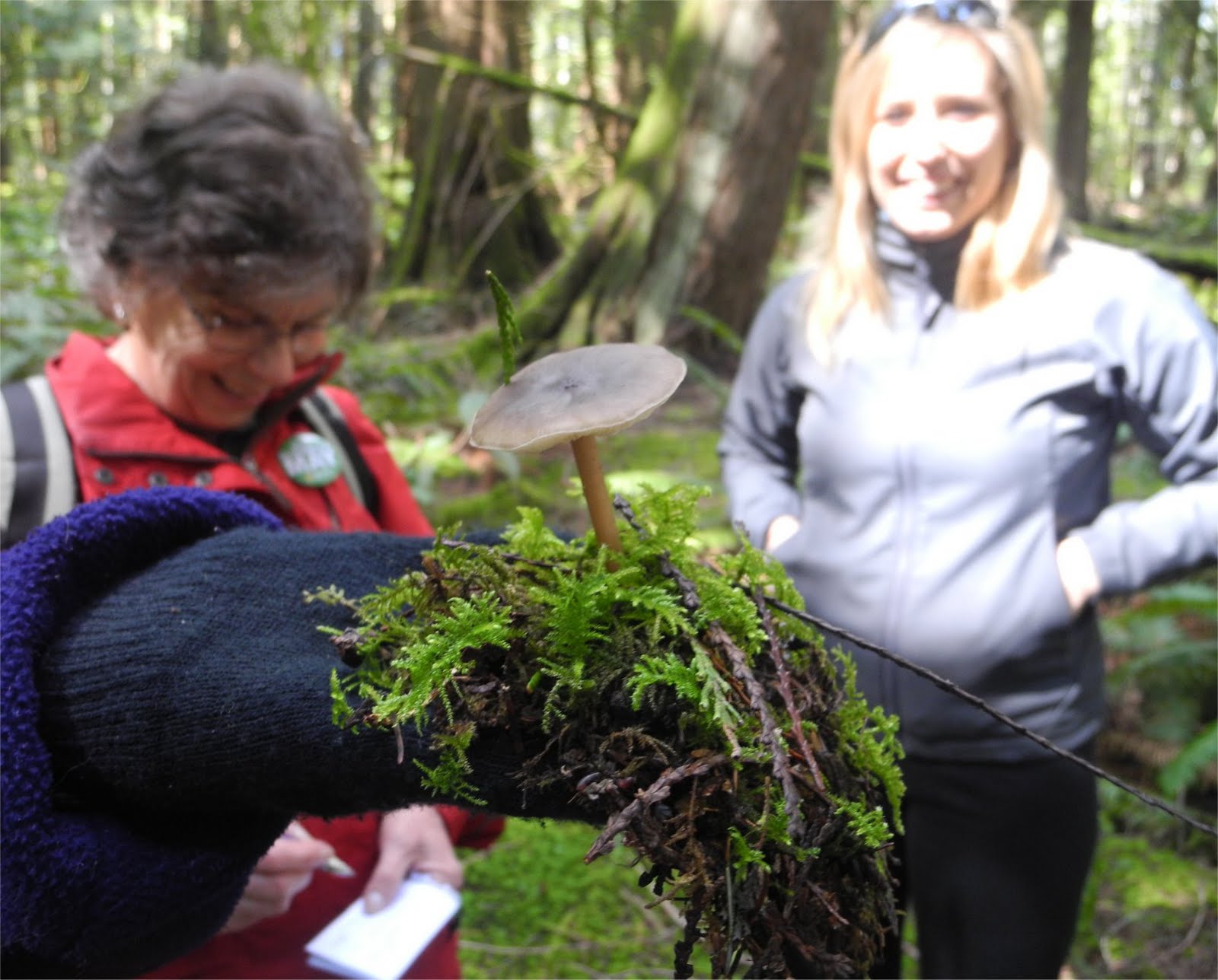
Last Thursday I was lucky enough to join a mushroom foray with SVIMS’ evening speaker Robert Rogers, from Edmonton, who was in town to talk about the medicinal uses of mushrooms. He described himself as a herbalist rather than a mycologist, but was pretty quick off the mark when it came to talking up the medicinal benefits of what we found in Francis King Park.

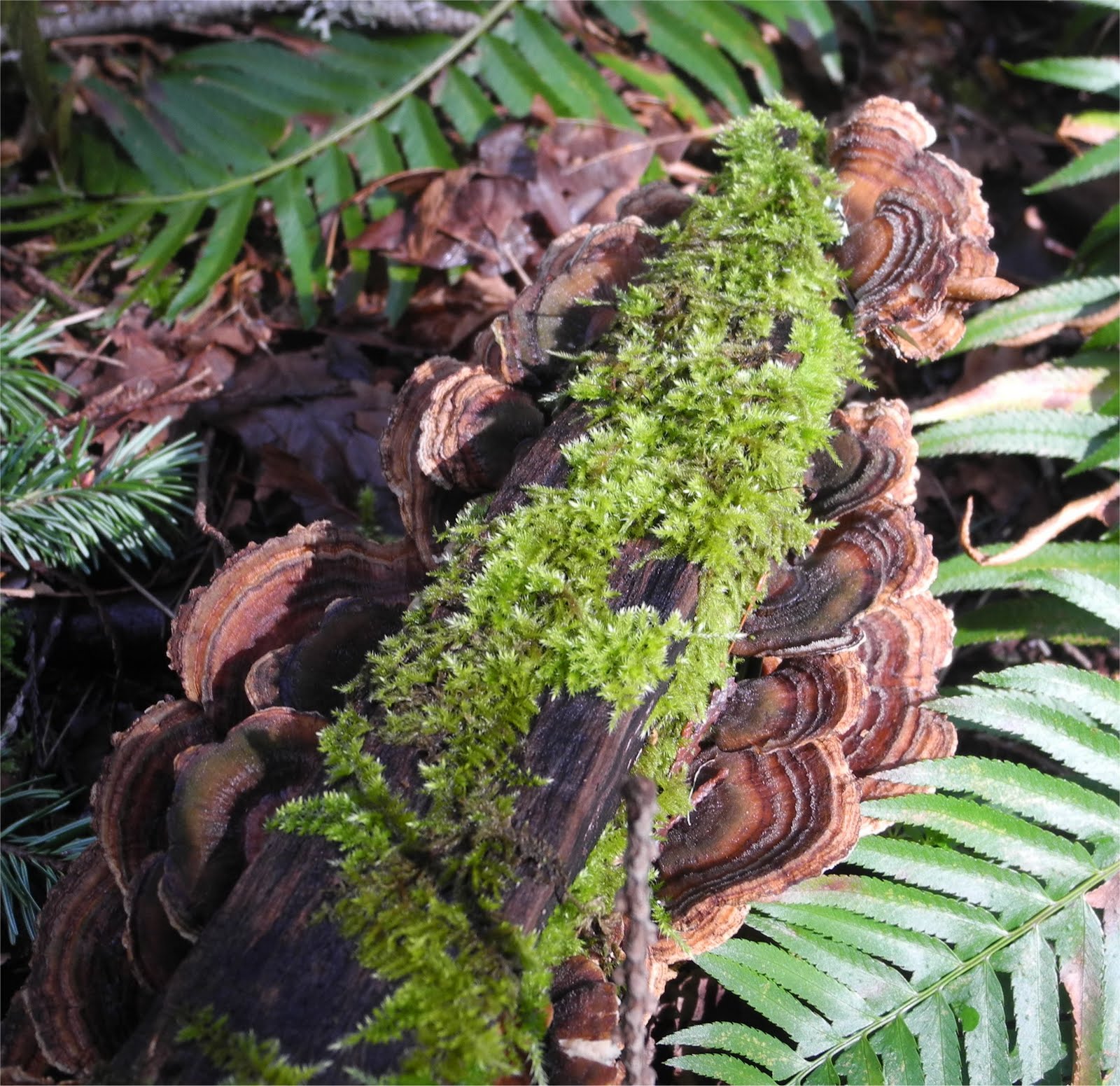
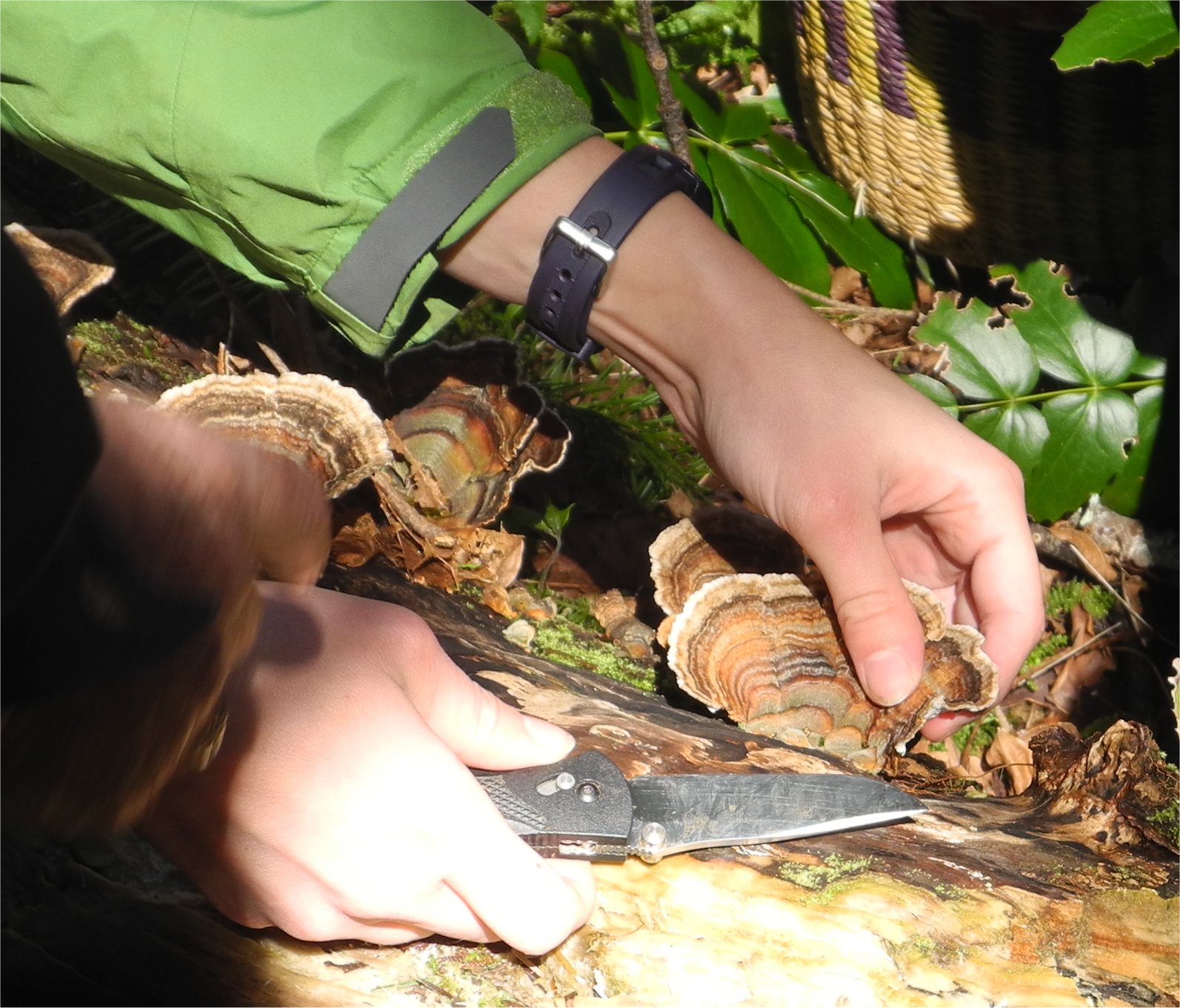
First up was a Turkey Tail (Trametes versicolor) on the park gate.
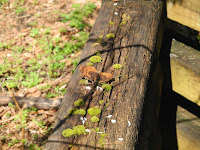
Better specimens found later on. Robert says it is the most important medicinal mushroom in Japan; the healthcare system there spends around $2.5bn a year providing it in extract form to post-operative cancer patients. In one study the placebo group had a 4.6 yr survival rate, while those taking a daily supplement survived 10.6 yrs post-op. He said it was an immune modulator and an important mycoremediator: its mycilium masses can convert PCBs and petrochemicals into CO2 and water. And it’s edible – just – a sort of mushroom chewing gum.


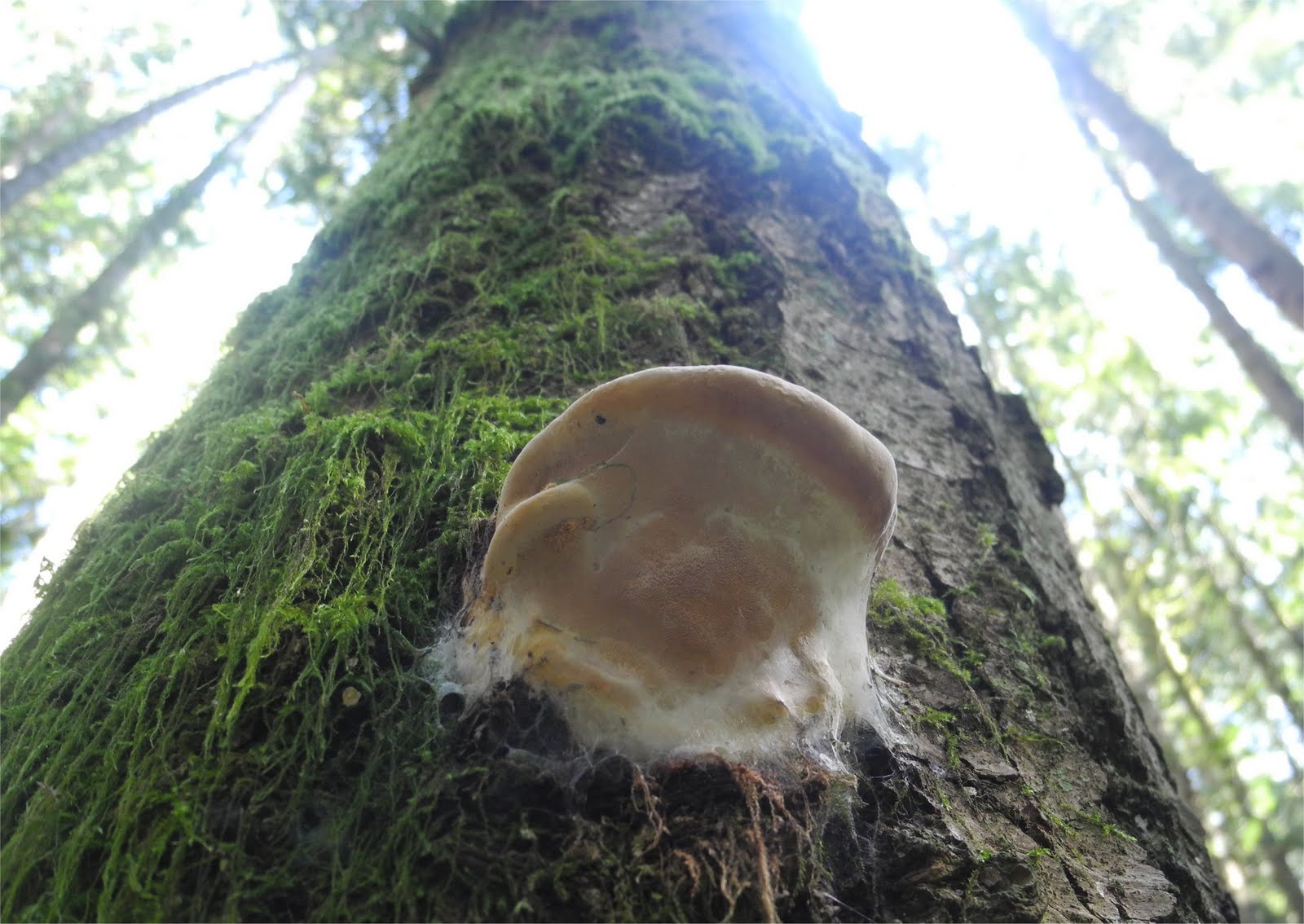
Many were the Polypores. Here a Ganoderma tsugae, one of the Reishi mushrooms. The Reishi is said to be the most studied mushroom of all time. It’s easily collected; best to work with when younger and spongier, as it’s easier to slice before processing. To prepare it you need to get polysaccharides and other matter out first, and through a series of soakings and decantings make it into a tincture that can be taken for various conditions. It modulates the immune system (perks it up when depressed, damps it down when over-active, as in the case of rhumatoid inflammation, lupus etc.) as well as reducing inflammation (and it is inflammation after all that kills us). It’s a great anti-cancer agent because it interrupts the cycle of cancer cells (via Apotosis 53: a point in self-cycled growth where cells are dividing) so can help prevent cancer formation. Chinese medicine uses it for esophageal carcinoma and indigestion.


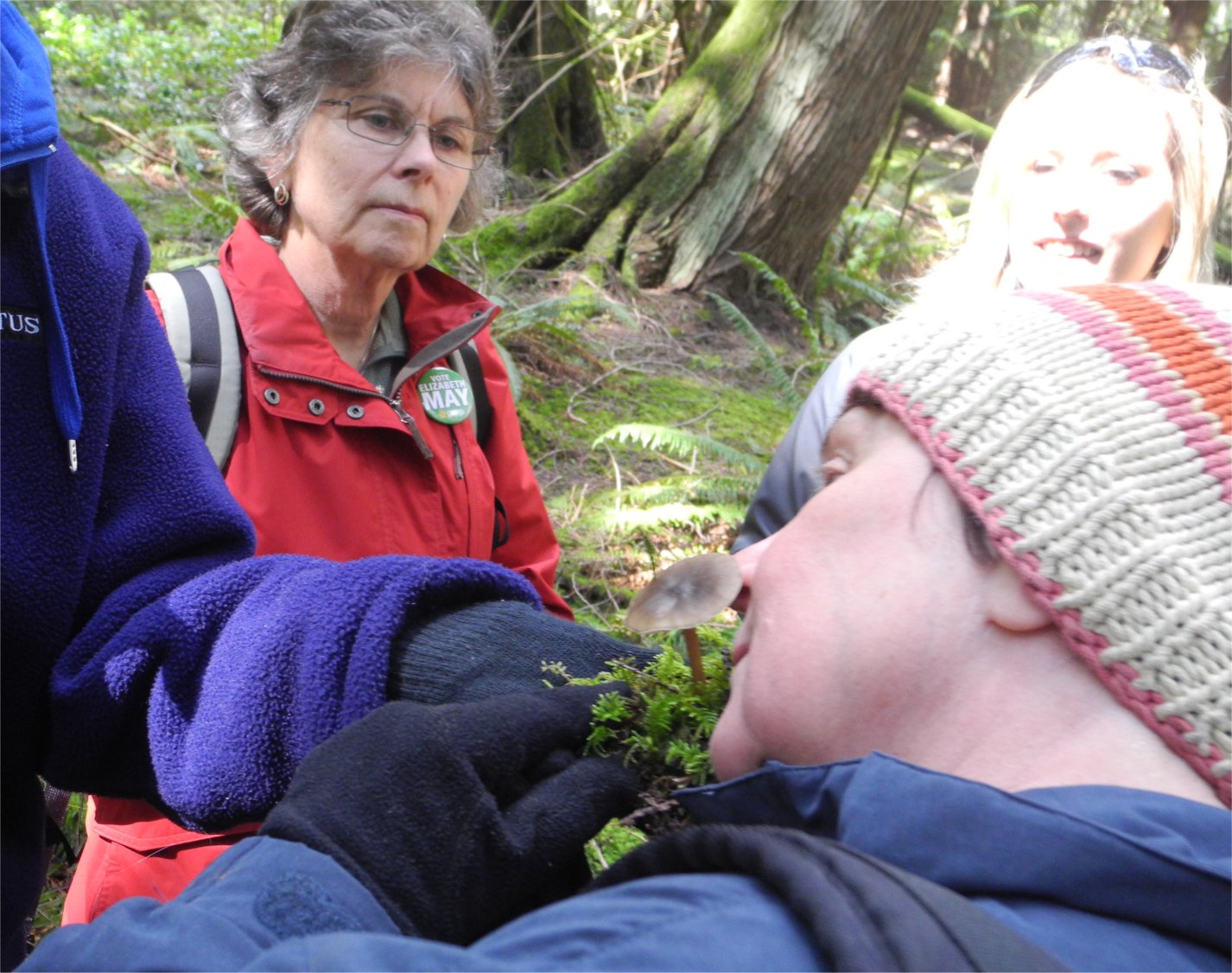
Mushroom hunters use all their senses in identification.


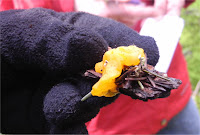
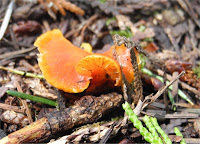
Inocybe sp. — is this the LBJ of mushrooming?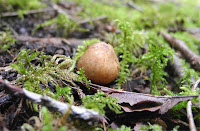
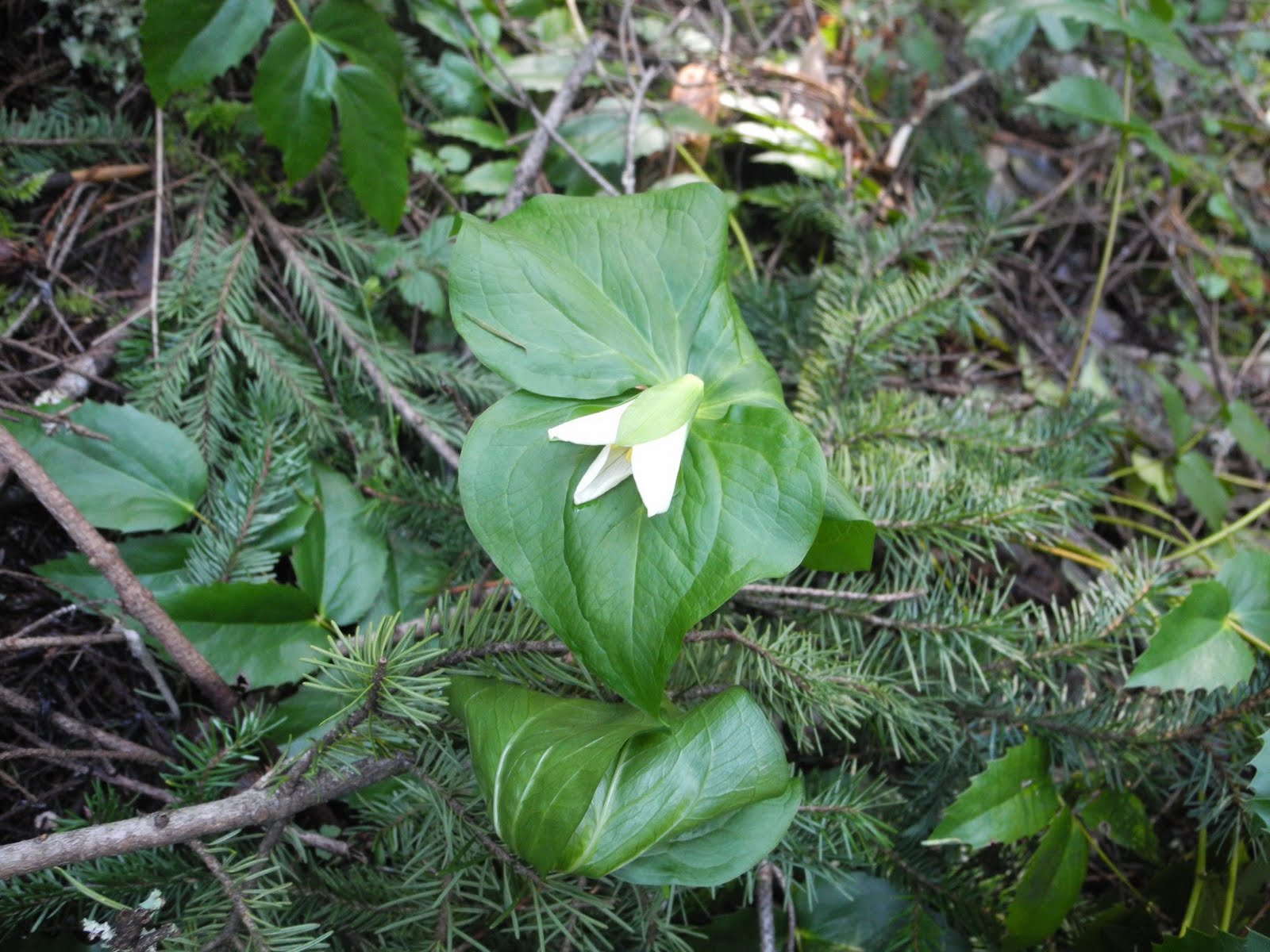
Spring in the rainforest: skunk cabbage and trilliums:


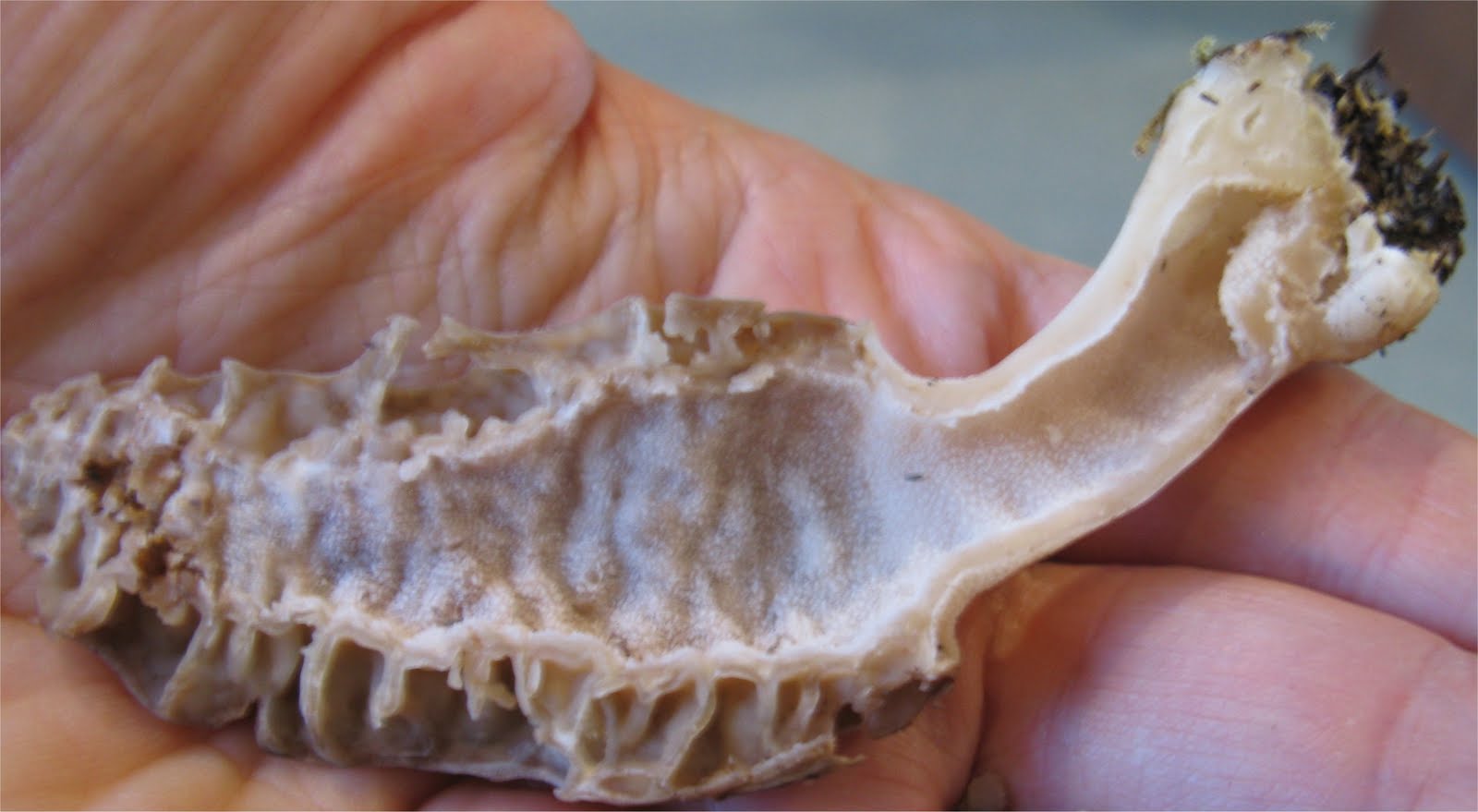
That evening at the meeting Robert went into more detail about a selection of mushrooms. But first we took a look at a Black Morel (Morchella elata), and observed the way the cap is integral to the stem, which is the way to distinguish a true Morel from a false one. It is of course an excellent eating mushroom, but one that can cause some diners upset, particularly if consumed with alcohol.


Then we heard about the beneficial properties of common edible mushrooms like Shiitake (Lentinula edodes) which a San Francisco hospital apparently found to be as good as any of its existing retroviral drugs); and it’s a cardiovascular regulator, preventing “hardening” of arteries, coronary embolisms, varicose veins, and helping with cholesterol problems.
The Enoki (Flammulina velutipes) cultivar is the only mushroom that Robert recommends eating raw; it is a cancer-preventive food, and one of the few to have undergone trials on breast and ovarian cancers.
Even the button/crimini/portobello mushrooms (Agaricus bisporus) got mention: don’t eat them raw, he says: some compounds may be toxic. But they are aromatase inhibitors (as are nettle leaves) preventing replication of hormone-sensitive cancers (prostate, breast). Regular consumption can act as good prophylactic. Reduction in breast cancer through eating these was found to be 67% but when combined with green tea, raised the reduction rate to 97% .
Oyster mushrooms (Pleurotus populinus; P. ostreatus) is a cholesterol reducer, containing lovastatin. Mitochondrial cell efficiency is affected by statin drugs (this inhibits Q10) but not by eating mushrooms. Two meals a week, he says, are as effective as statin drugs. They prevent build-up of placque in arterial walls, and are protease inhibitors: when the liver starts to shut down, cholesterol levels rise, but oyster mushrooms prevent both, and are antiviral as well. And an important mycoremidator – oyster mushroom mycillium can help clean up environmental messes (an idea Paul Stamets explains in his TED Talk).
There were many more besides.. described in fascinating detail in Robert’s book, The Fungal Pharmacy – Medicinal Mushrooms of Western Canada.
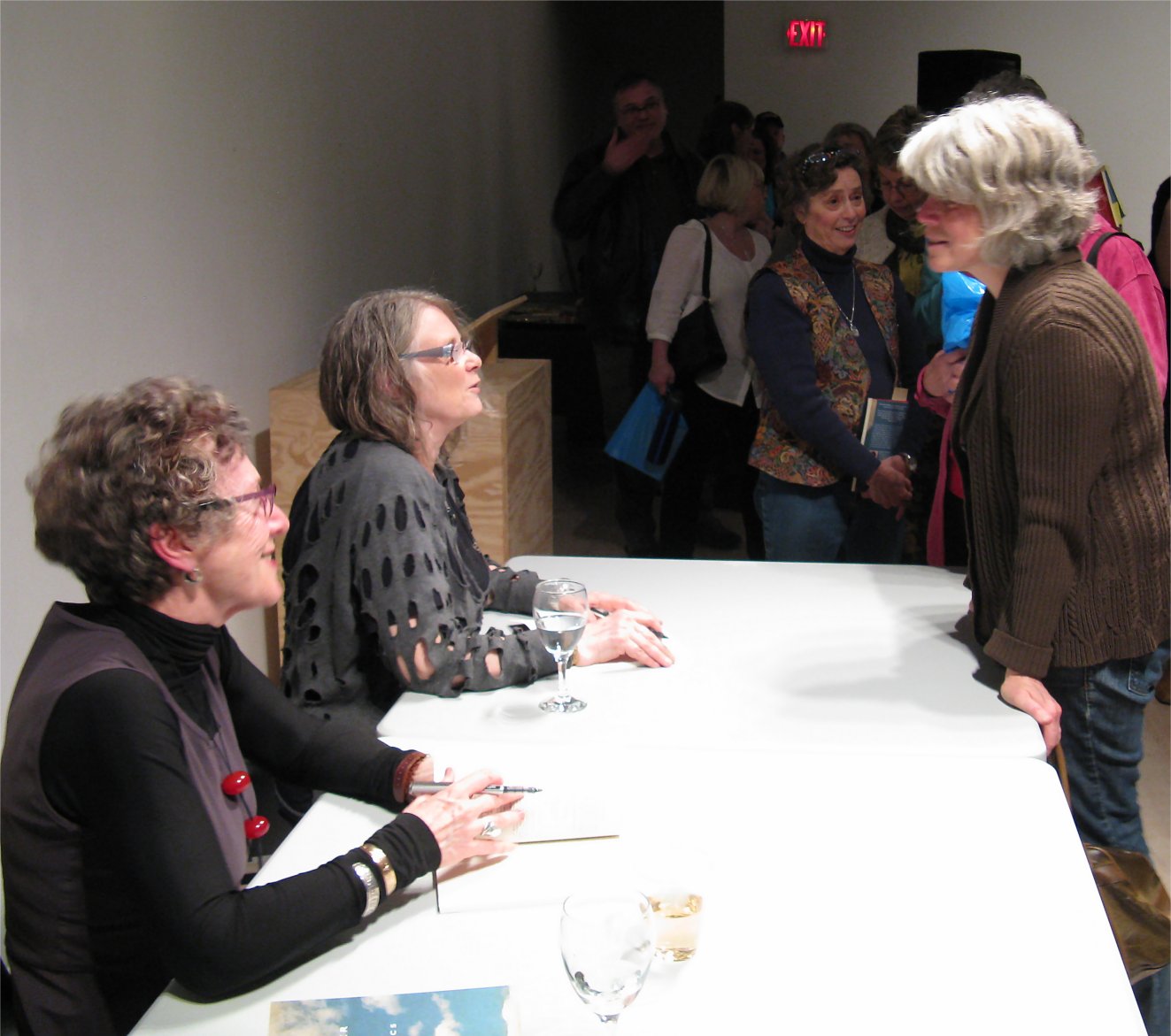
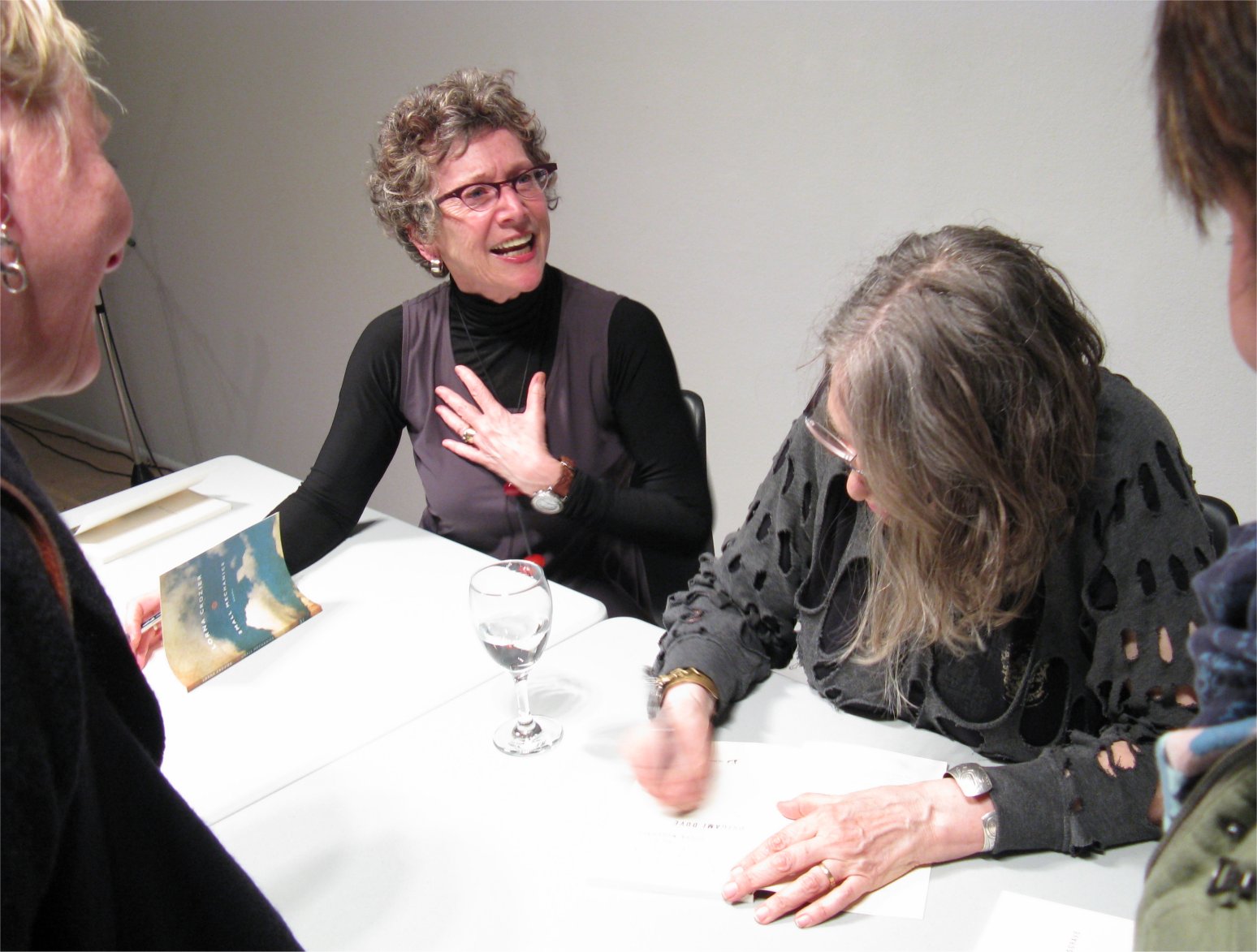
And on Friday, I was one of a multitude attending a book launch for new collections by two grande dames of Canadian poetry: Susan Musgrave (Origami Dove) and Lorna Crozier (Small Mechanics).


A stylish and hilarious evening, fuelled by quantities of sushi from the restaurant next door.
-
Communicating with our tax dollars
This Open letter to Canadian Journalists should really be read by readers of Canadian media as well, as it affects all of us, and our right to know what our government is doing in our name and with our tax money:
Civil servants – scientists, doctors, regulators, auditors and policy experts, those who draft public policy and can explain it best to the population — cannot speak to the media. Instead, reporters have to deal with an armada of press officers who know very little or nothing at all about a reporter’s topic and who answer tough questions with vague talking points vetted by layers of political staff and delivered by email only.
…
Politicians should not get to decide what information is released. This information belongs to Canadians, the taxpayers who paid for its production. Its release should be based on public interest, not political expediency.This breeds contempt and suspicion of government. How can people know the maternal-health initiative has been well thought out or that the monitoring of aboriginal bands has been done properly if all Canadians hear is: “Trust us”?
— Canadian Association of Journalists, April 2011
A question to ask your Conservative – and other visitants – during the current election campaign is:
- What will your party do to repair what Stephen Harper has done to the taxpayer’s ability to know how the government is spending our money?
(Perhaps you’ll get an answer from the Conservatives by email from the election’s public affairs staff…?)










Latest Posts
- Sublime
- Good weather for reading
- The world, the world
- Sublime launch!
- Planet Earth Poetry – Readings by Volunteers, Victoria 2026
- Poetry at the Goldfinch
Aldeburgh Poetry Festival Barny Haughton BBC BC poets Berkswell blackberries Black Stilt Bologna book launch Borough Market Carlo Petrini Catalonia Cyrus Todiwala dairy Daunt's Books Dijon Edinburgh Fanny Bay Feast of Fields Food and Morality food history food journalism Jenna Butler lardo Malahat Review Michael Pollan Okanagan olive oil tasting olive trees Omnivore's Dilemma Our Food Our Future Oxford Parmigiano-Reggiano Planet Earth Poetry poetry poetry readings Poetry videos prosciutto salumi Sean O'Brien Suffolk ticks Wendy Morton Wired Writing Yvonne Blomer
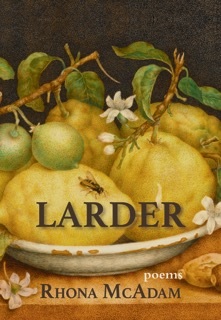
In her latest collection, Rhona McAdam navigates the dark places of human movement through the earth and the exquisite intricacies lingering in backyard gardens and farmlands populated by insects and pollinators, all the while returning to the body, to the tune of staccato beats and the newly discovered symmetries within the human heart.
“…A beautiful, filling collection, Larder is a set of poems to read at the change of the seasons, to appreciate alongside a good meal, and to remind yourself of the beauty in everything, even the things you may not appreciate before opening McAdam’s collection….”
Rhona McAdam is a writer, poet, editor, and Registered Holistic Nutritionist with a Master’s in Food Culture from Italy and a deep-rooted passion for ecology and urban agriculture. Her work spans corporate and technical writing to poetry and creative nonfiction, often exploring the vital links between what we eat and how we live. Based in Victoria, BC, and available via Zoom, Rhona is always open to new writing commissions, readings, or workshops on nutrition and the culinary arts.