-
Stuffed & stirred
 Raj Patel made a welcome visit to Victoria last week, supporting the Horticultural Centre of the Pacific’s efforts to raise funds to rebuild the greenhouse, gardener’s office and tool shed that were destroyed by fire last year. For such a high profile name and entertaining speaker there was a puzzling number of empty seats, but those who came were treated to a whirlwind tour through the complexities of feeding an imbalanced world.
Author of Stuffed and Starved and The Value of Nothing, Patel is fond of an hourglass metaphor (you can see this graphic explained on page 3 of Food Security in a Volatile World) to explain the world’s food economies. Consumers are the numerous bulge in the hourglass’s wide top, farmers & producers make up the wide bottom, and a few corporations act as gatekeepers, pinching the middle and squeezing profits from both ends. The aim, he says, is to try to keep those corporations out of the relationship between consumers and producers: in that way, food can be fairly exchanged and there is no need for hunger.
We do have enough food for the world, we just don’t distribute it well, because we’ve commodified it and a small minority is fixated on making large profits rather than nourishing populations. What we have is wasted and poorly distributed. India leads the world in diabetes – some cities have 20% rate. In his own family every man over 50 must watch his blood sugar.
He spoke about market economies and the disastrous effects they’ve had on food security by removing the obligation found in, for example, feudal economies, where the landlord ensured that food was distributed in times of hardship. In a market economy, there is no such concept. In India, he said, a nation of farmers, the market economy was forced upon a working feudal system by the British, who reaped vast financial rewards and left the country in economic ruin. Where famines had happened once in a hundred years in India, after the British occupation they occurred every four years.
Market economy damages food security by treating food as infinitely produceable and marketable, failing to recognize that it takes time to grow and produce: if there’s a food shortage, it can’t be solved until the crop comes in. Patel reminded us of the concept of grain reserves – a tradition of grain stores whose loss puts the world at tremendous risk. The Mayans, he said, had enough for 15 million people for 6 months; the US public corn store has enough for 9 hours. This is a public grain store: there are private ones, but this will not feed a hungry public in times of need.
Haiti was another example of a food economy crippled by the imposition of a market economy. It had been self-sufficient in rice, but following American intervention and then an American-backed coup, Haiti made a forced entry into market economy. Local rice farmers were swiftly driven out of business by subsidized American rice farmers. There was widespread deforestation and poverty. Farmers were driven into cities to work in sweatshops. Even before Haiti’s earthquake, the country was being hammered into worse poverty by the likes of economist Paul Collier who maintained that Haitians could pull themselves out of debt if the 8 hour sweat shops were made 24 hour (workers were being paid around $3 a day at this time and the American government cooperated with such profitable US clothing companies as Fruit of the Loom, Hanes, Dockers, Nautica and Levi’s in stalling a minimum wage increase to $5 a day, which we now know thanks to WikiLeaks).
Patel expended much of his venom on the World Bank, where he once worked. To illustrate its workings he suggested we watch the Terry Gillian film Time Bandits, in the scene where Robin Hood distributes goods to the poor, while a big thug behind him punches the peasant in the face. And that, he said, is the world Bank. It goes around setting up market economies and lending money that can’t be repaid. Lending more money to cover the debts.
He turned to agriculture, at the root of the food security issue. GMO crops are said to be more productive, he observed. In fact they are, but it has nothing to do with genetic manipulation: it is that seed companies are dedicating their conventional seed breeding efforts to develop the strains that they are pairing with the GMO. So it’s not technology, it’s old fashioned seed breeding that’s improving the yields; but it’s the genetic manipulation of those strains that makes the improved varieties unavailable to organic farmers and those who don’t want/can’t afford to invest in GMO.
He mentioned as well one of the great media blackouts of the past five years: the IAASTD report (Agriculture at a Crossroads) was buried after 4 years work by 400 scientists from 64 countries, working under the request of the United Nations to predict ways to feed the world’s population. The report to its cost said industrial agriculture has had its day and that small scale ecological farming methods are our only hope. Biotech might have a role to play, the report said, but the jury was out.
In brighter news, he spoke about food sovereignty initiatives in Malawi where they’re growing millet, sorghum, cow peas – traditional subsistence crops grown for local consumption. In what sounds like a permaculture move to me, they’re also growing leguminous trees which will also fix nitrogen in the soil while providing shade: 15% more shade means 15% more yield – these are the practicalities of climate change. Despite the success of these crops, children are going hungry, because harvest is woman’s work. Gender roles impair success, so to counter this they’re holding cooking parties, where men, women and children cook together: the women teach the men how to cook.
-
Flavour of September, with a pinch of October


How busy can one month be? Very very in September’s case. Here it is October and I’m still rushing. A quick review will show why I’ve been too crazed to post, though it’s been delightful and stimulating.
 Friday Sept. 21 was the long-anticipated (by me, certainly) panel discussion featuring visiting baker Andrew Whitley, community-supported fisherman Guy Johnston and urban farmer Angela Moran, with her chicken wrangler Trevor van Hemert. Whitley kicked off with a description of the organic baking career that led him to his current life as a baking instructor and organic activist. He is helping to launch a local community supported baking enterprise, and through the Real Bread Campaign which he co-founded, to raise awareness about different ways to promote bread in communities. Johnston described his two-year old community supported fishery, which helps him keep his boat in the water and his family in the sustainable fishing business. He urged us to join in the October 22 protest against the Northern Gateway Pipeline, which will endanger the livelihood of all those who fish in west coast waters. Moran and van Hemert have arranged with eight neighbours to share both chicken-shaped responsibilities and egg-shaped outcomes so that Moran’s urban farm is able to keep its flock of laying hens. They’ve come up with a model agreement they want to share with others to spread the joy of shared chicken ownership.
Saturday we put Andrew back in the kitchen to lead a breadmaking workshop for a lucky baker’s dozen who were spared the cost of airfare to Scotland to take the class at Bread Matters. In the beautifully equipped domestic science lab at Royal Oak Middle School, Andrew and the participants faced some challenges with the limitations of domestic ovens and unfamiliar flours while he shared some of his knowledge about bread, flour and the state of grain in the world today.


Sunday Sept. 23 marked the first offering of the Flavour Gourmet Picnic, held at Coastal Winery in Black Creek, just north of the Comox Valley. I’d been to Feast of Fields and the Island Chefs Collaborative festivals, and thought it would be interesting to experience a north Island event. Andrew & Veronica joined us to sample the many, many wares on offer at a gentle, sun-warmed and well-organized afternoon of sipping and tasting. One of those who’d attended Andrew’s talk to the VIU Professional Baking program in Nanaimo the week before was there with her Church Street Bakery breads, and he make an appearance in the rather lovely video made to commemorate the day (accepting one of the most delicious items on offer: a piece of chocolate pave from Kingfisher Lodge).


On Monday, after a relaxing morning gathering oysters for supper, we headed back to Victoria where I attended a meeting of the Victoria Horticultural Society‘s Veggie group – one of the members was explaining her planting calendar and use of cover crops, which is something I’d like to do better even in my tiny garden.
By Wednesday 26th Andrew & Veronica were packed and ready to leave, but not until we’d
 stopped in to see Cliff Leir’s operation at Fol Epi. He’d described his grain soaking and flour milling operations at the Kneading Conference, but seeing the tiny space in which the magic happens made it the more special. Good things, small packages etc. (and the pumpkin pie and sausage roll we sampled, among other treats, were formidably good).
Wednesday evening arrived promptly and after a small misspelling on the poster had been
 swiftly corrected (yes, I pine still for England where there is never a D in my name) the maiden voyage of Digging the City took place in a room in my local library filled with interesting and interested people, many from GTUF.
Thursday saw me back on the farmstand at Haliburton and then back on the road to Nanaimo where we were discussing vitamins and minerals in the CSNN introductory holistic nutrition course. Fascinating but mind-blowing.
Friday 28th I went to a permaculture potluck to hear Brandon Bauer, one of the instructors in the permaculture design course I took earlier this year, talk about his work replenishing the soil on his property on Salt Spring Island. He’s currently teaching a permaculture and site planning workshop and as ever had some pithy things to say about his own experiences in those areas. Saturday was a workshop on tenancy management (better late than never) that was fascinating and offered by one of the very knowledgeable souls at ROMS. That evening we went for supper at the Moon Under Water brewpub which I hadn’t had a chance to try out, and enjoyed my Fanny Bay Oyster Burger for auld lang syne.
Sunday was my weekly family dinner, plus some lying-in, sitting-down and catching-up, which meant I missed the Saanich Sustainable Food Festival and the 5th Annual Chef Survival Challenge and Feast at Madrona Farm… I’ll get to one of those one of these days… AND the Slow Food Terra Madre fundraiser Last Hurrah At Orange Hall.
Monday it was suddenly October, and I joined some other GTUFers to talk about food security at Gorge-ous Coffee, our newly opened local hangout. While we did not quite set the world to rights, we had an interesting chat about foraging in the neighbourhood, rooftop gardens, preserving skills, grafting tours and nut trees, among others.


After a quasi-restful Tuesday in which I attempted to catch up on a few more things, like a bit of light tomato canning, and a chat with my neighbour who’d attracted a frog to his garden, and a bit of acorn gathering, it was suddenly Wednesday and time for the debut screening of Symphony of the Soil, Deborah Koons Garcia’s (The Future of Food) second feature film and an excellent one it is. It explains very beautifully what soil is, how it produces food (not just for humans) and how it can be preserved and nourished. Recommended viewing for all living things. We too were nourished with birthday cake as the occasion marked Open Cinema’s tenth anniversary and afterwards there was a panel discussion with Robin Tunnicliffe, Heide Hermary and the filmmaker.


-
Kneading with a k
 I’d been looking forward to the second offering of the Kneading Conference West, held in the idyllic gardens and fruit orchard of the Mount Vernon Research Station, where grains are being grown, tested and much discussed. Over this past September weekend they were also being ground, mixed, cooked and tasted to delicious ends.
There was enough variety to keep the 200 or so various types of grain geeks amused, from tasting sessions – grains baked into crackers or breads, or liquified into beer – to talks on the science of baking (complete with easy-to-grasp 3D models) to demos on how pizza can turn into pita.


There were baking workshops too. Last year I’d missed most of George de Pasquale‘s session on sourdough/artisan bread for home bakers so made sure to attend it this year, though it was packed to the rafters. He walked us through equipment, explained ingredients, and guided those able to reach the counter on mixing, kneading, shaping and fermenting bread dough.


He demonstrated with a few swift cuts how to make Epi


And he critiqued a baked loaf, explaining some of the features to test for done-ness and the physical clues of underproofed and properly baked loaves. There were other demos too: one of the keynote speakers, food writer Naomi Duguid, demonstrated some of her favourite flatbreads (Finnish barley bread, Naan, Pugliese and Burmese breads) with help from Toronto baker Dawn Woodward. Oregon barley scientist Pat Hayes was there showing off his wares and giving out samples of his team’s Streaker (naked) Barley, so named for its hullessness.


Then there were the mud people, led by Kiko Denzer, who slapped together a wood-fired oven in less than a day. One minute he was demonstrating an oversized hand blender in a bucket of mud and water, the next he was tamping down the base, and a few hours later it was done and decorated. Miraculous.


Andrew Whitley – who’d enlivened a panel on Thursday, discussing grain quality with Tom Dunston (an Oregon miller with Camas Country Mill) and Cliff Leir (of Victoria’s own Fol Epi Bakery) among others was the keynote speaker on Friday morning, introduced by last year’s barley baker, Andrew Ross from Oregon State University, and he gave us a rousing talk about his own history as a baker and small-scale grain grower, having started off in a spirit of self-sufficiency growing wheat for his own bread. He started and ran the Village Bakery in Cumbria for more than 30 years, during which time he produced rye bread that I had, to my delight, discovered at my local Waitrose in London when I lived there back in the nineties.


After reviewing his past life as a rural wholegrain baker using only local wheat in 1970s England, with a business plan someone had once summarized for him as “going to a place where there were no people, making a product for which there was no demand, from a material that was impossible to work with for its purpose,” Whitley’s talk ranged over issues facing all today’s eaters. There are the centralized production and monocropping issues that reduce choice for all of us and mean that in wheat breeding we’ve allowed production requirements to trump nutrition and taste (the only grains measured for such are for feedstock); the nutritional issues – the decline in nutritional value through breeding and milling “advances” (we have lost important mineral content through the change from stone ground to roller milled wheat, for example). And there’s the accelerated production time demanded by industrial operations, that rob our bread of the lactic acids and enzymes that work on naturally leavened bread to make it more digestible (not to mention tasty). He talked a bit about the Community Supported Bakery he’s supporting, the work of the Real Bread Campaign, and offered some ideas for bringing good bread to people who might not feel comfortable crossing the threshold of an artisan bakery. Bring our bread back home, he said, and gain liberation from larger corporations who don’t have our interests at heart.
And few would argue with that, enjoying excellent baked goods all weekend. We were certainly well fed and entertained through a superbly sunny and pleasant weekend. And really, how many times will someone offer you a slice of pie, freshly made with duck fat pastry and filled with caramelized apples? Not many, I’d say. I’ll be back…


Latest Posts
- Sublime
- Good weather for reading
- The world, the world
- Sublime launch!
- Planet Earth Poetry – Readings by Volunteers, Victoria 2026
- Poetry at the Goldfinch
Aldeburgh Poetry Festival Barny Haughton BBC BC poets Berkswell blackberries Black Stilt Bologna book launch Borough Market Bra Caerphilly Carlo Petrini Catalonia Cyrus Todiwala dairy Daunt's Books Dijon Fanny Bay ferries Food and Morality food history food journalism lardo Michael Pollan Monsanto Okanagan olive oil tasting Omnivore's Dilemma Our Food Our Future Oxford Parmigiano-Reggiano Planet Earth Poetry poetry poetry readings Poetry videos prosciutto salumi sausage making Sean O'Brien Suffolk ticks Wendell Berry Wendy Morton Yvonne Blomer
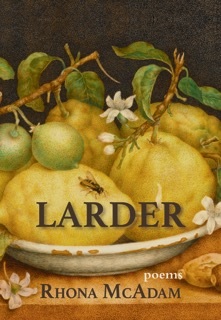
In her latest collection, Rhona McAdam navigates the dark places of human movement through the earth and the exquisite intricacies lingering in backyard gardens and farmlands populated by insects and pollinators, all the while returning to the body, to the tune of staccato beats and the newly discovered symmetries within the human heart.
“…A beautiful, filling collection, Larder is a set of poems to read at the change of the seasons, to appreciate alongside a good meal, and to remind yourself of the beauty in everything, even the things you may not appreciate before opening McAdam’s collection….”
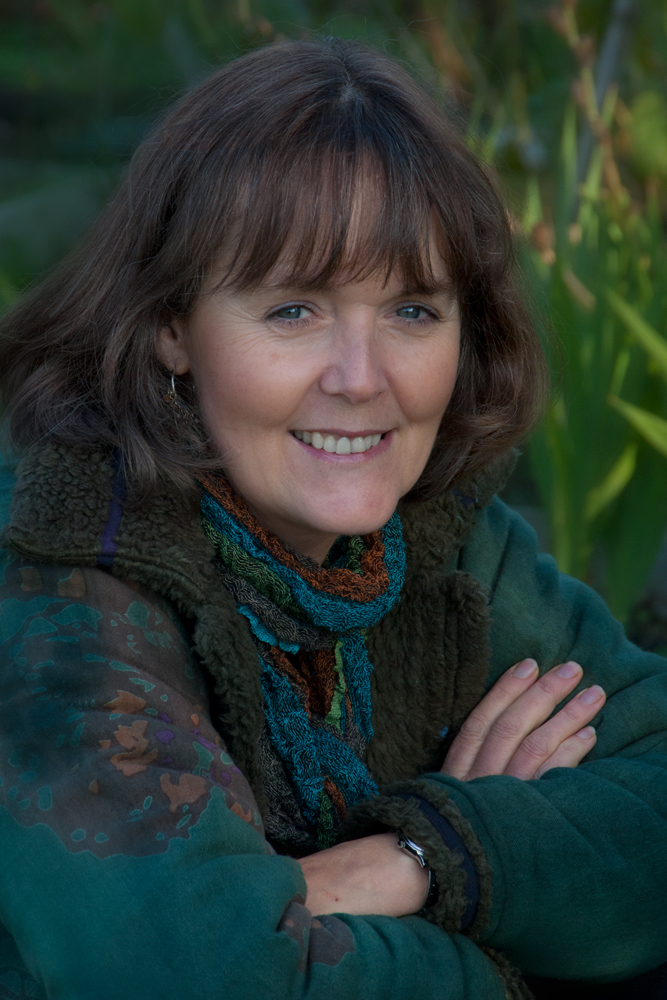
Rhona McAdam is a writer, poet, editor, and Registered Holistic Nutritionist with a Master’s in Food Culture from Italy and a deep-rooted passion for ecology and urban agriculture. Her work spans corporate and technical writing to poetry and creative nonfiction, often exploring the vital links between what we eat and how we live. Based in Victoria, BC, and available via Zoom, Rhona is always open to new writing commissions, readings, or workshops on nutrition and the culinary arts.