-
Home, invasion of garlic mustard, and Food Farms & Community conference
Stefan forwarded news of a new film released on YouTube which is worth a look. Home describes itself as
an ode to the planet’s beauty and its delicate harmony. Through the landscapes of 54 countries captured from above, Yann Arthus-Bertrand takes us on an unique journey all around the planet, to contemplate it and to understand it.
Meanwhile in my home landscape, it’s weed time. The latest scourge to reach us is garlic mustard (Alliaria petiolata), which as its name suggests, is a garlic-like member of the mustard family, and according to one source is
A winter herb used in salads and as a garlic or onion substitute for recipes. It is high in Vitamins A and C. Contains antiseptic properties and was used to clean wounds and abrasions.
But in one of those life lessons where you learn that food that’s good for you might not be good for everything, garlic mustard is otherwise a scourge and highly invasive, as well as toxic to other plants.
The ASLE session on invasive species that I attended raised some interesting discussion about the fine line between wanted and unwanted species, and how often it seems that the “invasive” label gets applied when human economics are jeopardized. And how often humans have created the problem through some idea that they can control nature by introducing one life form to take out another.
How I wish I could drop everything and jet off to Vermont next week, to take in the Food, Farms, and Community: Rural America’s Local Food Renaissance conference at Sterling College’s Rural Heritage Institute.
-
ASLE in a nutshell
Some of the ASLE conference sessions I attended this week included one about edible campus projects at Lafayette College (Corn on the Quad); the University of Central Arkansas – Allison Wallace‘s work with the Dee Brown Memorial Garden; and the College of DuPage‘s community garden.
In a session about sustainable agriculture, the topics included Ruth Ozeki‘s novel All Over Creation, about potato farming and commodity monoculture; Theatre Passe Mureille‘s legendary play The Farm Show; and Doris Lessing‘s The Grass is Singing.
Then there was a session called Earth’s Body: An Ecopoetry Anthology, which featured some great readings by Anne Fisher-Wirth, Laura Gray-Strelt, Patrick Lawler, Harriet Tarlo and (to me) most excellently the Amazonian fable-poems of Juan Carlos Galeana.
Then there was a many-fingered session on the poetics and politics of water, with papers by Doug Thorpe and Mark Feldman, and an amazing presentation by artist Basia Irland, talking about her unusual book projects (also documented in The Water Library).
After that I went to an enlightening roundtable on the value of darkness. Paul Bogard, who’d edited an anthology (Let There Be Night) on the subject, introduced the many issues of darkness, and hosted readings by contributors Gretchen Legler, Christina Robertson, Thomas Becknell and John Tallmadge. Proceeds from the book’s sales are going to FLAP and Dark Sky.
Yesterday’s events included Narratives of Invasive Species, featuring Victoria Haynes from UVic, talking about the positioning of official communication about the mountain pine beetle (and the absence of blame on humans for the subsequent loss of pine forests); Kelsi Nagy spoke about the ethics of introduction and eradication attempts of island invasive species such as the brown tree snake in Guam and coqui frogs & wild boars in Hawaii; and Elizabeth Giddens talked about the loss of Georgia’s hemlocks to hemlock woolly adelgid, and the effect of community literacy projects on monitoring and treating the infestation.
In the final session I attended, Anne Shifrer talked about poems by PK Page and Elizabeth Bishop; Dean Mendell spoke on WS Merwin; Tom Lynch on Loren Eiseley; and Ehor Boyanowsky told fishing tales about Ted Hughes.
There were several plenary sessions with interesting speakers; I made it to four of these, of which the best was Karsten Heuer, who got a standing ovation after his great talk about his journeys – following bear paths, joining migrating caribou and hiking, paddling and sailing the trail of Farley Mowat’s books.
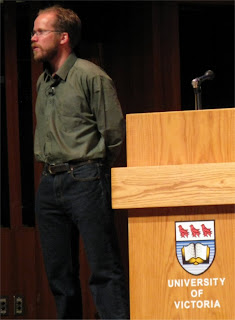
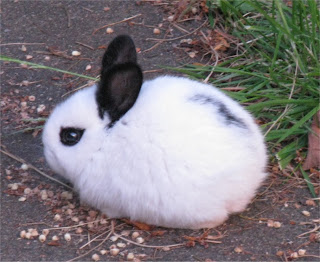
At a Saturday afternoon plenary called New Publishing Environments: The Changing Landscape of Reading, Andrew Revkin gave a talk about his career as an environmental blogger, on Dot Earth (since his visit, he’s done a special blog on UVic’s bunnies). Chip Blake talked about Orion‘s place in the digital evolution – mentioned that they add sound files for all the poems they publish (after all the electronic rights talk at the Writers Union meeting last month I wondered what the payment deal is for that). And we heard from Daniel Slager, of Milkweed Editions, who described himself as being both intrigued and perplexed by the possibilities of web publishing; mused about the future of literary publishing, of literary works whose nature is to go beyond the simple conveyance of information that the web does well.
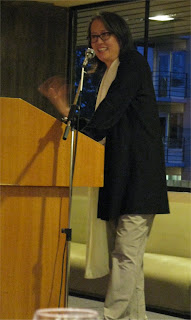
The closing address was by Ruth Ozeki who led us through a curious relaxation exercise, which made up in some respects for the yoga class I missed on Friday.
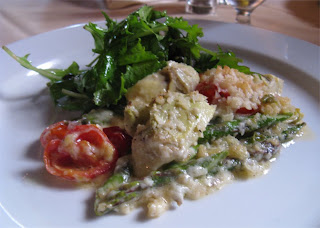
I helped a couple of attendees find some good local food at Camille‘s and tucked into an artichoke and asparagus gratin myself.
Where are the UVic spelling police?
-
My ASLE environmental booklist
Some of the books (and poets and websites) that have been mentioned in the sessions I’ve attended, or which I’ve acquired, or which I recommended to people….
Film/YouTube clips/Slides
A Farm for the Future (on YouTube, in 5 parts)
Being Caribou
Design for Disaster (SlideShare)
Flight Patterns (YouTube)
Upstream BattleJournals/Magazines/Publishers
Milkweed
OrionPoetry: Books
Kupinse, William – Fallow
Lang Day, Lucille – The Curvature of Blue
Munden, Paul, editor – Feeling the Pressure: Poetry & Science of Climate Change (anthology)
Oswald, Alice – Dart (book-length poem on the river Dart, in Devon)
Voros, Gyorgyi – Unwavering
Washington, Peter, editor – Eat, Drink, and Be Merry: Poems About Food and Drink (anthology)Poetry: Individual Poems
Bishop, Elizabeth – The Map
Doty, Mark – Description
Frost, Robert – Aquainted with the Night
Hughes, Ted – September Salmon
Hughes, Ted – Wolfwatching
Jeffers, Robinson – Night
Merwin, WS – Looking for Mushrooms at Sunrise
Neruda, Pablo – Ode to the fertility of the earth
Page, PK – Planet Earth
Scott, Duncan Campbell – Night Hymns on Lake NipigonPoetry: Poets
Loren Eiseley – poet and naturalist
Maggie O’Sullivan – recommended by Harriet Tarlo for her unusual engagement in the non-human world.Prose: Books
Armstrong, Luanne – Blue Valley: An Ecological Memoir
Benstein, Jeremy – Way Into Judaism and the Environment
Berry, Thomas – The Dream of the Earth
Berry, Thomas & Swimme, Brian – The Universe Story: From the Primordial Flaring Forth to the Ecozoic Era–A Celebration of the Unfolding of the Cosmos
Berry, Wendell – The Unsettling of America: Culture & Agriculture
Bogard, Paul, editor – Let There Be Night: Testimony on Behalf of the Dark
Coe, Sue – Dead Meat
Deakin, Roger – Waterlog
Franklin, Adrian – Animal Nation: The True Story of Animals and Australia
Galeano, Juan Carlos – Amazonie / Amazonia
Howard, Russell D., Forest, James J.F. & Moore, Joanne – Homeland Security and Terrorism: Readings and Interpretations
Hughes, Ted – Poetry in the Making
Irland, Basia – Water Library
Knechtel, John, editor – Food
Kohak, Erazim – The Embers and the Stars: A Philosophical Inquiry Into the Moral Sense of Nature
Laporte, Dominique – History of Shit
Lessing, Doris – The Grass is Singing
Menzel, Peter – Hungry Planet
Nabhan, Gary Paul – Coming Home to Eat: The Pleasures and Politics of Local Foods
Pears, Pauline & Kruger, Anna – Rodale’s Illustrated Encyclopedia of Organic Gardening
Pollan, Michael – Second Nature: A Gardener’s Education
Raymo, Chet – The Soul of the Night: An Astronomical Pilgrimage
Smiley, Jane – A Thousand Acres
Vileisis, Ann – Kitchen Literacy: How we lost knowledge of where food comes from and why we need to get it back
White, Richard – The Organic Machine: The Making of the Columbia RiverProse: Individual Essays/Articles
Barcott, Bruce – Kill the Cat that Kills the Bird
Berry, Wendell – The Pleasures of Eating
Diamond, Jared – The Worst Mistake in the History of the Human Race
Steinbeck, John – The Harvest Gypsies
Thoreau, Henry David – The Bean-FieldWebsites
International Dark-Sky Association: non-profit member organization that teaches others how to preserve the night sky through factsheets, law references, pictures, and web resources.
Fatal Light Awareness Program (FLAP): Information on how light pollution affects birds, and what steps must be taken to save the lives of birds by reducing lighting
The Organic Center – Peer-reviewed scientific studies on the benefits of organic farming.


Latest Posts
- Sublime
- Good weather for reading
- The world, the world
- Sublime launch!
- Planet Earth Poetry – Readings by Volunteers, Victoria 2026
- Poetry at the Goldfinch
Aldeburgh Poetry Festival Barny Haughton BBC BC poets Berkswell blackberries Black Stilt Bologna book launch Borough Market Carlo Petrini Catalonia Cyrus Todiwala dairy Daunt's Books Dijon Edinburgh Fanny Bay Feast of Fields Food and Morality food history food journalism Jenna Butler lardo Malahat Review Michael Pollan Okanagan olive oil tasting olive trees Omnivore's Dilemma Our Food Our Future Oxford Parmigiano-Reggiano Planet Earth Poetry poetry poetry readings Poetry videos prosciutto salumi Sean O'Brien Suffolk ticks Wendy Morton Wired Writing Yvonne Blomer
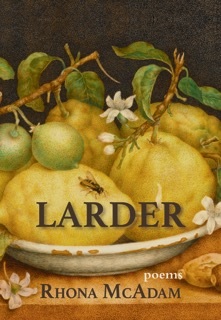
In her latest collection, Rhona McAdam navigates the dark places of human movement through the earth and the exquisite intricacies lingering in backyard gardens and farmlands populated by insects and pollinators, all the while returning to the body, to the tune of staccato beats and the newly discovered symmetries within the human heart.
“…A beautiful, filling collection, Larder is a set of poems to read at the change of the seasons, to appreciate alongside a good meal, and to remind yourself of the beauty in everything, even the things you may not appreciate before opening McAdam’s collection….”
Rhona McAdam is a writer, poet, editor, and Registered Holistic Nutritionist with a Master’s in Food Culture from Italy and a deep-rooted passion for ecology and urban agriculture. Her work spans corporate and technical writing to poetry and creative nonfiction, often exploring the vital links between what we eat and how we live. Based in Victoria, BC, and available via Zoom, Rhona is always open to new writing commissions, readings, or workshops on nutrition and the culinary arts.