-
Market Envy
Read Full Post: Market EnvyWe have a lot of excellent markets and farm shops in Victoria, but reading a pair of articles in the Guardian about food markets made me pine and yearn all over again. Borough Market is one I try to visit every time I’m in London, and it seems to get better every time; the variety and quality are staggering, and the ambience incomparable. In the companion article about new vs traditional food markets the excellent point was made that marketeers offer human contact in an age where we’re removed not only from the source of our food itself but also from the people who raise, process and package it. And that small scale trading in food is not a bad way to make a living, for both sides of the barrow. Supermarkets are cheap, fast and impersonal, like so much of our world today; I’d rather give my money straight to the farmer if I can.
It’s not unlike buying discounted books: if you buy a cut-price read from Walmart or Costco or an online discounter, you are also cutting the royalties of the writer, which are slender enough. So too the farmer loses on the profit margin for retailing through supermarkets. So I don’t begrudge paying a supermarket price to a farmer any more than I do paying the retail book price to an author (who’s had to purchase the book from the publisher).
Something struck me in a recent interview with 87-year old Lawrence Ferlinghetti:
“My poetics are totally different to something like the Ginsberg school, which is based on the idea of ‘first thought, best thought’. It is a solid concept to get the most direct transcription of your consciousness, especially if the person doing it has an original mind. Allen Ginsberg had a fascinating and genius mind and so the poetry is fascinating and genius. But when this method is laid on to thousands of students, many of whom don’t have original minds, you get acres of boring poetry.”
-
Juggling jam jars and polishing poems
Read Full Post: Juggling jam jars and polishing poemsExhausting times in the kitchens of chaos. Blackberry season is upon us, the apples are waxing and the corn has hit the shelves, or rather the bins of Silver Rill. The jam jars are filling, batch by batch. This week I’ve made two kinds: plum and blackberry, and salal, raspberry and blackberry. I’ve stewed blackberries and apples and picked some oregon grapes and juiced them ready for the next batch. I have accepted the cruel truth that there is not one plum to be had from my trees and am biding my time till the apples are fully ripe, dusting off the juicer in anticipation. I thawed some frozen apple, blackberry and carrot juice I made last summer and agreed with myself that baby carrots are the bee’s knees in a combo like that.
Between cauldrons of jam I looked up some information about writing competitions that’s come my way. Alors, you can sense the coming of autumn when you hear that the CBC Literary Awards competition is open already. The deadline this year is November 1st, 2006. Poets are advised to note that the word limits for poetry have been changed to between 1000 and 2000 words. A first prize of $6000 and a second prize of $4000 are awarded in each category, poetry, short story, and creative nonfiction. Winning texts are also published in enRoute magazine and broadcast on CBC Radio.
Well in advance of deadline, I visited the site of Poet’s Letter to read about the Beowulf Poetry Competition, whose first prize is a staggering £10,000.00, and which gives you until July 31, 2007 to get your entries in. The theme for the 2006/07 Prize is Poetry of Cities (anything and everything about cities: living, growing up, working, falling in love, buildings, architecture, engineering, arts, culture, food, suffering, agonies and joys).
The July issue of Poet’s Letter magazine features our very own Victorian, Yvonne Blomer, who had wandered off to England for year to earn her University of East Anglia MA.
-
The 100th post
Read Full Post: The 100th postGoodness, I have blogged 100 times since February.
Years ago, when I was still naively eyeing the glossy chrome and enamel glitz of Kitchen Aid mixers, pining after industrial-looking Kenwood kitchen machines, and had bought a wimpy but ever-so compact Braun all-in-one mixer/food processor/blender to fit in my tiny English cupboard, my mother had the wisdom to snap up a couple of Bosch kitchen machines for herself and my sister-in-law. These are serious mixers, but more importantly they sell on the principle that you keep them for life and add bits and pieces as you need them. Mine has a blender and slicer/shredder in addition to the mixer with its whisk and dough hooks and has been churning along happily for over 20 years, its white finish yellowing but its motor unfazed by anything I throw at it. The local supplier is helpful and creative, and her very useful website now offers online cooking courses by the batch, using simple narrated slideshows. There’s a free one on making bread in 1 hour 15 minutes, and if that doesn’t make you rush out and buy a Bosch right now I don’t know what will.
There’s a good discussion about poetry on CBC’s Canada Reads pages. During this year’s Canada Reads series, the question was asked, What makes something a poem and not paragraph? and the query was finally answered by several poets. I thought Susan Musgrave’s response was particularly good: “It troubles me that others worry about this distinction (between what is poetry and what is prose): either the poem affects you, or it does not.”
Another literary competition with a charity reaping the rewards has a looming deadline. The Canadian Aid charity offers commercial publication of a previously unpublished book-length manuscript. Deadline is August 31.


Latest Posts
- (no title)
- Sublime and Twisted Readings coming up!
- Sublime
- Good weather for reading
- The world, the world
- Sublime launch!
Aldeburgh Poetry Festival Barny Haughton BBC BC poets Berkswell blackberries Black Stilt Bologna book launch Borough Market Carlo Petrini Catalonia Cyrus Todiwala dairy Daunt's Books Dijon Edinburgh Fanny Bay Feast of Fields Food and Morality food history food journalism Jenna Butler lardo Malahat Review Michael Pollan Okanagan olive oil tasting olive trees Omnivore's Dilemma Our Food Our Future Oxford Parmigiano-Reggiano Planet Earth Poetry poetry poetry readings Poetry videos prosciutto salumi Sean O'Brien Suffolk ticks Wendy Morton Wired Writing Yvonne Blomer
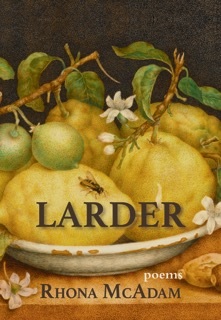
In her latest collection, Rhona McAdam navigates the dark places of human movement through the earth and the exquisite intricacies lingering in backyard gardens and farmlands populated by insects and pollinators, all the while returning to the body, to the tune of staccato beats and the newly discovered symmetries within the human heart.
“…A beautiful, filling collection, Larder is a set of poems to read at the change of the seasons, to appreciate alongside a good meal, and to remind yourself of the beauty in everything, even the things you may not appreciate before opening McAdam’s collection….”
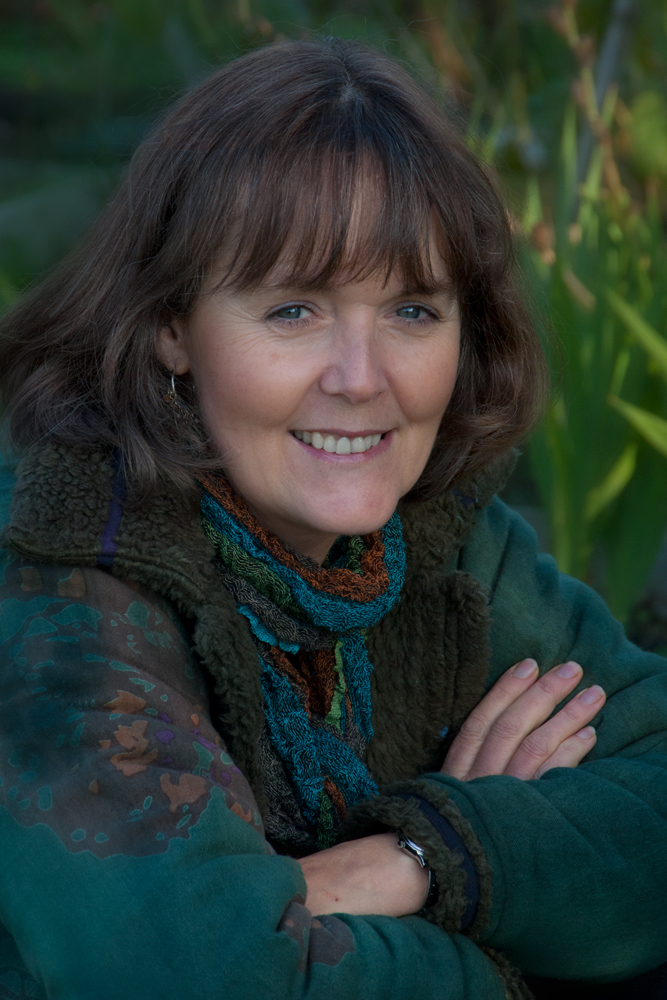
Rhona McAdam is a writer, poet, editor, and Registered Holistic Nutritionist with a Master’s in Food Culture from Italy and a deep-rooted passion for ecology and urban agriculture. Her work spans corporate and technical writing to poetry and creative nonfiction, often exploring the vital links between what we eat and how we live. Based in Victoria, BC, and available via Zoom, Rhona is always open to new writing commissions, readings, or workshops on nutrition and the culinary arts.