-
Terra Nossa Farm tour
 Last Sunday I got down and dirty with the Victoria Horticultural Society’s Fruit & Vegetable Group, whose monthly meeting was a tour of Terra Nossa Farm. I’d often bought eggs or sausages or chicken from Evelyn, who commands a loyal queue each Saturday at Moss Street Market, so I was delighted to have a chance to see the farm she runs with her husband Jesse.
Labour of love about sums it up here. Jesse says of their pigs that they live their lives in
 heaven, and then they die. They’re fed organic grain, fresh greens and roast sweet potatoes grown on the farm. Ten of their Berkshires, purchased as piglets from Tom Henry (there are very few organic pig breeders, Evelyn remarked), were nearing their slaughter date, and were out frolicking in a field of greens. They came to greet us, flapping their enormous eyelashes and making us question who was looking at whom. I’ve been on pig farms before, and never have I been to one where there was not a whiff of stink: they have plenty of room to run and play, and shelters provided for both summer and winter comfort.
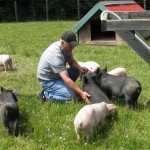
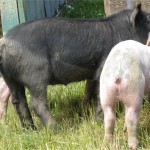
There were some piglets in another field: two varieties, black mule pigs (sourced from Lasqueti Island) and some Tamworth cross pigs bought from a commercial operation in Alberta. The white pigs were very skittish at first and prone to scattering when Jesse approached, but with patience he has been able to get them to become a bit more pig-like, curious and friendly. The white ones’ tails had been docked by the breeder, a common practice where they are kept in such overcrowded conditions they are likely to gnaw on their neighbours out of stress or for lack of anything better to do. Evelyn said they hadn’t checked their teeth but these were likely clipped as well, for similar reasons.
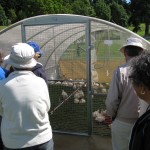 The chickens are treated kindly at Terra Nossa as well, although in the case of the meat birds, this happy life is a short one. They are purchased as chicks from a commercial breeder, so they have, as Evelyn put it, had most of the chickenness bred out of them. They’re sent to slaughter at around 8-9 weeks (commercial operations only keep them half that time); they can’t be allowed to get any bigger because the way they’ve been bred means their bodies become too large for their legs to support them and they start developing painful injuries. Jesse was out scything some fresh vetch for the
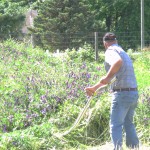 m, which they love, and they seemed to be enjoying the commodious chicken tractor, a top-of-the-line pen that keeps them shaded from the sun and lets them enjoy the view, the breeze, and the tasty snacks being delivered at regular intervals. And the tractor is an easy structure to move, which is the most important feature.
The Perrieras are choosy about where they sell their chickens. They’ve become disillusioned with restaurant sales, having experienced situations where chickens were sold to restaurants who put their farm’s name on the menu and then ceased buying from them. So now they limit their sales to the farm gate, the farmers markets they attend (Moss Street in the summer and the Downtown market in the winter), Ingredients Health Food and local food promoters Share Organics.
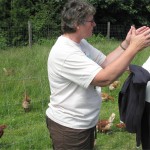 The laying hens have a nice big area to run in, and produce enough eggs to supply Moss Street Market, Origin Bakery, Terra Nossa’s farm shop and Share Organics. I noticed that they still peck one another’s tails – I suppose they are just too numerous, and a few are lost from time to time to the bald eagles we saw circling during our visit. The farm has a license allowing them to keep 399 laying hens (the limit on small producers without such a license is 99 birds) but Evelyn says they won’t be renewing that. New rules are coming in that would mean the small producers with 399 layers would be forced to adopt the same biosecurity measures as industrial producers (meaning no more farm tours, for one thing); would not be allowed to let their chickens run outside on pasture as they do now; would not be allowed to raise meat birds as well as layers; would have to invest in impossibly high-cost equipment and potentially upgrade facilities for inspection. We would not have been allowed access to the farm without suiting up, for example. So the regulatory club is still swinging directly and heavily at small producers and forcing them out of the very markets where they are needed and appreciated.
Evelyn & Jesse are acutely aware of their dependence on imported livestock feed, since
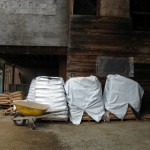 there is no organic feed producer on Vancouver Island, they must have it shipped from the mainland by ferry. Like any Islander who thinks about food security, they are conscious of the fragility of their supply, so they try to keep a reasonable reserve in store. Because organic feed is more expensive than conventional, this means quite a substantial capital outlay, at about $1000 a pallet.
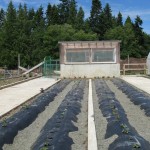 Towards the end of the tour we had a look at the sweet potatoes bravely growing under black plastic mulch. They were planted out in March, but the weather has been so chilly that they are not thriving, although with luck the summer heat should kick in and move them along. At the end of the rows is the winter pig barn, where the porkers can loll about enjoying the roasted sweet potatoes the Perrieras prepare for them (many of the larger sweet potatoes are considered unsaleable, so they go to the lucky pigs).
 -
Wild & raw
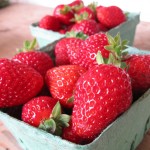 It’s been a slightly wild week, and the weather’s been bordering on raw at times, but I think we’re safely and belatedly into our summer now, if a mild one. The strawberries think so, anyway. Farmer Ray’s berries have been flying off the farm stand at Haliburton Farm this month, and even my own meagre crop of neglected strawbs which I strategically placed next to the bus stop have been yielding enough for a passing taste. I am rather touched that local travellers are too polite to steal a morsel from my garden. If it were at child level I suppose it would be a different story.
I was tempted back to the VIVA Raw Food Potluck on Sunday by the guest speaker: Roger Fouc
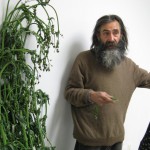 her, a local expert in wild foods. I’d seen him around – at the Duncan Seedy Saturday for instance, and knew he had given a workshop at Spring Ridge Commons that I wasn’t able to attend, so it seemed an opportunity not to be missed.
Besides, coming up with a raw
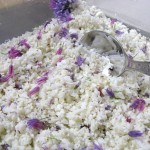 vegan dish is always an invigorating challenge. After meditating on my garden and what was on offer there, I settled on garlic scape pesto. The garlic was intense so I cut it a bit with tomato and cucumber, and served it with raw cauliflower “risotto” that I seasoned with sea salt and olive oil and prettied up with chive blossom, and “parmesan” “cheese” made out of walnuts, garlic and sea salt. And it went down a treat. We’d been asked to go easy on the salt, so I put a minimal amount in the pesto and “risotto” – I think people seized on the “cheese” as a way of brightening up some of the blander offerings. The “risotto” would make a good rice substitute (just as many recipes suggested cooking and mashing cauliflower as a potato substitute). I may have said before that one of my chief complaints against raw food is its lack of vocabulary and its devotion to the parent cuisine to which it pays tribute through endless approximation.. and endless quotation marks.
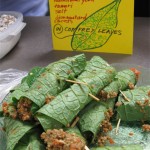
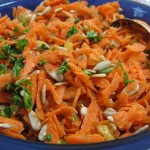
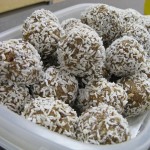
Other items of note included comfrey rolls, filled with sweet potato and fresh herbs and seasonings. The texture of raw comfrey leaf is not, to my palate, very pleasant, with a definite prickle. But comfrey is a much-treasured plant of many purposes. There were a lot of salads, and lots of colour. This carrot salad was pretty, especially beside a beet and carrot salad. There was also a spinach and strawberry salad and a lot of cut fruit, which made me happy. And there were some energy balls (sunflower seeds, pumpkin, sesame, rolled oats, ginger, raisin etc) which were softer and, I think, less interesting than the variations I’ve had that are based on nut butters.
The meal over, we had an hour of talk and another hour of Q&A with Foucher, and didn’t come close to exhausting his knowledge or enthusiasm for eating raw and wild foods. He follows ayurvedic principles when eating them, and suggests that it is in our own interests to explore more fully alternative food sources such as “weeds” and learn what nutritional sources are available outside conventional food systems (which are of course subject to changes and disruptions beyond our control).
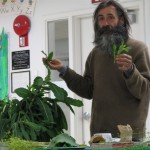
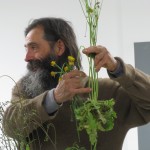
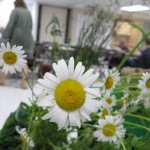
He had brought many samples of the sorts of plants he eats regularly, and commented about the importance of understanding their life cycles: they are all best eaten in season, and most plants should not be harvested for teas after they have flowered and are beginning to form seeds, as the leaves become bitter and the plant’s energy is directed to producing seed. He was expansive on the subject of wild lettuce (Lactuca virosa), which he said has been given to opium addicts as a nonaddictive detox therapy and which exudes a kind of latex that is a helpful cure for toothache. Oxeye daisy (Leucanthemum vulgare) he said would make an excellent tea together with yarrow; and he praised catsear (Hypochaeris radicata) for its flower’s similarity to chocolate (I tasted some the following day and frankly could not sense that resemblance).
He has been eating wild plants for some years and is more sensitive to their flavours and effects than most novices would be. He remarked that his sensitivity to bitterness has changed over time, and what seemed to him very bitter at first is now a pleasant and complex flavour. “Our palates are habituated to sweet things” he observed. “Bitter tastes take time and practice.” Which was something I noticed in Italy, where there are far more bitter vegetables (radicchio, endive, chicory etc.); one of our tasting instructors told us that not everyone has sensitivity to bitterness, but I’m inclined to agree with Foucher that it is a matter of exposure. Here in the land of sugar, we avoid it and so never grow to appreciate it as a distinct flavour.
He recommended a few texts: there are many such books about but these are his favo
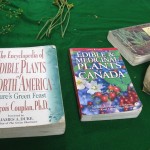 urites. The Encyclopedia of Edible Plants of North America is his favourite, but it contains no colour photos of the 4000 plants described, though there are some line drawings. Edible and Medicinal Plants of Canada is illustrated with photos and describes some 800 different plants. And Plants of Coastal British Columbia is, I’m sure, already in the libraries of most local gardeners (or should be).
 -
Another Fabulous Food Fest
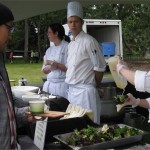
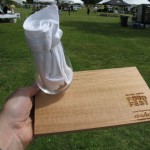 Sunday dawned gloomy and grey and I feared we were in for yet another chilly drizzly day, but things had warmed and brightened considerably by noon when the ICC Food Fest opened its gates to a sold out mob of gastronomes. We were each equipped with glasses, boards and napkins and set loose in the grassy grounds of Fort Rodd Hill for an afternoon’s fine browsing.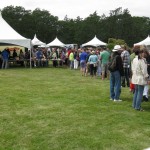
Wine+beer tent queue There was a lot on offer, but not so much that a hungry diner couldn’t manage to sample it all at least once. Hungry and thirsty diners were pretty much out of luck, though, since the fine minds of the BC Liquor Control Board had deemed it necessary to sequester the alcohol into an undersized tent entirely separate from the food it was meant to accompany. This is the same sharp thinking that prevents the apparently uncontrollable drinkers of British Columbia from enjoying a glass of wine with their meal on the ferries, a task that Europeans have been managing for decades without mass drunkenness. And just last month I witnessed numerous brave Americans taking beer or wine with their otherwise unspeakable meals on one of the Washington State Ferries, and we all drove off that ship without any trouble.
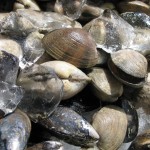
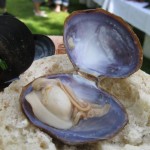
Aside from that, it was a relaxed and convivial affair. Taste with thine eyes. The varnish clam was a surprise – I’ve seen the shells on the beach but hadn’t been served one before. They’re an invasive species, one of the newer ones (though the other popular variety, Manila Clams, are also invasive) and quite tasty, though I still fondly remember the butter clams of my youth.
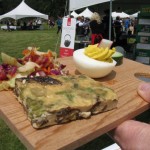
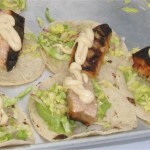
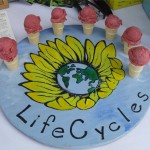
The veggie platter included an asparagus and morel frittata, which was delicious; so were the salmon tacos which tasted that much better after a lengthy queue while the fish was gentled on the bbq. And the LifeCycles plum gelato with its whisper of balsamic vinegar was excellent: it was made from urban fruit from the Fruit Tree Project.
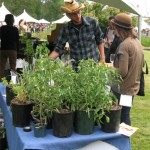
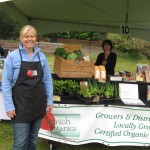
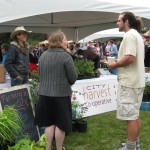
Farmers were there too: for the chefs revere the growers of their food. Farmer Mike Nyberg manned the Haliburton Farm stand; Heather Stretch and Rachel Fisher were on hand next door at Saanich Organics, where their very handsome and helpful book All the Dirt was on sale alongside the beautiful produce. And Farmer Derek Powell from Haliburton was spotted yukking it up with some City Harvesters.
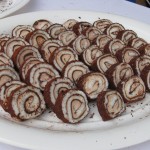
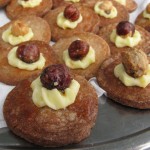
Best till last. There were some gorgeous sweets, including a a chocolate roll, a hazelnut biscuit, and some creamy crispy raspberry macarons from the wunderkind of VIU’s Culinary Arts program.

Latest Posts
- Sublime
- Good weather for reading
- The world, the world
- Sublime launch!
- Planet Earth Poetry – Readings by Volunteers, Victoria 2026
- Poetry at the Goldfinch
Aldeburgh Poetry Festival Barny Haughton BBC BC poets Berkswell blackberries Black Stilt Bologna book launch Borough Market Carlo Petrini Catalonia Cyrus Todiwala dairy Daunt's Books Dijon Edinburgh Fanny Bay Feast of Fields Food and Morality food history food journalism Jenna Butler lardo Malahat Review Michael Pollan Okanagan olive oil tasting olive trees Omnivore's Dilemma Our Food Our Future Oxford Parmigiano-Reggiano Planet Earth Poetry poetry poetry readings Poetry videos prosciutto salumi Sean O'Brien Suffolk ticks Wendy Morton Wired Writing Yvonne Blomer
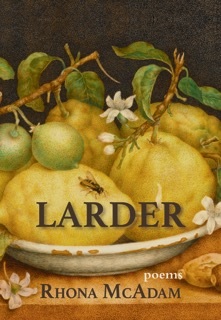
In her latest collection, Rhona McAdam navigates the dark places of human movement through the earth and the exquisite intricacies lingering in backyard gardens and farmlands populated by insects and pollinators, all the while returning to the body, to the tune of staccato beats and the newly discovered symmetries within the human heart.
“…A beautiful, filling collection, Larder is a set of poems to read at the change of the seasons, to appreciate alongside a good meal, and to remind yourself of the beauty in everything, even the things you may not appreciate before opening McAdam’s collection….”
Rhona McAdam is a writer, poet, editor, and Registered Holistic Nutritionist with a Master’s in Food Culture from Italy and a deep-rooted passion for ecology and urban agriculture. Her work spans corporate and technical writing to poetry and creative nonfiction, often exploring the vital links between what we eat and how we live. Based in Victoria, BC, and available via Zoom, Rhona is always open to new writing commissions, readings, or workshops on nutrition and the culinary arts.